

Quick Answer: Travel to New Zealand for US Citizens at a Glance
New Zealand requires no visa from US passport holders. The pre-trip paperwork totals ~$35, takes minutes to complete via the official app, and must be done before you reach the airport. Here's what matters at a glance:
- Entry: No visa required; an NZeTA (New Zealand Electronic Travel Authority) is mandatory before boarding, applied through the official New Zealand Immigration app
- Pre-trip fees: ~$14 for the NZeTA plus ~$21 for the International Visitor Levy (IVL), totaling ~$35 via the official app
- Best timing: March through May offers the strongest combination of stable weather, lower prices, and thinner crowds
- Connectivity: Travel eSIM plans start around $10 for 5 GB on Spark; see current eSIM for New Zealand options before you fly
- Wildlife: No deadly snakes, no dangerous spiders, which puts New Zealand in a very different category from Australia
New Zealand's summer runs December through February, lining up with the American holiday rush. That means expensive flights from LAX, JFK, and ORD, packed trails, and lodges with waitlists. Here is what each point means in practice.
Do US Citizens Need a Visa to Travel to New Zealand?
US citizenship gets you past the New Zealand visa requirement. What it doesn't get you past is the NZeTA: a mandatory pre-entry authorization that every visitor must complete before boarding, including Americans.
The NZeTA (New Zealand Electronic Travel Authority) grants entry authorization before you reach the departure gate. The official app charges NZD $23, roughly $14 USD, which is cheaper than the government's own website, which runs NZD $35 for the same application. Same form, different price. Use the app.
Here's what the application screen doesn't flag upfront.
New Zealand also charges an International Visitor Levy (IVL), a conservation and infrastructure fee of NZD $35 (roughly $21 USD), billed in the same transaction as the NZeTA. That's how the combined total reaches the ~$35 figure from the section above. The IVL funds conservation programs and tourism infrastructure. It's legitimate, widely applicable, and almost never mentioned until the payment page appears.
Third-party sites exploit the confusion. Search "apply for NZeTA" and you'll find commercial services charging $50 to $100 to submit the identical form to the same government system. They add nothing. Skip them entirely.
The actual process runs about five minutes:
- Download the official NZeTA app from New Zealand Immigration
- Enter your passport number, expiry date, travel dates, and a health declaration
- Pay the NZeTA fee and IVL together in a single step
- Receive email confirmation, typically within minutes
US travelers with Global Entry have expedited customs clearance on the American side, but the NZeTA is a New Zealand entry requirement, independent of Global Entry status. Both are necessary. Different systems, neither optional.
New Zealand Immigration recommends applying at least 72 hours before your flight. Approvals usually arrive well before that.
Your NZeTA is valid for two years from approval, covers multiple entries, and caps each stay at 90 days. US travelers who return regularly will find that initial cost spreads quickly across trips.
Entry requirements sorted. The next question is when to fly, and it's the one most first-time visitors get wrong.
Best Time to Travel to New Zealand as a US Visitor
March through May is the strongest window for US visitors to New Zealand, and the specific reasons go beyond "lower prices." Autumn keeps the South Island's most celebrated hiking trails open while summer crowds clear, and that pairing is hard to replicate in any other season.
The season layout, practically speaking: New Zealand's summer (December through February) brings the kind of operational pressure that makes trip planning frustrating. Popular accommodation in Queenstown books months in advance. Freedom camping sites that sit empty in April fill by December, and post-2021 regulations mean improper setups can attract fines of NZD $200 or more. High demand compounds every logistical challenge.
June through August is ski season.
The Remarkables and Coronet Peak near Queenstown draw committed powder hunters, and Mount Ruapehu in the North Island rounds out the winter options. Outside the ski areas, though, most of the country's famous long-distance hiking routes close under snow. The Tongariro Alpine Crossing, one of the most-walked single-day routes in the country, becomes outright dangerous in full winter conditions. If your itinerary doesn't involve ski lifts, winter is the wrong call.
Shoulder season (March through May) typically runs 20 to 30 percent below December-to-February accommodation rates. Trails stay accessible. Daytime temperatures hold across both islands well into April. Late autumn also delivers a striking visual payoff that barely surfaces in US travel media: South Island native beech forests turn copper, amber, and gold from late April through May.
October and November (southern spring) offer an alternative, particularly for North Island itineraries. Trails reopen and prices stay below peak, though weather consistency is lower than autumn.
The costs beyond accommodation are what most US visitors to New Zealand underestimate next.
New Zealand Travel Costs: What US Visitors Should Budget
Tourist healthcare isn't free. A broken ankle on the Routeburn Track or a stomach illness in Queenstown generates real medical bills. Travel insurance isn't optional here; it's the one purchase that protects everything else you've spent on the trip. If you do need a doctor, expect to pay upfront and claim back through your insurer afterward.
New Zealand is widely considered one of the safest international destinations for US visitors, and the wildlife picture is the clearest reason why. Zero deadly snakes on either island. No dangerous spiders. The fauna that unnerves travelers in Australia simply doesn't cross the Tasman Sea. For a first-time international traveler, that absence is straightforward good news.
The Australia comparison
The two countries sit close on a map and share enough of a visual identity that Americans routinely conflate their risk profiles. The landscapes overlap. The accents blur together. The wildlife doesn't transfer. New Zealand's evolutionary isolation produced birds, not venomous predators.
Don't borrow Australia's anxiety for a New Zealand trip.
What to actually plan around
Driving is on the left. New Zealand accepts US driver's licenses for trips under 12 months, covering the typical two-week itinerary without an international permit. Roundabouts take the most adjustment. Budget a day of low-stakes regional driving before you tackle mountain passes.
Freedom camping zones are defined and enforced, as covered in the budget section above. Stick to certified self-contained sites and the rules are easy to follow. The fines aren't the hardest part; finding a legal spot after dark in an unfamiliar area is.
With safety mapped, the last decision is purely geographical: which part of New Zealand actually deserves the most of your time.
Mobile Data for New Zealand Travel: eSIM, SIM Cards, and WiFi
US carriers charge daily roaming fees in New Zealand that add up faster than most travelers expect. Travel eSIM plans on Spark's network run a fraction of that cost, and a local SIM card sits somewhere in between. Here's how the main connectivity options compare:
That carrier notification pings before you've cleared the immigration queue at Auckland International Terminal. The free T-Mobile roaming tier that looks like a money-saver? It runs at 128 kbps.
What T-Mobile's Free Roaming Actually Delivers
128 kbps. That's roughly dial-up speed from the late 1990s, and it's what T-Mobile's complimentary international tier provides in New Zealand. Turn-by-turn navigation loads fine. Video calls won't hold. Music streaming barely loads.
Upgrading to the T-Mobile Day Pass gets you full speeds on Spark's network. T-Mobile's daily rate makes sense for a quick stopover, but stretch it across two weeks and a 5 GB travel eSIM on Spark comes out ahead.
Spark matters more than you'd think here: it carries the broadest rural reach of New Zealand's three main networks across both islands. If your trip includes Haast Pass, Fiordland, or the Coromandel Peninsula interior, you want to be on that network.
Travel eSIMs vs. Local SIM Cards
HelloRoam's New Zealand eSIM runs on Spark's network with no contract, 24/7 customer support, and a QR code you scan before boarding. No kiosk queue in arrivals, no scrambling for a retailer after a 12-hour flight.
The local Spark SIM in the table above gives you 6 GB for NZD $29. It's the dead-simple physical card option, but your handset needs to be unlocked and nano-SIM compatible, and you'll have to source it at an airport counter or Spark store in Auckland or Christchurch.
For travel to New Zealand under three days with reliable hotel Wi-Fi, skipping a paid data plan is a perfectly reasonable call. Offline maps and downloaded confirmations carry you through a long weekend. Beyond that, a prepaid option is worth the commitment, and where that signal holds outside the cities is the next thing worth knowing.
Is New Zealand Safe to Travel To for Americans?
New Zealand is one of the safest countries US visitors choose, with no deadly snakes, no dangerous spiders, and crime rates well below most American metro areas.
The wildlife situation is the standout detail. Unlike Australia, where venomous species can turn certain trailheads into a risk calculation, New Zealand has zero deadly land snakes. Not rare snakes. Zero. Native spiders exist, but none carry venom that threatens healthy adults. It's a genuinely clean slate on that front.
Families arriving at Auckland International Airport braced for Australia-style wildlife hazards tend to visibly relax once they've cleared arrivals and checked a local trail map. No snake advisories. No venom warnings. Just mountains and sheep.
Healthcare isn't covered for tourists. New Zealand's public health system is solid for residents but doesn't extend to visitors. A doctor's visit or emergency room trip comes out of pocket. Travel insurance is the no-brainer that protects a multi-thousand-dollar trip from a single medical bill.
Two practical gaps US visitors routinely underestimate:
- Freedom camping: Post-2021 restrictions tightened the rules nationwide. Sleeping rough at uncertified sites now carries fines running into the hundreds of New Zealand dollars. Certified self-contained sites are inexpensive and dead-simple to book ahead.
- Driving: Traffic runs on the left. A US license is valid for short stays, but the left-hand adjustment is genuinely fiddly on the South Island's narrower mountain passes until you've logged a few hours behind the wheel.
Get travel insurance before you fly. Book certified camping sites in advance. Those two steps cover most of the practical risk picture for travel to New Zealand.
How to Plan Your New Zealand Travel Itinerary: North Island vs. South Island
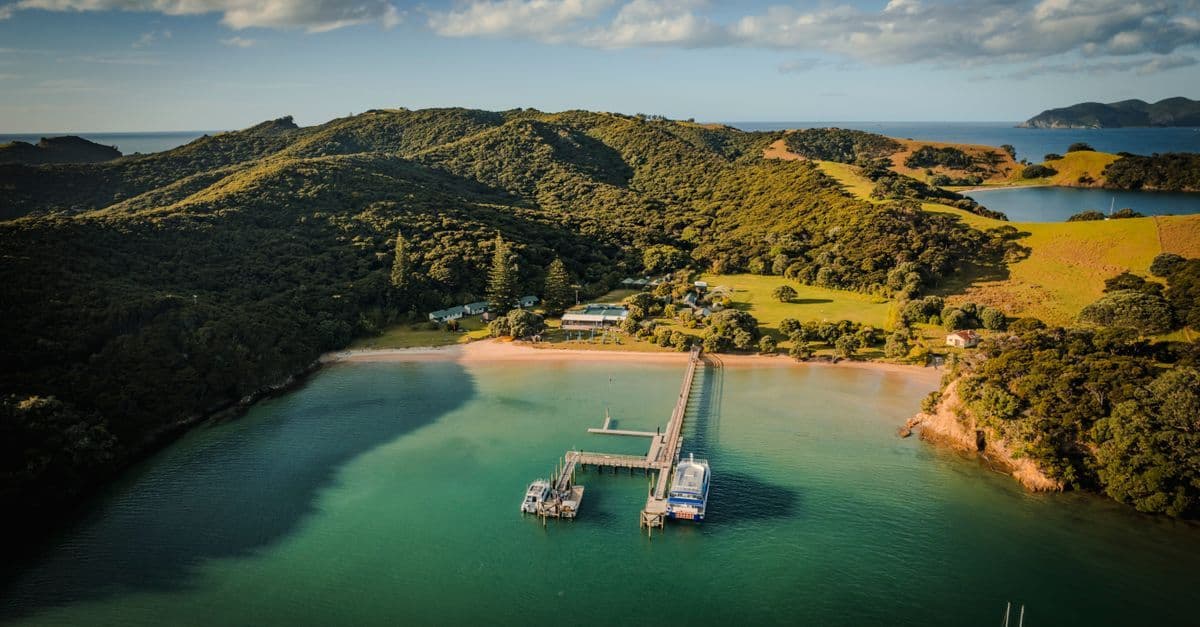
The planning mistake most US visitors make is trying to cover both islands in a single two-week trip. South Island alone fills fourteen days without padding the schedule. North Island rewards a sharp, focused seven days. Pick one. Go deep.
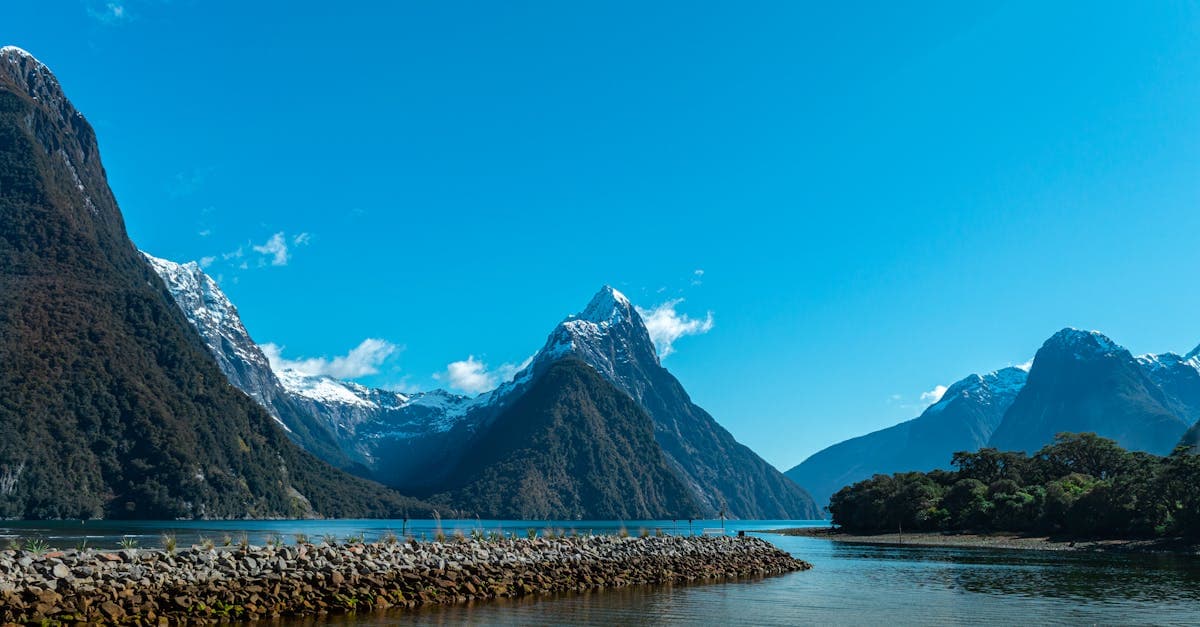
South Island is the clear choice for scenery-first travel to New Zealand. Queenstown anchors the southern itinerary: base camp for Fiordland National Park, the drive into Milford Sound, and access to the Routeburn Track. Add Franz Josef Glacier (the helicopter landing, at the price range noted earlier, is worth budgeting for) and the Mackenzie Basin, and two weeks fill without forcing anything. The landscape shifts every few hours of driving, from alpine lake to coastal fjord to ancient glacier. That variety is what makes the South Island tough to rush.
North Island runs on different logic. Auckland is the entry point, but Rotorua is the reason to stay: geothermal vents, Maori cultural performances, and thermal mud pools that smell unmistakably like sulfur. Hobbiton sits forty minutes south of Auckland in Waikato farming country. Tongariro Alpine Crossing cuts through the volcanic terrain that Peter Jackson's crew used for Mordor in the Lord of the Rings films, and stands as one of the world's great single-day hikes. A week covers all of it with breathing room.
Self-drive is the only practical way to cover either island. Public transport connects major towns, but Fiordland, Franz Josef, and Tongariro's trailhead have no workable alternative to a rental car. Book early: campervans and compact SUVs run tight in peak season.
The Interislander ferry links Wellington to Picton in 3.5 hours, which makes island-hopping feel manageable on paper. In practice, attempting both islands in under two weeks means spending real days in transit and skimming both destinations.
South Island for scenery. North Island for culture and geothermal drama. Two focused weeks on one island beats two hurried weeks split across both.
All the pieces are here. Book accordingly.
Reviewed by HelloRoam's editorial team. Last updated: 26 June 2026.
Get Connected Before You Go


Frequently Asked Questions
US citizens don't need a visa for New Zealand, but must obtain an NZeTA before boarding. The online application takes about five minutes and costs roughly $35 total.
The NZeTA is New Zealand's mandatory pre-entry authorization. Via the official NZ Immigration app, it costs NZD $23 (about $14 USD), cheaper than applying on the government website.
The IVL is a conservation and tourism infrastructure fee of NZD $35 (about $21 USD), charged in the same transaction as the NZeTA, bringing the total pre-entry cost to roughly $35.
Download the official NZeTA app from New Zealand Immigration, enter your passport details and travel dates, pay the NZeTA fee plus IVL, and receive email confirmation, usually within minutes.
New Zealand Immigration recommends applying at least 72 hours before your flight. Most approvals arrive well before that window. The NZeTA is valid for two years and covers multiple entries.
No. Third-party sites charge $50 to $100 to submit the same form to the same government system. The official NZeTA app costs NZD $23 (about $14 USD) and takes about five minutes to complete.
Each stay under an NZeTA is capped at 90 days. The authorization itself is valid for two years from approval and covers multiple entries, so repeat US visitors get good value from the initial fee.
March through May offers the best combination of stable weather, lower accommodation prices, and thinner crowds. Autumn keeps major hiking trails open while summer tourists have cleared out.
New Zealand has zero deadly land snakes and no dangerous spiders. Unlike Australia, venomous species simply don't exist here, making it one of the safest wildlife environments in the world.
New Zealand has no deadly snakes and no dangerously venomous spiders. Australia's venomous species don't cross the Tasman Sea, so the two countries have very different wildlife risk profiles.
Travel eSIM plans on Spark's network start around $10 for 5 GB, making them significantly cheaper than US carrier day passes, which run $5 to $10 per day over a two-week trip.
T-Mobile's free international tier works in New Zealand but runs at 128 kbps, roughly dial-up speed. Navigation loads fine, but video calls and music streaming won't work reliably.
A travel eSIM activates via QR code before you board, with no airport kiosk needed. A local Spark SIM offers 6 GB for about $18 USD but requires an unlocked, nano-SIM-compatible handset.
Spark carries the broadest rural coverage across both islands. If your itinerary includes remote areas like Fiordland, Haast Pass, or the Coromandel Peninsula interior, Spark is the best choice.
Yes. New Zealand's public health system doesn't cover tourists, meaning medical bills come out of pocket. Travel insurance protects against costs from a doctor's visit or emergency room trip.
Yes, a US driver's license is valid in New Zealand for stays under 12 months. Traffic drives on the left, so budget extra time to adjust before tackling narrow mountain passes.
Post-2021 regulations require staying at certified self-contained sites. Camping at uncertified locations carries fines of NZD $200 or more. Certified sites are inexpensive and easy to book in advance.
South Island suits scenery-first trips, anchored by Queenstown and Fiordland. North Island offers geothermal sights, Maori culture, and Hobbiton. Attempting both in two weeks means skimming both destinations.
Sources
- International Travel — travel.state.gov
- VisitToro — immigration.govt.nz
- Guide to travelling to New Zealand | 100% Pure New Zealand — newzealand.com
- Welcome to New Zealand | Official site for Tourism New Zealand — newzealand.com