




Table of content
What Should Be in a Packing List?

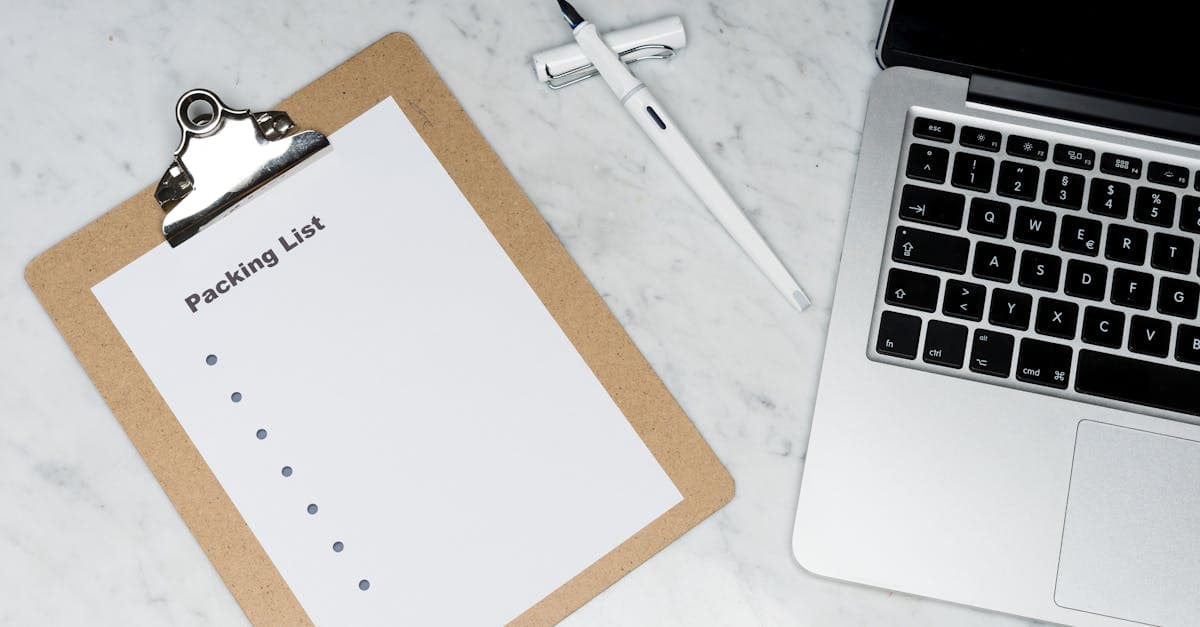
A complete packing list covers seven core categories: clothing and footwear, toiletries, travel documents, electronics and connectivity, health and safety items, financial essentials, and carry-on specifics. Organizing by category rather than by bag keeps the process methodical and makes it far harder to miss something when you're splitting items across checked and carry-on luggage eftours.com.
Over 60% of travelers forget at least one essential item on trips, with chargers and adapters consistently among the casualties. That number drops sharply when you build your list at least a week before departure, category by category, rather than dumping everything into a running note at 11 pm the night before a 6 am flight.
The seven-category framework
The categories map to how you actually use things during travel, not how you pack them:
- Clothing and footwear: Every piece of clothing, shoes, and accessories organized by the outfits or activities they support
- Toiletries: Personal care essentials, medications, and anything subject to TSA's 3-1-1 liquids rule for carry-ons
- Travel documents: Passport, visa confirmations, travel insurance details, boarding passes, and Global Entry or TSA PreCheck documentation if applicable
- Electronics and connectivity: Devices, adapters, charging cables, and a considered plan for staying online once you land
- Health and safety: Prescriptions, first-aid basics, sunscreen, and any destination-specific items
- Financial essentials: Cards, backup cash in local currency, and emergency contact numbers for your bank
- Carry-on specifics: Items that must stay with you on the plane, not just items that happen to fit
The category most lists skip entirely
Electronics and connectivity is consistently the most underbuilt category on traveler packing lists. People spend real time deliberating between three pairs of jeans and almost no time thinking about whether their phone will actually work at the destination.
That's a thoughtful approach to the wrong problem.
US carriers charge $10 to $15 per day for international data roaming. Over a two-week trip, that adds $140 to $210 to the total cost, charged to a bill you won't see until you're home. The apps that matter most when you land, maps, translation tools, hotel booking confirmations, all require a live data connection to function. An eSIM activated before departure sidesteps the daily carrier charge and gives you working data before your luggage reaches the carousel. For a layered look at how the technology works, What Is an eSIM? is a useful starting point if that category currently feels bare-bones on your list.
Digital lists beat paper for one straightforward reason: you can duplicate last trip's version, update it for the new destination, and check items off mid-pack across devices. A beach week in Mexico and a two-week multi-city Europe itinerary both draw from the same seven categories, but the specific items differ considerably. The framework holds; the contents shift. According to justagirlandherblog.com, building from a structured template and customizing per trip is one of the most reliable ways to stay organized across different vacation types.
Clothing is the largest and most negotiable category on most lists. How you approach it determines whether your bag gets checked at the gate or stays in the overhead bin.
Your Clothing, Shoes, and Accessories Packing List

Clothing is the heaviest and bulkiest category on any packing list. The goal is versatile pieces that work across multiple outfits and settings without requiring a checked bag. Every item needs to justify its weight, and most don't survive that scrutiny honestly.
Carry-on-only travelers save $60 to $120 per round trip on average, depending on the airline. That figure alone has converted plenty of chronic overpackers. The 3-5-7 rule gives clothing decisions a solid starting framework: 3 bottoms, 5 tops, and 7 accessories (socks, underwear, and a belt) covers most week-long trips without bloating the bag.
Making every piece work harder
Neutral colors multiply outfit combinations without adding a single item. Navy, grey, black, and tan mix without effort, which cuts roughly 20 to 30 percent of the deliberation time you'd otherwise spend standing in front of the closet the night before. Wrinkle-resistant fabrics aren't glamorous, but they're lean and practical. Merino wool and synthetic blends travel compressed and emerge from a bag presentably. Cotton holds moisture and takes forever to dry, which is a problem on any itinerary longer than a weekend. For international trips specifically, lightweight and stretchy fabrics in versatile cuts offer the most outfit utility per item packed omventure.com.
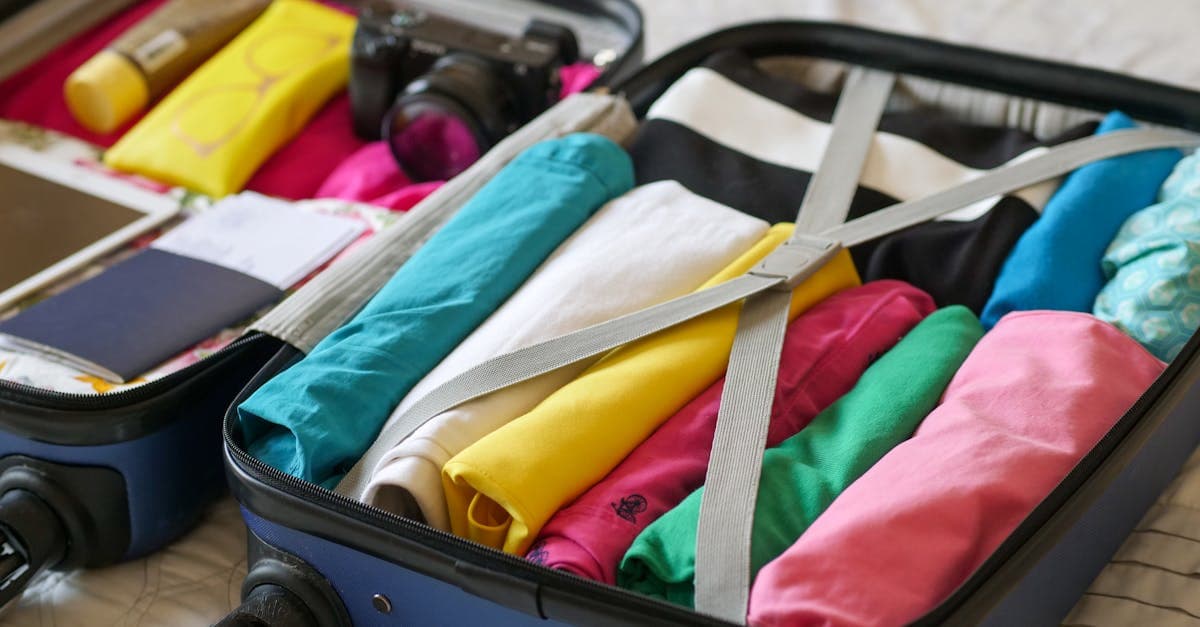
Roll clothes instead of folding them. This is dead-simple advice that still surprises travelers the first time they see how much space it reclaims in a standard carry-on. Packing cubes add compression and organization without adding much weight eaglecreek.com.
Climate and planned activities drive every clothing decision. A city break and a hiking itinerary both need layering, but the specific items are almost entirely different. Pack for what's on the itinerary, not for every hypothetical scenario you might theoretically face.
One useful test before anything goes in the bag: can you name two specific occasions you'll actually wear it? If not, leave it.
Footwear is where most travelers overpack and regret it by day two. The fix is surprisingly straightforward.
Shoes and footwear: the two-pair principle

Two pairs of shoes cover the vast majority of trips: one comfortable pair for walking and one pair appropriate for dinners or more formal occasions. That's the principle. Everything after that is overkill.
Shoes are dense, heavy, and take up real bag space. Each extra pair costs roughly one to two pounds and displaces three or four clothing items that would otherwise fit. That math tends to settle most footwear debates before they start.
Wear your bulkiest pair on travel days rather than packing them. It's one of the oldest carry-on tricks in circulation, and it still works every time. A pair of sneakers crammed into the overhead bin is a carry-on that won't close; those same sneakers on your feet at security are a non-issue.
When the two-pair rule bends
Athletic shoes serve double duty on most city trips: comfortable for long walking days, acceptable for casual dinners, and versatile enough to handle most of what an urban itinerary involves. Sandals make a practical second pair for beach or resort destinations. For most travelers, that covers it.
Activity-specific footwear, hiking boots, formal heels, technical trail shoes, should only make the list when the itinerary genuinely requires them. "Just in case" is how bags end up at the oversized luggage counter.
Confident packers commit to the two pairs, wear the heavier ones through security, and don't revisit the decision at the gate. Locking in footwear early makes the accessory category that follows feel far less fiddly. Fewer open questions in the bag mean fewer last-minute additions that push a carry-on over the airline's weight limit.
Accessories and outerwear: what earns its place

A packable rain jacket or lightweight down layer earns its place on almost any international trip. It weighs next to nothing, compresses into a small stuff sack, and handles the kind of weather variability that every multi-destination itinerary eventually delivers. Full winter coats compress poorly and should prompt a serious reconsideration of the entire bag strategy before they get anywhere near the suitcase.
What consistently earns its space
- Packable rain jacket or down layer: Handles weather shifts across nearly every itinerary without adding meaningful bulk
- Sunglasses: Used daily on most trips; replacing a lost pair abroad is fiddly and often overpriced at tourist-area shops
- One versatile scarf or wrap: Doubles as a flight blanket, covers shoulders at religious sites, and adds warmth without the weight of an extra layer
- Crossbody bag or packable daypack: Earns its place every time you visit a market, head out on a day trip, or leave the main bag at the hotel
- Packable tote: Folds into almost nothing and handles souvenirs, overflow, and beach days without forcing a second checked bag
What rarely earns its space
Multiple belts, more than one or two pieces of jewelry, bulky hats that can't be compressed flat, and formal wear for events that haven't been confirmed on the calendar all tend to come home unworn. They don't feel like a nuanced decision when you're packing; they feel obvious. Then you carry them through four airports and never once reach for them.
Check the forecast for every destination on your itinerary, not just the first stop. A trip that starts in Rome and ends in Edinburgh in October needs a wider clothing range than either city alone suggests. That's the kind of careful planning most generic packing guides skip, and it's also the step that separates a bag you can carry on from one you'll pay to check.
Liquids, medications, and the rules governing what TSA will and won't allow through security tend to catch even experienced travelers off guard. That category deserves its own thinking before you zip anything up.
Toiletries, Health, and Safety Essentials

Toiletries divide into two groups: things you genuinely need to bring from home and things available at any pharmacy within walking distance of almost any hotel. Getting that distinction right saves bag space and TSA friction simultaneously.
The carry-on liquid rule applies without exception. Every liquid, gel, paste, or cream must be 3.4 oz (100ml) or smaller, packed in a single clear quart-sized zip bag, one bag per passenger. That covers toothpaste, shampoo, sunscreen, and foundation regardless of how you label the container. Checked luggage carries no size restriction on liquids, but most travelers keep toiletries accessible.
Prescription medications are a separate matter. They travel in carry-on only, in original pharmacy containers with the label intact. For controlled substances, a letter from your prescribing physician belongs in the same bag. Losing your checked luggage is stressful. Losing your medication in a country where you can't fill a US prescription is a problem with no convenient fix.
First aid earns its space. Adhesive bandages, pain reliever, an antidiarrheal, antacids, and a blister kit for the day your new shoes remind you they're not broken in yet. These items take up almost no volume and matter enormously on the one afternoon you actually need them.
Sunscreen and insect repellent are judgment calls. In major European cities, both are widely available. In parts of Southeast Asia or rural Central America, local formulations may not match your skin type, and resort-area pharmacy prices tend to run higher than what you'd pay at home.
Travel insurance documentation belongs in the health category: policy number, emergency assistance line, and a coverage summary in both digital and printed form. A door wedge alarm and a passport photocopy kept separate from the original complete the safety layer that most packing lists treat as optional.
Health items follow you everywhere by design. The documents you need at the border have their own rule, and it's a simple one.
Documents, Money, and Travel Finances

Your passport must be valid for at least six months beyond your return date, not your departure date. Several countries enforce this regardless of what their official entry requirements list, and airlines may deny boarding before the question ever reaches immigration. Check the expiration date now, not at the check-in counter.
Keep physical copies of your passport and any required visas in a different pocket or bag from the originals. Digital copies stored in cloud accounts you can access without a data connection add a second layer. If your bag gets stolen, you can still prove who you are.
Documents travel in carry-on only. Boarding passes, travel insurance cards, hotel confirmations, and passport copies. None of it goes in checked luggage, ever.
Carry at least two cards from different networks. Visa and Mastercard have the widest international acceptance, and one card getting flagged on a Friday night in a city where your bank's fraud line has a long hold time is exactly the situation the second card exists to solve. Having a backup isn't pessimism; it's the basic arithmetic of international travel.
A money belt or RFID-blocking wallet reduces pickpocket risk in high-traffic tourist areas without changing how you carry cards day to day. Neither requires adjusting your habits; they just add a layer beneath the existing ones.
Documents are fixed once packed. Electronics determine what your trip actually looks and feels like from the first hour.
Electronics and Connectivity on Your Packing List

Pack a universal travel adapter before you leave home. The US uses Type A plugs; most of Europe, the UK, Australia, and large parts of Asia use incompatible standards. Discovering this at your hotel at midnight is a solvable problem, but a compact adapter purchased before departure solves it without any friction eaglecreek.com.
A 10,000 mAh portable battery pack is not optional on arrival day. GPS, translation apps, digital boarding passes, and constant map navigation drain a full charge well before afternoon. Arrival days are consistently the highest-drain days of any trip, and they're also the days you can least afford to go dark.
The smartphone has replaced the camera, the map, the phrasebook, the boarding pass, and the hotel key. Every traveler demographic now ranks it as the single most essential item in their bag. That central role shapes everything else in this category.
Noise-canceling headphones earn their bag space on any flight over four hours. The fatigue reduction on overnight international legs is real and shows up in how functional you are the following morning.
Connectivity is where cost surprises accumulate. 72% of international travelers have experienced connectivity problems abroad, ranging from complete data loss to unexpected charges on the first statement back home. The daily carrier roaming rates noted earlier in this guide add up faster than most travelers expect, and on a two-week trip, those cumulative costs rival a short domestic flight.
The connectivity problem on any packing list has a fix that weighs nothing and takes less time to set up than finding your departure gate.
Staying connected abroad: eSIM vs. roaming

An eSIM is a digital SIM card embedded in your phone's hardware. You activate a local data plan by scanning a QR code from your device settings. The process takes fewer than five minutes and can happen at home before departure, not in the boarding line.
The setup myth doesn't survive contact with reality. Most travelers who haven't used one assume it requires a carrier support call or technical configuration. In practice: scan a QR code (many providers let you pay and activate directly using Apple Pay or Google Pay), your phone confirms the plan, and you're done. No tray tool, no kiosk queue.
All US iPhone 15 and 16 models ship without a physical SIM tray. They're eSIM-only, which moves this from optional feature to practical requirement for tens of millions of American travelers.
Travel eSIM plans for popular international destinations typically run ~$5 to ~$20 for 1 to 7 GB of data. Measured against the daily carrier roaming costs noted earlier, the math on any trip longer than a long weekend is straightforward.
Multi-country itineraries used to mean separate SIM cards at each border. Hello Roam offers plans covering multiple countries under a single activation, backed by 24/7 customer support if a connection issue comes up mid-trip.
Two checks before departure. Confirm your phone is carrier-unlocked; a locked device can't install third-party eSIM plans regardless of the hardware. Activate your plan at home so data is live the moment you clear customs.
The carry-on is the last category that rewards deliberate planning.
What to Pack in Your Carry-on Bag

The carry-on rule worth committing to: if losing it would derail your trip, it doesn't go below the plane. Airlines mishandle roughly 5 to 6 checked bags per 1,000 passengers. The number sounds manageable until your bag ends up in the wrong city and your first morning begins in the same clothes you flew in.
Essentials that should never leave your hands:
- Passport, boarding passes, and any printed travel confirmations
- All electronics, cables, and your portable battery pack (airlines generally require lithium battery packs in carry-on, not checked luggage)
- Prescription medications in their original, labeled containers
- One complete change of clothes
- Your TSA-compliant quart-sized toiletries bag
- Valuables: jewelry, camera gear, and anything with no straightforward replacement at the destination
For overnight or long-haul flights, a neck pillow, eye mask, and earbuds earn their bag space, a pattern reflected across comprehensive carry-on guides smartertravel.com. On a two-hour domestic leg, skip them. The trade-off isn't worth it.
Pack snacks. It's consistently underrated on every packing list. Airport food is expensive, and delays stretch meal windows past the point of comfort in ways that are hard to anticipate before they happen.
Assign your passport and boarding pass a fixed pocket and never change it. The security line scramble is avoidable with one consistent habit.
A solid carry-on strategy handles the logistics. The final piece is understanding the rules and ratios that shape how much you pack in the first place.
What Is the 5 4 3 2 1 Rule for Packing?

The 5-4-3-2-1 rule is a clothing ratio for carry-on travel: 5 sets of socks and underwear, 4 tops, 3 bottoms, 2 pairs of shoes, and 1 formal or statement outfit for occasions that require it. Calibrated for trips of five to seven days, it gives you enough variation to dress differently each day without pushing a bag past standard airline carry-on size limits.
The real value isn't in the numbers themselves.
It's that the framework forces trade-offs before you're standing at an airport scale, already over the weight limit, making hurried decisions under pressure. Pack by a ratio at home and you'll almost never reach that point. A considered choice made with your bag on your bed beats a hasty one made with a line forming behind you.
The 3-5-7 rule, covered earlier in this guide, takes a different approach by weighting accessories more heavily. It suits travelers who move between casual and more formal settings, or anyone who wants more outfit variation across the week. The two frameworks target similar trip lengths; the 5-4-3-2-1 version is leaner and faster to apply when you want a clear decision-making structure rather than a layered one.
Neither rule covers every scenario. For trips longer than a week, scale each number up modestly or plan a laundry stop mid-trip. Activity-specific gear (hiking boots, wetsuits, cold-weather layers) sits outside both systems entirely and needs to be added on top of whichever ratio you choose.
Use whichever framework fits how you think, then adjust for your specific itinerary. The goal is a bag you can lift into an overhead bin without rearranging your entire approach at the gate.
Clothing ratios cover what goes in the bag. The 3-3-3 rule covers what airport security will and will not let through.
What Is the 3 3 3 Rule for Flights?
The "3-3-3 rule" for flights is an informal name for the TSA's liquids policy, officially called the 3-1-1 rule: carry-on liquids must be in containers of 3.4 oz (100 ml) or less, all packed into one clear quart-sized zip bag, with one bag per traveler. The name you'll see depends on who's explaining it; the restriction is the same either way.
Most travelers focus on the liquids they already know about. Checkpoint slowdowns usually come from the ones they didn't consider.
Full-size toothpaste, shampoo, conditioner, and sunscreen are the most common offenders. All need to be travel-sized or decanted into reusable silicone bottles before the screening lane. Liquid medications larger than 3.4 oz are allowed in carry-on bags but must be declared separately at the checkpoint rather than left buried in your bag. Certain dense gels and foods (peanut butter, hummus, thick spreads) can also trigger a secondary screening because they register similarly to liquids on the scanner.
Full-size toiletries belong in your checked bag. The 3-1-1 restriction applies only to carry-on luggage; checked bags have no liquid volume limits.
TSA PreCheck and Global Entry don't exempt you from the liquids policy. Both programs let you keep shoes on and leave your laptop in the bag, which speeds up the lane considerably. The quart-sized zip bag still has to come out if you're routed to a standard screening lane rather than the dedicated PreCheck lane. Know which one you're headed toward before you reach the belt.
Get Connected Before You Go

Frequently Asked Questions
A complete packing list covers seven core categories: clothing and footwear, toiletries, travel documents, electronics and connectivity, health and safety items, financial essentials, and carry-on specifics. Organizing by category rather than by bag keeps the process methodical and makes it far harder to miss something when splitting items across checked and carry-on luggage.
The 3-5-7 rule is a clothing framework for week-long trips: pack 3 bottoms, 5 tops, and 7 accessories such as socks, underwear, and a belt. This approach covers most week-long trips without bloating your bag and helps carry-on-only travelers avoid checked baggage fees.
The 5-4-3-2-1 rule is a structured clothing formula designed to keep packing minimal and organized, typically covering tops, bottoms, shoes, outerwear, and accessories across five categories. Like the 3-5-7 rule, it encourages travelers to commit to a fixed number of items per clothing type rather than packing open-endedly.
The 3-3-3 rule for flights is commonly associated with carry-on liquid limits: each liquid container must be 3.4 oz (100ml) or smaller, all containers must fit in a single clear quart-sized zip bag, and each passenger is allowed one such bag. This rule applies to all liquids, gels, pastes, and creams regardless of how the container is labeled.
Over 60% of travelers forget at least one essential item on trips, with chargers and adapters among the most common casualties. Building your list at least a week before departure, category by category, significantly reduces the chance of forgetting something compared to creating a rushed list the night before travel.
Electronics and connectivity is consistently the most underbuilt category on traveler packing lists. Most people spend time deliberating over clothing choices but give little thought to whether their phone will have a working data connection at the destination, which can affect access to maps, translations, and booking confirmations upon arrival.
US carriers typically charge $10 to $15 per day for international data roaming. Over a two-week trip, that adds $140 to $210 to your total cost, charged to a bill you won't see until you're home. Activating a travel eSIM before departure can sidestep these daily carrier charges entirely.
The two-pair principle covers the vast majority of trips: one comfortable walking pair and one pair appropriate for dinners or more formal occasions. Each extra pair costs roughly one to two pounds and displaces three or four clothing items, so activity-specific footwear should only be packed when the itinerary genuinely requires it.
Every liquid, gel, paste, or cream in a carry-on must be 3.4 oz (100ml) or smaller and packed in a single clear quart-sized zip bag, with one bag allowed per passenger. This rule covers toothpaste, shampoo, sunscreen, and cosmetics regardless of how the container is labeled, with no size restrictions applying to checked luggage.
Prescription medications should travel in carry-on luggage only, kept in original pharmacy containers with the label intact. For controlled substances, a letter from your prescribing physician is recommended. Placing medications in checked luggage risks losing access to them if your bag is lost or delayed.
Carry-on-only travelers save $60 to $120 per round trip on average, depending on the airline. Strategies like rolling clothes instead of folding, using packing cubes, wearing your bulkiest shoes on travel days, and following a structured clothing formula such as the 3-5-7 rule can make carry-on-only travel achievable for most trips.
Merino wool and synthetic blends are among the best travel fabrics because they compress well, resist wrinkles, and dry quickly. Cotton holds moisture and takes a long time to dry, making it a poor choice for trips longer than a weekend. Choosing neutral colors like navy, grey, black, and tan also multiplies outfit combinations without adding extra items.
A packable rain jacket or lightweight down layer, sunglasses, a versatile scarf or wrap, and a crossbody bag or packable daypack are accessories that earn their place on most trips. A packable tote is also useful for souvenirs or overflow without forcing a second checked bag.
All documents including boarding passes, travel insurance cards, hotel confirmations, and passport copies should travel in carry-on luggage only, never in checked bags. Physical copies of your passport should be kept in a different pocket or bag from the originals, with digital copies stored in a cloud account accessible without a data connection as a second backup.
Your passport must be valid for at least six months beyond your return date, not your departure date. Several countries enforce this requirement regardless of what official entry requirements list, and airlines may deny boarding before the question ever reaches immigration, so the expiration date should be checked well in advance.
A travel first aid kit should include adhesive bandages, pain reliever, an antidiarrheal, antacids, and a blister kit. These items take up minimal space but can be essential on the one afternoon you actually need them, especially in destinations where pharmacy access is limited or unfamiliar.
In major European cities, sunscreen and insect repellent are widely available and can be purchased locally to save bag space. In parts of Southeast Asia or rural Central America, local formulations may not match your skin type and resort-area pharmacy prices tend to run higher than what you would pay at home, making it worth packing these items.
ATM withdrawals at your destination typically offer near-interbank exchange rates and are among the best ways to get local currency, though you should check your bank's foreign ATM fee policy. Carrying two travel credit cards with no foreign transaction fees from different card networks provides a reliable backup for most purchases abroad.
Sources
- The Ultimate Packing List — smartertravel.com
- What to Pack for a School Trip - School Trip Packing List 101 — eftours.com
- Free Printable Packing List for Organized Travel and Vacation — justagirlandherblog.com
- The Ultimate Travel Packing List For Any Vacation — eaglecreek.com
- Packing Checklist (for Foreign, International, Overseas Travel) — omventure.com
- Packing List — trade.gov