


Top Prepaid Phone Plans at a Glance
Prepaid phone plans run from ~$10 a month for basic talk and data to ~$55 for full unlimited service, with no annual contract and no credit check at any tier prepaidcompare.net.
MVNOs (carriers that lease Big 3 network capacity rather than building their own towers) are doing the most interesting work in this space. Visible runs on Verizon's network at ~$25/month. Mint Mobile uses T-Mobile's 5G infrastructure from ~$15/month, though it prices lower tiers only when you pay multiple months upfront.
That last detail matters more than the headline number.
The unlimited tier is more layered than the pricing chart suggests. Most plans deprioritize your data during peak congestion, and hotspot access varies widely between tiers. Coverage quality has converged since 5G became a commodity feature across all three major networks, quietly eroding the argument for paying postpaid rates.
The right plan depends on how you actually use your phone. Start there.
What Are Prepaid Phone Plans?

A prepaid phone plan is wireless service you pay for before you use it, not after the billing cycle closes. No annual contract, no credit check, no overage charges arriving mid-month because you streamed one too many episodes on the highway.
Around 25 to 30 percent of US wireless subscribers are on prepaid plans, accounting for roughly 80 to 85 million active lines. The perception that prepaid means compromised coverage has stuck around long past its expiration date.
The coverage gap is mostly a myth.
Here's how it works: an MVNO buys wholesale access to AT&T, T-Mobile, or Verizon towers and sells plans at retail prices below what the Big 3 charge directly. The practical distinction narrows to deprioritization, meaning during peak congestion, postpaid subscribers get bandwidth first. In most day-to-day situations, that difference is invisible.
Switching has become frictionless. Apple Pay and Google Pay integration lets you purchase and activate a new plan in minutes, without visiting a store or waiting for a physical SIM card in the mail.
Month-to-month flexibility is the real draw. Switch carriers without a termination fee, pause service before a long trip abroad, and restart when you're back. Some subscribers use that pause window to activate a travel eSIM (a digital SIM profile installed by scanning a QR code, no physical card required) for each destination. Come back, tap a few settings, and you're on your domestic carrier again.
That combination of low cost and easy switching is why the prepaid subscriber base keeps growing year over year.
So which carrier actually delivers the best value?
Who Has the Best Prepaid Cell Phone Plans?

The best prepaid plan depends on coverage footprint, monthly data use, and how much flexibility you need. There's no single answer that fits everyone, which is why thinking in scenarios is more useful than searching for a universal winner.
Reliability over price: T-Mobile Prepaid's unlimited tier includes a price-lock guarantee, meaning your monthly rate stays fixed regardless of promotional shifts around it prepaid.t-mobile.com. AT&T Prepaid and Verizon Prepaid cover comparable network footprints across multiple data tiers, though neither currently offers the same long-term pricing assurance att.com.
Lower monthly cost: Budget MVNOs run the same infrastructure for less. Mint Mobile operates on T-Mobile's network and prices plans lower for subscribers who pay several months upfront. Visible delivers Verizon-level coverage on a genuine month-to-month basis with no annual commitment. Cricket Wireless sits in the AT&T ecosystem and handles straightforward unlimited service without much customization overhead.
Data-heavy or multi-region use: US Mobile lets subscribers toggle between T-Mobile and Verizon networks under one account, useful when one carrier outperforms the other in your primary locations. Google Fi Wireless switches networks automatically based on signal strength, which earns consistent loyalty from subscribers who move between coverage zones regularly.
None of them travel well without a separate roaming package.
eSIM-native activation has also changed the switching process. Most major carriers and MVNOs now support QR-code plan activation, meaning setup takes under two minutes with no SIM tray tool or shipping wait.
For international travel, the considered approach is pairing a lean domestic prepaid plan with a dedicated travel eSIM for each trip. HelloRoam's Browse All eSIM Plans covers destinations worldwide. Activate before you board, and you'll clear customs at LAX or JFK with data already running, whether you're moving through the Global Entry lanes or the standard queue.
The domestic plan handles the US. The travel eSIM handles everywhere else.
Cheapest and best are rarely the same thing, and the differences are more nuanced than the monthly price suggests. Throttling thresholds, hotspot caps, and what happens to your speeds at peak hours are the real differentiators.
Who Has the Cheapest Prepaid Mobile Plans?
Tello runs prepaid phone plans starting at roughly $9 a month on T-Mobile's network. That's a standard monthly price, not a teaser rate.
Most American households are paying considerably more right now.
The surprise deepens when you look at annual pricing. Carriers like Mint Mobile structure rates so that paying upfront for a year cuts the monthly figure substantially against rolling month to month. The lowest-advertised price almost always requires that kind of commitment, a detail that's easy to miss when you're scanning comparison tables at speed.
What you gain
Switchers from major postpaid plans save $300 to $500 per year on average for equivalent coverage. No credit check, no 24-month device installment, and no early termination fee to negotiate if circumstances change. The underlying network infrastructure is typically the same as what the Big 3 carriers run.
What you give up
The tradeoffs are real. Budget plans impose monthly data ceilings, often just a few gigabytes, which works fine for light users but runs short quickly for anyone navigating unfamiliar streets, streaming audio on a commute, or relying on mobile data as a backup connection. More significant: budget MVNO subscribers sit at the bottom of the deprioritization queue. When towers get congested in a busy corridor or a packed airport terminal, that clause shifts from fine print to felt slowdown.
Annual upfront payments also catch people off guard. The plan advertising the lowest monthly rate often requires several months paid in advance, which affects short-term cash flow even when the yearly math clearly favors switching.
Price is just one part of the decision.
How to Choose the Right Prepaid Phone Plan
Choosing a prepaid plan comes down to four questions, answered in the right order. Skip one and you'll end up paying for coverage you can't use, or hitting a data ceiling by week two.
Step 1: Estimate your monthly data use
Pull up your current carrier's account portal and check your average consumption over the last three months. Most people discover they're either paying for data they don't use or brushing against soft caps they didn't know existed. Navigation, streaming, and video calls consume data quickly. Messaging and email use almost none.
Step 2: Confirm your phone is unlocked
A carrier-locked phone won't activate on a different network, regardless of how competitive the plan looks. T-Mobile, AT&T, and Verizon all release devices from carrier locks after an eligibility period, but you need to verify your phone's status before initiating a switch. Your current carrier can confirm this; most iPhones and modern Androids also display lock status in device settings.
Step 3: Read the hotspot fine print
Tethering allowances vary more than the headline plan specs suggest. Some plans include full-speed hotspot data; others throttle tethering to speeds that handle email but struggle with anything heavier. If you regularly connect a laptop or tablet, check those terms before committing.
Step 4: Understand your international coverage before you need it
Most prepaid plans don't include meaningful international coverage by default. Some offer day passes; others simply stop working at the border. Knowing which category your plan falls into before travel is considerably easier than sorting it out from an unfamiliar airport.
One more adjustment
Enrolling in autopay typically reduces your monthly rate by around $5, sometimes more depending on the carrier. Across twelve months, that lowers your effective cost without changing anything about how you use your phone.
Getting the domestic setup right is the foundation. What those choices cost you abroad is the part most people discover too late.
Staying Connected When You Travel: Prepaid and eSIM Options
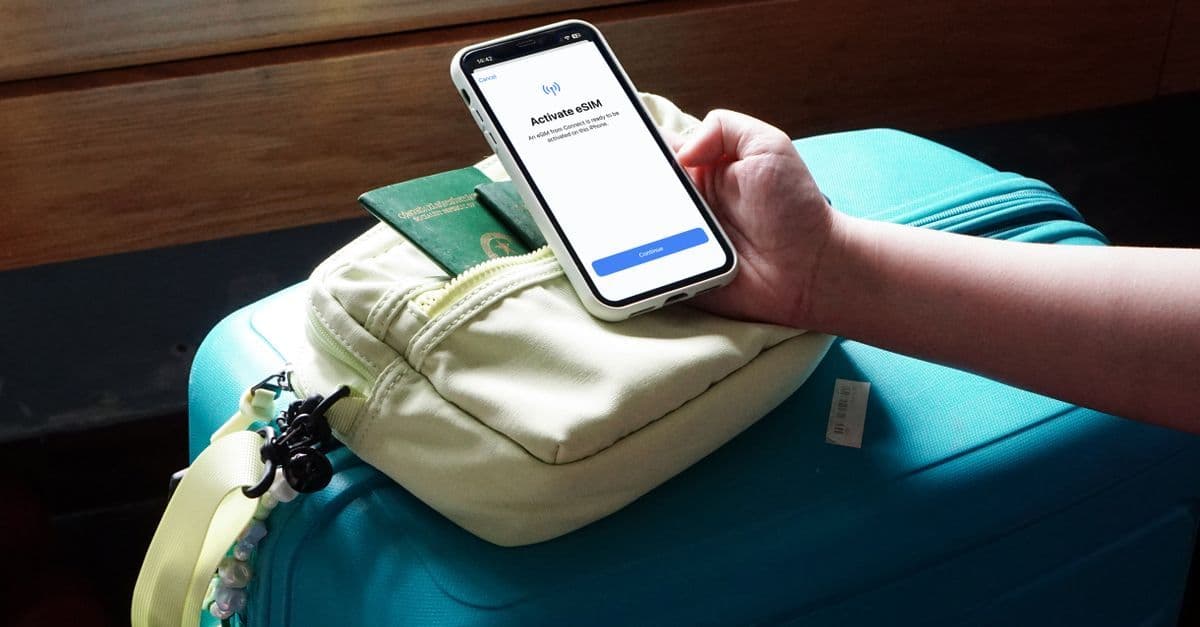
Most US prepaid plans stop being budget-friendly the moment you cross a border. Per-day international roaming fees apply on nearly every domestic prepaid plan, and those charges can erase a month of savings in a single week abroad.
The specifics matter. AT&T Prepaid and Verizon Prepaid both charge per-day fees for international use att.com verizon.com. T-Mobile's Magenta plan includes free international data, but throttled to 256 Kbps, a speed at which maps load slowly and video calls stall out prepaid.t-mobile.com. For anything longer than a short trip, those terms tend to point toward a different solution.
Why a travel eSIM changes the calculation
An eSIM (a built-in digital SIM profile activated by scanning a QR code) can be purchased and installed before departure, so your phone connects to a local network the moment the plane lands. No kiosk queue, no cash transaction, no fumbling with a physical card at baggage claim. If you hold Global Entry and clear customs in under ten minutes, your phone can already be working before the rest of your flight has reached the arrivals hall.
A travel eSIM routes data through local carrier infrastructure at local rates, sidestepping the per-day charge from your domestic prepaid plan entirely. On phones with dual SIM capability (the ability to hold two active SIM profiles simultaneously), your home number stays reachable for calls and texts while the travel eSIM handles data.
HelloRoam covers international destinations through tier-1 networks with plans that activate in minutes before departure. Browse All eSIM Plans to compare coverage and pricing by destination before your next trip.
Dual SIM setup takes roughly ten minutes to configure. For most travelers, knowing both lines stay active throughout the trip makes that a straightforward investment. Questions about compatible devices and what to expect on pricing are worth settling before you commit to any plan.
What Is the Cheapest Way to Get a Prepaid Phone?
Buy an unlocked device, not a carrier-branded one. That single decision shapes every plan choice you make afterward. A locked phone traps you on one network. An unlocked phone works with any compatible carrier, which means you can switch to a better prepaid deal without buying new hardware.
Here's the step-by-step approach:
1. Skip the carrier store. Retail carriers sell branded handsets at what look like subsidized prices, but the lock-in is the real expense. Pick up an unlocked phone at Best Buy, Amazon, or directly from manufacturers like Google, Samsung, or Motorola instead.
2. Check refurbished listings first. Refurbished phones typically run 30 to 50 percent below the price of new bestbuy.com. A renewed Pixel 7 or Samsung Galaxy A-series device from a reputable seller performs like new for daily tasks. Verify the warranty and return window before buying.
3. Go Android for sub-$150 options. New, unlocked Android models start under $150 bestbuy.com. Motorola's G-series and Samsung's A-series consistently hit that price point with 5G included, a measured trade-off between upfront cost and long-term flexibility.
Carrier lock is the hidden cost most buyers never calculate.
4. Confirm eSIM support on the spec sheet. eSIM-capable phones (built-in digital SIM activated by QR code) skip physical SIM swaps entirely. That's more convenient for travelers who want to activate a data plan before departure. Check the manufacturer's specification page under connectivity before purchasing.
5. Cross-check 5G band compatibility. The compatibility question is more nuanced than the spec page suggests. Not every unlocked phone supports every carrier's 5G frequencies. Before committing, confirm the handset works on your target carrier's bands. AT&T, T-Mobile, and Verizon each run different spectrum.
The lowest sticker price and the lowest total cost are different numbers. A considered purchase upfront tends to cost less over two years than a cheap device that forces a plan switch in six months.
Reviewed by HelloRoam's editorial team. Last updated: 29 June 2026.
Get Connected Before You Go





Frequently Asked Questions
The best prepaid plan depends on your coverage needs and budget. Some major carrier prepaid tiers offer rate-lock guarantees, while budget MVNOs provide the same Big 3 network access at lower monthly costs.
Budget MVNOs offer prepaid plans starting around $9/month using major carrier networks. Paying multiple months upfront can reduce the effective monthly rate, though it requires a larger initial payment.
New unlocked Android phones start under $150, with Motorola and Samsung A-series budget models offering 5G at that price point. Refurbished devices from reputable sellers typically cost 30-50% less than new.
Buy an unlocked phone from a retailer or manufacturer, not a carrier store. Check refurbished listings for 30-50% savings below new retail prices, then pair it with a budget MVNO prepaid plan.
A prepaid phone plan is wireless service paid before you use it, with no annual contract, credit check, or overage charges. Plans range from roughly $10 to $55 per month depending on data and features.
Prepaid and postpaid plans typically use the same carrier towers. The key difference is deprioritization: prepaid subscribers may experience slower speeds during peak congestion when towers are busiest.
Switchers from major postpaid plans save $300 to $500 per year on average for equivalent coverage, with no credit check, device installment plans, or early termination fees to navigate.
Most US prepaid plans charge per-day international roaming fees that can erase a month of savings in a single week abroad. Some include throttled international data at speeds too slow for maps or video calls.
A travel eSIM is a digital SIM profile activated by scanning a QR code before departure. It connects your phone to local carrier networks at local rates, bypassing the per-day roaming fees on most US prepaid plans.
Yes. On phones with dual SIM capability, your domestic number stays reachable for calls and texts while the travel eSIM handles data over a local network abroad.
Check your average monthly data use, confirm your phone is unlocked, read the hotspot terms carefully, and understand what international coverage your plan includes before committing.
Yes, autopay typically reduces your monthly prepaid rate by around $5 or more depending on the carrier, lowering your effective annual cost without changing your service or coverage.
An MVNO is a carrier that leases network capacity from the major carriers and resells it at lower prices. You access the same towers at a lower cost, with possible deprioritization during peak congestion hours.
Most carriers and MVNOs now support QR-code eSIM activation, making setup take under two minutes with no physical SIM card, store visit, or shipping wait required.
Confirm the phone supports your target carrier's 5G band frequencies, as compatibility varies. Also verify eSIM support on the manufacturer's spec page if you plan to use digital SIM profiles for travel.
Sources
- Verizon PrepaidThe coverage youneed, the priceyou want — verizon.com
- T-Mobile Prepaid: Prepaid Phone Plans, Hotspot Plans ... — prepaid.t-mobile.com
- Affordable AT&T Prepaid Phone Plans & Devices — att.com
- Compare prepaid phone carriers — bestbuy.com
- Shop All Prepaid Cell Phone & Devices Plans — straighttalk.com
- Compare Prepaid Phone Plans | PrepaidCompare — prepaidcompare.net
- Prepaid Phone Plans | Unlimited & Affordable Options — target.com