

Quick Answer: What Is a BlackBerry Phone?
A BlackBerry phone is a keyboard-focused smartphone originally made by Research In Motion (RIM), a Canadian company founded in 1984 and later rebranded as BlackBerry Ltd. The brand captured roughly 50% of the US smartphone market in 2008, built on push email and enterprise security that no competitor matched at the time. Hardware sales ended in August 2020. On January 4, 2022, BlackBerry shut down its network infrastructure, cutting every legacy BlackBerry OS and BB10 device off from calls, texts, and mobile data.
The brand survives. The phones do not.
BlackBerry Ltd. (NYSE: BB) now operates across four software product lines:
- QNX real-time operating system: embedded in 235 million vehicles, including Toyota, BMW, and Ford models
- Cylance: AI-driven endpoint security for enterprise customers
- BlackBerry UEM: enterprise device management, descended from the original BlackBerry Enterprise Server
- SecuSUITE: NSA-certified encrypted communications for government and military use
No consumer hardware exists in any of those lines, and no active phone licensing deals are in place.
That collapse from controlling half the US smartphone market to zero hardware revenue is one of the steepest falls in tech history. The ~50% figure has a story behind it that starts with a two-way pager in 1999.
BlackBerry Phone History: From Pager to Corporate Staple
The first BlackBerry device launched in 1999 as a two-way pager, not a smartphone. The physical keyboard was there from day one, but voice calls weren't part of the original product. What RIM had figured out early was push email: messages arrived on the device the moment they hit the inbox, rather than waiting for the handset to poll a server every few minutes. For executives managing inboxes that never stopped filling, that was immediately useful.
The BlackBerry Enterprise Server (BES, the software layer handling corporate device management) deepened the lock-in. BES encrypted communications end-to-end, enabled remote device wipes, and routed data through corporate servers, giving IT departments complete oversight of company communications. Fortune 500 firms standardized on it. Law firms, investment banks, and federal agencies followed.
Enterprise adoption wasn't just loyalty. It was dependency.
Barack Obama famously refused to surrender his device after taking office in January 2009. The National Security Agency eventually approved a hardened version for presidential use. That single news story communicated more about BlackBerry's status than any advertising campaign could.
By 2012, the company reported 80 million global subscribers. Annual revenue peaked at approximately $20 billion in fiscal year 2011, with stock trading near $148 a share at its June 2008 high.
Behind those numbers was a product people genuinely loved, and an executive team that badly misjudged what was coming for it.
The physical keyboard that defined a generation
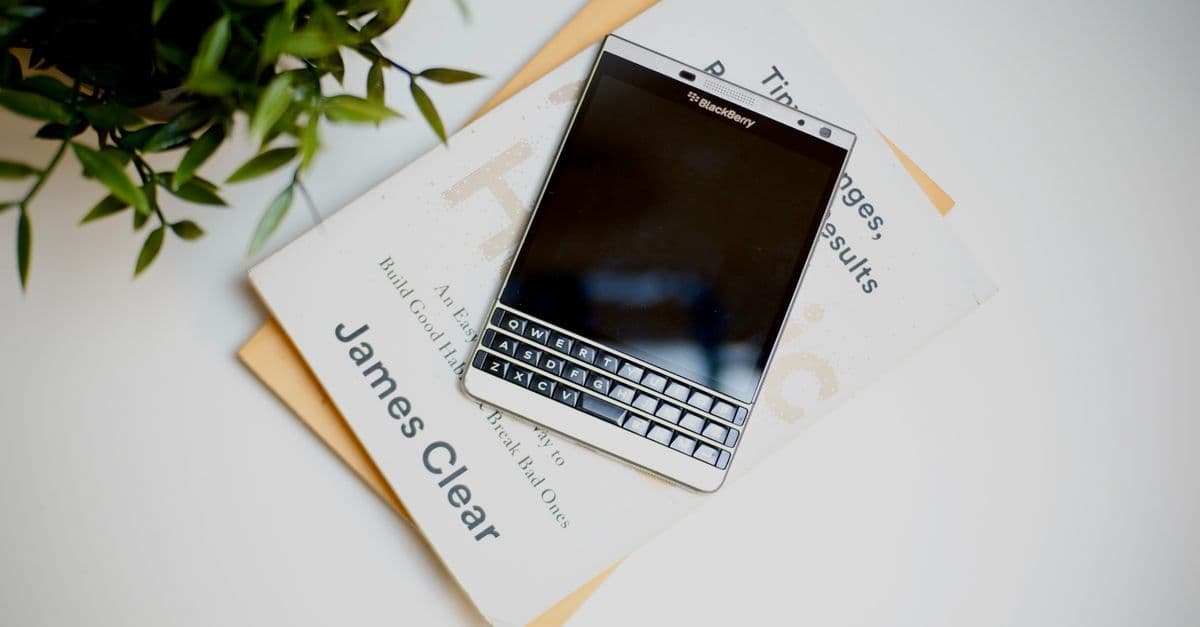
Tactile keys did something touchscreens can't fully replicate: they let fast typists compose messages without looking at their fingers. On a BlackBerry, a professional could draft a full email during a meeting and appear entirely present throughout. That wasn't a convenience feature. For people whose careers ran through their inboxes, it was close to a superpower.
The security layer made these devices boardroom-ready. BlackBerry Enterprise Server encrypted communications end-to-end before most executives understood why encryption mattered. IT departments could enforce password policies, restrict app installations, and remotely wipe a lost handset. Corporate trust wasn't earned through marketing. It was earned through IT sign-off.
"CrackBerry" wasn't a marketing term. Users invented it.
The nickname was accurate. Consultants, lawyers, traders, and politicians described checking messages as reflexive, barely voluntary. The physical keyboard turned a communication tool into something the body maintained almost without conscious input, and the device became inseparable from professional identity in a way no phone had managed before.
Why Did BlackBerry Phones Disappear?
BlackBerry phones disappeared because the iPhone disrupted the smartphone market before RIM could mount a credible response, and the developer ecosystem that followed iOS and then Android made recovery practically impossible. By the time RIM's full software overhaul shipped, the competitive window had closed and app-catalog parity was out of reach.
The mistake wasn't missing the iPhone. It was dismissing it.
Mike Lazaridis, then co-CEO of RIM, reportedly told colleagues that Apple's new device couldn't work as marketed: the battery would die, the network couldn't support it, users wouldn't type on glass. That framing handed Apple and Google time to build an app ecosystem RIM never replicated.
Developers followed users. Users followed apps.
The App Store grew fast enough that a smartphone without compelling software started to feel like a compromise. BlackBerry's OS covered a fraction of iOS's catalog, and that gap widened every year. RIM's full competitive response, BB10, eventually shipped as a ground-up OS overhaul. It arrived far too late and never attracted the developer investment needed to close the distance.
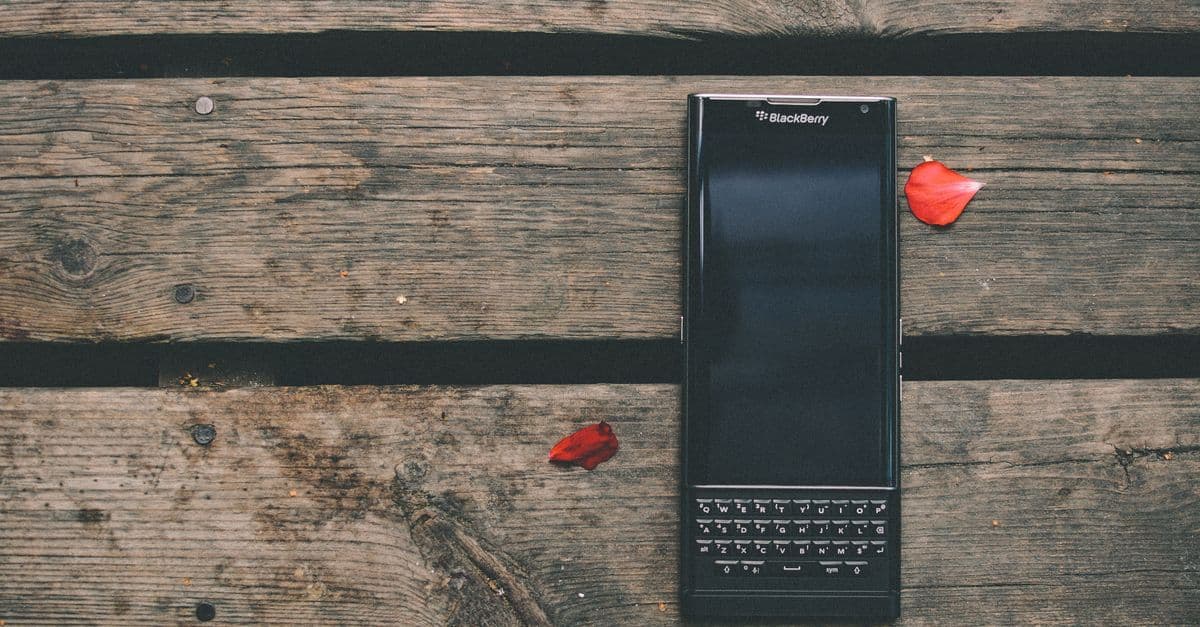
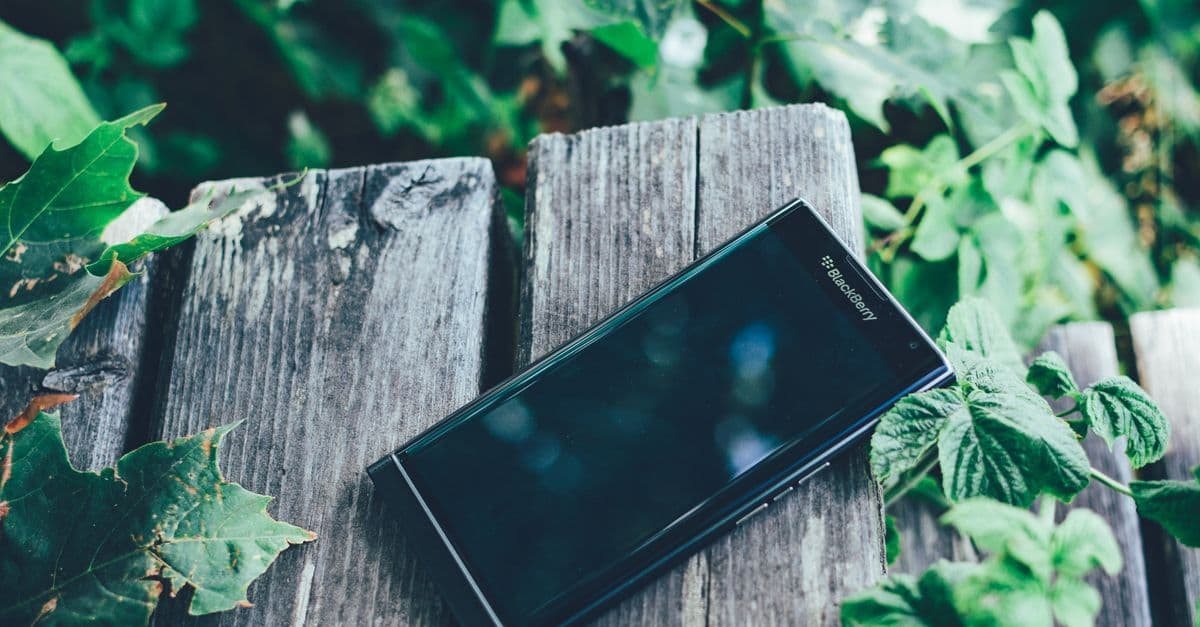
BlackBerry tried an Android pivot with the PRIV, running a physical keyboard on Google's operating system. Sales were modest. The company exited hardware design entirely, licensed the brand to TCL Communication, which produced three keyboard phones before walking away.
A startup called OnwardMobility announced a 5G BlackBerry revival. It dissolved without shipping a single device.
The hardware timeline:
Every BlackBerry ever made also lacks eSIM (the built-in digital SIM activated by a QR code) support. For international travelers who rely on swapping digital carrier profiles at the border without touching a physical SIM card, that's a genuine hardware constraint on any legacy device. HelloRoam's(https://www.helloroam.com/what-is-an-esim) guide explains how the technology works on current phones, which matters for anyone evaluating modern keyboard-phone alternatives.
No active BlackBerry phone licensee exists as of mid-2026. The entire device ecosystem went dark in early 2022, leaving keyboard loyalists with nothing new to buy.
Which leaves an obvious question: what physical keyboard phone options actually exist in 2026?
What BlackBerry Phones Can You Still Buy in 2026?
No new BlackBerry hardware has shipped since August 2020. TCL's licensing deal lapsed, the final units sold through retail, and production stopped. If you want one today, the secondary market is your only option.
Supply hasn't dried up entirely. The TCL KEY2 and KEY2 LE still circulate on refurbished marketplaces, and they're the most sensible targets if you want a BlackBerry phone that runs Android and has a working physical keyboard. Both accept a standard nano-SIM and represent the last devices manufactured before TCL's licensing agreement expired.
Older models surface regularly too. The KEYone, released in 2017, and the PRIV, BlackBerry's first Android handset from 2015, appear in used listings across major resale platforms. Refurbished units across the lineup run roughly $50 to $150, depending on condition and model. The KEY2 typically sits at the higher end of that range because it's the newest hardware in the bunch.
The build quality held up. These weren't cheap phones when they launched, and the physical construction shows it.
Where to find refurbished BlackBerry devices today
Three marketplaces carry the most reliable used KEY2 stock in the US: eBay, Swappa, and Back Market. Before you commit to a listing, run through these checks:
- Verify unlocked status. A carrier-locked KEY2 won't activate on a different network. The listing should explicitly state "factory unlocked" or "SIM-free." If it doesn't, ask the seller directly before buying.
- Confirm US LTE band support. Different carriers in the US operate on different frequency bands. Check your carrier's LTE band requirements against the phone's published specs before checkout.
- Read the condition grade carefully. Swappa's grading standards tend to be stricter than most eBay listings. Factor that difference in when you're comparing prices across platforms.
Can You Still Use a BlackBerry Phone for Daily Life?
BB10 and original BlackBerry OS (BBOS, the pre-Android operating system) devices stopped functioning as phones on January 4, 2022. BlackBerry Ltd. shut down the server infrastructure those operating systems depended on; calls, texts, and data stopped working that day. A non-Android BlackBerry is now a paperweight.
Android BlackBerrys are a different matter. The KEY2, KEYone, and PRIV still make calls, send texts, and connect to US carrier networks when the LTE bands align. That part works. The problems run three levels deeper.
Security patches stopped. Full stop.
These devices haven't received Android security updates in years. Running an unpatched Android phone as a primary device means accepting vulnerabilities that have been publicly documented and remain unaddressed. That's not a theoretical concern.
App compatibility has been eroding in parallel. Google Play updates stalled for BlackBerry Android handsets well before the hardware era ended. Apps that installed cleanly several years ago now fail on download or crash on launch. The slide has continued, not leveled off.
Banking apps have made daily use harder in practice than most listings acknowledge. Major US financial apps verify your Android version and security patch date before allowing login. Two-factor authentication apps follow the same logic. A BlackBerry KEY2 may not pass the device check at all, regardless of your login credentials.
Keyboard enthusiasts treat these phones as dedicated secondary devices, not daily drivers. That distinction matters.
Travel adds a separate hardware problem on top of all that.
Staying Connected When Your Phone Lacks eSIM Support
An eSIM (embedded SIM, a digital profile stored in the phone's chip and activated by scanning a QR code) ships as standard hardware on most flagship smartphones sold in recent years. No BlackBerry model ever shipped with one.
For day-to-day domestic use, that's manageable. Android BlackBerrys accept a physical nano-SIM, and US carrier service works normally. The friction surfaces when you travel internationally.
Physical SIM swaps abroad take time. You land, clear passport control, then track down a carrier kiosk, buy a local SIM, and wait for activation. Global Entry gets you through customs in minutes; finding a working SIM kiosk can take far longer. An eSIM-capable phone skips all of it: buy a plan before you board (most eSIM apps accept Apple Pay or Google Pay), scan the QR code at the departure gate, and you're connected before your bag hits the carousel.
Here's how the two approaches compare for international trips:
For the complete activation walkthrough,(https://www.helloroam.com/what-is-an-esim) covers the process from QR scan to first signal.
The company that built the original hardware moved a long way from keyboards and nano-SIM trays.
eSIM support across BlackBerry device generations
Every BlackBerry device shipped with a nano-SIM tray, never an eSIM chip. The PRIV (2015), KEYone (2017), and KEY2 (2018) all required a physical card. The KEY2 added a second nano-SIM slot for dual-SIM use, but eSIM support never appeared in any generation.
That absence matters for travelers. Modern smartphones with eSIM can activate a travel data plan via QR code in minutes. BlackBerry hardware can't.
Here's a quick look at the SIM configuration across BlackBerry's Android lineup:
If you're buying a refurbished BlackBerry phone for international travel, plan around the physical SIM requirement from the start. The company behind those devices has moved into very different territory.
What Is BlackBerry the Company Doing Today?
BlackBerry Ltd. (NYSE: BB) no longer makes phones. The company carrying that name today is a cybersecurity and embedded software business, and the transformation is more complete than most people realize.
Zero hardware revenue. That's been true since 2020, and it's not coming back. BlackBerry now earns its living from two main product lines: QNX, a real-time operating system (RTOS) embedded in over 235 million vehicles, and Cylance, an AI-powered endpoint security platform the company acquired for roughly $1.4 billion in 2019.
QNX runs inside Toyota, BMW, Ford, and Volkswagen infotainment and safety systems. It's the kind of software most drivers never know exists but trust every time a car responds to a brake input or a lane-departure warning. Cylance competes with CrowdStrike and SentinelOne in enterprise security, a market where BlackBerry's brand carries less weight than its algorithms.
Annual revenue now runs between $500 million and $600 million, almost entirely from software contracts. BlackBerry has signaled it's exploring a separation of the QNX and Cylance business units, which would divide a company that spent years trying to unify those businesses under one roof.
Still have questions? The most common ones are below.
QNX: the real-time OS inside 235 million vehicles
QNX is a real-time operating system (RTOS) embedded in over 235 million vehicles, including Toyota, BMW, Ford, and Volkswagen models, running inside infotainment stacks, safety controllers, and driver-assistance software that drivers interact with every day.
QNX isn't software most people have heard of. That gap between obscurity and importance is the point.
Real-time operating systems like QNX power functions where a half-second delay is a safety failure: airbag deployment triggers, adaptive cruise control, lane-centering algorithms. Most general-purpose operating systems can't make that guarantee. QNX was built for exactly that.
As of mid-2026, QNX is BlackBerry's most strategically valuable asset. The vehicle footprint described above isn't something competitors can replicate quickly. It represents decades of automotive certification and deeply embedded OEM relationships built into production lines worldwide.
Reviewed by HelloRoam's editorial team. Last updated: 27 June 2026.
Get Connected Before You Go





Frequently Asked Questions
A BlackBerry phone is a keyboard-focused smartphone originally made by Research In Motion (RIM). The brand captured roughly 50% of the US smartphone market in 2008 before hardware sales ended in August 2020.
No new BlackBerry hardware has shipped since August 2020 when TCL's licensing deal expired. No active phone licensee exists as of mid-2026, making the secondary market the only source for BlackBerry devices.
Android BlackBerry models like the KEY2 still make calls and send texts, but security patches have stopped and app compatibility continues to erode. They are best used as secondary devices, not daily drivers.
No BlackBerry phone has ever included eSIM support. All models including the PRIV, KEYone, and KEY2 use physical nano-SIM cards only, which limits options for international travelers needing quick carrier switching.
BlackBerry shut down its legacy network infrastructure on January 4, 2022, cutting off all BlackBerry OS and BB10 devices from calls, texts, and mobile data. Non-Android BlackBerry phones are now non-functional.
BlackBerry declined after dismissing the iPhone's threat in 2007, allowing Apple and Google to build app ecosystems RIM never replicated. By the time BB10 launched in 2013, the competitive window had closed.
The TCL KEY2 and KEY2 LE are the most recommended refurbished BlackBerry options, as they run Android with a physical keyboard. Refurbished units typically cost $50 to $150 depending on condition and model.
Refurbished BlackBerry phones are available on eBay, Swappa, and Back Market. Always verify the phone is factory unlocked and confirm LTE band compatibility with your carrier before purchasing.
Android BlackBerry phones work abroad via physical nano-SIM, but lack eSIM support. Travelers must purchase a local SIM at an airport kiosk on arrival instead of activating a travel plan before departure.
The BlackBerry KEY2 uses dual nano-SIM slots and does not support eSIM. International travelers must purchase and activate a physical local SIM card upon arrival at their destination, with no remote pre-activation option.
eSIM-capable phones let travelers buy and activate a data plan before boarding by scanning a QR code, skipping airport SIM kiosks entirely. BlackBerry phones require an in-person physical SIM purchase on arrival.
Major banking apps verify Android version and security patch dates before allowing login. Since BlackBerry Android phones no longer receive security updates, they frequently fail device compatibility checks regardless of credentials.
The PRIV (2015), KEYone (2017), and KEY2 (2018) are BlackBerry's Android-based models. These can still connect to carrier networks, but security updates have stopped and app compatibility is steadily declining.
No. OnwardMobility announced a 5G BlackBerry revival but dissolved without shipping a single device. No active BlackBerry hardware licensee exists as of mid-2026.
BlackBerry Ltd. now operates as a cybersecurity and embedded software company with zero hardware revenue. Its main products are QNX software embedded in 235 million vehicles and Cylance AI-powered endpoint security.
BlackBerry controlled roughly 50% of the US smartphone market in 2008 and reported 80 million global subscribers by 2012. Annual revenue peaked near $20 billion in fiscal year 2011 before a sharp decline began.
BlackBerry Enterprise Server offered end-to-end encryption, remote device wipes, and IT policy enforcement before competitors matched it. The physical keyboard also allowed fast email replies without looking at the screen.
No. BlackBerry OS and BB10 devices lost all phone functionality on January 4, 2022, when BlackBerry dismantled its supporting server infrastructure. These legacy devices cannot make calls, send texts, or access data.
Sources
- en.wikipedia.org — en.wikipedia.org
- Communications Protected. Operations Orchestrated. — blackberry.com
- BlackBerry Classic Factory Unlocked Cellphone, Black — amazon.com