

Paris Weather at a Glance: Quick Planning Guide
Paris has an oceanic climate, mild and rarely extreme, with summer highs between 74°F and 79°F and winter lows near 35°F. The city sits at 48.9°N latitude, roughly the same as Vancouver, which explains the temperate year-round pattern. Despite a longstanding reputation for drizzle, Paris averages around 25 inches of rain annually, well below New York City's 46 inches accuweather.com.
Three months consistently stand out for trip planning: April, May, and September. Spring brings blooms and temperatures in the low-to-mid 60s°F, with enough daylight to stay out past dinner. September delivers warm afternoons, golden light, and a noticeable thinning of the tourist crowds.
Paris rain is real but brief. Showers arrive fast and typically clear within the hour, rather than settling in for grey all-day stretches. The city logs around 111 rainy days per year weather.com, but most pass quickly.
Key fact: HelloRoam's France eSIM starts at ~$3.49 for a day of unlimited data on Orange's 5G network, with full-speed access up to 2GB.
For a city built around walking, that forgiving climate is a genuine asset. Averages only tell half the story, though.
When Is Paris Weather at Its Best?
September is the locals' pick, and the data backs them up. Temperatures hold in the low-to-mid 70s°F, tourist density drops sharply from the August peak, and the afternoon light turns that warm gold that makes every corner of Montmartre look better than it has any right to.
Each season carries trade-offs worth understanding before you book flights.
Spring (April and May) delivers the most photogenic version of Paris. Highs climb from the low 60s°F in April to the upper 60s°F in May, parks bloom, and crowds build without hitting summer intensity. Rain showers are common but short.
August brings peak sunshine and peak congestion. Many Parisians actually leave the city in August, and a significant number of neighborhood restaurants and specialty shops close for weeks at a stretch. If you want sun and don't mind the Louvre queue stretching across the courtyard, August works fine. If you want Paris to feel like itself, it's the wrong month.
January and February offer the lowest prices and fewest crowds. Cold, yes, with nighttime lows well below 40°F, but the museums and cafés stay open. The Musée d'Orsay without a 90-minute queue is worth the coat.
December sits in its own category. Cold and grey most days, but the Christmas markets and the lighting strung across the main boulevards create real atmosphere. Transatlantic fares from US cities tend to dip in December more than at almost any other point in the calendar.
Month-by-month data sharpens this picture considerably.
Paris Weather by Month: Temperature, Rain, and Sunshine Data
According to weather.metoffice.gov.uk, Paris is sunnier and drier than its reputation suggests, and the monthly figures confirm it. February is the driest month of the year, with just 1.5 inches of rainfall. June and July both reach 218 sunshine hours, the highest monthly totals of the year.
One figure in this table warrants real attention from summer planners. On July 25, 2019, Paris hit an all-time high of 108.7°F during a record European heatwave accuweather.com. The city wasn't designed for that kind of heat. Air conditioning remains uncommon in most mid-range hotels and residential rentals, which means that number isn't purely historical for anyone booking late July.
Snow tells a very different story. Paris averages around 15 snowy days per year theweathernetwork.com, and on most of them the snow clears before noon. The city runs normally in conditions that would shut down much of the US Midwest.
Good data still leaves the packing question open.
Staying Connected in Paris: eSIM, SIM Cards, and WiFi
Paris Metro WiFi covers select lines but drops out frequently enough to be unreliable for navigation or real-time translation. Cellular data on Orange's 5G network, which covers central Paris and the main tourist zones, is the more dependable choice for anyone building a day around maps, restaurant lookups, and language apps.
Rainy days sharpen this dependency. When you're ducking into covered passages, pivoting between arrondissements mid-afternoon, and pulling up last-minute reservations, data use spikes in ways a morning hotel WiFi session won't offset.
Buying a local SIM card in France requires in-store identity verification at a carrier shop, typically adding 30 to 45 minutes to your Charles de Gaulle arrival routine. Even with Global Entry cutting customs time down to a few minutes, a carrier queue undoes that advantage fast.
eSIM removes it entirely. Install the profile before departure, and the connection activates on landing. HelloRoam's eSIM for France runs on Orange's 5G network with plans from ~$3.99 for 1GB over 7 days up to ~$13.99 for 10GB over 30 days. Activation is a QR code scan, no kiosk visit or physical card required.
Key fact: HelloRoam's France 10GB plan costs ~$13.99 for 30 days on Orange's 5G network, enough data for most two-week Paris itineraries with room to spare.
AT&T, T-Mobile, and Verizon offer international day passes that add up quickly on a longer stay. For a short trip where hotel WiFi covers your evenings, those can suffice. For anything over five or six days, a dedicated France eSIM plan makes the cost math work in your favor.
Plan sorted. Now pack for the forecast.
What to Pack for Paris Weather Each Season
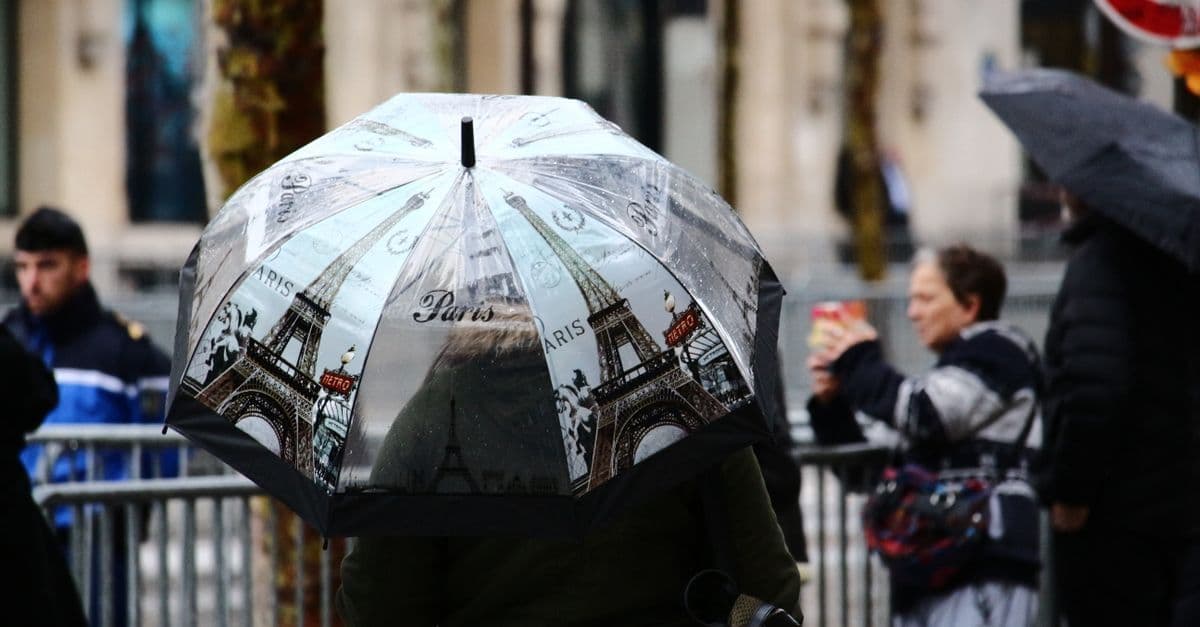
Pack layers and a compact umbrella, regardless of which season brings you to Paris. The rain arrives fast and clears fast (a brief, heavy shower, not a grey all-day drizzle), which makes a fold-flat umbrella far more useful than a bulky rain jacket taking up half your bag. Season-specific additions follow, but those two items form the foundation year-round.
The biggest packing myth: you need head-to-toe rain gear for Paris. You don't.
Spring and Autumn
These two seasons demand identical logic: layers. Morning and afternoon temperatures can feel like different climates on the same day, especially in April and October. A merino cardigan over a light shirt under a cotton jacket covers the full range without adding meaningful weight. Pack this combination twice and you'll handle both seasons without rethinking your bag at the door each morning.
Summer
Linen or lightweight merino handles Paris days well. Both breathe, hold their shape across a full day of walking, and don't show the wear of a crowded Métro car on a warm afternoon. The detail most visitors don't anticipate: museums run cold. Sainte-Chapelle and the Louvre crank the air conditioning hard enough that a light sweater isn't optional, it's necessary.
Winter
Three items earn their weight in your bag: a wool coat rated for sustained cold (not fashion-weight wool), waterproof ankle boots (Paris sidewalks pool standing water fast after rain hits stone), and a thermal base layer for days when temperatures barely clear freezing. That's the complete system.
Skip the expedition parka unless a genuine cold snap hits during your dates. Paris winters run considerably milder than Chicago or New York, and standard layering covers the vast majority of winter visits.
Weather shapes your itinerary too, not just your bag.
How Paris Weather Shapes Your Sightseeing Plans
The Louvre, Musée d'Orsay, and Center Pompidou each absorb a full day, and rainy weather redirects outdoor visitors indoors, thinning queues at outdoor sites by afternoon. A rainy morning in Paris isn't a setback. It's an invitation to walk straight in without competing with the outdoor crowds.
Versailles is the rain-sensitive exception. The gardens are what justify the trip out there. Two-plus hours of outdoor walking across the grounds is the point, not just an option. Check the forecast before you book the RER. A cloudy sky with dry conditions works fine. A soaking rain does not.
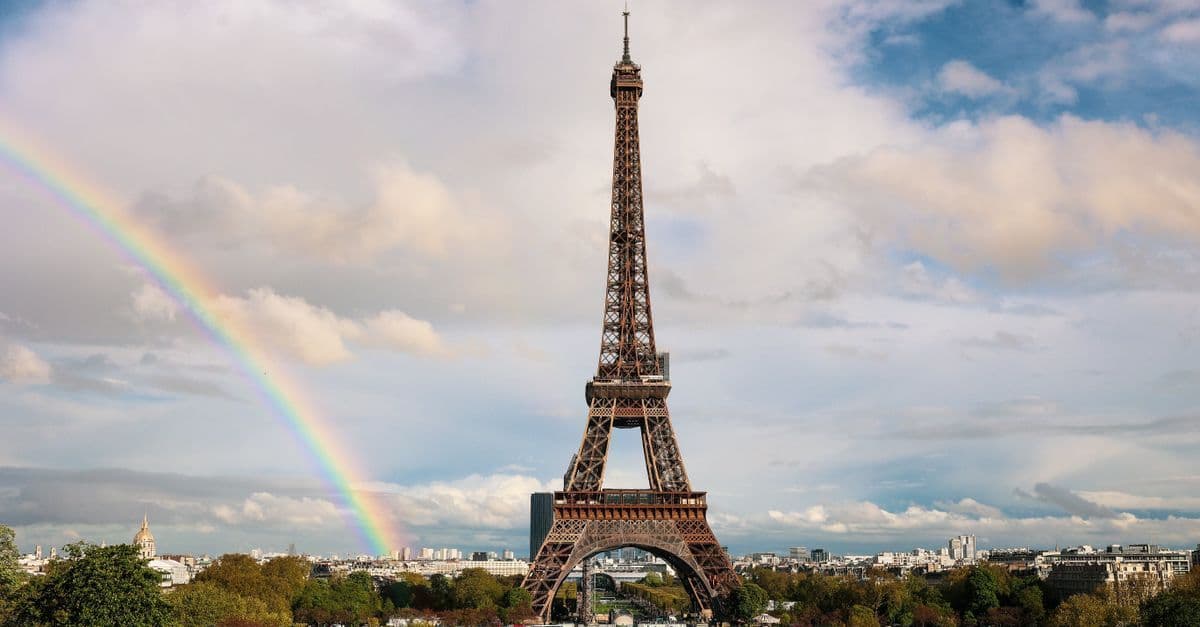
Eiffel Tower views run sharpest on low-humidity autumn mornings, when the air above the Seine sits clear and sightlines stretch for miles. Summer haze dulls those views noticeably, which matters if you're planning the observation deck. An early slot in September or October makes a striking difference compared to a humid July afternoon.
The surprise is in Montmartre. Overcast light makes street photography there better, not worse. Harsh midday summer sun drives deep shadows between buildings and blows out the white-painted facades of the Sacré-Coeur district. A flat grey sky diffuses everything evenly and makes each frame look considered. Street photographers know this. Most tourists plan around sunshine instead.
Seine boat tours add one more forecasting variable nobody mentions. Rain cancellations are uncommon, but high winds ground river departures more often than showers do. Before booking an evening cruise, check the wind forecast, not just the rainfall total.
A few questions from US travelers come up every time they're planning a Paris trip.
Paris Weather FAQ
Does Paris get snow?
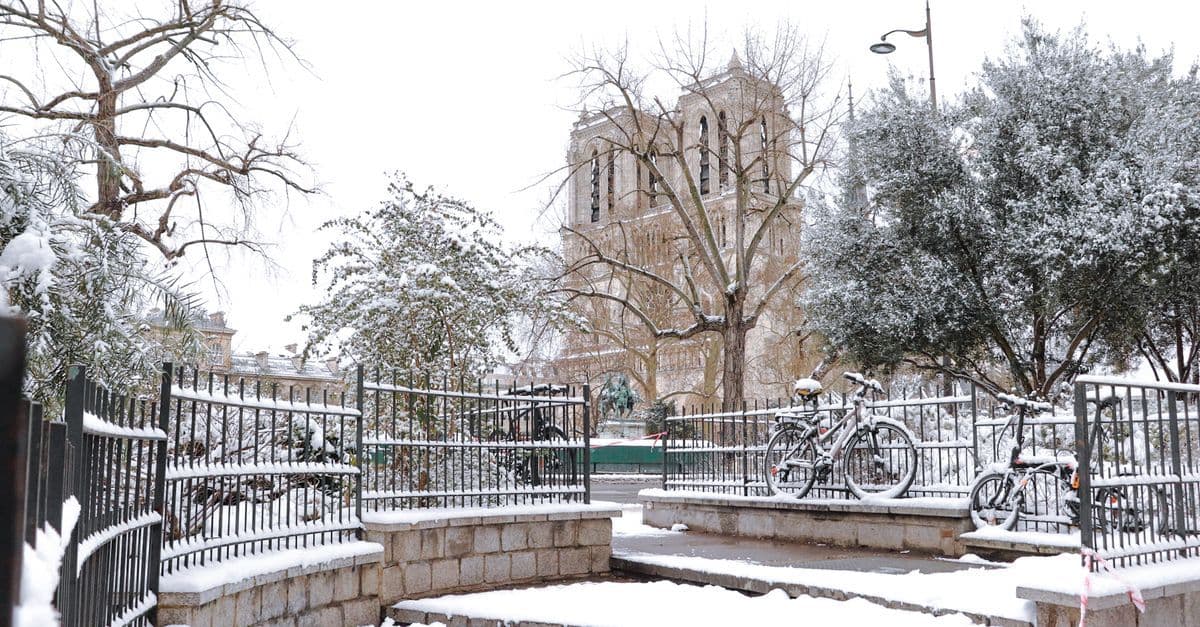
Rarely, and it rarely sticks. Paris averages around 15 snowy days per year, but meaningful accumulation is the exception. Most snowfall melts within a day of landing on the city's stone streets. Visiting in January or February gives you a small chance of catching a light dusting on Haussmann facades. Don't structure your itinerary around it. Paris winter is grey, cold, and atmospheric, but not typically white.
Should I worry about heat waves?
Yes, and with good reason. In 2019, Paris hit 108.7°F, a record that caught the city without adequate cooling infrastructure. Older hotels and most Métro lines still run without air conditioning. If you're visiting in July or August, confirm your accommodation has A/C before you book (not assumed, confirmed), and carry water on any day with a warm forecast. The risk stays low in most summers, but 2019 set the planning benchmark.
Which months see the most rain?
May and October average the highest monthly rainfall totals wunderground.com, but the margins across the calendar are small. Paris doesn't have a wet season in any traditional sense. The driest stretch runs from late January through early March, and even then the difference is modest. Rain is consistent, brief, and manageable across all twelve months.
Is September actually as good as people say?
Yes. Comfortable temperatures, noticeably fewer tourists than peak summer, and afternoon light that makes Paris's stone buildings look their absolute best. The one caveat: some smaller restaurants and boutiques that closed for August may not have fully reopened in the first week of September. Give it ten days into the month and the city is fully back.
What is the temperature in Paris for the next 2 weeks?
In June, Paris averages 74°F highs and 56°F lows weather.com, putting most days in a comfortable range for full-day walking without serious heat. Occasional afternoon thunderstorms can push humidity up quickly in summer. For live 14-day conditions, Météo-France and Weather.com both update daily and reflect local patterns reliably. Summer forecasts in Paris shift faster than the monthly averages suggest, sometimes within 48 hours of a system moving through, so recheck outdoor plans the morning of each activity rather than the week you book them.
What is frowned upon in Paris?

Skipping "Bonjour" before any request, raising your voice in a bistro, and photographing strangers at a market without permission are the three fastest ways to earn cold treatment in Paris. Sidestep all three and the tone of your reception changes.
The Bonjour rule isn't arbitrary. It acknowledges another person before asking anything of them, and that one word resets the whole exchange.
American conversational volume lands differently in a Parisian cafe, so lower it by half. Social awareness gets you warmth. Spatial awareness keeps you safe.
Where not to go in Paris right now?
The Sacré-Coeur steps in Montmartre and the RER B train between Charles de Gaulle Airport and central Paris carry the highest pickpocket concentration in the city. Knowing those two spots lets you find the Paris you came for.
Active vigilance, not general tourist caution.
Pull up the US State Department's France advisory page before booking, then recheck 48 hours before departure. Advisories can shift between when you book and when you fly. Transit strikes can shut down Metro lines with little warning. Track disruptions through French news sources in real time.
Reviewed by HelloRoam's editorial team. Last updated: 19 June 2026.
Get Connected Before You Go


Frequently Asked Questions
In June, Paris averages 74°F highs and 56°F lows, ideal for full-day walking. Summer forecasts shift quickly, so recheck conditions the morning of each activity rather than the week you book.
Skipping 'Bonjour' before any request, raising your voice in a café, and photographing strangers at a market without permission are the fastest ways to earn cold treatment from locals.
September is the locals' pick: temperatures hold in the low-to-mid 70s°F, tourist crowds thin sharply after August, and the afternoon light makes Paris's stone buildings look their absolute best.
The Sacré-Coeur steps in Montmartre and the RER B train between Charles de Gaulle Airport and central Paris carry the highest pickpocket concentration in the city.
Paris averages around 15 snowy days per year, but meaningful accumulation is rare. Most snowfall melts within a day on the city's stone streets.
Yes. In 2019, Paris hit 108.7°F and most hotels lack air conditioning. Confirm your accommodation has A/C before booking July or August and carry water on any day with a warm forecast.
May and October average the highest monthly rainfall, but Paris has no true wet season. Rain is brief year-round, with the driest stretch running from late January through early March.
Yes. September offers comfortable low-to-mid 70s°F temperatures, fewer tourists than August, and golden afternoon light. Most restaurants and boutiques reopen fully about ten days into the month.
February is the driest month, averaging just 1.5 inches of rainfall. The driest overall stretch runs from late January through early March, though monthly differences are modest across the year.
Paris averages around 25 inches of rain per year, well below New York City's 46 inches. The city logs about 111 rainy days annually, but most showers pass quickly within the hour.
Pack layers: a merino cardigan, light shirt, and cotton jacket handle wide temperature swings between morning and afternoon. A compact fold-flat umbrella is essential, as showers arrive fast but clear quickly.
Bring a wool coat rated for sustained cold, waterproof ankle boots for wet stone sidewalks, and a thermal base layer. Paris winters are milder than Chicago or New York, so standard layering covers most visits.
June and July are Paris's sunniest months, each reaching 218 sunshine hours. May is close behind at 210 hours, making late spring and early summer the brightest period of the year.
August brings peak sunshine but also peak crowds, and many local restaurants and shops close as Parisians leave the city. Visitors wanting an authentic Parisian experience are better served by September.
Yes. Paris Metro WiFi drops out frequently, making cellular data the more reliable option for navigation, translation apps, and pulling up last-minute reservations throughout the day.
Buying a local SIM in France requires in-store identity verification, typically adding 30 to 45 minutes at Charles de Gaulle. An eSIM installed before departure activates on landing with no kiosk visit needed.
Sources
- Daily ForecastLocationInvalides, 7th arrondissement, Île-de-France, France· as of12:35 AM UTC — weather.com
- Paris, France 10-Day Weather Forecaststar_ratehome — wunderground.com
- Paris, IDF, FR 14 Days Weather — theweathernetwork.com
- Paris, Ville de Paris, France Weather Forecast — accuweather.com
- Paris 7, 10 & 14 Day Weather Forecast — thomascook.com
- Paris (France) weather — weather.metoffice.gov.uk