

Things to Do in Paris: the Essential 2026 Guide

Emily Thornton
Written by: Emily Thornton
Published date
Updated:
Reading time

14 min read

Things to Do in Paris: the Essential 2026 Guide

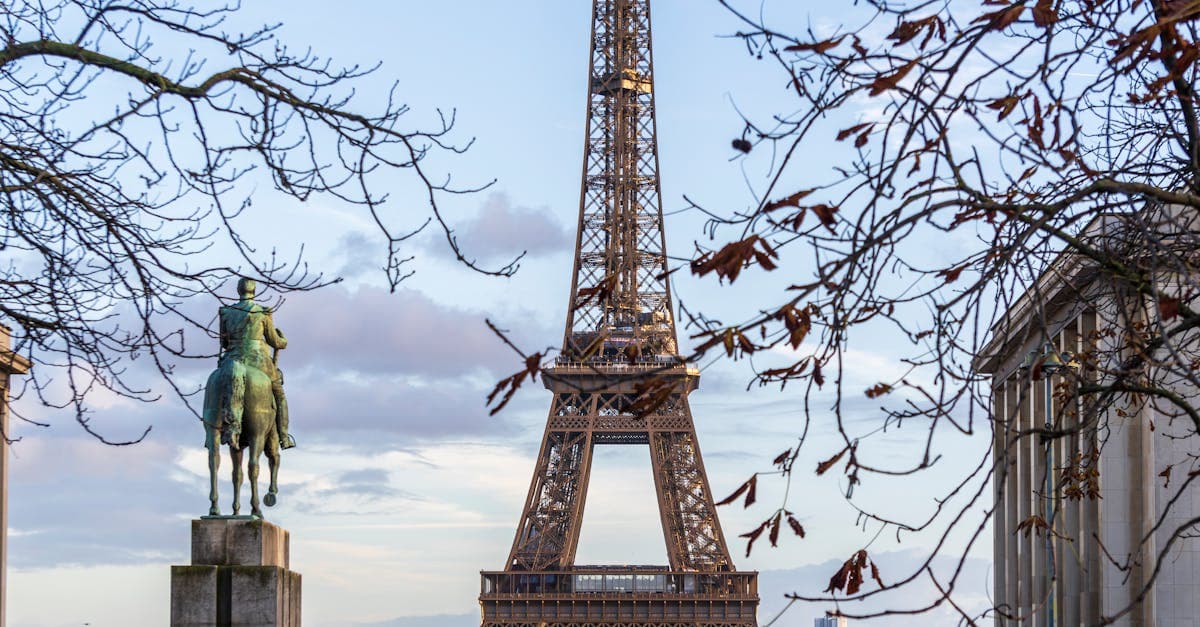
![Eiffel Tower rising above bare winter trees and a classical statue in Paris! image

Get your eSIM for France before you travel.

Paris packs its most essential things to do into a compact, connected area. The Louvre, Musée d'Orsay, Saint-Chapelle, Notre-Dame, and the Arc de Triomphe all sit within a few Métro stops of each other, and three to five days covers the essentials without feeling pressured. A Seine cruise from Pont de l'Alma gives solid orientation from the water.

The top picks in practical order:

  • Louvre: The world's most visited museum. Book at least two weeks ahead in summer; walk-up queues stretch well beyond an hour.
  • Musée d'Orsay: The finest Impressionist collection in Europe, consistently less crowded than the Louvre.
  • Saint-Chapelle: 13th-century Gothic stained glass that most visitors overlook in favour of bigger names nearby.
  • Seine cruise: Bateaux Mouches departing every 30 minutes offer the clearest view of the city's river-facing monuments.

According to mywanderlustylife.com, the Paris Museum Pass spans more than 50 museums and monuments, cuts queuing time at the busiest sites considerably, and includes priority entry at many of them. For three or more museums in one trip, buying individually rarely makes financial sense.

April to June and September to October offer the most settled visiting conditions [dangerous-business.com. July and August push crowds and queues to their highest.

Post-Brexit roaming changes mean EE, Three, and Vodafone all apply daily fees in France. A week in Paris adds up faster than most people expect. HelloRoam's [eSIM for France keeps connectivity costs transparent, with no carrier surprise charges waiting when you land back at Heathrow.

Here is what each of those actually involves.

![Louvre Pyramid glowing at night beside the illuminated Palace in central Paris! image

Paris's essential museum and monument visits are the Louvre, Musée d'Orsay, Saint-Chapelle, Arc de Triomphe, and Notre-Dame. These five anchor any first-visit itinerary. The city's broader collection, seven institutions each of which would headline a smaller capital's cultural offering, fills the surrounding days without effort.

The Louvre holds around 35,000 works across its permanent galleries, which creates its central challenge. A full circuit is a multi-day exercise. Most visitors benefit from targeting two or three rooms with clear purpose: the Denon Wing covers the Mona Lisa, Winged Victory, and Venus de Milo; the Richelieu Wing handles Dutch and Flemish masters. Walk-up entry in summer tests patience considerably. Booking in advance remains the more sensible approach year-round, not just during school holidays.

Musée d'Orsay makes a quieter case for itself. According to bloggeratlarge.com, the Impressionist collection spanning Monet, Renoir, Degas, and Cézanne is the finest in existence. Queues run shorter. The building, a converted Beaux-Arts railway terminus on the Left Bank, is an attraction in its own right.

Quiet. Precise. Profoundly good.

That description fits Musée de l'Orangerie even better. Monet's Water Lilies occupy two oval rooms in the Tuileries gardens, designed specifically around the eight panels at the artist's direction. Most visitors walk past the entrance entirely. It remains the most consistently overlooked significant artwork experience in the city.

Arc de Triomphe rewards the climb for the rooftop view across the twelve radiating avenues of the Place de l'Étoile. EU citizens under 26 enter free; others pay the standard admission. The surrounding Champs-Élysées crowd is thicker, but the monument itself earns its place on any careful itinerary.

Saint-Chapelle, tucked inside the Palais de la Cité on the Île de la Cité, is the most underrated monument in Paris [rachelirl.com. The upper chapel's stained glass windows date from 1248 and have no equivalent elsewhere in the city for precision of craft and quality of light on a clear afternoon.

Palais Garnier runs guided tours daily, with no opera ticket required. The grand foyer, mirror-lined halls, and Chagall's painted ceiling above the auditorium justify at least an hour of anyone's time.

Notre-Dame de Paris, restored and fully reopened after the 2019 fire, now draws significant queues. The rebuilt interior is more measured than many expected. Booking a timed visit in advance, where slots are available, is the sensible approach [bloggeratlarge.com.

Beyond the marquee names, a different Paris waits.

The best things to do in Paris beyond the standard circuit include Montmartre's village streets and working vineyard, the Jardin du Luxembourg, Parc des Buttes-Chaumont in the 19th arrondissement, and the Belle Époque brasserie Le Train Bleu at Gare de Lyon. These are the spots where crowds thin and the city stops performing for cameras.

Worth noting too: the dress code anxiety most British visitors arrive with dissolves within a day. Wear what you like; Parisians dress with intent, not rules.

Montmartre functions as a village above the city rather than a neighbourhood within it. Place du Tertre still draws working portrait artists alongside the expected tourist commerce, but the streets north of Sacré-Coeur clear out quickly. The Clos Montmartre vineyard occupies a small hillside plot, one of the few working vineyards remaining inside a European capital [dangerous-business.com. The Sacré-Coeur steps deliver the best free panorama of central Paris.

The Seine cruise deserves more credit than it typically receives. The riverfront view of Notre-Dame, the Conciergerie, and the Musée d'Orsay from water level is a distinctly different perspective from anything street-facing. Bateaux Mouches departs from the Pont de l'Alma embankment; the standard run takes roughly an hour.

Le Train Bleu inside Gare de Lyon is a Belle Époque brasserie dating from 1901. Ornate painted ceilings, gilt columns, and a menu that takes its time. No train ticket required to enter [rachelirl.com.

Jardin du Luxembourg is the more thoughtful afternoon stop over the Tuileries: better benches, cleaner light, and significantly fewer organised tours working their way through.

Parc des Buttes-Chaumont in the 19th arrondissement is where Parisians actually spend their weekends [rachelirl.com. The temple on the island, the suspension bridges, and the complete absence of tourist infrastructure make it feel unmistakably local. It's a 30-minute Métro ride from central Paris and worth every minute.

Starting with the hill that overlooks it all.

Walking Montmartre, exploring parks and joining a Seine cruise

![Tourists cruising the Seine River past elegant Parisian bridges and stone facades! image

Montmartre, the Jardin du Luxembourg, and a Seine cruise each offer a distinct experience from Paris's ticketed museum circuit. Montmartre rewards an early start: before 10am, the Place du Tertre tourist circuit hasn't assembled yet, the light falls at a lower angle across the cobbles, and the neighbourhood still belongs to its residents.

The detail most visitors miss: a working vineyard at Rue Saint-Vincent produces Pinot Noir in the centre of a major European capital. It's easy to walk past without registering it's there. In October, the neighbourhood marks the harvest with a street festival that most tourists visiting in summer never know exists [dangerous-business.com.

A Seine cruise earns its place on any sensible itinerary for one specific reason. It reorganises the city spatially in a way no map achieves. Roughly 70 minutes on the water shows how the Île de la Cité, the Eiffel Tower, the Louvre, and Notre Dame sit relative to each other, and the scale snaps into place the moment you're level with the riverbanks.

The Tuileries Garden and the Jardin du Luxembourg charge nothing to enter. Luxembourg particularly repays time: the Senate building as backdrop, beehives maintained by park staff, a model boat pond on Sunday afternoons. These aren't afterthoughts to pad an itinerary. They're as layered an experience as anything ticketed.

Le Train Bleu, the Belle Époque brasserie inside Gare de Lyon, needs no reservation and no museum pass. Walk in. Order coffee. Look at the ceiling.

Paris is also the ideal base for leaving it entirely.

![Panoramic view of the Paris skyline from the heights of Montmartre hill! image

The four most rewarding day trips from Paris are Versailles, Giverny, Chartres, and Reims. Each is reachable in under an hour by public transport. Mont Saint-Michel is achievable, but belongs to a different category of effort entirely.

Versailles sits 40 minutes south on the RER C. The practical detail worth knowing before you book: the palace and the gardens require separate tickets [mywanderlustylife.com. The garden ticket alone covers the formal parterres, the orangery, and the Grand Canal, and on a clear afternoon it's more rewarding than the crowded palace interior. Crowds thin noticeably after 3pm.

Giverny requires more planning than most visitors realise. Monet's house and water garden open in April and close in October, with nothing accessible through winter [dangerous-business.com. Come in May or June for the wisteria at full flower. Late September is passable but the water lilies are well past their peak by then.

Chartres makes a considered case for those who've spent enough time in Paris museums. The medieval cathedral is 55 minutes from Montparnasse and represents, by the assessment of most architectural historians, the finest surviving Gothic structure in France [bloggeratlarge.com. A half-day return trip is entirely sensible.

Reims adds a dimension Paris can't offer: Champagne cellars tunnelled into chalk beneath the city, open year-round. The TGV from Paris Est reaches Reims in 45 minutes, which makes a morning departure and a relaxed evening return a realistic proposition.

Mont Saint-Michel runs to 3.5 hours each way from Paris by train. Feasible. Tiring. The right choice for a dedicated trip, not something to graft onto an already full Paris week.

The true non-negotiables deserve a direct answer.

What can I not miss in Paris?

![Louvre Museum glass pyramids surrounded by crowds on a bright sunny day in Paris! image

No itinerary covers everything. The minimum shortlist, if time is the real constraint, is the Louvre, Musée d'Orsay, Montmartre, and Saint-Chapelle. That's already three full days if approached with any care rather than rushed through.

A single Seine cruise provides the clearest spatial overview of how the city is actually arranged. Nothing else gives the same sense of where the major sites sit in relation to each other, and it costs less than almost any other ticketed experience on offer.

Le Marais deserves half a day minimum. The Place des Vosges, Paris's oldest planned square, dating to 1612, repays time even without entering a single building [rachelirl.com. On a Sunday morning, the Marché des Enfants Rouges is the considered choice for food lovers: cheese vendors, Moroccan street food stalls, and an atmosphere that remains resolutely local rather than staged for visitors.

The Palais Garnier is the sleeper pick.

The interior tour of the Paris Opera covers the backstage areas, the chandelier hall, and Marc Chagall's painted ceiling above the auditorium. It's quietly spectacular in a way the Louvre queues are not. Consistently overlooked. Rarely crowded. Worth booking ahead, but not always necessary.

Paris's five headline landmarks warrant their own summary.

What are the big 5 in Paris?

Paris's five landmark sites are the Eiffel Tower, the Louvre, Notre Dame Cathedral, the Arc de Triomphe, and Sacré-Coeur. Each merits a slightly different approach than the one most first-time visitors take.

The Eiffel Tower reads better from the Trocadéro esplanade, across the Seine, than from the base. Up close, the structure fills the frame and loses context. From the Trocadéro, the full silhouette resolves against the sky, which is the version in every photograph worth keeping.

According to tripadvisor.ca, the Louvre covers 72,000 square metres, making it the world's largest art museum by floor space. That scale works against the visitor who tries to cover it comprehensively. Two focused wings, properly absorbed, beat six hours of walking exhaustion through galleries that start to blur together.

Notre Dame Cathedral completed its restoration and reopened in December 2024, five years after the fire destroyed the spire and gutted the nave. The interior is more vivid than many visitors expect: stonework cleaned for the first time in generations, the rose windows clarified, the whole building carrying a distinct sense of the rebuild [bloggeratlarge.com.

The Arc de Triomphe stands at the junction of twelve converging avenues. Napoleon commissioned it in 1806; he didn't live to see it finished. Summit access is free for visitors under 26.

Sacré-Coeur's forecourt terrace offers an unobstructed view across most of central Paris. No ticket required.

One more visitor question comes up reliably.

Is it okay to wear red in Paris?

![Moulin Rouge windmill and neon-lit façade on a lively Pigalle street in Paris! image

Absolutely. Colour choice in Paris is entirely your own, and no cultural prohibition on red exists. The notion that Parisians enforce rigid unwritten rules about what visitors should wear is a myth, probably kept alive by travel columns with column inches to fill.

The idea that colour coordination matters here has little grounding in how Parisians actually dress. Practicality outranks presentation in daily life. Comfortable shoes, layers that work across variable spring weather, something reasonably tidy for a restaurant dinner. That's the considered summary of the actual approach.

Smart-casual suits the nicer brasseries and bistros well. Clean trainers, dark jeans, and a collared shirt or neat blouse handle most situations comfortably. Overly formal attire is unnecessary; Paris is relaxed by European city standards, and genuine dress codes, where they exist, appear explicitly in the booking terms.

Trainers are broadly accepted, including in moderately upscale venues. The one visible misstep is looking unprepared for the weather, particularly in April when temperatures shift by several degrees within the same afternoon.

So: wear red. Wear whatever you'd feel confident in at home. The more carefully considered wardrobe decision in Paris is footwear, because three days of serious sightseeing covers real ground.

Three days is enough to cover Paris's headline attractions without feeling rushed, provided timed-entry tickets are booked before you leave the UK. The Louvre, Musée d'Orsay, and Sainte-Chapelle all require reservations. Arriving without one doesn't just mean queuing; it can mean missing entry altogether.

Day 1: Louvre, Tuileries, Musée d'Orsay

Start at the Louvre before 9am. The morning window between opening and 10am is noticeably calmer, and three hours covers the permanent highlights without museum fatigue. Walk through the Tuileries Garden afterwards, then cross to the Musée d'Orsay for the afternoon. The Impressionist galleries on the top floor are the point.

Day 2: Montmartre, Le Marais, Pompidou Centre

Montmartre before 10am, Sacré-Coeur included. The neighbourhood shifts once the tour groups arrive. Le Marais in the afternoon offers a different register: covered passages, the Place des Vosges, the Jewish Quarter. End at the Pompidou Centre, whose rooftop terrace gives one of the more layered views across central Paris.

Day 3: Historic core and west

Sainte-Chapelle first thing, when the stained glass catches morning light at its most concentrated. The Arc de Triomphe in the afternoon; book roof access in advance, because the view along the Avenue des Champs-Élysées is sharper than the postcard version suggests. An evening near the Palais Garnier rounds the trip with some neighbourhood texture worth lingering in.

The Navigo Découverte pass

A Navigo Découverte weekly pass covers unlimited Metro and RER travel across Paris [bloggeratlarge.com. For three full days of movement between sites, it undercuts individual ticket costs and works on the RER C to Versailles if a day trip fits. Available at staffed Metro stations with a passport photo.

Most three-day Paris guides stop at the itinerary. What they don't address is staying connected while you follow it.

Staying connected in Paris: SIM cards, eSIMs and Wi-Fi

![Two travellers using smartphones on a Paris street at night, staying connected abroad! image

Paris has reliable 4G coverage across the city centre above ground. On the Metro, signal is more patchy; some lines carry it in stations but not between them. For navigation-heavy days of sightseeing, museum Wi-Fi is too inconsistent to depend on for maps and real-time directions.

Post-Brexit roaming charges apply on most UK carrier plans used in France as of early 2026. Three's Feel At Home plan includes EU data up to a fair-use limit, after which speeds reduce. EE's Roam Abroad and Vodafone's roaming add-ons both apply daily charges. For a week in Paris, those costs accumulate to more than most travellers notice until the bill arrives back home.

Three options compared

OptionUK carrier roaming (Three, EE, Vodafone)
Typical costCheck your plan; daily charges common
SetupNone
Works best forShort stays where EU roaming is included
OptionLocal SIM from tabac shops
Typical costAffordable; varies by operator
Setup20-30 min on arrival
Works best forBudget-conscious travellers with unlocked handsets
OptionTravel eSIM
Typical costCurrent France eSIM plans on HelloRoam
SetupActivate before boarding
Works best forMulti-day trips and dual-SIM setups

The dual-SIM case

Keeping a UK number active while using a French data plan matters more than it sounds. Banks send SMS verification codes to your registered UK mobile; without it, approving card payments abroad becomes unexpectedly complicated. A dual-SIM setup, one physical SIM for calls and texts, one eSIM for data, handles both without any additional hardware.

A local SIM from a tabac shop remains a workable option for shorter stays, though activation occasionally requires identification documents. For anything longer than a long weekend, HelloRoam offers France eSIM plans with transparent, fixed pricing and no mid-trip top-up surprises; see current France plans and pricing on HelloRoam for current options.

Reviewed by HelloRoam's editorial team. Last updated: 07 April 2026.

  • Esim Cape Town
  • Esim Atlanta
  • Esim Hawaii

Get Connected Before You Go

Emily Thornton, Travel Writer at HelloRoam
Emily Thornton is a travel writer at HelloRoam who covers travel connectivity and eSIM tips for international visitors. She writes about finding reliable data at outdoor events, during weekend city breaks, and on ferry and rail journeys. Emily keeps her tone friendly and jargon-free so any traveler can follow along.

Frequently Asked Questions

The minimum must-see list for Paris is the Louvre, Musée d'Orsay, Montmartre, and Saint-Chapelle, which together fill at least three full days. A Seine cruise is also essential as it gives the clearest spatial overview of how the city's major landmarks are arranged relative to each other. Le Marais and the Place des Vosges deserve at least half a day, and the Palais Garnier interior tour is a consistently overlooked highlight that rarely draws large crowds.

Three days in Paris covers the core essentials without feeling rushed. Day one works well for the Louvre and a Seine cruise; day two for Musée d'Orsay, Saint-Chapelle, and Notre-Dame; day three for Montmartre in the morning and Le Marais in the afternoon. Book the Louvre and any timed monument entry in advance to avoid losing hours to queues.

There is no restriction on wearing red or any particular colour in Paris. The dress code anxiety many visitors arrive with typically dissolves within a day. Parisians dress with personal intent rather than according to formal rules, and tourists wearing any colour are entirely unremarkable.

Paris's five landmark sites are the Eiffel Tower, the Louvre, Notre-Dame Cathedral, the Arc de Triomphe, and Sacré-Coeur. The Eiffel Tower is best viewed from the Trocadéro esplanade across the Seine rather than from the base, where the structure loses context. The Louvre covers 72,000 square metres, making it the world's largest art museum by floor space, so targeting two or three specific wings is more rewarding than attempting a comprehensive circuit.

Yes, booking the Louvre in advance is strongly recommended, particularly in summer when walk-up queues can stretch well beyond an hour. Booking at least two weeks ahead is advisable during peak season. The Paris Museum Pass also provides priority entry at many of the busiest sites and is worth considering if you plan to visit three or more museums.

The Paris Museum Pass covers more than 50 museums and monuments and includes priority entry at many of the busiest sites, cutting queuing time considerably. For visitors planning to visit three or more museums during their trip, buying individual tickets rarely makes financial sense compared to the pass. It is available in two, four, and six-day formats.

April to June and September to October offer the most settled visiting conditions in Paris. July and August push crowds and queues to their highest levels across all major museums and monuments. Visiting in spring or early autumn avoids the worst of the summer pressure while still offering reliable weather for outdoor sightseeing.

The four most rewarding day trips from Paris are Versailles, Giverny, Chartres, and Reims, all reachable in under an hour by public transport. Versailles is 40 minutes south on the RER C, Chartres is 55 minutes from Montparnasse, and Reims is 45 minutes by TGV. Giverny is only open from April to October and is best visited in May or June when the gardens are at their peak.

A standard Seine cruise from the Pont de l'Alma embankment takes approximately 70 minutes, with departures running every 30 minutes. It is genuinely worth including on any Paris itinerary because it reorganises the city spatially in a way no map achieves, showing how the Île de la Cité, the Eiffel Tower, the Louvre, and Notre-Dame relate to one another. It also costs less than most other ticketed experiences in the city.

Saint-Chapelle is a 13th-century Gothic chapel located inside the Palais de la Cité on the Île de la Cité, considered the most underrated monument in Paris. Its upper chapel contains stained glass windows dating from 1248 that have no equivalent elsewhere in the city for precision of craft and quality of light. Most visitors overlook it in favour of more prominent nearby landmarks, which means queues are typically far shorter.

Versailles is widely considered one of the most rewarding day trips from Paris and is reachable in 40 minutes on the RER C. The palace and the gardens require separate tickets, and on a clear afternoon the gardens alone, covering the formal parterres, the orangery, and the Grand Canal, can be more enjoyable than the crowded palace interior. Crowds thin noticeably after 3pm, making a later arrival a practical strategy.

Musée de l'Orangerie is located in the Tuileries gardens and houses Monet's Water Lilies across two oval rooms designed specifically to display the eight panels at the artist's direction. It is consistently described as the most overlooked significant artwork experience in Paris, meaning queues are far shorter than at the Louvre or Musée d'Orsay. Entry requires a ticket but the experience is considered exceptional.

Parc des Buttes-Chaumont in the 19th arrondissement is where Parisians actually spend their weekends and has no tourist infrastructure. It features a temple on a central island, suspension bridges, and open parkland that feels genuinely local. The Jardin du Luxembourg on the Left Bank is also a more considered alternative to the Tuileries, offering better benches, cleaner light, and fewer organised tour groups.

Le Train Bleu is a Belle Époque brasserie inside Gare de Lyon dating from 1901, featuring ornate painted ceilings, gilt columns, and a full menu. No train ticket is required to enter and no museum pass is needed; visitors can simply walk in and order coffee. It is considered one of the best examples of early 20th-century decorative dining rooms in the city.

Post-Brexit roaming changes mean major UK mobile carriers including EE, Three, and Vodafone now apply daily roaming fees when using your UK plan in France. A week in Paris can add up significantly faster than many travellers expect. Using a travel eSIM with a fixed data allowance is a common way to keep connectivity costs predictable and avoid unexpected charges on return.

Related Articles

Stay Connected with Travel Data
View all destinations
United States travel destination
United States flag
United States
United Kingdom travel destination
United Kingdom flag
United Kingdom
United Arab Emirates travel destination
United Arab Emirates flag
United Arab Emirates