

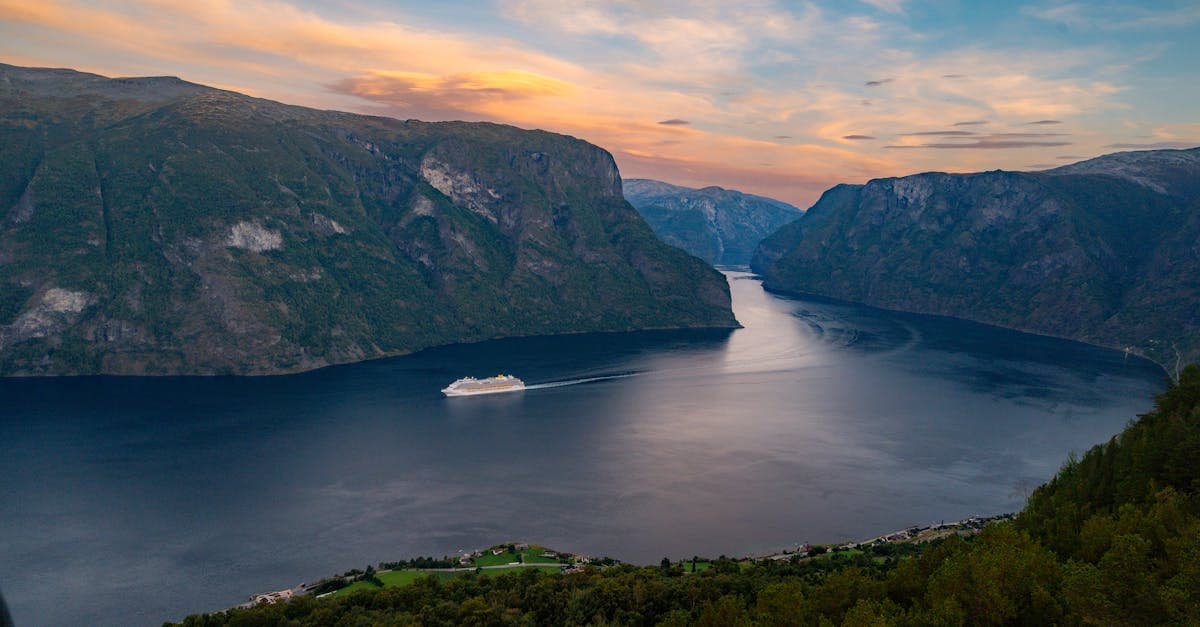
Norwegian fjords cruises at a glance
A Norwegian fjords cruise typically runs 7 to 14 nights, with most itineraries including at least one of Norway's UNESCO World Heritage fjords: Geirangerfjord or Nærøyfjord hayscruise.co.uk. Fares range from roughly £800 to around £3,000 per person, depending on ship, cabin grade, and departure port pocruises.com.
Southampton, Dover, and Newcastle all offer no-fly departures, making Fred Olsen and P&O the go-to lines for Britons who'd rather skip the airport entirely worldofcruising.co.uk.
Norway's zero-emission entry requirements are now in force for Geirangerfjord and Nærøyfjord, barring conventionally fuelled ships from those specific fjords. Itineraries that previously included both may have quietly substituted alternative stops. Check the small print on any sailing you're considering.
Norway sits in the EEA, not the EU. The roaming terms UK carriers advertise for France and Spain don't apply here. EE Roam Abroad and Vodafone UK's roaming add-ons charge daily rates in Norway; Three's Feel At Home covers EU destinations, not EEA-only countries. Sorting a data plan before departure is the sensible move.
Key fact: HelloRoam's Norway eSIM starts at ~£2.76 for 1GB over 7 days on Telia and Telenor networks, including 5G.
An eSIM for Norway costs considerably less than a single evening of ship Wi-Fi. Timing your trip changes everything about what you'll actually see.
What is the best month to cruise the Norwegian fjords?
June and July deliver the best weather and the midnight sun, with daylight stretching past 20 hours in northern Norway hurtigruten.com. November through February brings northern lights but colder temperatures and quieter ports. May and September sit in the shoulder season: lower fares, fewer crowds, and less predictable weather.
The difference between seasons is starker than most guides let on.
Summer (June to July): Peak season and pricey cabins, but you get the fjords in full green bloom with long, bright evenings. Popular itineraries tend to sell out by January; commit early or accept limited cabin choice.
Winter (November to February): Northern lights sailings attract a growing following. The fjords look dramatic stripped bare of foliage. The catch: zero-emission rules now constrain some itineraries to compliant vessels, so check which fjords your sailing actually enters before booking.
Shoulder (May and September): A tidy middle-ground for most travellers. Fares run lower than peak, Bergen and the main ports remain accessible, and the weather, while mixed, is rarely severe.
One detail most itineraries don't flag: summer sailings that include Geirangerfjord routinely book out months ahead. If you want a specific ship or cabin grade, the autumn before departure is when to commit.
Temperature next: warmer than most Britons expect, but with one genuine catch when you're standing on deck.
Is it warm on a Norwegian fjords cruise?
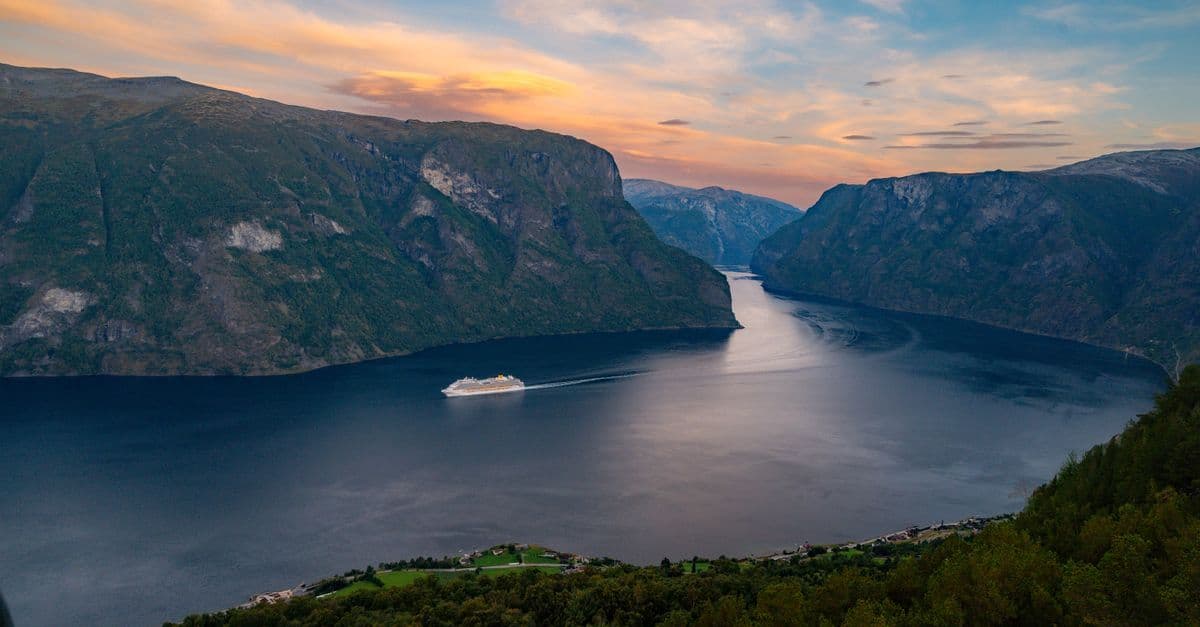
Bergen averages 18°C to 20°C in summer, which is warmer than many Britons anticipate travel.saga.co.uk. Tromso and the northern fjords run cooler, even in July. The thermometer figure is misleading on deck: the wind turns noticeably nippy the moment the ship picks up speed in open water. Layers are non-negotiable, whatever month you're sailing.
That's a practical truth the sun-drenched brochure photos never quite convey. A thin-but-warm layer in your hand luggage beats heavier clothing buried in the hold. Ship size shapes the experience as much as season does.
Big ship or small ship: which Norwegian fjords cruise suits you?
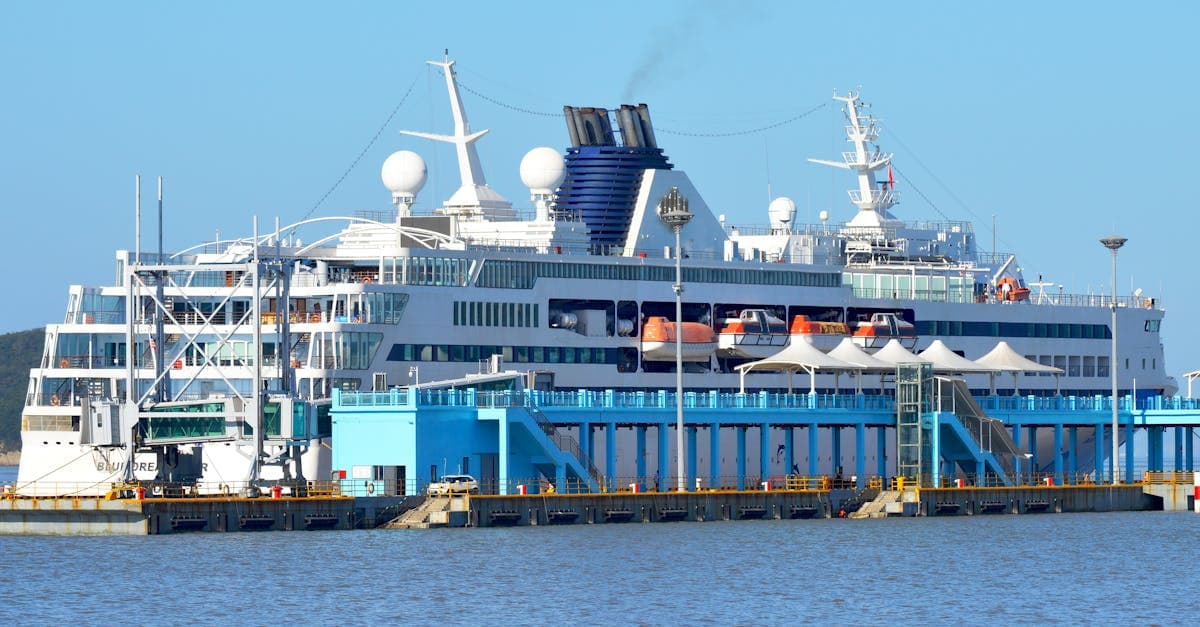
Large ships carry 2,000-plus passengers and can't always reach the most dramatic scenery on a Norwegian fjords cruise. That's the honest truth most brochures leave buried. Resort amenities, UK no-fly departures, and comfortable North Sea crossings are the clear strengths. The physical limitation is blunt: Nærøyfjord's narrowest channels and many innermost fjord arms are simply inaccessible to vessels of that size.
Expedition ships, capped at under 200 passengers, go precisely where large ships can't. They reach Undredal, the quieter Aurlandsfjord branches, and anchorages where the only sound is a waterfall and the occasional oar. Small-group shore programmes and naturalist guides come as standard. The price is real: expedition itineraries typically cost 20 to 40 percent more per night than comparable large-ship sailings, and most require a flight to Bergen or Oslo to embark.
Hurtigruten's classic coastal route sits in its own category. It's a working passenger ferry serving Norwegian communities, not a cruise ship in the traditional sense. Slower, cheaper, unpretentious. Embark in Bergen and sail north hurtigruten.com.
If you're booking from the UK and want to avoid a flight, the realistic options are mid-to-large mass-market vessels. The small-ship expedition market almost always requires an outbound flight. That's the practical constraint worth checking before you start comparing itineraries.
Whatever ship you choose, the mobile signal situation off Norway's coast is the next surprise worth understanding.
Staying connected during your Norwegian fjords cruise
Norway sits outside the EU, which means the post-Brexit free-roaming guarantee that covers France, Spain, and most of Europe doesn't apply here. EE Roam Abroad, Three's Feel At Home, and Vodafone UK all treat Norway under separate terms from their EU roaming packages. Before you board, check your specific tariff.
Many Britons only find this out when the charges appear on their next bill.
The ship Wi-Fi problem
Cruise ship Wi-Fi runs from around £20 to £60 per device per day. It works reasonably well in open water when the satellite connection holds, but it's not suited to navigation, video calls, or anything data-heavy. On a 10-night sailing, daily connectivity packages add up fast.
The signal reality
Bergen, Flam, and Alesund carry solid 4G and 5G coverage when you're docked. Between those stops, on open water and within the narrower fjord passages, signal drops sharply and often disappears entirely. Download offline maps through Maps.me or Google Maps before you leave the UK. That's not an optional extra; it's the practical standard for shore excursions in remote ports.
What actually works
An eSIM (a built-in digital SIM activated by QR code) connects automatically in Norwegian ports without a physical card swap. HelloRoam's Norway plans include a 5GB/30-day option at ~£7.50, running on Telia and Telenor networks with 4G and 5G coverage across the main cruise ports.
Key fact: HelloRoam's Norway 5GB/30-day plan costs ~£7.50, running on Telia and Telenor networks with 5G coverage in Bergen, Flam, and Alesund.
A 3GB/30-day plan at ~£5.13 suits shorter sailings where most data use happens while docked. Download your offline maps before leaving home and you've covered the essentials.
Connectivity sorted. Now the question most people search before booking: which cruise line to choose.
Which cruise line is best for Norwegian fjords?
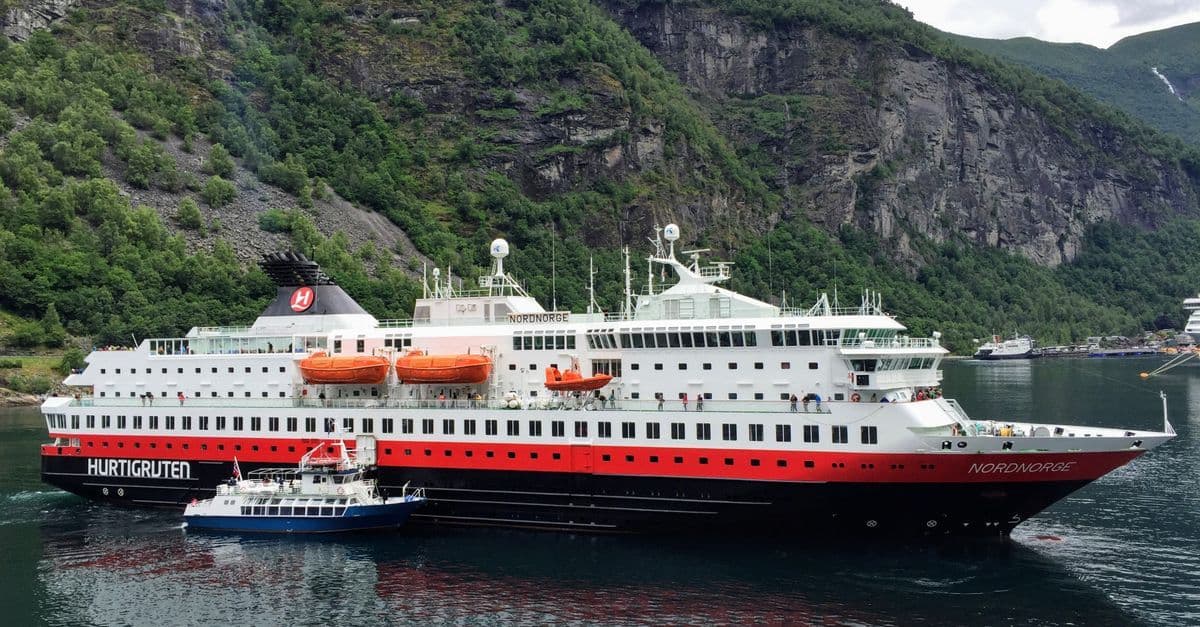
No single cruise line is the best choice for a Norwegian fjords cruise. The right answer depends on your priorities: no-fly convenience, expedition access, sustainability credentials, or onboard formality. That's not a cop-out. It's the only framing that actually helps.
UK-departing operators including P&O Cruises and Fred Olsen sail from Southampton, Dover, and Newcastle without requiring a flight pocruises.com fredolsencruises.com. The onboard culture is familiar to British passengers, pricing is in sterling, and itineraries typically cover the headline fjords: Bergen, Alesund, and Geiranger. Mass-market sailings, executed competently. For travellers who prioritise simplicity and a UK departure, they're a sound starting point.
Expedition operators are a different proposition. Most embark from Bergen or Oslo, so an outbound flight is part of the package, but the access they offer is meaningfully different. Norway's zero-emission rules for Geirangerfjord and Nærøyfjord are now in force, and electric-hybrid vessels have a tangible advantage: they can enter restricted zones that conventional ships cannot. If the UNESCO-listed heartland is the point of the trip, this matters.
Before committing, check the specific ports of call rather than the regional label. Two itineraries both marketed as "Norwegian fjords" can differ considerably: one might include Flam, Geiranger, and Undredal; another might call at Stavanger, Bergen, and Kristiansand without touching the UNESCO core. Marketing language is rarely precise on this.
Dress codes and dining formality vary sharply between operators. Some lines run formal dinner nights throughout the sailing; others have moved to smart-casual as their default. On a short sailing, a minor consideration. On a 14-night trip, it shapes the feel of every evening.
With your cruise line chosen, packing is the next practical question worth getting right.
What to pack for a Norwegian fjords cruise
The packing list for a Norwegian fjords cruise is shorter than most people expect, but the items that do matter are specific. Six decisions separate a comfortable trip from a cold, offline one.
- Waterproof outer layer. Non-negotiable. Fjord weather shifts within hours: the Geirangerfjord dock can be sunny at midday and wet by mid-afternoon. A packable shell with sealed seams works harder than anything else in your bag.
- Lightweight merino mid-layer. Merino is the practical choice for both deck viewing and shore excursions. It regulates temperature, dries quickly, and won't smell after a full day's walking.
- Offline maps, downloaded at home. Not at the port kiosk with patchy Wi-Fi. Google Maps and Maps.me both cover Norwegian fjord regions offline; the download takes minutes on a decent home connection.
- Portable power bank. Midnight sun photography is battery-intensive. An all-day shore excursion in high summer, with the light lasting well into the evening, demands more from your phone than a typical day's use.
- eSIM data plan, set up before travel. As covered in the connectivity section above, sorting mobile data in Bergen or Flåm costs time and often money. Activate it at home.
- Your cruise line's dress code, checked in advance. Formal night requirements differ significantly between operators. Fred Olsen runs smart-casual; some lines still expect black tie. Check the FAQ before you zip up.
One upgrade question remains before you confirm the booking.
Is it worth having a balcony on a Norwegian fjords cruise?
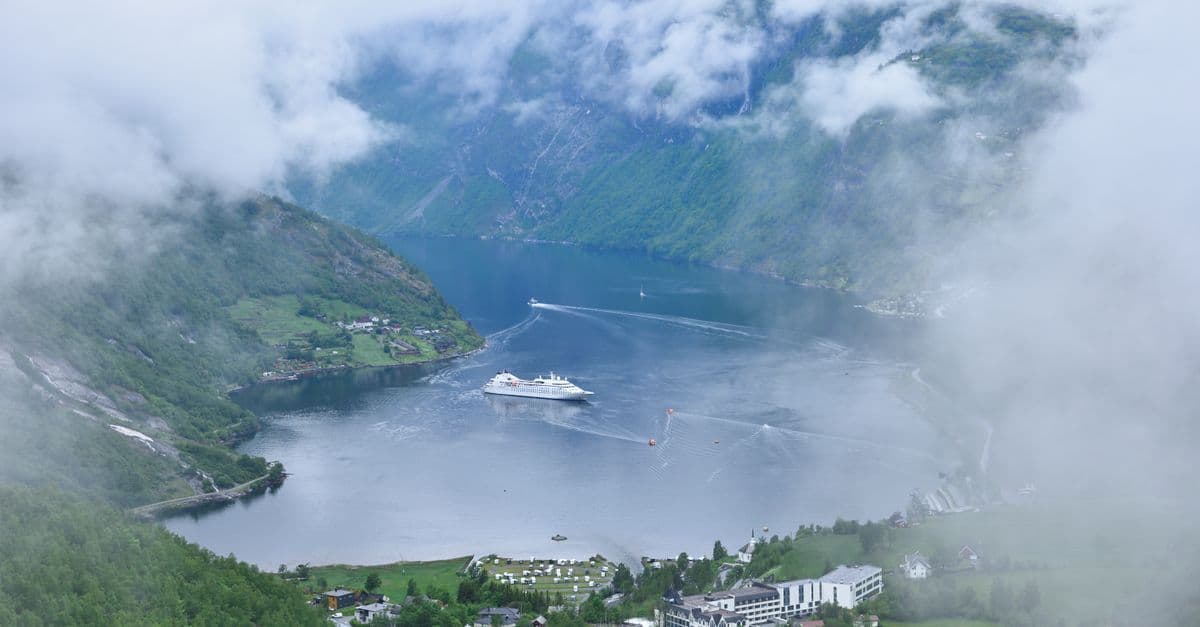
For most itineraries, yes. The fjord scenery justifies a balcony upgrade in a way that doesn't apply to most other cruise routes. The view is the entire point, and a private sheltered space to sit with it beats competing for a rail spot in a light drizzle.
The upgrade typically adds £300 or more per person. That's a real cost. The question is whether you'd spend the equivalent on shore excursions you might miss through bad weather anyway.
Consider the midnight sun factor. In June and July, your balcony stays usable past 10pm. You can watch the Nærøyfjord in evening light at 11pm from your own chair, in a fleece, without navigating to the ship's observation deck or jostling for a gap at the rail.
Worth knowing before you book: port versus starboard matters.
The direction your cabin faces changes significantly depending on whether you're inbound or outbound through a given fjord. Check your itinerary before upgrading, since a starboard cabin on one crossing might face the best scenery, while the return leg gives the portside view. Cruise line itinerary pages usually specify the direction; it's worth a ten-minute check before you pay the upgrade price.
If the budget doesn't stretch, an inside cabin paired with time on the ship's forward deck covers the key moments. The forward viewing area on most Norwegian fjords vessels is unobstructed during fjord transits. Those transits are often the most dramatic parts of the sailing anyway.
Reviewed by HelloRoam's editorial team. Last updated: 23 June 2026.
Get Connected Before You Go

Frequently Asked Questions
No single line suits every traveller. UK-departing operators sail from Southampton without a flight; expedition lines require flying to Bergen but access the innermost fjords and comply with Norway's zero-emission rules.
June and July offer the best weather with over 20 hours of daylight and the midnight sun. May and September have lower fares and fewer crowds. November to February offers northern lights but colder temperatures.
Yes, for most itineraries. The fjord scenery justifies the upgrade, and in June and July the midnight sun keeps the balcony usable past 10pm. The upgrade typically adds £300 or more per person.
Bergen averages 18 to 20 degrees Celsius in summer, warmer than many travellers expect. Wind chill on deck when the ship is moving makes layers essential regardless of the season.
Norwegian fjords cruises typically run 7 to 14 nights. Most itineraries include at least one UNESCO World Heritage fjord, either Geirangerfjord or Nærøyfjord.
Fares range from roughly £800 to around £3,000 per person, depending on ship, cabin grade, and departure port. Balcony upgrades and shore excursions are usually priced separately.
Yes. Cruises depart from Southampton, Dover, and Newcastle, offering no-fly sailings to the Norwegian fjords. These itineraries suit travellers who prefer to avoid airports entirely.
Not automatically. Norway is in the EEA, not the EU, so standard EU roaming packages from UK carriers may not apply. Check your specific tariff and any daily roaming charges before departure.
A Norway eSIM plan is far cheaper than cruise ship Wi-Fi. Budget eSIM plans start from around £2.76 for 1GB on 4G and 5G networks, activated by QR code before you leave home.
Cruise ship Wi-Fi typically costs £20 to £60 per device per day. It works in open water but is unreliable for video calls or data-heavy tasks, and costs accumulate quickly on longer sailings.
Large ships carry 2,000-plus passengers and offer no-fly UK departures but cannot reach the narrowest fjords. Expedition ships carry under 200 passengers and access remote anchorages, but cost 20 to 40 percent more per night.
Yes. Geirangerfjord and Nærøyfjord now ban conventionally fuelled ships. Some itineraries have quietly replaced these stops with alternatives, so verify the specific ports before booking.
Summer sailings including Geirangerfjord often sell out months in advance. For a specific ship or cabin grade, booking in the autumn before your intended departure year is strongly advisable.
Pack a waterproof outer layer, a lightweight merino mid-layer, offline maps downloaded before departure, a portable power bank for long summer days, and a pre-activated mobile data plan for use in port.
Yes. Cabin orientation determines which scenery you see during fjord transits. Check the sailing direction in your itinerary before paying for a balcony upgrade, as the best views switch sides.
Sources
- Norwegian Fjords Cruises — fredolsencruises.com
- Thinking of taking a Norwegian fjords cruise? — travel.saga.co.uk
- Norway & Norwegian Fjords Cruise 2026 & 2027 — pocruises.com
- Norwegian Fjords cruise from Southampton in 2026, 2027 ... — worldofcruising.co.uk
- Hurtigruten UK: Norwegian Fjords & Northern Lights Cruises — hurtigruten.com
- Norwegian Fjords Cruises 2026 / 2027 / 2028 — hayscruise.co.uk