

HelloRoam is a global eSIM provider offering instant mobile data in 185+ countries. Buy prepaid travel eSIM plans with no extra fees, no contracts, and instant activation on any eSIM-compatible device.

Street Food in Hanoi: the Complete Guide for UK Travellers (2026)

Emily Thornton
Written by: Emily Thornton
Published date
Updated:
Reading time

16 min read

Street Food in Hanoi: The Complete Guide for UK Travellers (2026)

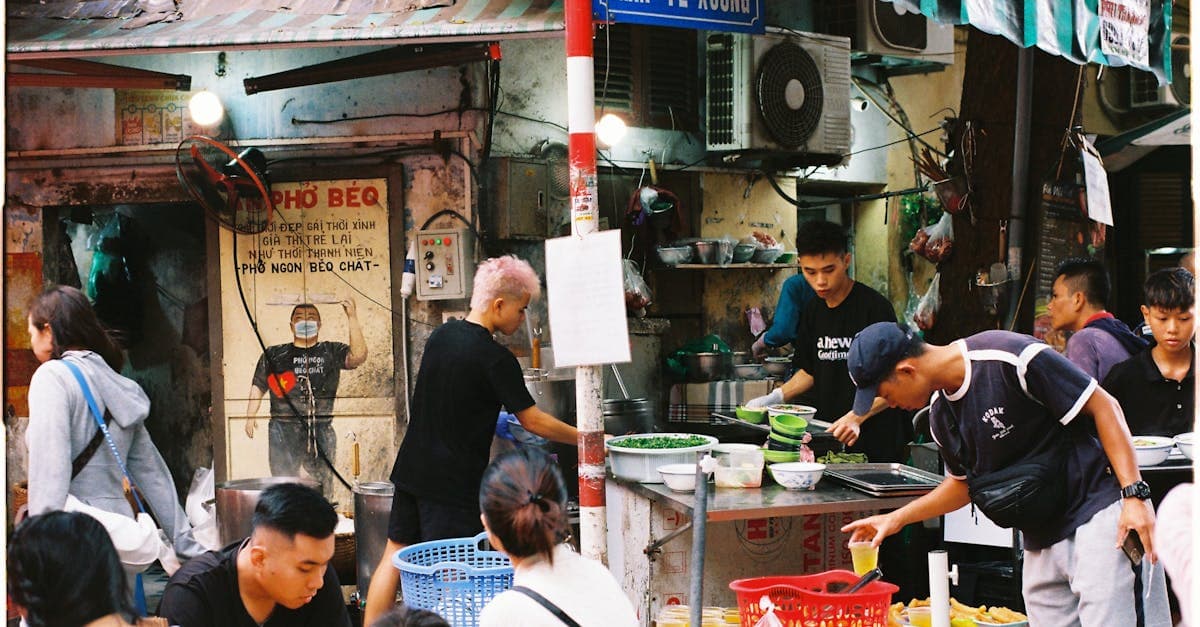
![Bustling outdoor market showcasing why street food in Hanoi draws visitors from across Vietnam.

Why Hanoi has Vietnam's best street food

Get your eSIM for Vietnam before you travel.

![Bustling outdoor market showcasing why street food in Hanoi draws visitors from across Vietnam.

Hanoi doesn't do fusion. The cooking here is northern Vietnamese: restrained, precise, and built on broths that take hours to achieve clarity. CNN Travel ranks Hanoi among the world's top ten cities for street food, and the case is easy to make.

The Old Quarter explains the depth of it, as [adventuresofjellie.com documents. Those 36 ancient trade streets were historically each given over to a specific craft or food, producing a city of specialists unlike anywhere else in Vietnam. You won't find that degree of culinary micro-specialisation anywhere south of the Red River Delta.

Pho started here, as [thesensiblefay.com reports. The Hanoi version, flat rice noodles in a clear, barely garnished broth, is the original recipe before the dish migrated south and acquired sweetness, beansprouts, and a heap of fresh herbs at the table. Ask any Vietnamese person for their country's defining street food and pho comes back almost unanimously. Its spiritual home is not in dispute.

The morning ritual seals it. Hanoians eat soup for breakfast as a cultural institution that goes back generations, not a novelty served up for foreign visitors, as [madisonsfootsteps.com confirms. Many of the city's most celebrated stalls open at six and sell out by nine-thirty. Arrive at eleven and you're too late.

What street food to eat in Hanoi?

![Street food in Hanoi featuring traditional pho and iced green tea at a lively stall.

The menu divides into two useful categories. Iconic dishes, such as pho, bun cha, banh mi, and egg coffee, are well-documented, easy to spot, and simple enough to order by pointing [thediscoveriesof.com. Local dishes take more navigation. Bun rieu, banh cuon, and xoi with sticky rice toppings tend to sit off the main tourist drag, in markets and neighbourhood stalls where the signs are in Vietnamese and the regulars look mildly surprised to see a foreign face. That's usually a good sign.

Thousands of food vendors operate across Hanoi. They range from pavement setups with four plastic stools that appear before dawn and vanish by nine to institutions that have occupied the same address for decades. That scale matters less than the schedule they keep.

Street food here runs in distinct shifts. Pre-dawn pho serves market workers and early risers; midday belongs to grilled dishes and noodle salads; the afternoon brings banh mi carts and sticky rice stalls; and by evening, Ta Hien Street is alive with charcoal smoke and bia hoi benches running well past midnight. Several of the city's most celebrated dishes are simply unavailable past ten in the morning.

The essential noodle dishes: pho bo, bun cha, and bun rieu

![Close-up of steaming Bun Rieu Cua soup garnished with fresh herbs and tomatoes in a bowl.

The essential noodle dishes of Hanoi are pho bo, bun cha, and bun rieu. At 49 Bat Dan Street, the queue forms before seven. Pho Gia Truyen has been ladling beef pho from this Old Quarter address for decades: clear broth, flat rice noodles, a scatter of spring onion, and almost nothing else. The pot is empty by ten.

Pho in Hanoi tastes different from the southern version. The northern broth is cleaner and saltier, without the sweetness or the heap of beansprouts, fresh basil, and hoisin sauce that arrives with a bowl in Ho Chi Minh City. It may seem spare at first. It won't after a minute. Pho ga, the chicken alternative, runs lighter and slightly cheaper if beef broth feels too rich in the heat.

Bun cha is a different matter. Grilled pork patties and belly strips come alongside a bowl of sweet-savoury dipping broth and vermicelli noodles, assembled to taste at the table. The dish became globally familiar in 2016 when Anthony Bourdain filmed a lunch with Barack Obama at Bun Cha Huong Lien, 24 Le Van Huu. The table itself is preserved and labelled.

Bun rieu rarely gets its due. The broth combines crab and tomato into something pink-hued and lightly acidic, quite unlike any other noodle soup in the city. It's a genuine Hanoi staple that most travel writers ignore.

Dishes born in Hanoi: cha ca lang, banh mi sot vang, and ca phe trung

![Freshly made banh mi sot vang on a rustic café table, a dish born in Hanoi.

Cha Ca La Vong has been here since 1871. The restaurant at 14 Cha Ca Street serves turmeric-marinated fish fried at a small brazier on your table with dill and spring onions, eaten over vermicelli with peanuts and shrimp paste. The dish grew so synonymous with the neighbourhood that a street was renamed after it.

France left Hanoi with more than wide boulevards. Banh mi sot vang fills a baguette with beef braised in red wine sauce, a direct product of French colonial cooking quite distinct in character from the cold-cut banh mi sold on every other corner in Vietnam. It's richer, more European in flavour, and a little harder to find.

Ca phe trung has a specific origin, as [thesensiblefay.com documents. Cafe Giang, at 39 Nguyen Huu Huan, invented egg coffee in the 1940s by whipping egg yolk and condensed milk over strong robusta coffee, a workaround for wartime rationing when fresh milk was unavailable. The original cafe is still open, cash only, tiny, and operating on the same recipe. French colonial influence explains why both baguettes and intense cafe culture became embedded in northern Vietnamese life; these aren't tourist adaptations.

At Cha Ca La Vong, a portion runs to 150,000 to 200,000 VND (~£5 to ~£6.30). That's the priciest item on this list, and it still undercuts most London lunches.

The plates most visitors walk past: chao suon, xoi, nem nuong, and banh tom

![Street food in Hanoi that most visitors miss — xoi, nem nuong, and banh tom at a local stall.

West Lake, Ba Dinh, and eating away from the Old Quarter

Thanh Nien Road at sunset is the best version of banh tom. The shrimp and sweet potato fritters aren't fundamentally different from what you'd find at other stalls, but the setting does something for them: West Lake in the early evening, cooler air, no particular hurry. Getting there from the Old Quarter takes roughly 10 to 15 minutes by Grab at around £1 to £1.60, or 30 minutes on foot.

Kim Ma and Ba Dinh are residential districts without much tourist infrastructure. Pho and banh mi stalls there run 10 to 20 percent cheaper than equivalent stalls in the Old Quarter, and the clientele is almost entirely local. Less English is spoken; the prices and atmosphere are the compensation.

Back near Hoan Kiem Lake, egg coffee cafes cluster on Dinh Tien Hoang and the nearby lanes. Order a ca phe trung, find a window seat, and use the strong WiFi to refresh your maps before the next move.

Grab is non-negotiable for getting between districts. The app runs on live mobile data, as do Google Translate's camera mode for menus, Foody.vn for restaurant reviews, and checking whether a stall is still open. UK carrier roaming in Vietnam falls outside every major network's free allowance, with daily bolt-ons running from around £2 to £6.

A Vietnam eSIM sorts this before you board. HelloRoam's plans activate at home and keep your UK number live for bank notifications, which matters whenever authentication texts need to reach your home number while you're navigating an unfamiliar city. Once connected, Grab and Google Maps handle most of what Hanoi asks of you. The offline maps cover walking; everything else needs live data.

Best street food areas and markets in Hanoi

![Busy street market in Hanoi's Old Quarter with vendors selling an array of Vietnamese dishes.

What is Hanoi famous for food?

Pho did not begin in a restaurant. According to [thesensiblefay.com, it emerged in northern Vietnam in the early 20th century, built around slow-simmered beef bone broth, flat rice noodles, and very little else. The Hanoi preparation is the original. What you eat in Ho Chi Minh City is an evolution: sweeter broth, more garnish, a version that developed its own character after the recipe migrated south.

Egg coffee was invented here out of necessity, as [thesensiblefay.com notes. Café Giang created ca phe trung in the 1940s when fresh milk was unavailable, and the drink has since become one of those rare inventions that outlives the condition that produced it. Cha Ca La Vong predates both. The restaurant on Cha Ca Street has been cooking turmeric-marinated fish at the table since 1871 and remains among the oldest continuously operating restaurants in the country.

Northern geography shaped the character of Hanoi's cooking long before any tourist arrived to define it. Cooler winters, a mountainous hinterland, and the absence of the Mekong Delta's tropical produce pushed the tradition towards clean broths and restrained seasoning rather than sweetness. Visitors who've only eaten in Ho Chi Minh City tend to find Hanoi's food quieter; many find it more complex once they've adjusted to what isn't there.

The 2016 meal at Bun Cha Huong Lien gave Hanoi's street food a global visibility it hadn't previously held. Pho is Vietnam's most widely eaten street food by most measures, with bun cha running close in Hanoi specifically; both dishes were born here, and the versions you encounter elsewhere in the country are adaptations of what was first cooked in the north.

West Lake, Ba Dinh, and eating away from the Old Quarter

![Locals enjoying street food in Hanoi beside West Lake, away from the busy Old Quarter.

The banh tom stalls on Thanh Nien Road are not secret. They're far enough from the tourist circuit to feel earned, though: shrimp and sweet potato fritters, best eaten at a lakeside table as the sun drops over Ho Tay. Getting there from the Old Quarter requires a 30-minute walk or a Grab ride costing roughly 30,000 to 50,000 VND. Worth planning as a deliberate trip, not a casual detour.

Kim Ma and Ba Dinh, west of Hoan Kiem, are where Hanoians eat without an audience. Pho and banh mi here run 10 to 20 per cent cheaper than equivalent stalls in the Old Quarter. English menus are rare, English speakers rarer still.

Back near the lake, egg coffee cafes cluster on Dinh Tien Hoang and the surrounding lanes. A logical mid-morning stop after a pho breakfast.

The trade-off is simple enough. The Old Quarter offers density and variety within walking distance; residential neighbourhoods offer lower prices and a more local atmosphere. Google Maps offline covers street-level walking detail across Hanoi well. For Grab, live data is non-negotiable.

What is Hanoi famous for food?

![Assorted street food in Hanoi displayed at an outdoor stall, showing what the city is famous for.

Pho started here. The dish developed in northern Vietnam in the early 20th century, and the Hanoi version, clean broth and minimal garnish, is the original before it travelled south and was reshaped by sweeter produce and more abundant herb plates.

Bun cha runs it close in cultural weight, particularly since 2016, when Anthony Bourdain and Barack Obama ate together at a low plastic-stool restaurant on Le Van Huu and placed Hanoi's street food on an international stage it had not previously occupied outside food-writing circles.

Cha Ca La Vong has operated since 1871. That makes it one of Vietnam's oldest continuously trading restaurants, and the turmeric-marinated fish dish it serves became so synonymous with the city that a street was renamed after it.

Egg coffee is a third claim to fame. Cafe Giang invented ca phe trung in the 1940s as a wartime substitute for scarce fresh milk, and tourists now travel to Hanoi specifically to sit in its narrow upstairs room.

The food here is shaped by northern geography and cooler winters: heavier broths, slower cooking, and far less of the sugar-heavy influence that dominates southern Vietnamese cuisine. Visitors arriving from Ho Chi Minh City often find Hanoi's food quieter, more restrained, and more complex.

How much is the average street food in Hanoi?

![Vietnamese street vendor in Hanoi selling affordable traditional dishes from a mobile food cart.

Pho bo runs 40,000 to 60,000 VND per bowl (around £1.25 to £1.90 at March 2026 exchange rates). That's the anchor price for street food in Hanoi: a full meal, not a snack.

Bun cha with nem ran on the side comes to 50,000 to 70,000 VND, under £2.20. A street cart banh mi is 25,000 to 40,000 VND, around 80p to £1.25. Egg coffee at Cafe Giang sits at the price noted in the earlier section on Hanoi's signature dishes; cha ca at Cha Ca La Vong carries the rate covered there, still cheaper than a London pub lunch.

Bia hoi at Ta Hien Street is 5,000 to 10,000 VND a glass. At March 2026 rates, it barely registers in sterling.

A full day adds up to roughly 350,000 VND: pho at breakfast, bun cha at lunch, afternoon egg coffee and banh mi, then three or four dishes and bia hoi come evening. Around £11 for the day.

Cash is essential. Almost every stall operates without a card terminal. Withdraw VND at Techcombank or Vietcombank branches in the Old Quarter rather than at airport arrivals machines, where fees run higher. The pound converts at approximately 32,000 to 33,000 VND as of March 2026, which makes Hanoi street food one of the most cost-effective eating experiences British travellers encounter anywhere in Southeast Asia.

Eating street food in Hanoi: safety, timing, and etiquette

![Locals dining safely at street food stalls in Hanoi's lively night market after dark.

The crowd is your guide to safety. A stall serving 200 bowls of pho before 9am has hot broth, high turnover, and fresh ingredients. An empty stall at the same hour is a red flag, not a hidden gem.

Prioritise food cooked in front of you: pho, bun cha, banh cuon, and nem nuong all qualify. On ice: Hanoi's cylindrical pillar ice, delivered commercially in large blocks, is generally safe. Crushed ice in unmarked plastic bags is worth skipping.

Timing matters more here than in most cities. Pho, banh cuon, xoi, and chao suon stalls open between 5am and 6am and close by 10am. Miss the window and they are gone. Evening stalls can have food sitting longer in the heat; at busy ones this matters little, but the crowd rule applies after dark just as well.

For the first two days, stick to lighter dishes: pho, banh mi, xoi. Introduce bun cha and cha ca from day three. Etiquette is simple: point at what the next table ordered if the menu is unclear; Google Translate's camera mode translates Vietnamese script as you hold the phone up.

Packets of individually wrapped wet wipes and factory-sealed disposable chopsticks on the table are a positive hygiene signal. Their presence indicates a vendor who thinks about these things.

EHIC does not apply in Vietnam. Every UK traveller needs comprehensive private travel insurance that covers medical evacuation before they board.

Street food tours in Hanoi: guided experiences versus going it alone

Budget walking food tours run 20 to 30 USD per person for a group session of roughly three hours, covering five or six stalls; widely listed on Viator and GetYourGuide. Evening motorbike food tours cost 35 to 55 USD per person, cover significantly more ground, and work well after dark when Hanoi's lane culture comes alive.

What a guide adds that self-navigation cannot easily replicate: current knowledge of which stalls are freshest that week, real-time Vietnamese language access, and vendor vetting that removes guesswork from food safety decisions. Hanoikids runs student-led tours on a donation basis; the cultural depth is genuinely excellent, and proceeds support local students directly.

The case for going it alone is also strong. After a single evening of orientation, the Old Quarter is navigable and the unpredictability becomes part of the appeal. Dietary requirements can be accommodated by tour operators if flagged in advance; independent navigation requires Google Translate and a willingness to point at things.

The practical compromise: take a guided tour on the first evening, then explore independently from day two. You will spend less, find better stalls, and gravitate toward the ones with the longest queues rather than the ones on the itinerary.

Staying connected in Hanoi: eSIM, local SIM, or UK roaming?

Mobile data in Hanoi isn't optional. Grab, the city's dominant ride-hailing app, requires it to get between food districts. Google Translate's camera mode reads Vietnamese menus in real time. Foody.vn surfaces local hygiene ratings and reviews. Without a live connection, these tools fail at the moments they are needed most.

No major UK carrier includes Vietnam in its free roaming allowance. Daily add-on rates apply; the costs noted in an earlier section accumulate quickly over a 14-day trip.

Tourist SIMs from Viettel, Vinaphone, and Mobifone are available at Noi Bai Airport from around 100,000 VND for 30 days of data. Passport registration is required at point of purchase. 4G LTE coverage across Hanoi city centre is excellent; 5G is rolling out, with Viettel ahead of the other networks.

A Vietnam eSIM removes the airport queue and the registration step. HelloRoam's Vietnam eSIM supports dual SIM operation, meaning the UK physical SIM stays active throughout the trip: bank two-factor authentication texts and WhatsApp messages arrive without interruption, and setup is possible before you leave home.

For navigating street food in Hanoi specifically, reliable mobile data is the difference between a frustrating first day and a productive one. Grab for transport between districts, Google Maps for lane-by-lane navigation: both need a signal.

[eSIM for Vietnam — Check current plans and pricing.

What UK networks actually charge in Vietnam

Check your carrier's small print before you land. None of the major UK networks include Vietnam in their standard free-roaming zone, and the charges vary by provider.

EE's 'roam like home' applies to EU destinations only. Vietnam requires a daily add-on. O2 faces the same issue, with elevated pay-as-you-go rates making a bolt-on essential for any practical data use. Vodafone's Extra Abroad pass covers Vietnam at roughly £3 to £5 per day. Three's Go Roam list is extensive, but Vietnam is not on it as of 2025; standard international charges apply regardless of which plan tier you hold. Sky Mobile: same story. Roaming charges apply, no free data included.

At a rough average of £4 per day across a fortnight, that comes to £56 in data costs alone. A Vietnam-specific eSIM from a specialist provider costs considerably less.

Managing without any data connection is possible, in theory. Google Maps offline handles walking navigation adequately if you download the Old Quarter before boarding. The limitation is concrete: offline Maps cannot hail a Grab, show live stall opening hours, or load Foody.vn reviews. On a food-focused itinerary, that matters.

A dual SIM setup, as outlined above, resolves it cleanly. Keep the UK SIM active for bank alerts and incoming calls; run a Vietnam eSIM alongside it for data. Most current Android and iPhone models support both without hardware changes.

  • Esim Cape Town
  • Esim Atlanta
  • Esim Hawaii

Get Connected Before You Go

Emily Thornton, Travel Writer at HelloRoam
Emily Thornton is a travel writer at HelloRoam who covers travel connectivity and eSIM tips for international visitors. She writes about finding reliable data at outdoor events, during weekend city breaks, and on ferry and rail journeys. Emily keeps her tone friendly and jargon-free so any traveler can follow along.

Frequently Asked Questions

The essential dishes are pho bo (beef noodle soup), bun cha (grilled pork with vermicelli), bun rieu (crab and tomato noodle soup), banh mi, egg coffee, cha ca lang (turmeric-marinated fish), and banh tom (shrimp and sweet potato fritters). Iconic dishes like pho and bun cha are easy to find in the Old Quarter, while local specialities like bun rieu and xoi tend to be in neighbourhood markets away from the main tourist drag.

Hanoi is famous for being the birthplace of pho, bun cha, cha ca lang, and egg coffee. Pho originated in northern Vietnam in the early 20th century, and the Hanoi version with clear broth and minimal garnish is the original recipe. Cha Ca La Vong restaurant has been serving turmeric-marinated fish since 1871, and Cafe Giang invented egg coffee in the 1940s as a wartime substitute for fresh milk.

A bowl of pho bo costs 40,000 to 60,000 VND (around £1.25 to £1.90). Bun cha runs 50,000 to 70,000 VND (under £2.20), a banh mi from a street cart is 25,000 to 40,000 VND (around 80p to £1.25), and bia hoi draft beer at Ta Hien Street is just 5,000 to 10,000 VND a glass. A full day of street food eating comes to roughly 350,000 VND total.

Pho is Vietnam's most widely eaten street food by most measures, with bun cha running close in Hanoi specifically. Both dishes were born in northern Vietnam and the versions found elsewhere in the country are adaptations of what was first cooked in Hanoi. Ask any Vietnamese person for their country's defining street food and pho comes back almost unanimously.

Hanoi pho uses a cleaner, saltier broth with flat rice noodles and minimal garnish — this is the original recipe. The southern version, as eaten in Ho Chi Minh City, is sweeter, served with beansprouts, fresh basil, and hoisin sauce at the table. The northern preparation is considered the original before the dish migrated south and acquired those additions.

Pho Gia Truyen at 49 Bat Dan Street in the Old Quarter is one of Hanoi's most celebrated pho stalls, with queues forming before seven in the morning. The stall has been serving clear beef broth, flat rice noodles, and spring onion from the same address for decades, and the pot is typically empty by ten.

Bun cha is grilled pork patties and belly strips served alongside a bowl of sweet-savoury dipping broth and vermicelli noodles, assembled to taste at the table. The dish became globally known in 2016 when Anthony Bourdain filmed a lunch with Barack Obama at Bun Cha Huong Lien, 24 Le Van Huu, where the original table is preserved and labelled.

Egg coffee, known as ca phe trung, is made by whipping egg yolk and condensed milk over strong robusta coffee. It was invented at Cafe Giang, 39 Nguyen Huu Huan, in the 1940s as a workaround for wartime rationing when fresh milk was unavailable. The original cafe is still open, cash only, and operating on the same recipe.

Cha ca lang is turmeric-marinated fish fried at a small brazier on your table with dill and spring onions, eaten over vermicelli with peanuts and shrimp paste. The dish originates from Cha Ca La Vong restaurant at 14 Cha Ca Street, which has operated since 1871. A portion costs 150,000 to 200,000 VND (around £5 to £6.30), making it the priciest common street dish in Hanoi.

Street food in Hanoi runs in distinct shifts. Pre-dawn and early morning (from around six) is peak time for pho, with the best stalls selling out by nine-thirty. Midday belongs to grilled dishes and noodle salads, the afternoon brings banh mi carts and sticky rice stalls, and evenings see Ta Hien Street alive with charcoal smoke and bia hoi past midnight. Several celebrated dishes are simply unavailable past ten in the morning.

Banh mi sot vang is a baguette filled with beef braised in red wine sauce, a direct product of French colonial cooking in Vietnam. It is quite distinct from the more common cold-cut banh mi sold across the country, being richer and more European in flavour. It is a little harder to find than standard banh mi but represents one of Hanoi's unique colonial-era food inventions.

Bun rieu is a noodle soup with a broth combining crab and tomato, producing a pink-hued, lightly acidic flavour unlike any other noodle soup in the city. It is a genuine Hanoi staple that most travel guides overlook. Bun rieu stalls tend to sit off the main tourist drag in markets and neighbourhood spots where signs are in Vietnamese.

The Old Quarter offers the highest density and variety of street food within walking distance, with centuries of culinary specialisation across its 36 trade streets. West Lake's Thanh Nien Road is the best spot for banh tom fritters at sunset. Residential districts like Kim Ma and Ba Dinh offer pho and banh mi running 10 to 20 percent cheaper than Old Quarter equivalents, with an almost entirely local clientele.

Grab is the recommended app for getting between districts, with a ride from the Old Quarter to West Lake costing roughly 30,000 to 50,000 VND (around £1 to £1.60). Google Maps offline covers walking navigation well. A Vietnam eSIM or live mobile data is essential for running Grab, Google Translate's camera mode for reading menus in Vietnamese, and checking whether a stall is still open.

Live mobile data is effectively essential for using Grab between districts, Google Translate's camera mode for Vietnamese menus, and checking stall opening hours via apps like Foody.vn. UK carrier roaming in Vietnam falls outside every major network's free allowance, with daily bolt-ons running from around £2 to £6. A Vietnam eSIM activated before departure is the practical alternative and keeps your UK number live for bank authentication texts.

Banh tom are shrimp and sweet potato fritters. The best setting to eat them is at the banh tom stalls on Thanh Nien Road beside West Lake, ideally at sunset when the lakeside atmosphere and cooler air add to the experience. Getting there from the Old Quarter takes about 30 minutes on foot or a short Grab ride costing 30,000 to 50,000 VND.

Northern geography and cooler winters shaped Hanoi's cooking tradition towards clean broths, restrained seasoning, and slow cooking rather than sweetness. The absence of the Mekong Delta's tropical produce meant less sugar-heavy influence. Visitors arriving from Ho Chi Minh City often find Hanoi's food quieter and more restrained, though many find it more complex once they adjust to the style.

Sources

  1. Street Food In Hanoi thesensiblefay.com
  2. madisonsfootsteps.com madisonsfootsteps.com
  3. Hanoi’s Old Quarter - Eating and Drinking Like a Local adventuresofjellie.com
  4. THE BEST Street Food in Hanoi (Updated 2026) tripadvisor.co.uk
  5. The Best Hanoi Street Food Tour! Full Guide + Map thediscoveriesof.com

Related Articles

Stay Connected with Travel Data
View all destinations
United States travel destination
United States flag
United States
United Kingdom travel destination
United Kingdom flag
United Kingdom
United Arab Emirates travel destination
United Arab Emirates flag
United Arab Emirates