

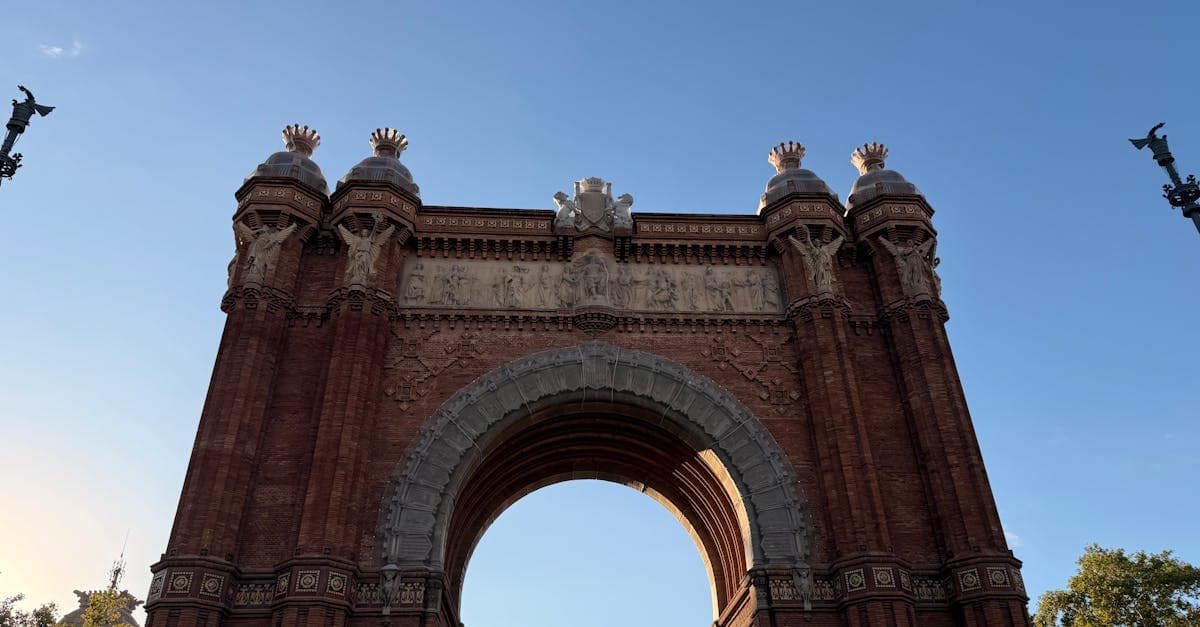
Barcelona holiday at a glance
Barcelona is a direct flight from most UK airports in under two hours and suits three to five days for a first visit. Mid-range spend runs around £80 per person per day. An eSIM for Spain from HelloRoam starts at ~£2.24 for 1GB over 7 days, activated at home before you board.
Key Takeaways - Barcelona is under two hours from most UK airports; suits three to five days. - Shoulder seasons (April to May, September to October) offer better value and shorter queues. - Mid-range daily spend runs around £80 per person. - Post-Brexit UK roaming charges apply in Spain; a Spain eSIM sidesteps the bill. - HelloRoam's Spain plans start from ~£2.24 for 1GB on Orange and Movistar 5G.
Spain is the most popular overseas holiday destination for UK travellers. Barcelona handles a large share of that volume, which means timing your visit isn't just a preference; it's a decision that affects cost, crowds, and how much you enjoy yourself.
Post-Brexit, free EU roaming ended for most UK carriers. EE, Vodafone, and Three all charge daily add-ons or monthly bolt-ons for Spanish data; those charges add up quickly on a five-day trip. Sorting a data plan before departure is the clean fix.
Key fact: HelloRoam's Spain 5GB 30-day plan costs ~£6.26 on Orange and Movistar 5G networks.
Each of these points deserves unpacking properly.
When is the best time for a Barcelona holiday?
April to May and September to October are the best windows for a Barcelona holiday. Temperatures sit between 18 and 25°C, crowds fall well below the summer peak, and hotels are noticeably cheaper. July and August sit at the other end of the scale: hot, packed, and expensive.
July temperatures regularly push past 30°C. La Barceloneta beach fills by mid-morning; the Gothic Quarter turns into a slow-moving crowd by 10am. For anyone with low heat tolerance, it's a slog.
Barcelona's low season gets less credit than it deserves. November through February, the city stays fully open: the Boqueria market runs daily, museums keep normal hours, and you'll move through the Gothic Quarter without fighting tour groups. The trade-off is cooler evenings and a closed beach, which matters less on a culture-focused trip.
For UK families with school-age children, August is often unavoidable. The shoulder-season case deserves closer detail.
Spring and autumn: the sweet spots
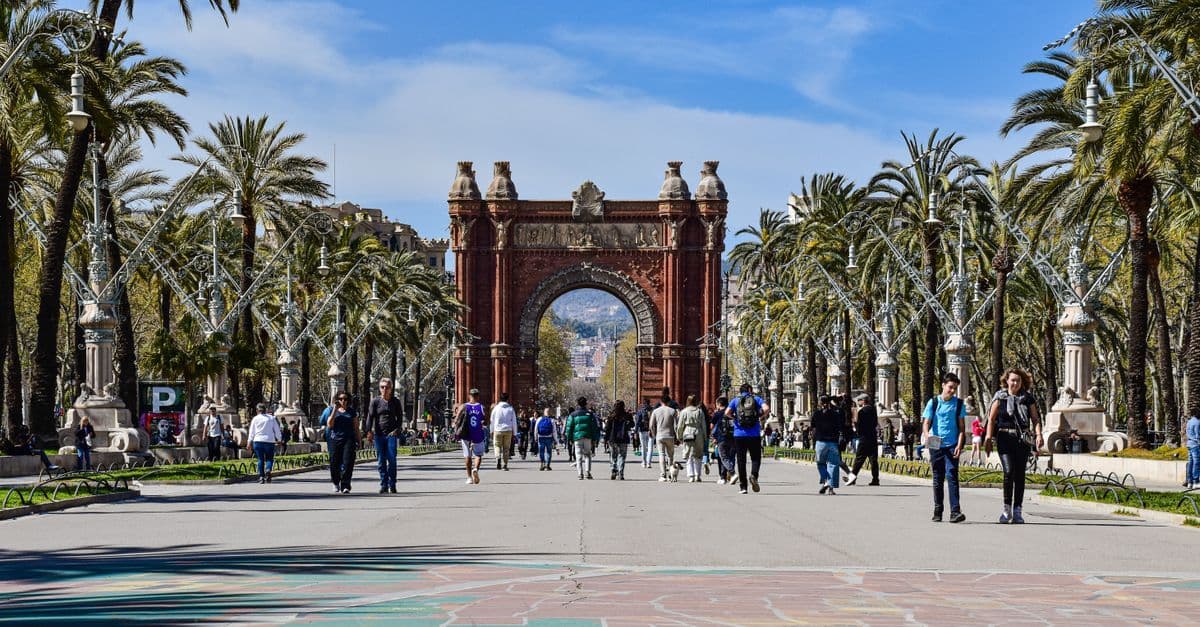
Spring and autumn are the clear picks for most visitors. Temperatures stay between 18 and 25°C, sightseeing stays comfortable, and hotels are noticeably cheaper than in peak season, which translates into a meaningfully different trip budget. Queues at Sagrada Família and Park Güell are shorter than in July.
The city breathes.
September warrants a special mention. The sea is warm enough for a proper session at Barceloneta, summer crowds have thinned, and La Mercè festival in late September gives the city a different energy: local, loud, and nothing like the tourist-facing spectacle of August. It's the strongest single month to visit.
May offers similar conditions with a cooler sea and more manageable evenings.
But school holidays force many UK families into August.
Navigating peak season without losing your mind
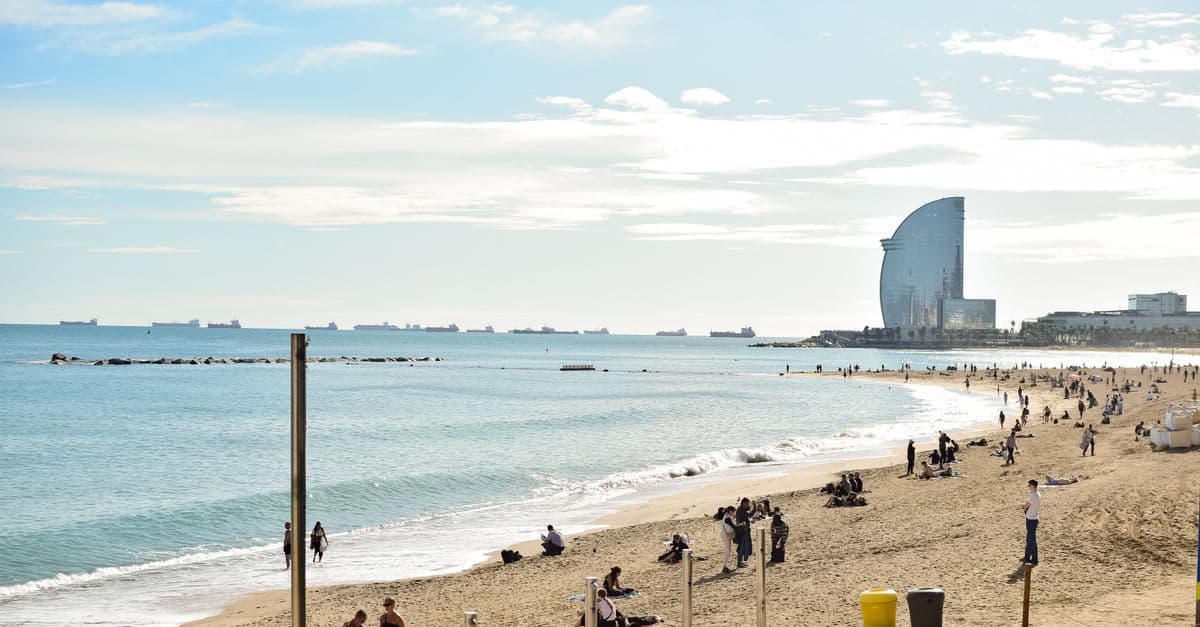
August in Barcelona is genuinely demanding. But it's manageable with a few non-negotiable habits.
- Book Sagrada Família at least six to eight weeks ahead, ideally three months if you're travelling in late July or August. The site sells out. No exceptions.
- Arrive before 9am at major attractions. Park Güell's free access zones fill fast; paid sections have long queues by 10am.
- Tread carefully in residential areas. Anti-tourism sentiment has been building since the 2024 protests. Keep noise down in Gothic Quarter side streets after midnight and choose local businesses over chain restaurants.
- Skip Barceloneta if you want calm. Bogatell beach, roughly two kilometres along the coast, draws more locals than tourists and stays far less crowded.
Now for what to actually do once you arrive.
Top things to do on a Barcelona holiday
Sagrada Família, the Gothic Quarter, and Parc de la Ciutadella anchor any Barcelona holiday. The mistake most visitors make is building a twenty-item agenda around them. The city doesn't reward a sprint, and the places you overlook tend to deliver more than the ones you race through.
Sagrada Família is the starting point. Book tickets weeks ahead (the towers sell out), arrive before 10am, and allow at least two hours. The interior is unlike anything else in European architecture. Rushing it wastes the visit.
The Gothic Quarter surprises most visitors. They arrive expecting a polished tourist zone and find instead a genuine medieval street plan where you can get properly lost for an afternoon. Walk rather than navigate. The lanes south of Plaça de Sant Jaume reward slow exploration far more than any structured route.
The Montjuïc viewpoints cost nothing and deliver a city-wide panorama. Parc de la Ciutadella is a proper park with open space, a boating lake, and a rather grand sculpted cascade.
Barcelona works with gaps.
Four anchoring experiences over four days beats fifteen ticked checkboxes. It's a city that responds well to that philosophy.
Gaudí's Barcelona deserves closer attention than a quick tick-off.
Gaudi's Barcelona and the modernisme trail
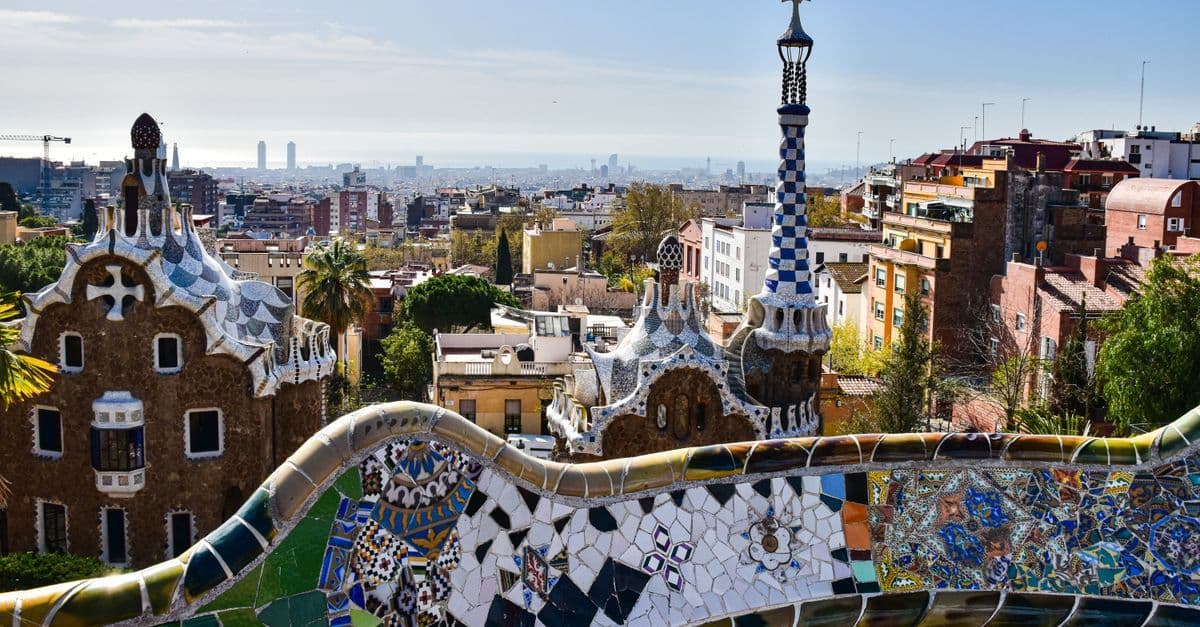
Three buildings form the core Gaudí itinerary: Sagrada Família, Casa Batlló on Passeig de Gràcia, and Casa Milà (La Pedrera) a few blocks further north. You could visit both Passeig de Gràcia buildings in a single day. One building absorbs attention better than two rushed in parallel.
Casa Batlló's evening tour is worth the premium. Visitor numbers thin out considerably, the theatrical light display in the main hall runs without the afternoon crush, and the rooftop ceramic work reads completely differently after dark.
Combined tickets for both Gaudí houses exist, but availability fluctuates. Check before building an itinerary around them.
The building most visitors bypass: Palau de la Música Catalana. It's Domènech i Montaner rather than Gaudí, but the concert hall interior rivals anything on the modernisme circuit for sheer exuberance. Tours run daily and crowds stay manageable.
Beyond the landmarks, the neighbourhoods are where Barcelona actually lives.
Markets, beaches and neighbourhood Barcelona
Start with markets, but be selective. La Boqueria is worth a walk-through. The sights and smells near the entrance are striking. Stop there. The tourist-facing stalls at the front (overpriced fruit cups, jamón at inflated prices) are exactly what they look like.
Santa Caterina market is the practical alternative: less footfall, a more varied stall selection, and prices that make sense for people who actually live nearby.
For beaches, Barceloneta suits a swim. Poblenou and Bogatell, a short metro ride northeast, are considerably quieter through the peak summer months.
Spend an afternoon in Gràcia or Poble Sec for a different flavour of the city. Both sit outside the main tourist circuit. Gràcia's squares fill with local life from around six in the evening.
With the itinerary taking shape, costs need a clear-eyed assessment.
How much does a Barcelona holiday cost from the UK?
A four-night Barcelona holiday from the UK typically costs £600 to £1,000 per person all in. That covers return flights, a central mid-range hotel, daily food, and local transport. It's not the cheapest European city break, but the value for what Barcelona delivers is honest.
Flights are the biggest variable. Budget carriers from UK regional airports can come in below £100 return. Booking late or departing from London pushes costs toward £200.
The tourist tax catches first-time visitors off-guard. Barcelona adds its own city surcharge on top of the Catalonian regional levy. The combined figure appears at checkout rather than in the booking confirmation. It won't reshape a holiday budget, but unexpected line items sting more than anticipated ones.
Menu del día is the standout budget move.
For the lunch figure in the table, you get a starter, main course, dessert, and frequently a drink at a proper sit-down restaurant. Order the same items à la carte and the bill typically doubles.
One practical note on payments: standard UK debit cards attract dynamic currency conversion fees at many Barcelona terminals. A Revolut, Monzo, or Wise card sidesteps that friction entirely and makes tracking daily spend in euros considerably easier.
Costs understood. Connectivity is the next practical consideration.
Staying connected in Barcelona: eSIM, SIM cards and WiFi
Post-Brexit, most UK carrier contracts charge daily roaming fees in Spain. An eSIM removes the problem cleanly: buy a Spanish data plan before you fly, activate it over home Wi-Fi, and your phone connects to Orange or Movistar when the wheels touch down at El Prat. No SIM swap. No kiosk queue in arrivals.
Spain has reliable 4G coverage across Barcelona, with 5G active in the city centre and major transport hubs including Passeig de Gràcia and the airport terminals. Hotel Wi-Fi is available almost everywhere, but treating it as your sole connection is a gamble: shared networks bog down when the whole floor is streaming, and hotel sign-in screens time out precisely when you actually need them.
HelloRoam's Spain plans start from ~£2.07 per day (unlimited data with 2GB at full 5G speed, throttled to 1Mbps after that) or ~£4.20 for 3GB valid over 30 days, which suits most city breaks without any daily-rate pressure. Both run on Orange and Movistar.
Key fact: HelloRoam's Spain eSIMs cover Barcelona via Orange and Movistar, both operating 5G networks across the city.
Dual SIM is worth understanding here. Most smartphones from 2020 onwards support a physical SIM and an eSIM running simultaneously. That keeps your UK number active for bank verification texts and calls home, while all mobile data routes through the Spanish eSIM. Setting it up takes a couple of taps in your phone's mobile data settings.
Set up the eSIM profile the evening before you fly, not at the gate. Airport Wi-Fi is unreliable enough that it's not worth the stress.
Still unsure if an eSIM is the right call for your trip?
Do I need an eSIM for my Barcelona holiday?
For most UK travellers heading to Barcelona, an eSIM is the most practical option. Post-Brexit, the free EU roaming that UK carriers once offered is gone. EE, Vodafone, and Three all charge daily fees for using your allowance in Spain, and those daily charges stack up fast across a week.
The myth worth debunking: that a roaming add-on has you properly covered. Add-ons vary considerably between carriers. Some throttle data speeds after a daily cap. Others charge per day regardless of whether you actually open your phone.
Reading the terms before you fly takes more effort than most people expect.
That said, eSIM isn't the automatic answer for every trip. A two-night city break where you'll mostly be on hotel and restaurant Wi-Fi might not justify the setup, particularly if your carrier's add-on comes to less than a fiver for the duration. Be honest about how much you actually reach for your phone when travelling.
A week or more? The maths tilts clearly in favour of a dedicated plan. Carrier daily fees accumulate to a figure that comfortably exceeds what a 10GB eSIM costs for the same period. HelloRoam's 10GB Spain plan runs ~£10.06 for 30 days on Orange and Movistar's networks.
Device compatibility rarely causes problems. iPhone 12 and later, Samsung Galaxy S20 and later, and most current Android flagships all support eSIM natively. Check your phone's cellular or mobile data settings if you're uncertain.
One last question before you can book with confidence.
How long should I spend in Barcelona?
Three days is the minimum for a first visit; four or five days is the comfortable sweet spot. Three full days covers the core Gaudí sites, the Gothic Quarter, and a proper afternoon at Barceloneta without feeling hurried. Add a fourth night and you have genuine breathing room.
Two days works if you've been before and know exactly what you want. For a first-timer, two days means choosing between Sagrada Família and Casa Batlló, skipping Parc Güell entirely, and sprinting through the Gothic Quarter. That's a preview, not a holiday.
Montserrat deserves a full day on its own. The rack railway up to the monastery, the walk to Sant Joan, the views back across the Catalan plain: none of it rewards rushing. Build it in if you're going four nights or more.
A week opens up the Catalan coast properly. Sitges is around 35 minutes by train from Passeig de Gràcia. Tarragona's Roman ruins sit about an hour south. These are day trips that turn a straightforward Barcelona holiday into something more layered.
Long weekends, Thursday to Monday, are the format most UK travellers default to. They work well. Arriving on Thursday rather than Friday helps: you absorb Sagrada Família before the weekend crush hits, and you leave without that nagging feeling that you only half-saw the place.
Pick your trip length, book the Gaudí tickets before you book anything else, and the rest of the planning falls in around them.
Get Connected Before You Go


Frequently Asked Questions
April to May and September to October are ideal, with temperatures of 18-25°C, shorter queues at major attractions, and hotel rates roughly 20-30% below peak summer prices.
A four-night trip typically costs £600 to £1,000 per person all-in, covering return flights, a central mid-range hotel, food, and local transport.
Post-Brexit, free EU roaming no longer applies to UK travellers. Most UK carriers charge daily add-ons or monthly bolt-ons for Spanish data, so costs stack up quickly on a five-day trip.
For most UK travellers staying a week or more, an eSIM is the most cost-effective option. A short city break relying on hotel Wi-Fi may not require one, but daily carrier roaming fees accumulate fast on longer stays.
Spain eSIM plans from budget providers start from around £2-4 for a few gigabytes valid over 7-30 days, running on major networks with 5G coverage across Barcelona city centre.
Three days is the minimum for a first visit; four or five days is the comfortable sweet spot. Two days means skipping major sites, while four nights allows breathing room and a day trip.
Book at least six to eight weeks ahead, or up to three months in advance for late July and August visits. The tower slots sell out regularly and are not available on the day.
Purchase a Spanish eSIM plan online, activate it over home Wi-Fi before departure, and your phone connects automatically on arrival in Barcelona. Set it up the evening before flying, not at the airport.
Most smartphones from 2020 onwards support eSIM, including iPhone 12 and later and Samsung Galaxy S20 and later. Check your phone's cellular or mobile data settings to confirm compatibility.
Barcelona applies a combined city and regional tourist levy of roughly £3 to £4 per night. It appears at checkout rather than in the initial booking confirmation, which catches many first-time visitors off guard.
The menu del día offers a three-course lunch with a drink for around £11 to £14 at a sit-down restaurant. Ordering the same dishes à la carte typically doubles the bill.
Budget carriers from UK regional airports can come in below £100 return. Booking late or departing from London typically pushes fares toward £200; booking six to eight weeks ahead improves prices.
August is the hottest, busiest, and most expensive month, with temperatures above 30°C and heavy crowds from early morning. It remains manageable with advance booking and arriving at attractions before 9am.
Barceloneta is the closest and suits a swim, but fills quickly in summer. Bogatell and Poblenou, a short metro ride northeast, stay far less crowded through the peak months and attract more locals.
Yes. Montserrat warrants a full day for the rack railway and walks. Sitges is around 35 minutes by train from Passeig de Gràcia, and Tarragona's Roman ruins sit roughly an hour south.
The core itinerary covers Sagrada Família, Casa Batlló, and Casa Milà on Passeig de Gràcia. Both Passeig de Gràcia buildings can be visited in a single day; Casa Batlló's evening tour is worth the premium.
Santa Caterina market is the practical local choice, with fewer tourists, broader stall variety, and realistic prices. La Boqueria is worth a brief walk-through for the atmosphere, but stalls near the entrance are tourist-priced.
Yes. Most smartphones from 2020 onwards support a physical SIM and eSIM simultaneously. Your UK number stays active for calls and bank texts while all mobile data routes through the Spanish eSIM.
Sources
- Barcelona Holidays 2026/2027 — tui.co.uk
- Barcelona Holidays 2026 / 2027 — onthebeach.co.uk
- Barcelona Holidays 2026 / 2027 — easyjet.com
- Barcelona holidays - Get great offers for cheap holidays — booking.com
- Barcelona Holidays | ATOL Protected 2026/2027 — loveholidays.com
- Barcelona Holidays and City Breaks 2026/2027 — britishairways.com