

Quick answer: Maldives holidays for UK travellers
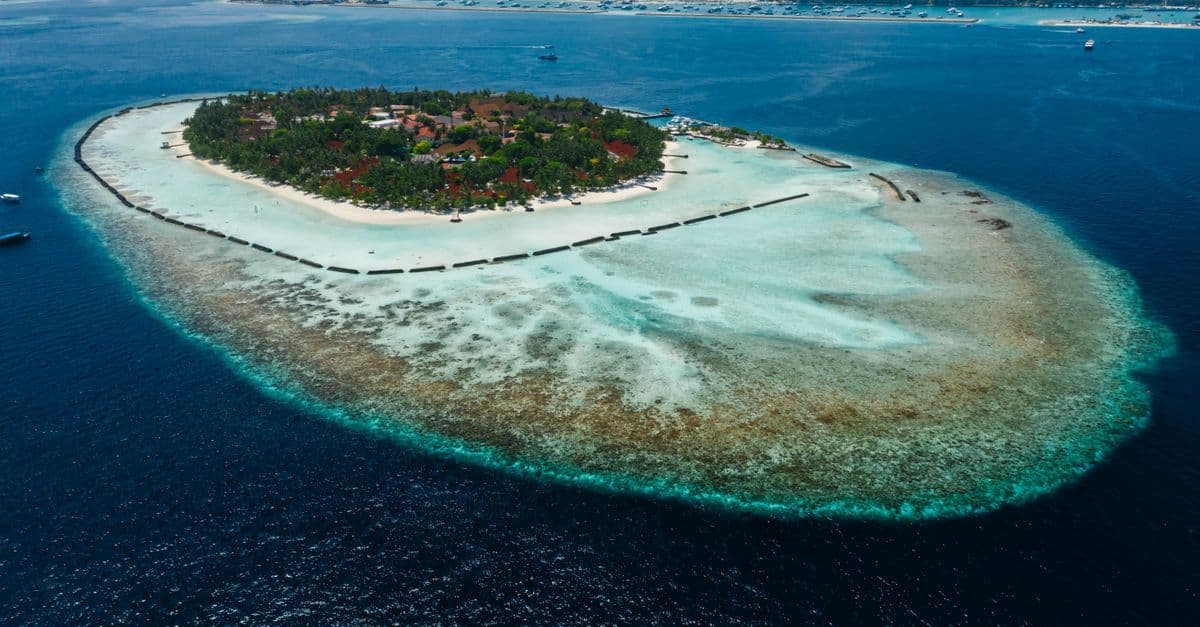
Maldives holidays start from ~£900 per person including return flights. UK passport holders get a free 30-day visa on arrival, no pre-application required. The dry season runs November through April. Seaplane transfers to resort islands often sit outside the quoted package price.
Key fact: HelloRoam's Maldives 1GB 7-day plan costs ~£9.39 on Dhiraagu's 4G network, covering the main atolls.
For connectivity when resort Wi-Fi falls short, an eSIM for Maldives activates via QR code before boarding and runs on the island network stretching from Male through the outer atolls.
The headline number tells you which tier you're in. What each tier actually delivers is where the real differences show up.
How much does a Maldives holiday cost from the UK?
A Maldives holiday costs between ~£900 and £9,000+ per person for seven nights including return flights from a UK airport. Most resort pricing runs in USD, so the GBP exchange rate matters more here than it does for a European trip; a softer pound quietly adds to any bill priced in dollars.
December and January push prices 30 to 50 percent above shoulder-season rates. That gap is significant. Book those months without six to twelve months' lead time and you'll either find rooms sold out or face steeply elevated last-minute pricing. November hits a more useful balance: reliable weather, fewer crowds, and rates that haven't yet climbed to peak.
Resort billing lands in USD. Travellers using Revolut, Wise, or Monzo can lock in a favourable exchange rate before the trip; across a full week of resort meals and excursions, that single step saves a meaningful amount compared to paying by debit card at whatever rate the bank applies on the day.
Budget guesthouse stays sidestep the currency question almost entirely. Local-island rooms run ~£30 to £80 per night, bookable in sterling, and the total sits comfortably within the budget tier regardless of the dollar rate.
Transfers tell a far more complicated story.
The seaplane transfer cost most UK packages omit
Budget the seaplane separately. Most UK Maldives packages exclude it from the headline quote, and the one-way fare to outer atoll resorts runs between USD 250 and USD 600 per person. For a couple making the return trip, that's ~£400 to £900 in unbudgeted spending landing after the deposit is already paid.
That's the line most booking confirmations leave for later.
Three transfer types cover the country, and they serve completely different islands:
- Seaplane (USD 250 to 600, one-way): the only route to most outer and mid-atoll resort islands. Seaplanes run in daylight hours only. British Airways and the main connecting carriers via Dubai, Doha, and Abu Dhabi often land at Velana International Airport (MLE) after dark; miss the final seaplane slot and an overnight in Male becomes unavoidable, adding an unplanned hotel night plus a morning transfer.
- Speedboat (USD 40 to 150, one-way): serves North and South Male Atoll resorts. Often bundled into packages for closer islands. Fast and dependable.
- Public ferry (USD 1 to 5): guesthouse islands only, Maafushi and Guraidhoo among them. Limited schedule, but adequate if you're already staying on a local island.
Before paying any deposit, confirm in writing whether seaplane seats are included in the price.
With the full transfer cost factored in, timing becomes the next decision worth getting right.
When is the best time to visit the Maldives?
The dry season (November to April) brings calm seas, consistent 30°C temperatures, and the flat-water conditions most UK travellers picture when they book. It also brings peak resort pricing and stiff competition for flights. The green season (May to October) trades some weather reliability for noticeably lower costs and fewer crowds. Which side of that trade-off suits your trip depends almost entirely on how fixed your dates are.
The pricing gap is real. December and January carry a 30 to 50 percent premium over green season rates, a meaningful swing when resort base prices are already substantial.
Here's what that table doesn't capture: whale shark season runs June through November in South Ari Atoll. Some of the Maldives' most sought-after wildlife encounters sit firmly in the green season. If that's on the itinerary, choosing a "wet" month stops looking like a straight trade-off.
UK school holidays hit the priciest windows directly.
Families constrained by term dates are working with December or summer, both of which overlap with the most expensive periods. Couples with flexible calendars who travel in February, March, or October get dependable conditions at a considerably more sensible cost. October, in particular, tends to get overlooked: the heaviest rains have typically cleared, the atolls quiet down, and no school half-term is inflating demand.
Once timing is settled, book flights as early as possible.
Flights from the UK to the Maldives: what to expect
Direct flights from London Heathrow to Velana International Airport take roughly 10 hours 30 minutes. British Airways operates this route seasonally rather than year-round. For much of the calendar, you're routing through a Gulf hub.
Emirates via Dubai, Qatar Airways via Doha, and Etihad via Abu Dhabi all serve Male (MLE). Expect 13 to 17 hours end to end, depending on your layover. Sri Lankan Airlines via Colombo is worth pricing up on certain departure windows, particularly for spring travel.
No direct services run from Manchester, Birmingham, or Glasgow.
That's workable. Qatar Airways has added capacity on the Manchester to Doha to Male route, a sensible option for Northern England travellers who'd rather not backtrack to Heathrow. Fares from regional airports are worth comparing directly against Heathrow departures; the price gap is sometimes narrower than expected, and the total journey time difference can be similarly modest when you factor in getting to Heathrow in the first place.
UK passport holders enter on a 30-day visa issued on arrival, fee-free. A confirmed return ticket and proof of accommodation are needed at immigration. Uncomplicated in practice.
Book competitive economy fares six to nine months ahead. Last-minute seats exist, but carry a significant premium. Business class and premium economy on the Gulf routes fill earlier still, particularly on peak-season departures.
One practical point: Male's domestic terminal for seaplane and speedboat transfers sits separately from the international arrivals hall. Having your transfer pre-booked and knowing which terminal you're heading to makes arrival considerably less fiddly after a long flight.
Connectivity needs sorting before you board.
Staying connected in the Maldives: eSIM, SIM cards and Wi-Fi
An eSIM solves Maldives connectivity cleanly, running on the Dhiraagu 4G network across the main atolls. Resort Wi-Fi is patchy and frequently charged as an extra, either per device or per day. Properties closer to Male tend to be better connected; resorts in the outer atolls often run on satellite links that turn ropey when the whole property is online during peak hours. Basing your connectivity plan on reliable resort Wi-Fi is optimistic.
Before you fly, in order:
- Confirm your handset supports eSIM. iPhones from the 12 series onwards are compatible, as are current Samsung Galaxy and Google Pixel models. Carrier-locked handsets from EE, Three, or Vodafone need unlocking first, a process that takes several days to arrange with your network.
- Download the eSIM profile at home, on Wi-Fi. The profile installs in a couple of minutes. No physical SIM card to swap, no SIM tray to eject at arrivals.
- Save offline maps before boarding. Google Maps and Maps.me both support offline region downloads by area. Seaplane transfers have no signal. The atoll map you forget to download won't load over open water.
4G coverage is available across Male city and the busier North and South Male Atoll resorts. Further out, speeds drop and consistency varies. For messaging, navigation, and the occasional upload, it's adequate. Streaming video on a remote outer atoll isn't realistic.
HelloRoam covers the Maldives on the Dhiraagu 4G network, with plans starting from ~£8.35. A multi-day data bundle works out more economical than daily plans for a typical week-long stay.
Key fact: HelloRoam's Maldives eSIM runs on Dhiraagu, the primary 4G network operator across the Maldivian atolls.
Sourcing a local SIM at MLE Airport isn't necessary for a standard resort stay. The time and effort rarely justifies the saving over a pre-installed eSIM for a trip of a week or less. For current plan options by duration and data volume, eSIM for Maldives lists what's available.
Travel insurance is equally non-negotiable for remote atolls.
Do I need travel insurance for a Maldives holiday?
Yes, and it's not optional here. Medical evacuation from a remote atoll to Malé, let alone Singapore or back to the UK, costs tens of thousands of pounds without cover. The FCDO (Foreign, Commonwealth & Development Office) explicitly advises comprehensive travel insurance for all Maldives visits, citing limited medical facilities outside the capital.
That phrase "limited facilities" is the one worth sitting with. Most atolls have basic clinics, not hospitals. Anything serious means a seaplane or speedboat transfer to Malé first, then potentially an international medical flight. The costs accumulate fast, and no NHS provision applies the moment you board at Heathrow.
Three things to confirm before purchasing a policy:
- Medical evacuation and airlift cover: the policy must explicitly include medical repatriation, not just on-island treatment. Check the per-incident limit and query anything that seems low for an intercontinental medical flight.
- Water sports coverage: snorkelling usually counts as standard, but scuba diving frequently requires a specific add-on or a policy marketed to divers. Get the inclusion confirmed in writing before you travel.
- Cancellation and pre-payment protection: Maldives resorts often require full prepayment months in advance. Standard cancellation limits may fall short of what you've actually paid, so check the per-person cap against your booking total.
Annual multi-trip policies sometimes cover the Maldives, but watch the maximum trip duration (often 31 days) and whether "water sports" is defined broadly enough to include diving.
With insurance sorted, the overwater villa question remains.
Is a Maldives overwater villa worth the price?
An overwater villa earns its price on honeymoons, significant anniversaries, and once-in-a-decade trips. On a straightforward beach holiday with a tighter budget, the maths tells a different story.
Entry-level overwater rooms start from ~£200 per night on a room-only basis. For a mid-range 4-star overwater experience with flights and transfers included, most UK travellers budget ~£3,000 to £5,000 per person for seven nights. In high season, that same mid-range experience pushes comfortably beyond £5,000 per person.
Here's the comparison resort websites rarely make obvious: a beach villa with direct lagoon access at the same property typically costs roughly £1,000 less per week. You lose the deck over the water. You keep private sea access, snorkelling right off the beach, and the same dining and spa facilities. For most trips, that trade-off is genuinely sensible.
The maths improves in two specific scenarios. Travel in the green season (May to October) and the same overwater room drops noticeably from peak rates. Extend the stay to ten nights or beyond and some resorts apply a length-of-stay discount from night seven onwards, which shifts the value calculation considerably.
A practical rule: if you're debating whether to upgrade, book the beach villa and spend the difference on a night or two at a smaller boutique property elsewhere in your trip. Two distinct experiences often outweigh one longer stay at a higher room category.
The overwater villa is a worthwhile splurge when the occasion matches the setting. Otherwise, the beach villa with lagoon access delivers most of the experience at a more defensible price.
Reviewed by HelloRoam's editorial team. Last updated: 27 June 2026.
Get Connected Before You Go


Frequently Asked Questions
Maldives holidays cost between £900 and £9,000+ per person for seven nights including return flights. Budget guesthouses start around £900, while 5-star overwater villas can exceed £9,000 per person.
UK passport holders receive a free 30-day visa on arrival in the Maldives. No pre-application is required, but you must carry a confirmed return ticket and proof of accommodation.
The dry season from November to April offers calm seas and consistent 30°C temperatures. February and March give the best dry-season value, avoiding peak Christmas pricing and UK school holiday conflicts.
Most UK Maldives packages exclude seaplane transfers from the headline price. A one-way seaplane to outer atoll resorts costs USD 250 to 600 per person, so confirm this in writing before paying a deposit.
One-way seaplane transfers to outer atoll resorts cost USD 250 to 600 per person. A return trip for two can add £400 to £900 in unbudgeted spending on top of the main holiday package price.
Direct flights from London Heathrow to Male take around 10 hours 30 minutes, operated seasonally by British Airways. Connecting routes via Dubai, Doha, or Abu Dhabi take 13 to 17 hours total.
No direct services operate from Manchester, Birmingham, or Glasgow to the Maldives. Connecting flights via Doha, Dubai, or Abu Dhabi serve UK regional travellers, with total journey times of 13 to 17 hours.
British Airways flies seasonally from Heathrow direct. Emirates via Dubai, Qatar Airways via Doha, and Etihad via Abu Dhabi all operate year-round connections, with total journey times of 13 to 17 hours.
Staying on a guesthouse island such as Maafushi or Thulusdhoo keeps total costs around £900 per person. Local rooms run £30 to £80 per night and public ferry transfers cost as little as USD 1 to 5.
Book economy flights six to nine months ahead for competitive fares. December and January holidays require 10 to 12 months' lead time, as peak-season rooms sell out quickly and last-minute pricing rises sharply.
Resort Wi-Fi is patchy and often charged as a daily or per-device extra. Outer atoll properties frequently run on satellite links that slow under peak demand, making a local data plan a practical backup.
Yes, eSIMs work across the Maldives on the Dhiraagu 4G network, covering Male and the main atolls. Compatible devices include iPhones from the 12 series onward, current Samsung Galaxy, and Google Pixel models.
Download the eSIM profile at home on Wi-Fi before you fly — it installs in minutes via QR code with no physical SIM swap needed. Also save offline maps, as seaplane transfers have no signal over open water.
Yes, comprehensive travel insurance is essential. Medical evacuation from a remote atoll costs tens of thousands without cover, and the FCDO explicitly advises comprehensive insurance for all Maldives visits.
Your policy must include medical evacuation and airlift cover, water sports cover if you plan to dive, and cancellation protection matching your full prepayment amount. Scuba diving often requires a specific policy add-on.
Overwater villas suit honeymoons and significant occasions, but a beach villa with direct lagoon access typically costs around £1,000 less per week at the same resort with similar sea access and facilities.
The green season (May to October) offers 30 to 50 percent lower resort rates and fewer crowds. Some months coincide with whale shark season in South Ari Atoll, making it worthwhile despite less predictable weather.
Using a travel card such as Revolut, Wise, or Monzo lets you lock in a favourable USD exchange rate before arrival. Across a full week of resort meals and excursions, this can save a meaningful amount over standard bank rates.
Sources
- Maldives Holidays 2026 / 2027 — emiratesholidays.com
- All-Inclusive Maldives Holidays | 2026 / 2027 — travelbag.co.uk
- Maldives Holidays 2026/2027 — virginatlantic.com
- Maldives Holidays 2026 / 2027 — kenwoodtravel.co.uk
- Maldives Holidays 2026/2027 — trailfinders.com