

Quick answer: Barcelona holiday essentials at a glance
No visa needed. UK citizens get 90 days in the Schengen area per 180-day period, and Spain sits firmly inside it. No special authorisation is currently required for UK passport holders.
Four things to sort before you board:
- Timing: Shoulder season, specifically April to May or September to October, gives you 18 to 24°C, manageable crowds, and hotel prices that won't punish you for the privilege.
- Daily spend: Plan for around €120 to €150 per person per day on a mid-range trip. A Revolut or Monzo card handles the euro conversion at the interbank rate without the foreign transaction fees most high-street bank cards charge.
- Data: UK carriers charge daily EU roaming bolt-ons post-Brexit. A HelloRoam eSIM for Spain starts from ~£2.07 and activates before you board, so you're connected the moment you land.
- Sagrada Família: Book timed entry at least two weeks ahead. Stretch that to a month during UK school holidays. There's no realistic walk-up option any more.
Each of those points deserves a closer look.
Why Barcelona is one of the UK's favourite city breaks
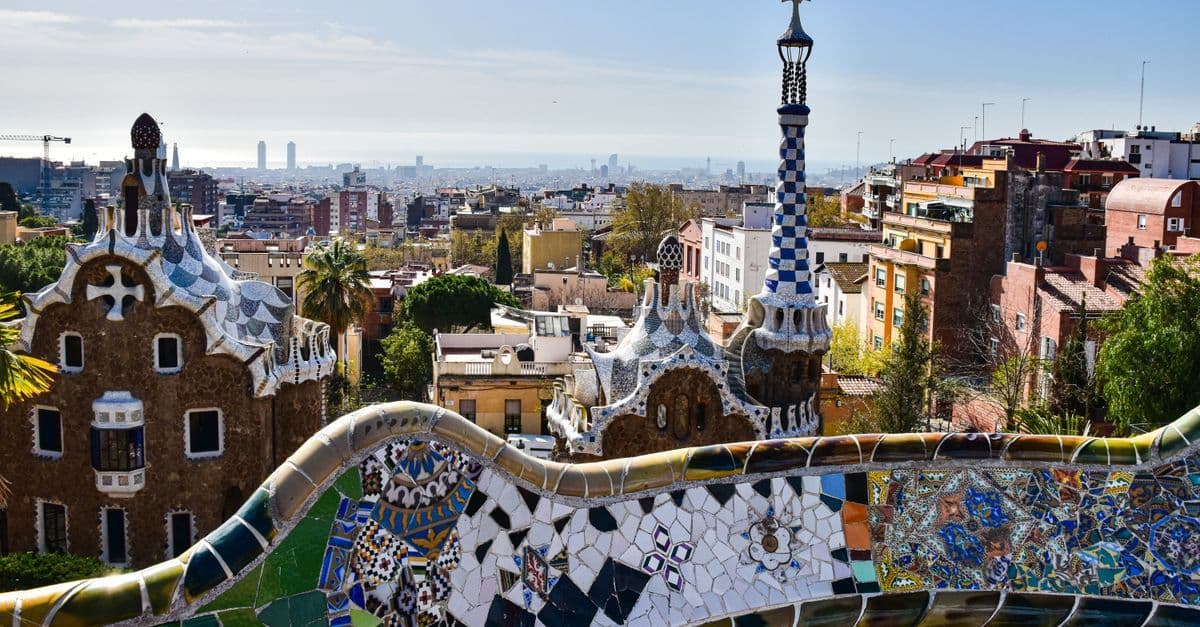
Spain is the UK's top overseas holiday destination, drawing around 17 to 18 million British visitors per year. Barcelona sits at the head of that queue: direct flights operate from more than 20 UK airports, the journey from London runs to roughly two hours, and the city stacks Gaudí architecture, an accessible beach, and one of Europe's most distinctive food cultures into a grid compact enough to walk across on a decent afternoon.
That combination is the point. Most European cities make you choose between culture and coast.
The overtourism story has shifted things since 2024, though, and not entirely in the wrong direction. Anti-tourism protests broke out across the city, with residents pushing back against the volume of visitors and the short-term rental market reshaping their neighbourhoods. Barcelona has since tightened licencing for short-term lets considerably, which has made the accommodation landscape less chaotic for travellers willing to look past the obvious options.
The practical result for a UK visitor: the tourist traps are easier to sidestep than they were a few years ago. Barrios like Gràcia, Poblenou, and Sant Pere are well-connected by metro, priced more reasonably than anything within walking distance of Las Ramblas, and far quieter. Travelling with some awareness of where locals actually eat and stay turns out to be cheaper and more interesting, not a compromise you're settling for.
Popularity's clear. But when should you actually go?
When is the best time for a Barcelona holiday?
Shoulder season is the clear answer: April to May or September to October. Crowds stay manageable, prices drop noticeably from the summer peak, and the weather makes actually enjoying the city straightforward.
Peak summer catches UK visitors off guard more often than not. The heat runs considerably higher than British travellers typically expect; Barceloneta beach packs out completely, queues roughly double once school holidays land, and July and August flight prices reflect the competition for seats.
Low season is underrated. If your trip isn't built around swimming or late outdoor evenings, winter in Barcelona is a cracking option: quieter, meaningfully cheaper, and more relaxed than the summer version of itself.
Timing's sorted. Next: what shoulder season actually looks like when you're there.
Shoulder season: the sweet spot for most UK travellers
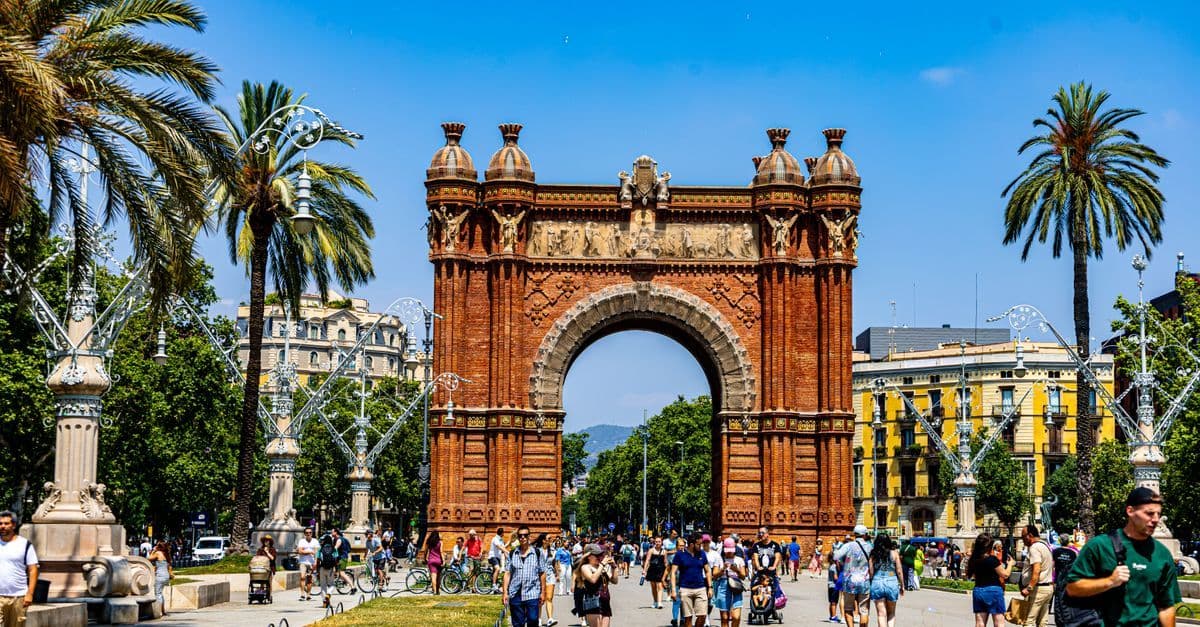
Flights and hotels in April, May, September, and October cost meaningfully less than their July and August equivalents. For a four-night city break, that price difference can cover a serious dinner or simply stretch the trip by a night.
Spring brings the parks into bloom. Easter week draws crowds, but they thin quickly once the bank holiday weekend passes. The temperature is warm enough to sit outside comfortably without the sapping heat of midsummer.
September and October flip the equation: Barceloneta is a fraction of its August self, the sea holds enough warmth for a swim, and prices have already dropped back from peak. Book the shoulder season and the city stops feeling like a logistical obstacle. It becomes the holiday.
Peak summer: what to expect in July and August
July and August bring peak heat, peak crowds, and peak hotel prices to Barcelona. Coastal humidity makes the temperature feel more punishing than it looks on paper, and Sagrada Família queues without a pre-booked ticket run past two hours. Hotels hit their annual ceiling across these months, with central locations booking out three to four months ahead.
The brochure version of summer looks ideal. The lived version is harder work.
Go if the school calendar forces your hand. Know it's the expensive, crowded way to do a Barcelona holiday.
How much does a Barcelona holiday cost from the UK?
A seven-night package from the UK, flights and hotel included, typically runs from around £600 to £1,200 per person. Season and hotel standard drive that range; shoulder months push costs towards the lower end.
Daily spending splits by travel style. The mid-range daily figure mentioned in the opening section covers comfortable meals, transport, and a central hotel without cutting corners. A genuine budget day is possible at €60 to €80: a hostel bed or basic hotel room, plus lunch at the menu del día.
That set lunch is the most effective single cost lever in the city.
Most restaurants run the set lunch Monday to Friday, and the cooking is frequently identical to the evening à la carte at twice the price. Move off Las Ramblas onto any side street and prices drop, the room fills with people who actually live nearby, and the food is better.
Add a nightly tourist tax on top of accommodation costs. Barcelona has been incrementally increasing this charge, and the exact 2026 rate varies by hotel category. Confirm it at time of booking rather than at checkout.
Compare eSIM plans for Spain — See 2026 pricing →
Barcelona isn't cheap in the way some Southern European cities are. Eat smartly and the daily spend is manageable.
Budget benchmarked. The question now is what to spend it on.
Accommodation costs in Barcelona: hotels and alternatives
Hotels offer predictable pricing and reliable availability. Mid-range options in central areas run €100 to €200 per night. Budget hotels cluster in Eixample and Gràcia, starting from around €40 to €60 per night, with smaller rooms and Metro access rather than prime addresses.
Short-term rentals are the logical alternative, but supply has tightened sharply. Barcelona imposed stricter licensing on rental platforms in 2023, removing a significant number of central flat listings. Fewer options mean more competition for what remains, particularly across peak months.
Book early. Availability in central areas drops fast, and rates track that scarcity.
Top things to do on a Barcelona holiday
The non-negotiable stops on any Barcelona holiday are Sagrada Família, Park Güell, and the Gothic Quarter. All three reward advance planning. El Born and Gràcia are the picks most first-timers miss and most returners wish they'd spent more time in.
Sagrada Família is the obvious starting point. Book timed entry online at least two weeks ahead in summer. The queue for walk-up tickets outside is a significant chunk of a day's sightseeing, and the interior is extraordinary in a way no photograph conveys.
Park Güell operates the same way: book the monumental zone in advance. That's where Gaudí's mosaic terraces and the colonnaded hall are. The surrounding hilltop park is free and worth the walk for views across the city and sea.
El Born and Gràcia are where the city works rather than performs. Independent bars, local restaurants, and afternoons that don't feel like queue management.
Barceloneta is the closest beach to the centre, easy to reach and properly hectic from June through August. In shoulder season it's a different experience entirely.
Free highlights: the Gothic Quarter rewards unstructured wandering; Montjuïc delivers port and city views without any entrance fee at the hilltop. The Boqueria market is tourist-heavy in the central sections, but the outer stalls where residents still shop are worth a detour.
Day trips: Sitges is thirty minutes south by train, a compact beach town with its own distinct energy. Montserrat takes around an hour from Plaça Espanya by rack railway, and the scale of the mountain is a sharp contrast to the city below.
One practical item to sort before you pack.
Staying connected in Barcelona: eSIM, SIM cards and WiFi

Post-Brexit, most UK carriers treat Spain as a paid roaming destination. EE Roam Abroad, Vodafone UK's EU bolt-ons, and Three's Feel At Home all impose daily fees or data caps before throttling kicks in. Check your plan before you fly: the difference between included and charged roaming adds up quickly over a longer trip.
A travel eSIM, installed as a digital profile on your phone at home, is the cleaner alternative for most Barcelona visits. You arrive with data already live: no physical SIM swap, no queueing at an airport kiosk.
HelloRoam offers Spain plans on Orange and Movistar's 5G and 4G networks, from ~£2.24 for 1GB over seven days to ~£6.26 for 5GB across 30 days. For a week of Google Maps, messaging, and social media, the 5GB plan covers a typical seven-night stay without data rationing.
Key fact: HelloRoam's Spain 5GB plan covers 30 days on Orange and Movistar's 5G networks for ~£6.26.
Most modern iPhones and Android handsets support dual-SIM. That matters in practice: your UK number stays active on one slot for bank verification texts and two-factor authentication codes, while data routes through the Spain eSIM on the other. It removes the main friction point of switching carriers temporarily.
A local SIM from El Prat airport or a city-centre phone shop in Eixample is a genuine alternative. The trade-off: your UK number goes dark while the local SIM is active, which creates problems if your bank texts security codes to that number.
Public WiFi across Barcelona is widespread but patchy near busy attractions, and hotel speeds vary considerably. For anything time-sensitive, your own data connection is more reliable.
Data sorted. A couple of common pre-trip questions remain.
Is Barcelona safe for a UK holiday?
Barcelona is broadly safe for UK tourists. The main risk is pickpocketing, concentrated on Las Ramblas and the Metro. Violent crime targeting visitors is not a significant concern.
The precautions are straightforward. Keep bags zipped and worn across the front on the Metro. Avoid leaving your phone face-up on café tables in busy tourist areas. Don't display cameras or valuables in dense crowds near Sagrada Família or Park Güell, where foot traffic is highest and distraction theft is easiest to execute.
Scams operate near Las Ramblas: friendship bracelets pressed onto wrists, and people posing as charity collectors with clipboards. Brief refusal is enough. Keep moving.
The FCDO travel advice for Spain sits at the normal precautions level, but verify the current status on the FCDO website before departure since the rating can shift. Travel insurance is strongly recommended for any international Barcelona holiday. Baseline cover should include medical expenses and trip cancellation; many policies also extend to bag theft and phone loss, which is worth confirming given the pickpocket concentration in the central tourist areas.
Safety understood. One entry formality to clarify.
Do UK citizens need a visa for a Barcelona holiday?
UK passport holders can visit Barcelona without a visa. Spain sits inside the Schengen Area (the 27-country European zone with shared passport-free borders). UK visitors get a 90-day allowance within any rolling 180-day window, covering all Schengen countries combined.
That limit isn't per country. A week in Barcelona, two weeks in Amsterdam, and a long weekend in Paris all count toward the same total.
Before booking flights, check your passport's expiry date. Airlines and EU border rules often require validity extending beyond your intended return date, and some carriers refuse boarding if that requirement isn't met.
ETIAS (the EU's pre-travel authorisation system, broadly equivalent to the US ESTA) is expected to apply to UK visitors at some point. No confirmed launch date has been set. For now, no pre-travel authorisation step is required beyond ensuring your passport is valid for your trip.
Reviewed by HelloRoam's editorial team. Last updated: 26 June 2026.
Get Connected Before You Go


Frequently Asked Questions
UK passport holders do not need a visa for Barcelona. Spain is in the Schengen Area, giving UK citizens 90 days within any rolling 180-day window across all Schengen countries combined.
Shoulder season — April to May or September to October — is ideal. Temperatures run 18 to 24°C, crowds are manageable, and hotel prices are noticeably lower than the July and August peak.
Plan for around €120 to €150 per person per day on a mid-range trip. A budget day is possible at €60 to €80 using a hostel bed and the set weekday lunch at local restaurants.
A seven-night package including flights and hotel typically runs from £600 to £1,200 per person. Travelling in shoulder season pushes costs toward the lower end of that range.
Yes — book timed entry online at least two weeks ahead, or a month ahead during UK school holidays. There is no realistic walk-up option, and unbooked queues outside can take over two hours.
Book the monumental zone of Park Güell in advance online. This covers the mosaic terraces and colonnaded hall. The surrounding hilltop park is free and open without a reservation.
Post-Brexit, most UK carriers treat Spain as a paid roaming destination with daily fees or data caps before throttling. Check your specific plan before travelling as charges add up quickly.
A travel eSIM installed before departure is the cleanest option. Budget eSIM plans for Spain start from around £2 for 1GB, activating before you board so you have data the moment you land.
A 5GB eSIM plan covers a typical seven-night stay for most travellers using maps, messaging, and social media. Budget eSIM plans for Spain offer 5GB over 30 days from around £6.
Yes — most modern iPhones and Android handsets support dual-SIM. Your UK number stays active for bank texts and two-factor authentication while data routes through a Spain eSIM on the other slot.
Barcelona is broadly safe for UK visitors. The main risk is pickpocketing on Las Ramblas and the Metro. Keep bags zipped and worn across the front, and avoid leaving phones on café tables in busy areas.
Friendship bracelets pressed onto your wrist and people posing as charity collectors with clipboards operate near Las Ramblas. A brief refusal and continuing to walk is sufficient to avoid them.
July and August bring temperatures of 28 to 32°C. Coastal humidity makes the heat feel more intense than it appears on paper, and Barceloneta beach becomes extremely crowded throughout the season.
Mid-range central hotels run €100 to €200 per night. Budget options in Eixample and Gràcia start from around €40 to €60, with smaller rooms and Metro access rather than prime-location addresses.
The menu del día is a three-course set lunch with a drink, served Monday to Friday at neighbourhood restaurants for around €12 to €15. It is often the same cooking as the evening à la carte at twice the price.
Sitges is around 30 minutes south by train — a compact beach town worth a half-day trip. Montserrat takes about an hour from Plaça Espanya by rack railway and offers a dramatic contrast to the city.
Gràcia, Poblenou, and Sant Pere offer Metro access, lower prices, and a quieter atmosphere than areas near Las Ramblas. They are well-connected and give a more authentic picture of daily city life.
ETIAS is the EU's planned pre-travel authorisation for non-EU visitors, similar to the US ESTA. No confirmed launch date has been set, and no pre-travel authorisation step is currently required for UK passport holders.
Sources
- Barcelona Holidays 2026/2027 — tui.co.uk
- Barcelona Holidays 2026 / 2027 — onthebeach.co.uk
- Barcelona Holidays 2026 / 2027 — easyjet.com
- Barcelona holidays - Get great offers for cheap holidays — booking.com
- Barcelona Holidays | ATOL Protected 2026/2027 — loveholidays.com
- Barcelona Holidays and City Breaks 2026/2027 — britishairways.com