




HelloRoam is a global eSIM provider offering instant mobile data in 185+ countries. Buy prepaid travel eSIM plans with no extra fees, no contracts, and instant activation on any eSIM-compatible device.

Phoenix Sky Harbor International Airport (PHX): the Complete 2026 Traveler Guide

David Chen
Written by: David Chen
Published date
Updated:
Reading time

11 min read

Phoenix Sky Harbor International Airport (PHX): the Complete 2026 Traveler Guide

![Passenger plane on tarmac ready for departure at phoenix sky harbor international airport phx! [image! image

Phoenix Sky Harbor International Airport PHX: Essential 2026 Facts

Get your Browse All eSIM Plans before you travel.

![Modern terminal interior at phoenix sky harbor international airport phx with check-in counters and signage! [image! image

Phoenix Sky Harbor ranks in the top 10 busiest airports in the United States, processing between 48 and 50 million passengers annually as of 2024 [en.wikipedia.org. Two terminals handle all departures and arrivals: Terminal 3 and the considerably larger Terminal 4.

American Airlines runs the dominant hub at PHX, carrying roughly 35 to 40 percent of all passengers. Southwest Airlines operates a spirited second presence at around 20 to 25 percent of traffic. Roughly 25 carriers in total serve the airport, connecting Phoenix to 120-plus nonstop destinations across the US, Mexico, Canada, and Europe, including London Heathrow via British Airways.

No carrier retail stores operate inside PHX. That's the detail most travelers discover too late.

The nearest AT&T, T-Mobile, and Verizon stores are a 10 to 20-minute drive from the terminals. Activating mobile data before you fly is the dead-simple move for international travelers. HelloRoam's [eSIM for your destination starts at ~$2.02 for 1 GB over 7 days on T-Mobile's 5G network, with activation via QR code before you board.

Key fact: HelloRoam's US eSIM starts at ~$2.02 for 1 GB, 7 days, on T-Mobile's 5G network.

Key fact: HelloRoam's unlimited US day pass costs ~$3.00, running on T-Mobile and Verizon's 5G networks.

According to the City of Phoenix, the airport generates between $38 and $44 billion annually for the Phoenix metro area and supports more than 58,000 jobs [phoenix.gov. With roughly 450,000 aircraft operations per year, it's one of the most animated hubs in the American Southwest.

The layout behind those numbers is worth knowing.

A brief history of Sky Harbor: early years and growth

![American Airlines planes lined up at phoenix sky harbor international airport phx with desert mountains behind! [image! image

Sky Harbor Airport opened in 1935, placing it among the earliest purpose-built commercial airports in the United States, when commercial aviation was still in its early years [en.wikipedia.org. The name draws on Native American tradition: an airport as a harbor in the sky, framing arrival and departure as something more communal than transactional.

Early service was lean. Phoenix was a mid-sized regional city, and scheduled air service reflected that modest scale. Post-war population growth changed the trajectory, pulling major carriers west and turning Sky Harbor into a dynamic node in the national route network. American Airlines recognized the long-term potential and built PHX into a full hub, shaping Southwest US aviation for decades.

Terminal 2 served passengers through most of the airport's modern history. It closed and came down in 2020, leaving the current two-terminal layout: Terminal 3 for lighter traffic from regional and budget carriers, Terminal 4 for American, Southwest, and the international carriers [en.wikipedia.org.

The story is still moving.

As of early 2026, Terminal 4 is mid-expansion, with gate construction underway to absorb Phoenix's energetic pace of incoming residents and sustained regional growth. Timelines on infrastructure projects can shift, so checking skyharbor.com for the latest terminal layout before your trip is the practical approach.

Ninety years of construction and expansion have produced terminals that look nothing like that original 1935 facility.

![Travelers moving through a concourse corridor with luggage at phoenix sky harbor international airport phx! [image! image

Terminal 3 handles Alaska Airlines, Frontier, and Spirit across two concourses: A (gates A1 through A19) and B (B1 through B20). Terminal 4 manages the heavier load, with American Airlines, Southwest, Delta, United, British Airways, Aeromexico, Air Canada, and WestJet spread across concourses B through E, totaling more than 100 gates [skyharbor.com.

The PHX Sky Train connects both terminals at no cost. The automated people mover runs 24 hours a day, seven days a week, with no ticket, tap, or fare required. It links Terminal 3, Terminal 4, the Valley Metro Light Rail station at 44th Street and Washington, and the Rental Car Center [skyharbor.com. From anywhere in either terminal, the Sky Train puts you a zippy, climate-controlled ride away from every ground transport option.

Riding the Sky Train beats dragging luggage through terminal traffic every time.

Light rail into the city costs $2 per trip from that 44th Street station, reaching downtown Phoenix in 20 to 25 minutes [skyharbor.com. Heading to ASU's Tempe campus adds roughly 10 more minutes. The light rail sidesteps the surge pricing that ride-share apps frequently apply during peak arrival windows, and the route is reliable and consistent regardless of what's happening on the 202.

Rideshare pickups at PHX are zoned by terminal. Both Terminal 3 and Terminal 4 have designated ground transportation areas on the lower level, clearly marked with overhead signage. Your app's map pin doesn't always land in the correct zone, so following the physical signs rather than the blue dot tends to save real time during busy periods.

Security is the next bottleneck to plan around.

Security wait times at checkpoints A, B, C, and D

![Open airport terminal with modern staircase near security checkpoints at PHX Sky Harbor! [image! image

Phoenix Sky Harbor splits its security checkpoints across both terminals. Checkpoint A covers Terminal 3 entirely, serving Concourses A and B. Terminal 4 runs three: Checkpoints B, C, and D, positioned across its considerably larger gate footprint. TSA PreCheck lanes are open at all four checkpoints, and CLEAR+ lanes operate at Checkpoints B and D in Terminal 4 [clearme.com.

Off-peak, PreCheck averages under 20 minutes at PHX. Standard lanes during busy periods can run considerably longer, particularly at the checkpoints feeding American's heavy Terminal 4 traffic.

Two congestion windows are predictable enough to plan around. Monday mornings pack Terminal 4's checkpoints with business travelers. Sunday evenings bring the same problem from the opposite direction, with weekend leisure passengers heading home in waves. Avoid both those windows and Sky Harbor's security moves at a brisk clip for an airport of this size.

The MyTSA app shows real-time wait estimates for PHX checkpoints. Check it the morning of your flight, not when you're already at the curb.

Checkpoint A is Terminal 3's only entry point. No weighing one lane against another.

If you hold Global Entry, that credential speeds up international arrivals through customs. TSA PreCheck is the relevant benefit for departures, and PHX honors it at every active checkpoint. For travelers with either credential, the security experience here is genuinely low-stress by major-airport standards.

Parking decisions land before you reach any checkpoint. Getting that sorted in advance means arriving with time to spare rather than sprinting.

Parking at Sky Harbor Airport

![Traveler approaching a security checkpoint lane at phoenix sky harbor international airport phx! [image! image

The cheapest parking at Sky Harbor isn't the most convenient. Economy Lot rates are the lowest available, but reaching the terminals requires a free shuttle, which adds time on both ends of your trip. For a long weekend or longer, that trade-off is worth it. For a tight 6 a.m. departure, the terminal lots are easier.

Parking OptionEconomy Lot
LocationOff-site
Shuttle NeededFree, included
Cost LevelLowest
Online BookingVia PHX Park
Parking OptionTerminal 3 Lot
LocationWalking distance to T3
Shuttle NeededNo
Cost LevelHigher daily rate
Online BookingVia PHX Park
Parking OptionTerminal 4 Lot
LocationWalking distance to T4
Shuttle NeededNo
Cost LevelHigher daily rate
Online BookingVia PHX Park
Parking OptionPHX East Lot
LocationNear T4, overflow
Shuttle NeededCheck on-site
Cost LevelMid-range
Online BookingVia PHX Park

Booking through PHX Park ahead of arrival saves up to 25 percent off drive-up rates [skyharbor.com. That's a clean win for anyone who knows their departure date.

Rental car drop-off follows a different circuit. The Rental Car Center sits off the main terminal campus; you return the vehicle there, then take the free PHX Sky Train back to your terminal. Budget extra time for that leg, especially on early morning departures when the rental lot handles volume from overnight returns.

Rideshare and taxi pickup zones are clearly signed at both Terminal 3 and Terminal 4, with dedicated curbside areas that keep the flow from turning into a scramble. There's no ambiguity about where to stand, which matters after a red-eye.

Your terminal assignment is set by your airline, and knowing which carriers operate from which terminal changes the parking calculation entirely.

What Airlines Fly Out of Sky Harbor Airport?

![Multiple aircraft on the runway at sunset departing phoenix sky harbor international airport phx! [image! image

More than 25 airlines operated out of Phoenix Sky Harbor as of early 2026 [skyharbor.com. American Airlines accounts for roughly 35 to 40 percent of total passenger traffic; PHX functions as one of its major hub airports. Southwest runs a spirited domestic network covering another 20 to 25 percent. Those two carriers handle the majority of daily departures.

The common assumption that PHX is a domestic-only connector doesn't hold up.

British Airways flies direct to London Heathrow, making it the sole transatlantic nonstop departing Phoenix. Air Canada and WestJet connect the city to Toronto, Calgary, and Vancouver. Aeromexico and Volaris add capacity on Mexico routes beyond what the domestic carriers already cover.

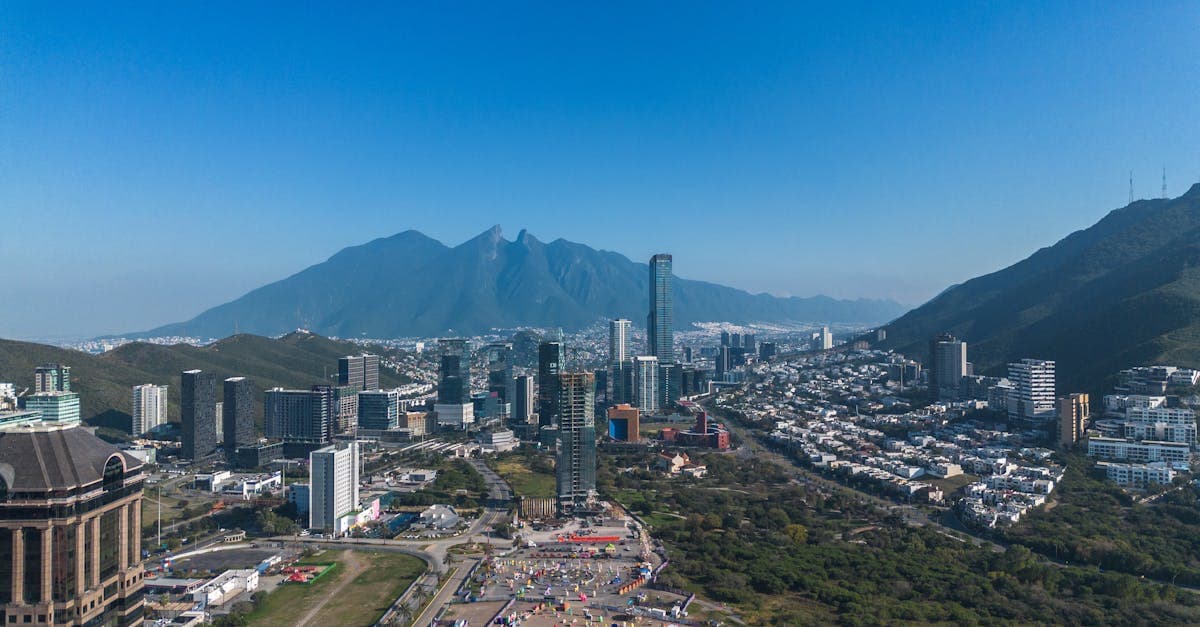
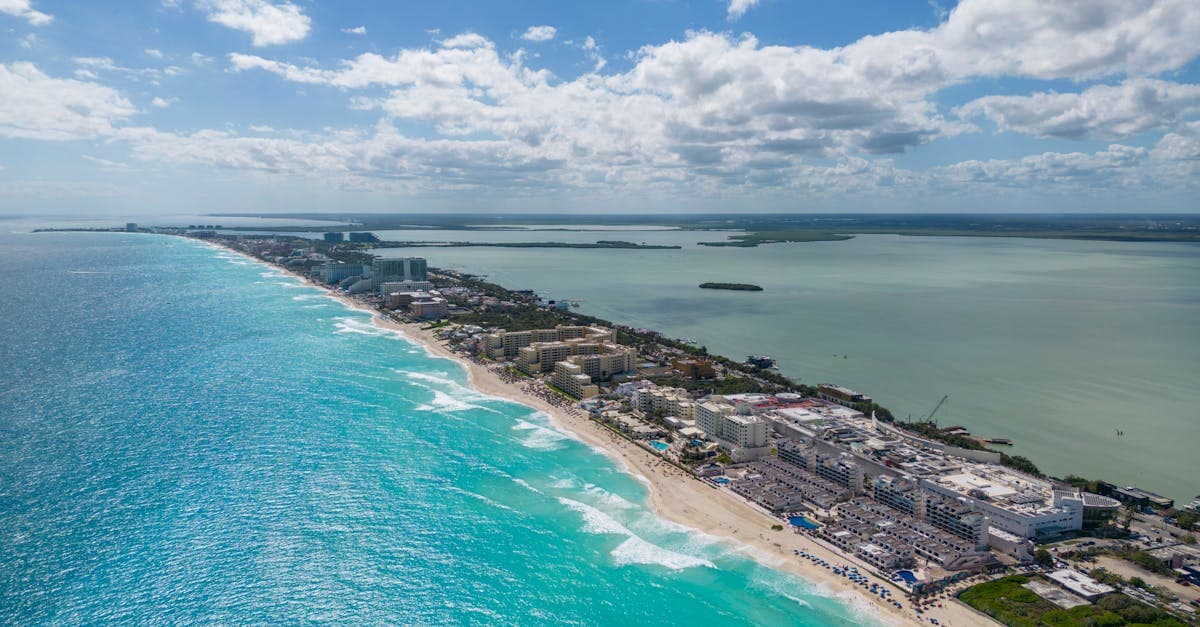
Mexico service at PHX is particularly deep. Cancun, Mexico City, Guadalajara, Puerto Vallarta, Los Cabos, and Monterrey all have direct connections from Phoenix. For travelers based in the Southwest and Midwest, that turns PHX into a practical gateway for Mexican destinations without routing through Dallas or Los Angeles.

Seasonal routes to the Caribbean and Central America extend the map further still. These typically run heaviest between January and April, aligned with snowbird travel and spring break demand.

The nonstop destination count, noted earlier, spans North America, Mexico, Canada, and one transatlantic corridor. For a landlocked desert metro, that's an animated lineup.

Knowing which airline you're on tells you your terminal, your checkpoint, and how much buffer time you actually need before the gate closes.

How Early Do I Need to Be at Sky Harbor Airport?

![Jet bridges extending from a terminal gate at phoenix sky harbor international airport phx! [image! image

For domestic flights, 2 hours is the standard minimum. International departures call for 3 hours. Those aren't arbitrary numbers; they account for check-in, bag drop, security, and the walk to your gate across a sprawling two-terminal facility.

TSA PreCheck and CLEAR both cut that math considerably. With either credential, 90 minutes covers most domestic departures at PHX during normal travel periods [clearme.com. Without expedited screening, count on the full 2 hours.

There's a seasonal catch.

Spring Training brings roughly 200,000 visitors to the Phoenix metro between February and March. The WM Phoenix Open and major holiday weekends create similar pressure. During those windows, add 30 to 45 minutes to whatever buffer you'd normally build in. Terminal 4 absorbs the bulk of that strain, and morning peak hours hit Checkpoints B, C, and D hardest.

Picture an 8 a.m. departure from Terminal 4 on a Monday in early March. Rideshare surge pricing is real, the departure curb is backed up, and the line at Checkpoint C wraps past the check-in counters. Two hours barely works. Three is comfortable.

Curbside check-in at both terminals removes the bag-drop variable from the clock. Use it whenever your airline offers it, especially during Terminal 4 peak mornings.

Once through security, connectivity becomes the priority.

Staying Connected at PHX: Wi-Fi, eSIM, and Mobile Data Options

![Busy airport terminal with flight information screens for travelers staying connected at PHX! [image! image

PHX runs a free Wi-Fi network called PHX Sky Ride, no login required and no time cap [skyharbor.com. Typical speeds range from 20 to 50 Mbps during normal periods, enough for boarding pass pulls, app downloads, and messaging. During Spring Training weekends and peak holidays, that window narrows to 5 to 15 Mbps.

No carrier retail stores operate inside either terminal. InMotion kiosks sell prepaid SIMs, but at airport-premium pricing that reflects a captive audience. The nearest T-Mobile, AT&T, and Verizon stores are a 10 to 20 minute drive away, which doesn't help once you're past security.

The smarter move is an eSIM bought before the trip.

T-Mobile and AT&T carry strong 5G coverage throughout Terminal 3 and Terminal 4 as of early 2026. HelloRoam provides access to T-Mobile's 5G network in the US, with plans starting at ~$2.02 for 1 GB over 7 days. For heavier data use or longer stays, the 3 GB 30-day plan runs ~$5.28.

Key fact: HelloRoam's 3 GB 30-day US plan costs ~$5.28 on T-Mobile's 5G network.

Most eSIM providers support Apple Pay and Google Pay at checkout, so the full process from purchase to activation takes a few minutes. Scan the QR code during the security wait, confirm activation at the gate, and the connection is live before boarding closes. No SIM swap, no kiosk line.

For international arrivals, Global Entry holders clear customs in under two minutes. An eSIM activated during the flight means walking out of arrivals with a live connection, no retail stop required.

One honest caveat: for a short domestic hop where your existing carrier plan covers data, an eSIM is overkill. That calculus changes the moment your itinerary crosses a border. PHX serves direct routes to Mexico, Canada, and the UK, and carrier roaming charges on any of those legs add up fast.

A few quick questions still come up about PHX.

David Chen, Travel Writer at HelloRoam
David Chen is a travel writer at HelloRoam who covers mobile connectivity and travel tech for international visitors. He compares data plan pricing for short trips and extended stays, and tests eSIM activation at major international airports. David also covers hotspot options for business travelers so readers can skip the SIM card counter and get online fast.

Related Articles

Stay Connected with Travel Data
View all destinations
United States travel destination
United States flag
United States
United Kingdom travel destination
United Kingdom flag
United Kingdom
United Arab Emirates travel destination
United Arab Emirates flag
United Arab Emirates