

Quick Answer: US Central Business Districts at a Glance
The US has more than 330 officially defined central business districts, collectively housing around 12 million office workers. Three carry the most global weight: Midtown Manhattan, The Loop in Chicago, and Brickell in Miami.
Hybrid work reshaped when these districts actually hum. Tuesday through Thursday carry peak foot traffic across every major US metro; Monday and Friday thin out noticeably. Plan client meetings mid-week and you'll find offices, restaurants, and transit running at full capacity.
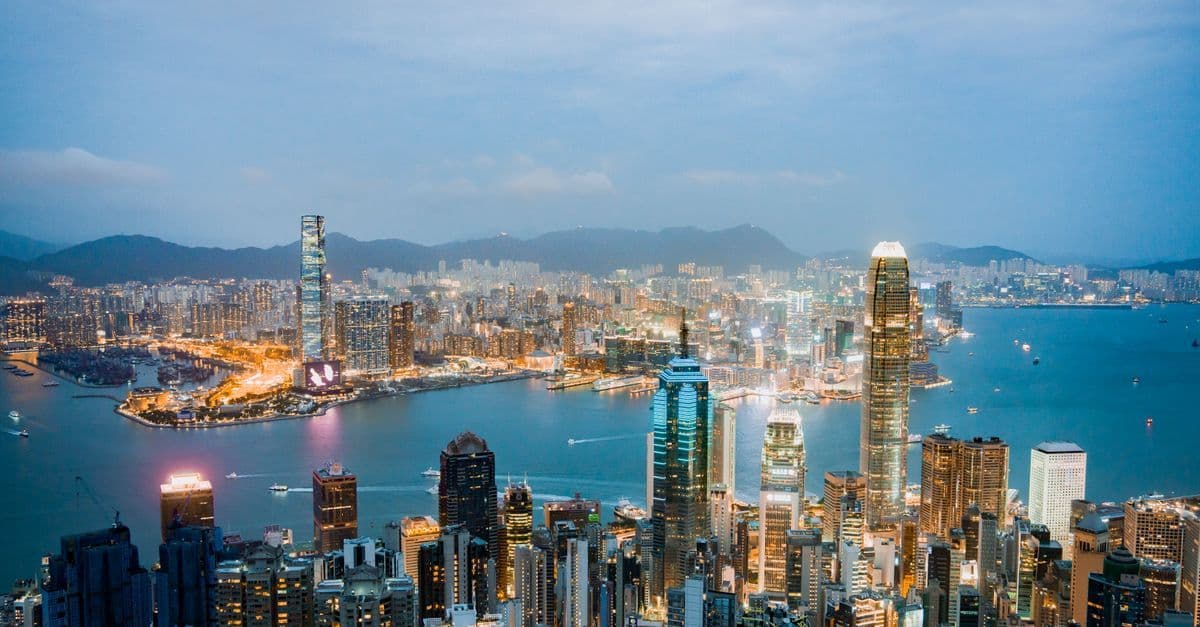
International travelers who move between US financial hubs and Asia-Pacific business centers can cover connectivity on both ends. HelloRoam offers eSIM for Hong Kong from ~$3.49 per day on csl's 5G network, with no physical SIM to track down.
City-by-city, though, these numbers tell very different stories.
What Is a Central Business District?
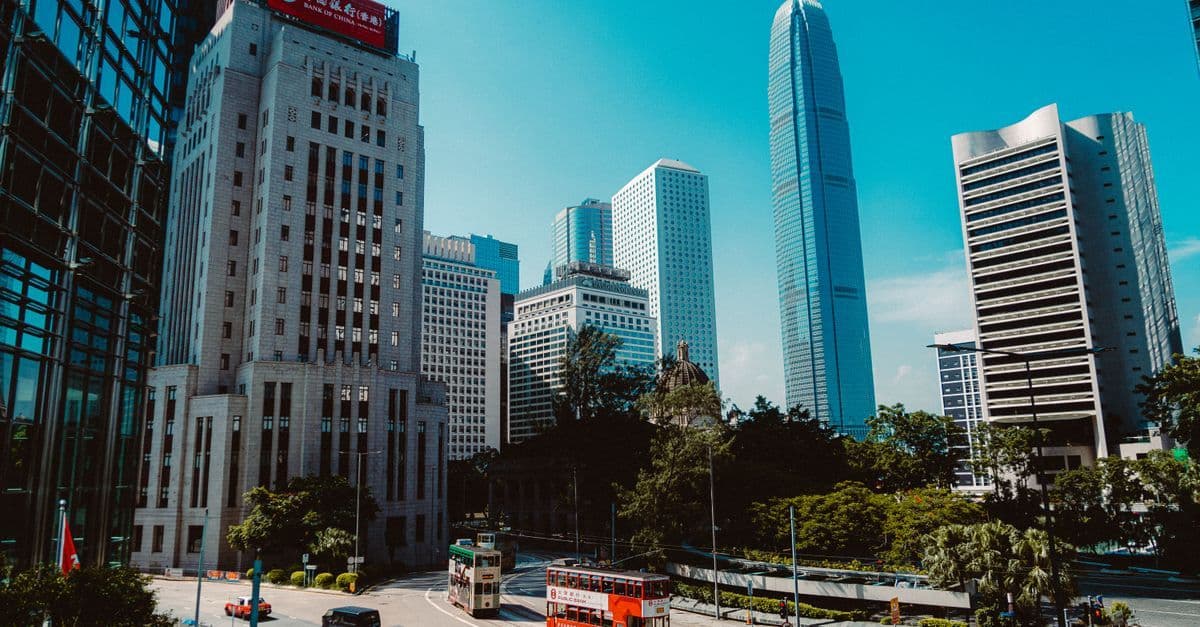
A central business district is the primary commercial and office core of a city: the zone where office towers, law firms, banks, government agencies, and tech campuses concentrate at their highest density. Transit lines converge there. Land values peak. Zoning stacks office, retail, hotel, and residential uses on top of each other, often within the same block.
New York is the only major US city running two fully formed CBDs simultaneously. Midtown Manhattan handles corporate headquarters, media companies, and global finance firms. The Financial District downtown manages Wall Street, stock exchanges, and the Federal Reserve Bank. Every other US city, from Dallas to Denver to Atlanta, concentrates its commercial core in a single district.
Finance, law, and government anchor most CBDs. Tech complicated that pattern in Seattle and San Francisco. Software companies staked out downtown territory before hybrid work scattered workforces across the suburbs. The result is a varied landscape: some CBDs run at full intensity from early morning through evening, while others hold activity closer to a traditional 9-to-5.
The definition clicks when you hold a CBD against its closest comparison in American real estate: the suburban business park.
How CBDs differ from suburban business parks
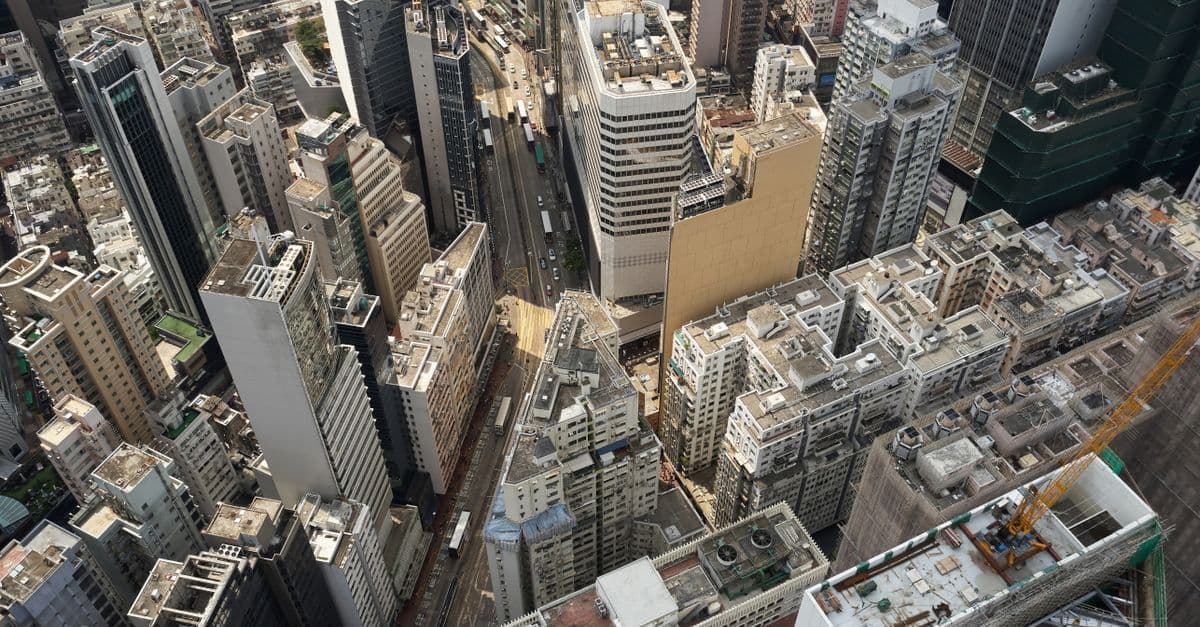
The contrast comes down to one tangible variable: whether you can arrive without a car. Suburban business parks assume you're driving. CBDs assume you're not.
A typical suburban campus spreads horizontally across acres of parking. Buildings rarely top six stories. No coffee shop at street level, no hotel around the corner, no subway entrance 50 feet from the lobby. You drive in, park, work, drive out.
CBDs flip every one of those constraints. Towers rise 40 to 60 stories. Multiple uses stack in the same block: offices above, retail below, a hotel adjacent, apartments in converted upper floors. You walk to lunch. You catch the train home. The density is the point.
That vertical concentration has a direct, grounded effect on mobile connectivity. Dense foot traffic justifies heavier cell infrastructure investment from the major carriers. Indoor 5G performance in well-deployed US CBDs typically outperforms what you'd get in most suburban office parks, because carriers concentrate antenna installations where the daytime population runs heaviest.
That contrast matters directly when choosing where to base yourself for a trip.
Which US Cities Have the Most Active Central Business Districts?
New York, Miami, and Dallas show the strongest post-pandemic recovery among major US central business districts, reaching roughly 60 to 75 percent of pre-pandemic occupancy by 2025. San Francisco sits at the opposite end.
San Francisco's CBD carries the highest office vacancy rate in the country, at around 35 percent. That's a striking figure for a city that defined a decade of US tech growth. What filled the gap: sublease listings, coworking conversions, and ground-floor retail holding on while upper floors went dark.
The Sun Belt is where the bold growth story is. Miami's Brickell district has become the preferred landing point for Latin American finance firms relocating northward. Charlotte and Dallas absorbed waves of corporate relocations from California and the Northeast, expanding their commercial cores faster than any comparable metros over the past three years.
Dallas is the surprise entrant. Its CBD and adjacent Uptown corridor have pulled in enough corporate relocations to rank among the country's most active commercial districts.
International visitors to the US cluster heavily in the top-12 CBDs, making those districts the most common first stop for any arriving business traveler who's just cleared customs.
Each of these cities looks completely different on the ground once you're actually there.
Midtown Manhattan and the Financial District: New York's dual CBDs
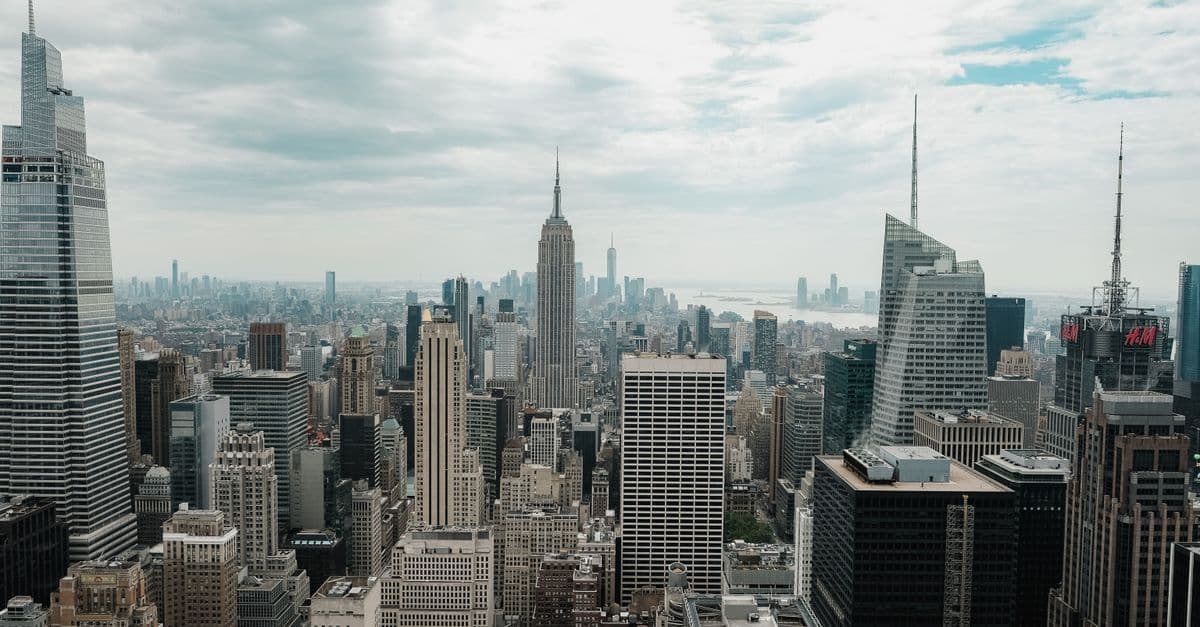
New York City is the only major US metro with two geographically distinct, simultaneously operating central business districts: Midtown Manhattan and the Financial District, about 4 miles apart by street distance.
Midtown is the larger zone. Between 400,000 and 500,000 workers arrive on peak weekdays, concentrated along the corridor between Grand Central Terminal and Penn Station. Corporate headquarters, media companies, law firms, and consulting practices fill towers above Park Avenue and Sixth Avenue. The Financial District, clustered near Wall Street and the Hudson waterfront, draws more than 300,000 of its own.
These aren't extensions of each other. Different business cultures. Different transit patterns. Different lunch crowds. A morning meeting in Midtown and an afternoon client visit in the Financial District is a 40-minute subway ride or taxi fare, not a short walk between conference rooms.
5G from T-Mobile, AT&T, and Verizon covers both zones. T-Mobile's mid-band spectrum provides the steadiest indoor signal inside glass towers. Verizon's ultra-wideband network runs fast on the street but drops noticeably in building lobbies.
Most US cities run one CBD. New York runs two, at full operational scale, four miles apart.
Chicago and the Sun Belt show a different growth story.
The Loop in Chicago and the rise of Sun Belt business districts
Chicago's Loop is the largest CBD concentration outside New York, comparable in scale to lower Manhattan on a peak business day. The assumption that Chicago is coasting on past industrial strength doesn't square with its current office occupancy.
What's actually striking: several Sun Belt central business districts are pulling international corporate activity at rates that rival established coastal markets.
Miami's Brickell district has built a specific role as a gateway for Latin American business, supporting a year-round flow of international visitors that most US cities don't see. Charlotte's Uptown has been adding financial services tenants as banking operations relocate from higher-cost coastal markets, sitting alongside Atlanta as one of the Southeast's main financial hubs.
Sun Belt CBDs don't have an off-season.
That matters for scheduling. Nashville in January, Phoenix in August, Raleigh-Durham in any month are running at full professional capacity. The idea that substantive corporate activity concentrates only on the coasts has been contradicted by office absorption figures for several years now. First-time business visitors often arrive expecting a regional city and find a full-scale financial district instead.
Knowing the landscape is step one; arriving connected is step two.
Staying Connected in US Central Business Districts
All top-12 US central business districts have commercial 5G coverage from at least two of the three major carriers. For international visitors, that coverage means nothing without a data plan that can actually use it.
The network breakdown inside CBD towers
T-Mobile built out mid-band 5G using the 2.5GHz n41 spectrum band across most major US CBDs, giving it the most consistent indoor performance inside steel-and-glass office towers. AT&T's C-band rollout, completed across major metros through 2024 and 2025, covers downtown corridors competitively.
Verizon's ultra-wideband network peaks outdoors but weakens quickly inside buildings. In most glass skyscrapers, Verizon falls back to LTE (long-term evolution, the 4G standard that handles calls and data when indoor 5G signal isn't available). All three carriers deliver workable coverage throughout Midtown, the Loop, and Miami Brickell.
Why public CBD Wi-Fi falls short
Most US CBDs have free public Wi-Fi on major plazas and transit hubs. In practice, these networks are bandwidth-capped, unsecured, and throttled during peak business hours. Fine for checking a street address. Not adequate for a client video call or uploading files between meetings.
Carrier day passes versus an eSIM: the actual math
Home carriers from most countries charge between $10 and $15 per day for US roaming add-ons. A five-day trip runs $50 to $75 before throttling, and most day-pass plans cap hotspot sharing or disable it entirely, which matters if you need to connect a laptop in a coworking space.
An eSIM (a digital SIM profile activated by scanning a QR code, no physical card swap required) is the more practical option for international visitors arriving without a US carrier plan.
There's a specific advantage worth flagging: if you're enrolled in Global Entry, you'll clear US customs in minutes at airports like JFK, O'Hare, or LAX. A pre-activated eSIM means your maps, messaging, and ride-share apps are live before you reach the taxi stand, not 20 minutes later after hunting for airport Wi-Fi.
HelloRoam offers eSIM plans that activate by QR code before you board, so the first signal hit off a US network arrives before your luggage does. Check the HelloRoam website for current US-compatible plans and pricing to compare against carrier day-pass costs.
What to confirm before you leave home
- eSIM support: most iPhones from the XS model onward and most flagship Android handsets since 2020
- Install the eSIM profile on home Wi-Fi before you depart, not at the airport gate
- Keep your home number active in dual-SIM mode if you need to receive calls on your regular number
Connectivity sorted, the question becomes how these districts are changing.
How Are US Central Business Districts Evolving in 2026?
The defining feature of US central business districts right now is a split-week occupancy pattern that most business visitors don't account for when planning trips. Peak days run Tuesday through Thursday across every major market. Monday and Friday occupancy drops below 35% in most cities.
That's not a minor fluctuation. It changes the character of the streets.
The Tuesday-through-Thursday reality
On a peak Wednesday, Midtown Manhattan and the Chicago Loop feel the way CBDs are supposed to feel: towers at capacity, lunch spots with queues, transit running heavy. On Friday morning, the same blocks are noticeably quieter. For visiting professionals, scheduling client meetings or pitches outside the Tuesday-to-Thursday window means competing for attention on days when most hybrid workers have already left for the weekend.
Office-to-residential conversions accelerating
San Francisco, New York, and Washington DC have all pushed programs to convert surplus office inventory into residential units. San Francisco's persistently high vacancy rate is driving some of the most aggressive conversion activity in the country. New York's program targets older Class B and C buildings in the Financial District and Lower Manhattan. These projects take years from approval to occupancy, but they're reshaping who lives in these districts, not just who works there.
Coworking filling the gap
In high-vacancy markets, coworking operators have absorbed substantial square footage. For short-term business visitors, that creates a tangible option: flexible day desks in established CBDs, available without a long-term commitment, often in buildings whose addresses are already on your meeting itinerary.
International visitor volumes rebounding
International visitor volumes to US CBDs were approaching pre-2020 levels by mid-2025. Business visitors concentrate their itineraries in CBDs and tend to stay longer than leisure travelers, which keeps foot traffic in these districts elevated even as resident office occupancy fluctuates with the hybrid schedule. The CBDs themselves remain the most productive address for a business trip, whatever day of the week you land.
That shift changes how to plan a business visit to any US CBD.
Do I Need an eSIM When Visiting a US Central Business District?
For international visitors without a US carrier plan, an eSIM cuts setup time to minutes and sidesteps the carrier store entirely. Activate before boarding, scan a QR code in the departure lounge, and you'll have a working data connection at Midtown Manhattan or the Chicago Loop before you've cleared customs.
When an eSIM makes sense
- Your home carrier's international roaming rates are high and require a call or an app update to enable before departure
- Your schedule includes ride-share apps like Uber or Lyft: both need live cellular data to locate a driver, especially in dense CBDs where every block looks identical
- Video calls are on the calendar: hotel conference Wi-Fi works, but elevator banks, street crossings between meetings, and airport pickups don't
- Navigation requires live transit data that offline maps don't carry
When you might skip it
A visit under 48 hours, anchored to one hotel and a set of pre-booked meetings, is the narrow case where hotel Wi-Fi may cover the basics. No commute, no street navigation, and your phone rarely leaves the conference floor.
That window closes fast.
Public Wi-Fi in CBDs like San Francisco's Financial District or Washington, DC's Penn Quarter is bandwidth-capped and unreliable under crowd load. Step outside for lunch, and you're back to needing cellular.
The eSIM profile installs via QR code before departure and goes live the instant your phone connects to a US network after landing. No SIM swap, no kiosk queue, and no hunting for a carrier store in an unfamiliar terminal.
For any business trip longer than a single hotel stay, cellular data in a US central business district isn't optional. It's infrastructure.
Reviewed by HelloRoam's editorial team. Last updated: 22 June 2026.
Get Connected Before You Go


Frequently Asked Questions
A central business district is the primary commercial and office core of a city, where office towers, banks, law firms, and transit lines concentrate at their highest density. Land values peak and multiple uses stack within the same block.
The US has more than 330 officially defined central business districts, housing around 12 million office workers. The three with the most global weight are Midtown Manhattan, The Loop in Chicago, and Brickell in Miami.
Tuesday through Thursday carry peak foot traffic across every major US metro. Monday and Friday occupancy drops below 35 percent in most cities, so schedule client meetings mid-week to find offices, restaurants, and transit at full capacity.
New York, Miami, and Dallas show the strongest post-pandemic recovery, reaching 60 to 75 percent of pre-pandemic occupancy by 2025. San Francisco lags significantly with an office vacancy rate of around 35 percent.
Midtown handles corporate headquarters, media, and global finance firms, while the Financial District manages Wall Street and stock exchanges. The two zones sit about 4 miles apart with distinct business cultures and transit patterns.
Miami's Brickell district is the preferred landing point for Latin American finance firms relocating northward. It supports a year-round flow of international business visitors at rates most US cities do not see.
CBDs assume you arrive without a car: towers rise 40 to 60 stories with offices, retail, and hotels in the same block. Suburban business parks spread horizontally across parking lots, rarely topping six stories, with no street-level amenities.
All top-12 US central business districts have commercial 5G coverage from at least two major carriers. Mid-band 5G provides the most consistent indoor signal inside steel-and-glass office towers, while ultra-wideband networks peak outdoors but weaken inside buildings.
Public CBD Wi-Fi on plazas and transit hubs is typically bandwidth-capped, unsecured, and throttled during peak hours. It is adequate for checking an address but not for client video calls or uploading files between meetings.
Carrier day passes typically cost $10 to $15 per day and often cap or disable hotspot sharing. An eSIM activated by QR code before departure is usually cheaper for trips of five or more days and works the moment you land.
Most iPhones from the XS model onward and most flagship Android handsets since 2020 support eSIM. Install the eSIM profile on your home Wi-Fi before departure so data is active when you land, not after hunting for airport Wi-Fi.
Miami, Dallas, Charlotte, and Nashville have absorbed waves of corporate relocations from California and the Northeast over the past three years. Sun Belt CBDs run at full professional capacity year-round with no off-season slowdown.
International visitor volumes to US CBDs were approaching pre-2020 levels by mid-2025. Business visitors tend to stay longer than leisure travelers, keeping foot traffic in these districts elevated even as hybrid work reduces daily office occupancy.
San Francisco leads the country with roughly 35 percent office vacancy, driving aggressive conversion of surplus space to residential use. New York and Washington DC have also launched office-to-residential conversion programs targeting older buildings.
Coworking operators have absorbed substantial square footage in high-vacancy US markets. Short-term visitors can access flexible day desks in established CBDs without a long-term commitment, often in buildings already on their meeting itinerary.