

Quick answer: Carnival Adventure deck plans at a glance
Carnival Adventure has 12 passenger decks, running from Deck 4 through Deck 17, with Deck 13 omitted in keeping with cruise industry convention. Staterooms fill Decks 5 through 12 across 41 cabin categories cruise1st.com.au. The upper levels (Decks 14 to 17) are reserved for pools, spa, and entertainment. The ship carries 2,636 passengers at double occupancy carnival.com.au.
Thirteen accessible levels sit behind what looks like fourteen on paper, a reliable quirk of cruise ship numbering. The layout shows a clean three-part split: arrivals and dining at the bottom, cabins through the middle, leisure at the top. That vertical spread matters more than it looks when you're choosing between a high balcony cabin and a midship room closer to the dining rooms.
Now for the full deck-by-deck breakdown.
What is the best deck to have a room on Carnival Adventure?
Midship on Decks 7 and 8 is the strongest choice for most passengers. Midship means the longitudinal centre of the ship, where pitch and roll do the least damage to your sleep schedule. That matters on Pacific crossings from Sydney or Brisbane to New Caledonia or Vanuatu.
Four factors shape the decision.
Motion. Decks 7-8 midship keep movement to a minimum. Forward cabins amplify pitch; aft cabins catch stern roll on beam swells. Lower decks also shift less than upper decks at the same longitudinal position, giving midship Deck 7 a solid stability edge over midship Deck 11.
Price. Forward cabins on Decks 5-6 price lower, partly because of motion and noise exposure. Sheltered Pacific itineraries make these a workable cabin choice. Longer overnight passages are a different story.
Views. Aft balcony cabins offer the best wake outlook on the ship. The catch: engine noise and occasional exhaust on warm nights when you'd want the balcony door open.
Convenience. Decks 9-12 sit close to pools and entertainment venues but farther from the main dining rooms. Families running multiple pool sessions a day often find this a sensible trade-off.
Decks 7-8 midship handle the widest range of passengers without a noticeable compromise.
With deck choice sorted, let's walk through every floor.
Carnival Adventure deck plans: every deck explained
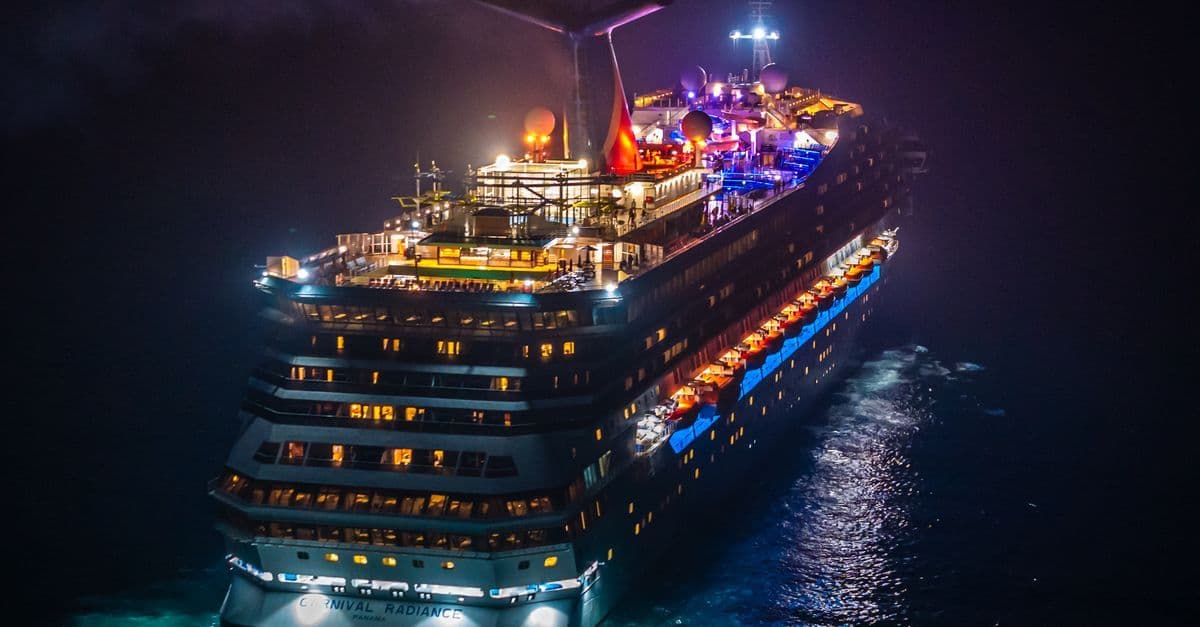
Thirteen accessible levels make up Carnival Adventure's vertical footprint, running from Deck 4 at the waterline to Deck 17 at the top, with Deck 13 skipped in keeping with cruise industry convention cruisedeckplans.com. That puts 13 distinct floors at passengers' disposal, each with a different function.
The lower levels handle arrivals and logistics in a no-fuss layout. The middle decks are cabin territory. The upper levels open into pools, entertainment, and the spa. No deck is purely one thing. Starting from the bottom and working upwards gives the clearest picture of how it all fits together.
Decks 4-6: lower levels, dining and arrival facilities
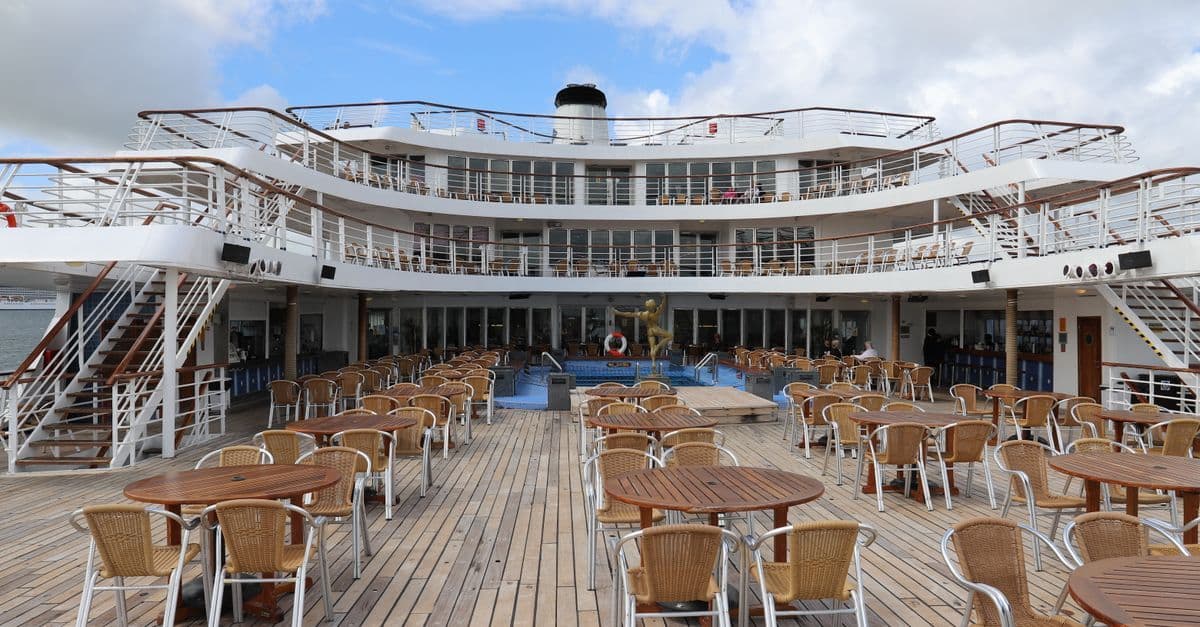
Deck 4 sits at the waterline and handles arrival logistics. The tender boarding area operates from here at anchor ports; on Pacific itineraries that covers stops like Mystery Island and Port Vila, where vessels anchor offshore. The medical centre is on Deck 4 as well, a handy detail to file away before boarding.
Heading ashore at tender ports? Local mobile data becomes practical once you step off the gangway. Understanding What Is an eSIM? before you board saves fumbling with a local SIM card at the pier.
Deck 5 carries lower cabin categories along the hull, the first level of the dining room at the aft end, and a shopping strip. Deck 6 is where the lobby atrium opens across multiple floors, the second dining room level continues, and the teen club occupies a dedicated corridor space well away from cabin areas.
Decks 7-12: the main cabin floors
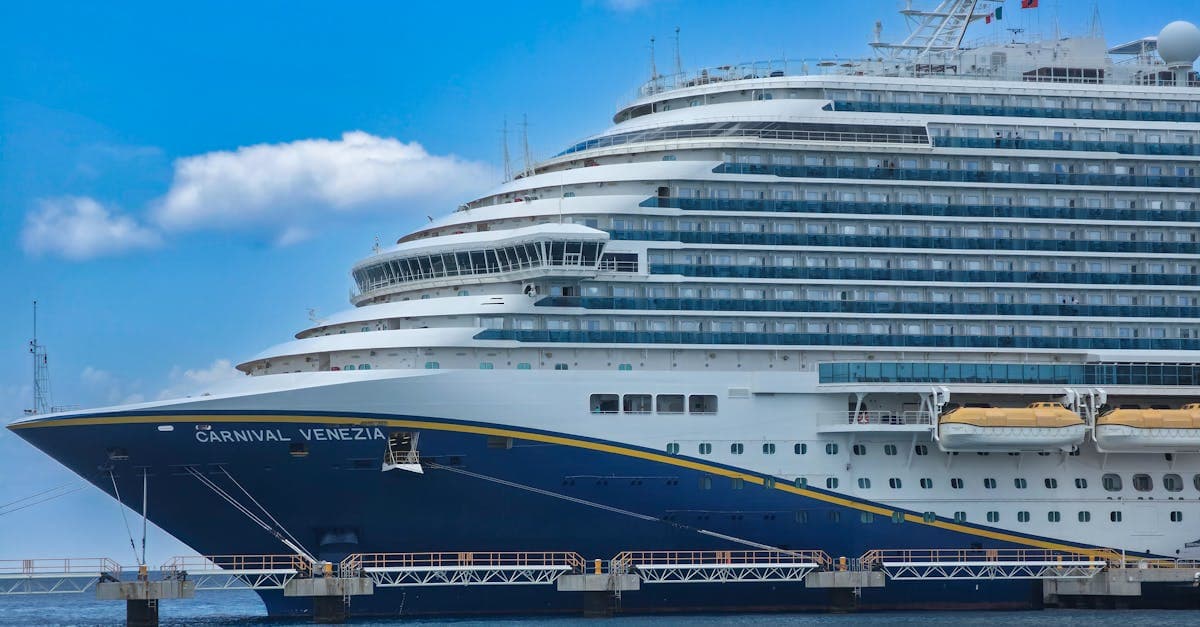
Decks 7 through 12 form the cabin core of Carnival Adventure, with Deck 7 breaking the residential pattern as the ship's social hub. The promenade level carries the casino, the main lounge, and retail shops, sitting directly beneath the first pure cabin decks. Cabins exist on Deck 7 at lower price points, but passengers positioned above the casino floor should factor in the noise cruiseline.com.
Decks 8 through 11 are dedicated cabin territory. The highest concentration of balcony staterooms sits across these four decks, with midship positions offering the most solid ride and the shortest walk to the lifts. Forward cabins in this band cost less and feel Pacific swells more noticeably, a genuine trade-off worth weighing against the price gap.
Deck 12 mixes cabins with direct aft access to the Oasis Pool, a quieter alternative to the main lido two decks above cruisedeckplans.com. Passengers after a deck chair without the crowd tend to claim this area by the second sea day. It's a decent pay-off for the slightly elevated cabin position.
Decks 14-17: lido, spa, entertainment and open-air spaces
Four decks handle everything Carnival Adventure places in the open air. Deck 14 runs the main lido pools and a dedicated adults-only area at the aft. It's the busiest outdoor level on most sailings, which makes locating that adults-only section a handy piece of knowledge for anyone travelling without children thetraveltemple.com.au.
Deck 15 adds the spa, a kids' splash zone, and a second sundeck. The layout at this level is clean and functional, spreading the crowd across two levels rather than one cruisemapper.com.
Deck 16 is the ship's most distinctive floor. The Byron Beach Club and Adventure Park sit here, exclusive to Carnival Adventure and not found on Carnival Splendor thetraveltemple.com.au. These spaces earn their keep on longer Pacific itineraries with full sea days between ports.
Deck 17 closes the stack with a sports court, the nightclub, and the widest panoramic sightlines on the ship. For passengers departing from Sydney or Brisbane, this is the observation level that earns its place before the coast drops from view.
How to score a cabin upgrade on Carnival Adventure
The most consistent route to a cabin upgrade on Carnival Adventure is booking a guarantee category rather than a specific stateroom. Carnival assigns the actual cabin closer to sailing. That placement can land higher than the category floor, occasionally in the tier above, which is what makes guarantee bookings worth understanding before you commit.
Compare eSIM plans for your destination — See 2026 pricing →
VIFP loyalty status shifts the odds. Gold, Platinum, and Diamond tier members receive priority consideration when Carnival redistributes unsold inventory before departure carnival.com.au. A second Carnival voyage changes the maths considerably compared to booking as a first-time passenger.
Check My Cruise Manager in the weeks after booking. Bid-based upgrade offers appear periodically, inviting you to nominate a price above your current category.
Accepted bids are non-refundable.
That detail changes the calculation. The decision requires a straight-up assessment of whether jumping from interior to ocean-view is worth the specific spend on your itinerary.
Late availability produces real surprises. Unsold interior cabins sometimes shift to ocean-view status as the sailing date closes in. Treating this as a strategy is patchy at best. Treating it as a welcome outcome if it happens is the more workable approach.
The practical path: book early for the cabin you want, or book guarantee and accept what Carnival sends. Before either option makes sense, the prior question is which of the two Carnival ships in the Australian market you're actually boarding.
Carnival Adventure vs Carnival Splendor: which ship suits you?
Adventure suits passengers doing their first or second Pacific cruise out of Sydney or Brisbane who want something predictable and manageable. Splendor suits families travelling across generations.
Carnival Adventure and Carnival Splendor both operate Pacific itineraries from Australian home ports, and Australian travellers regularly cross-shop the two before committing. Adventure carries fewer passengers across a more compact footprint; Splendor is the larger ship by every measure. They're not interchangeable.
Splendor is the larger vessel at 113,323 GT, which accounts for the extra stateroom count and additional passenger deck carnival.com.au. That scale difference is more nuanced than the headline numbers suggest. Roughly 380 additional passengers shows up in dining wait times and pool deck density at peak sailings, but Adventure's tighter layout keeps the ship navigable from day one, a counterintuitive advantage that gets overlooked in direct comparisons.
The smaller ship produces a more measured first cruising experience than a vessel that takes two full sea days to properly orient yourself on. The additional deck and stateroom count create enough space for teenagers, younger children, and adults to occupy different sections of the ship without anyone feeling like they're sharing the same common area all week.
Both vessels call at the same Pacific island ports. The on-board experience differs more than the destinations.
Once the ship is confirmed, sorting connectivity for the port days is the remaining practical step before departure.
Staying connected on your Carnival cruise: WiFi, eSIM and port days
Carnival Adventure's onboard WiFi uses a satellite connection that delivers around 1-5 Mbps, workable for messaging and email but not streaming or video calls. Port days in New Caledonia and Vanuatu require a separate data plan: either a carrier roaming pack from Telstra, Optus, or Vodafone AU, or an eSIM activated at home before departure.
Carnival sells WiFi access as a per-day fee or a full-voyage package, both bookable through the Carnival Hub app. The bundled package tends to work out cheaper on longer sailings. At sea, the satellite connection is what it is: functional, not fast.
Port days are where mobile data earns its keep. Noumea in New Caledonia, Port Vila, and Mystery Island in Vanuatu all have local mobile coverage once you step off the tender or gangway. Your Australian SIM will roam automatically onto local networks, but Pacific roaming rates vary by carrier, and coverage at smaller stops like Mystery Island can be patchy.
An eSIM (a digital SIM profile that installs without swapping a physical card) removes that uncertainty. You load the profile before leaving home, and the plan activates when your phone picks up a local tower in port. HelloRoam covers both Vanuatu and New Caledonia, making it a considered fit for Carnival Adventure's standard Pacific routes without juggling two separate plan purchases.
Activate the eSIM profile before boarding in Sydney, Brisbane, or Fremantle. Trying to configure it from the ship while anchored off Mystery Island is the kind of avoidable fuss worth skipping.
A few quick questions before you pack your bags.
Common questions about Carnival Adventure deck plans
Three questions dominate Carnival Adventure pre-cruise research: whether the wine rules are strict, how to land a cabin upgrade, whether midship placement really matters for Pacific swells, and how Adventure compares to Splendor.
Carnival enforces the one-bottle-per-adult wine cap at embarkation carnival.com.au. Upgrades track VIFP loyalty tier and guarantee category selection, not booking date. Midship on Decks 7 or 8 is the practical answer for motion sensitivity. Adventure and Splendor serve different preferences: one is more intimate, the other more activity-dense.
What is the 3:1:1 rule on a Carnival cruise?
The 3:1:1 rule is a carry-on liquids rule from airport security, not a Carnival-specific policy: containers must be 100ml or smaller, all fitting in a single one-litre clear plastic bag, one bag per passenger. Carnival applies it at embarkation because passengers pass through the same security screening used at most cruise terminals.
What Carnival does regulate separately is alcohol. The cruise line caps embarkation wine at one bottle per adult. Spirits are not permitted to be brought on board at all.
How to get a free balcony upgrade on Carnival?
Truly free balcony upgrades are uncommon on Carnival. What passes for 'free' usually involves booking a guarantee balcony category, where Carnival assigns your specific cabin closer to sailing, sometimes placing you in a higher category than you paid for. The alternative is a bid upgrade through My Cruise Manager, which involves a monetary offer, not a freebie.
VIFP loyalty status (Gold, Platinum, or Diamond tier) increases the probability of a complimentary upgrade noticeably. If you're not a loyalty member yet, guarantee booking is the more reliable route.
Which ship is better, Carnival Splendor or Adventure?
Splendor suits families who want more options at every turn: more dining venues, more entertainment spaces, more capacity. It's the bigger ship by every measure.
Adventure is the more intimate choice. First-time cruisers tend to find the layout easier to get their head around, and the smaller crowd is noticeable on sea days.
Both ships run Pacific Island routes. The itineraries overlap considerably; what differs is the scale of the ship you return to each evening.
What is the best deck to have a room on a cruise ship?
Midship on a middle deck is the standard recommendation across most cruise ship classes. Motion is lowest at the centre of the vessel, and you're equidistant from venues at both the bow and stern.
Higher decks come with a real trade-off. You're closer to the pools, but lido noise filters through the floor on sea days, which matters more than most cabin guides acknowledge.
Reviewed by HelloRoam's editorial team. Last updated: 09 June 2026.
Get Connected Before You Go





Frequently Asked Questions
The 3:1:1 rule is an airport security standard applied at cruise terminals: liquids in containers of 100ml or less, all fitting in one clear one-litre bag, one bag per passenger. Carnival also limits embarkation wine to one bottle per adult.
Truly free balcony upgrades are rare on Carnival. The best routes are booking a guarantee cabin category, earning VIFP loyalty status, or bidding through My Cruise Manager. Accepted upgrade bids are non-refundable.
Carnival Adventure suits first-timers seeking a manageable, intimate Pacific cruise. Carnival Splendor is better for families wanting broader entertainment variety, with 3,012 passengers versus Adventure's 2,636.
Midship on Decks 7-8 is the best choice for most passengers, minimising pitch and roll. This position suits motion-sensitive travellers and keeps you close to lifts for easy access across the ship.
Carnival Adventure has 12 passenger decks running from Deck 4 to Deck 17, with Deck 13 omitted following cruise industry convention. That gives 13 distinct accessible levels across the ship.
Staterooms on Carnival Adventure span Decks 5 through 12 across 41 cabin categories. Decks 4 and 14 to 17 are reserved for arrivals, dining, pools, spa, and entertainment.
Aft balcony cabins offer the best wake views on the ship. The trade-off is engine noise and occasional exhaust on warm nights when you want the balcony door open, which is worth factoring into your decision.
A guarantee booking means you select a cabin category rather than a specific room. Carnival assigns your stateroom closer to sailing, and the placement can land higher than the category minimum, occasionally a full tier above.
Deck 14 houses the main lido pools and a dedicated adults-only area at the aft. It is the busiest outdoor level on most sailings, making the adults-only section a useful retreat for passengers travelling without children.
Deck 16 is home to the Byron Beach Club and Adventure Park, features exclusive to Carnival Adventure and not found on Carnival Splendor. These spaces are especially valuable on longer Pacific sailings with full sea days.
Carnival Adventure offers satellite WiFi delivering around 1-5 Mbps, suitable for messaging and email but not streaming or video calls. Access is sold as a per-day fee or a full-voyage package through the Carnival Hub app.
At ports like Noumea, Port Vila, and Mystery Island, Australian SIMs roam onto local networks automatically. An eSIM loaded before departure activates when your phone finds a local tower, avoiding in-port setup hassles.
Gold, Platinum, and Diamond VIFP tier members receive priority when Carnival redistributes unsold inventory before departure. Even one prior Carnival sailing improves your upgrade odds compared to first-time passengers.
Carnival Splendor is the larger vessel at 113,323 GT with capacity for 3,012 passengers across 13 decks. Carnival Adventure carries 2,636 passengers across 12 decks with a more compact, navigable layout.
Forward cabins on Decks 5-6 are priced lower but feel Pacific swells more noticeably than midship positions. On sheltered itineraries they are a reasonable choice; on longer overnight passages the motion trade-off matters more.
Carnival Adventure sails Pacific itineraries from Sydney, Brisbane, and Fremantle. Standard routes include stops in New Caledonia and Vanuatu, with ports such as Noumea, Port Vila, and Mystery Island.
Deck 4 sits at the waterline and handles arrival logistics, including the tender boarding area used at anchor ports like Mystery Island and Port Vila. The ship's medical centre is also located on Deck 4.
Sources
- carnival.com.au — carnival.com.au
- Carnival Adventure deck plans — cruisemapper.com
- Carnival Adventure Cabins — cruise1st.com.au
- thetraveltemple.com.au — thetraveltemple.com.au
- Carnival Adventure Deck Plans & Cabin Details — cruisepassenger.com.au
- Carnival Adventure decks, cabins, diagrams and pics. — cruisedeckplans.com
- Carnival Adventure Deck Plans (Layout & Map) — cruiseline.com