

Quick Answer: vietnam visa for australian
The application lives at evisa.gov.vn, Vietnam's official government portal smartraveller.gov.au. It's entirely online: no embassy queue, no travel agent required.
Step 1: Go direct to evisa.gov.vn
Type the URL directly rather than searching for it. Sponsored third-party sites with official-looking designs surface at the top of Google results and charge two to four times the government fee for an identical outcome. The real portal is evisa.gov.vn, nothing else.
Step 2: Prepare your documents before you start
Have two files ready before you open the form: - A clear scan of your passport bio page (the photo page with your name and personal details) - A recent colour photo of your face against a plain white background, no glasses or hats
Sort these beforehand. Scrambling for a suitable photo mid-application while the session timer runs down is a solid waste of time.
Step 3: Complete the application form
Enter your personal details exactly as they appear in your passport. Select your entry and exit ports from the dropdown list, set your travel dates, and choose single or multiple entry. The entry port selection can't be changed after approval. Getting it wrong means a rejected entry at the border. Check it twice before submitting.
Step 4: Pay the fee
Pay the applicable fee (USD $25 single or USD $50 multiple, as noted in the quick answer above). The portal accepts major credit cards. No AUD payment option exists; your card provider handles the conversion at the prevailing rate.
Step 5: Wait for approval
The approval arrives as a PDF to your registered email address, generally within the processing timeframe covered in the quick answer. During peak Australian travel periods (June to August, December to January), the government system queue runs longer. Apply at least two weeks before your departure date. Flying out of Sydney or Melbourne mid-July? Three weeks out is the sensible play.
Step 6: Present at immigration
Print the PDF or save it offline on your phone. Vietnamese border officers accept both. Hand over the e-visa alongside your passport at the arrival counter. The officer checks the document and confirms your entry port matches your nomination.
The most common application mistake is mismatched ports: booked flights into Hanoi, e-visa nominating Da Nang. Triple-check that nomination at Step 3 before you click submit.
Steps clear. What does it cost in AUD?
eSIM for Vietnam: Check current plans and pricing.
Quick Answer: Vietnam Visa for Australians at a Glance
All Australian passport holders need a visa to enter Vietnam. There's no exemption, no visa-on-arrival without pre-arrangement, and no workaround. The good news: the e-visa system is straightforward, affordable, and applies to the full 90-day stay most Australians actually need.
Here's what matters:
- E-visa cost: USD $25 for single entry, USD $50 for multiple entry evisa.gov.vn
- Maximum stay: 90 days (up from the old 30-day limit, changed in 2023) smartraveller.gov.au
- Processing time: 3 working days via the official portal
- Official portal only: evisa.gov.vn. Third-party "visa agencies" charge two to four times the fee for identical results.
- Passport validity: Must extend at least 6 months beyond your planned departure date
Apply through evisa.gov.vn and nowhere else. Dozens of copycat sites mimic the official portal's design and charge a premium for a service you can do yourself in 15 minutes.
Once you've sorted the visa, data's the next thing to lock in before you fly. HelloRoam offers Vietnam eSIM plans from ~A$5.41 for 1GB over 7 days on Viettel Mobile's network, with no physical SIM swap needed at the airport.
Do Aussie Citizens Need a Visa for Vietnam?
Yes, every Australian passport holder needs a visa to enter Vietnam. Australia isn't on Vietnam's visa exemption list vietnam-immigration.org.vn, so the requirement applies regardless of trip length, entry point, or how you arrive.
Picture rocking up at Tan Son Nhat Airport in Ho Chi Minh City without a visa sorted. Border control won't wave you through, even for a long weekend. That's the reality: there's no exemption for short stays, no grace period, and no workaround for Australian passport holders.
The good news is Vietnam simplified things considerably with the 2023 visa law reform. The government's e-visa portal at evisa.gov.vn became the clear recommended route, replacing the old approval-letter system that required third-party agents. Before the reform, most Australians were capped at 30-day stays. The current e-visa extends that considerably, available as single or multiple entry, processed directly through the official government portal.
One practical requirement that catches travellers off guard: your passport must be valid for at least six months beyond your intended departure date from Vietnam. Check your expiry before you apply. An application rejected for passport validity means starting again.
The visa requirement applies at every international entry point: Hanoi's Noi Bai Airport, Ho Chi Minh City's Tan Son Nhat, Da Nang, and major land and sea crossings. There's no entry method that sidesteps it.
The application process is relatively straightforward, but the official Smartraveller advisory comes with a specific warning that most travellers scroll past at their own cost smartraveller.gov.au.
How to Apply for a Vietnam E-Visa: Step by Step
Applying for a Vietnam e-visa takes around 15 minutes on the official government portal, evisa.gov.vn vietnamembassy.org.au. That's the only site you need. Third-party visa services charge two to four times the official fee to process an application any Australian traveller can handle solo, without assistance or special knowledge.
The complexity most people associate with the Vietnam visa process comes almost entirely from unofficial websites designed to look like government portals. The real thing is boringly simple.
What You'll Need Before You Start
Gather these before opening the application:
- Your passport bio page: a clear scan or photo with no glare, shadows, or cut-off edges
- A recent passport-style photo against a plain background
- Your intended arrival and departure dates
- Your designated entry point: Noi Bai International Airport in Hanoi, Tan Son Nhat in Ho Chi Minh City, Da Nang International Airport, or your chosen land or sea border crossing
- A credit or debit card for payment
Your passport must hold at least six months of validity beyond your final day in Vietnam. Confirm that now, before you fill in a single form field.
Completing the Application
The portal steps through the process in a series of form pages. Enter your personal details exactly as they appear in your passport; even minor discrepancies cause delays at the border. Upload your passport bio page scan and your headshot when the portal prompts you.
Next, enter your trip dates and select your entry and exit points from the dropdown menu. At payment, you'll cover the single-entry or multiple-entry fee noted earlier in this guide. The portal accepts major credit cards. Screenshot or write down your application reference number before closing the browser.
After Submission
Approval arrives as a PDF to your registered email, typically within three working days. The PDF is your visa. Check it the moment it lands: confirm your name, passport number, validity dates, and the entry point listed. Any error needs to be flagged and corrected before departure.
Print the PDF or save it to offline storage on your phone. Immigration officers at Vietnamese airports check it at the entry desk, and mobile data is not guaranteed before you clear customs.
Processing times stretch during peak periods, specifically the June-August school holiday window and the December-January summer rush from Australia. Submit at least a week before you fly. That buffer costs nothing and removes the one variable entirely within your control.
How Much Does a Vietnam Visa Cost in AUD?
The e-visa converts to ~A$38 for single entry and ~A$76 for multiple entry at current exchange rates, with zero service fees charged by the official evisa.gov.vn portal. That's the entire outlay for most Australians applying through the government's own system.
Key fact: Vietnam's official e-visa portal charges no service fee beyond the government application charge. Single-entry converts to ~A$38 at current exchange rates evisa.gov.vn.
Here's how all three routes compare:
Compare eSIM plans for Vietnam — See 2026 pricing →
The cost most comparison guides skip
That agent fee is the number buried in footnotes. The Vietnamese government's component of a VOA application sits at roughly the same level as the e-visa fee, but you also pay a private agent to arrange the approval letter before you leave Australia. Most charge somewhere between A$30 and A$80. Some charge more during peak months.
Run those figures against a direct e-visa application and the VOA route costs more, takes longer, and requires a printed document at the airport.
Embassy visas are largely a fallback for edge cases now. The e-visa delivers the same outcome with faster turnaround and no in-person visit required.
There's also a risk no table captures: approval letters do get delayed. Finding out 24 hours before departure is a stressful experience the e-visa removes entirely.
The cost picture is clear. Choosing the right entry type for your itinerary is the next decision.
Vietnam E-Visa vs Visa on Arrival: Which Option Suits Australians?
For most Australians, the e-visa is the clear, obvious choice. Apply online through evisa.gov.vn, pay the government fee directly, receive email confirmation before you board. No agent involved, no extra charge on top of the government fee, no printed documents to wrangle at the immigration counter.
VOA maintains a presence in travel forums partly because older guides indexed well and keep circulating. Understanding the actual differences makes the call straightforward.
Why VOA no longer has a strong use case
Before the e-visa system expanded to 90-day stays following the 2023 reforms, VOA covered more scenarios. Agents built solid online presences, forums archived their recommendations, and the process became entrenched in travel knowledge even as the e-visa improved substantially. A lot of the advice still visible in search results is outdated.
How the processes actually compare
The e-visa is applied, paid, and confirmed entirely online from Australia. Approval arrives by email before you board the plane.
VOA requires sourcing an approval letter from a licensed Vietnamese agent before travel, paying the agent fee, carrying that letter to the airport, and paying a separate stamp fee at the immigration counter on arrival. Two fees, more steps, one extra document to keep track of.
Entry points
Both options cover major international airports: Noi Bai in Hanoi, Tan Son Nhat in Ho Chi Minh City, and Da Nang International. The e-visa also covers designated land border crossings, which matters for travellers combining Vietnam with overland legs into Cambodia or Laos.
VOA is restricted to select airports and isn't accepted at land borders. That's a real restriction for anyone with an overland itinerary.
When VOA actually makes sense
Emergency travel booked with fewer than 24 hours to departure and no reliable internet access. That's the realistic use case. For any planned trip from Australia, the e-visa wins clearly on cost, confirmation, and convenience.
Visa type sorted. Connectivity is the next item on the pre-departure checklist, particularly relevant after 20-plus hours in the air from Sydney or Melbourne.
Staying Connected in Vietnam: eSIM, SIM Card and WiFi
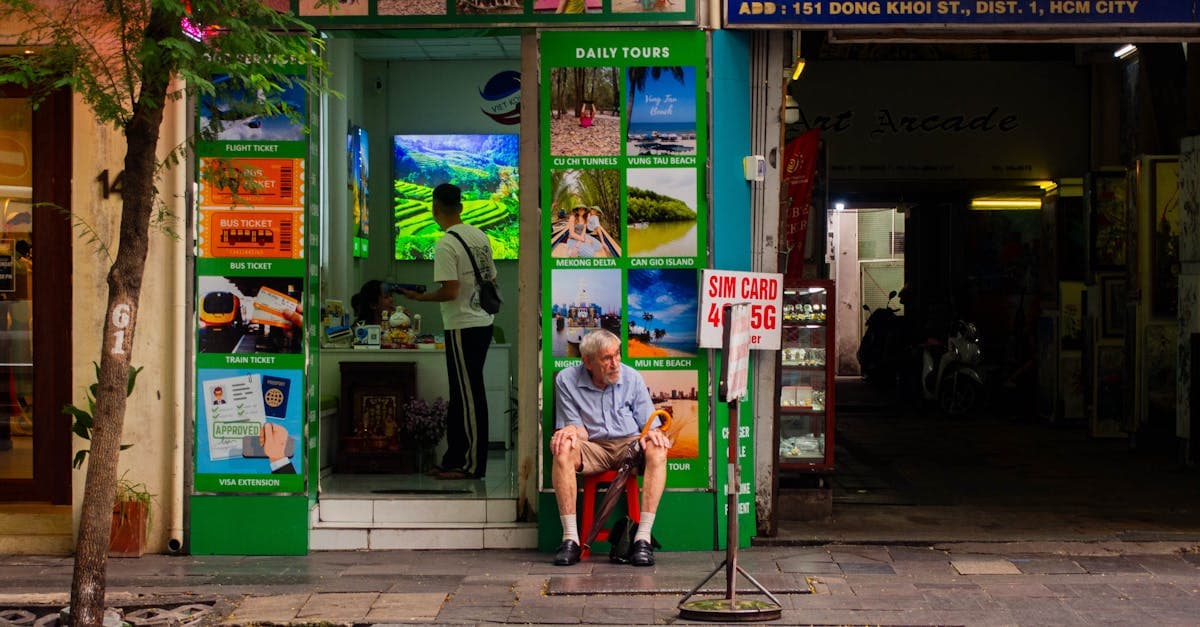
Vietnam delivers solid 4G coverage in major cities and popular tourist zones. Ho Chi Minh City, Hanoi, Da Nang, Hoi An, and Hue are all well-served by established operators. Head into the central highlands or the remote north and coverage thins, particularly on smaller networks.
Three options cover Australian travellers arriving in Vietnam.
Airport SIM card. Counters from Viettel, Vinaphone, and Vietnamobile operate at Tan Son Nhat and Noi Bai. Pricing is competitive, but passport registration is required at the counter. After 20-plus hours in the air from Sydney or Melbourne, that arrivals queue is nobody's idea of a welcome.
Local WiFi. Reliable in most hotels, cafes, and restaurants across the major cities. Drops off sharply outside urban areas and is often absent on intercity bus routes. A useful backup rather than a primary connection.
eSIM. Install before you board, land with data already running. No SIM counter, no passport registration, no physical card to lose in transit. For Australian travellers at the far end of a long-haul flight, skipping the arrivals queue is a practical advantage worth something real.
Telstra, Optus, and Vodafone AU roaming add-ons all cover Vietnam. The daily rates accumulate sharply over a two-week trip and typically cost significantly more than a standalone eSIM covering equivalent data. The maths rarely favours carrier roaming for trips longer than a few days.
HelloRoam offers Vietnam eSIM plans on the Viettel Mobile network, which runs 4G coverage across major urban centres with 5G available in key city locations. The 5GB 30-day plan costs ~A$17.19, a workable option for a fortnight in Vietnam without the daily mental arithmetic of carrier roaming add-ons.
Key fact: HelloRoam's Vietnam 5GB 30-day eSIM plan costs ~A$17.19 on Viettel Mobile's 4G/5G network.
Visa and data sorted. What's left are the mistakes that catch Australian travellers out at every stage of the process.
Common Vietnam Visa Mistakes Australians Make
The number-one pitfall: unofficial visa websites. A search for "Vietnam e-visa" surfaces a mix of government and third-party results, and the unofficial sites look credible. They charge above the government fee for a service the official portal delivers directly. The only website that processes Australian e-visa applications is evisa.gov.vn smartraveller.gov.au. That isn't a suggestion.
Name mismatch. Your name on the application must match your passport exactly, including spacing, hyphens, and middle names. A dropped middle name or transposed initial creates a discrepancy that immigration officers flag at the counter. Check the passport bio page character by character before submitting.
Wrong entry point. The e-visa specifies designated entry and exit points. Arrive through a different airport or border crossing and the visa isn't valid for that entry. Confirm the correct airport before you submit the form, particularly if your routing involves a connection through Da Nang or a lesser-used international terminal.
Cutting the timeline too close. Standard processing runs three working days, but that clock excludes weekends and Vietnamese public holidays. Apply at least a week before departure to leave buffer for any delays.
Misreading the validity window. The e-visa shows an issue date and an expiry date. These define when you can enter Vietnam, not when you must leave. Permitted stay begins from actual entry date. Travellers who enter late in the validity window occasionally overstay the 90-day limit without realising it until they're at the departure counter.
Travel insurance sits alongside the visa as a genuine pre-departure necessity. Medical facilities in Hanoi and Ho Chi Minh City cater to international visitors, but costs without cover can be significant, particularly for anything requiring specialist treatment or medical evacuation.
That validity date confusion generates one specific question that surfaces in virtually every Vietnam travel forum.
Is Vietnam Visa on Arrival Available for Australians?
Visa on arrival (VOA) is available to Australian passport holders, but it's not a turn-up-and-hope situation. You need a pre-arranged approval letter from a licensed Vietnamese agent before you board the plane. Without it, you're not getting through.
Here's how the two options compare:
Visa on arrival - Approval letter must be arranged through a paid agent before departure - Processed at international airports only, not land border crossings - Agent fees stack on top of the government stamping fee payable at the airport counter - More moving parts, more places for something to go sideways
E-visa - Applied directly through evisa.gov.vn, no agent required - Valid at major international airports, certain land borders and seaports evisa.gov.vn - Single fixed government fee, no intermediary costs - Approval confirmed digitally before you leave home
For most Australian travellers, VOA delivers no real advantage over the e-visa. The e-visa cuts out the agent layer entirely, costs less overall, and means you fly with documented approval already in hand.
VOA isn't without purpose, though. If your trip is genuinely last-minute and the standard e-visa processing window is too tight, a licensed agent can sometimes fast-track the approval letter. That's a narrow use case. Treat it as a backup option, not a strategy.
The question that catches people out next: what actually counts as a valid Vietnam visa entry point, and what happens if yours doesn't match your travel plans?
Reviewed by HelloRoam's editorial team. Last updated: 09 June 2026.
Get Connected Before You Go


Frequently Asked Questions
Yes, all Australian passport holders need a visa to enter Vietnam. Australia is not on Vietnam's visa exemption list, so the requirement applies regardless of trip length, entry point, or how you arrive.
The Vietnam e-visa costs approximately A$38 for single entry and A$76 for multiple entry at current exchange rates. The official evisa.gov.vn portal charges no service fees beyond the government application charge.
The Vietnam e-visa allows Australians stays of up to 90 days per visit. This article covers tourist entry only and does not address retirement visas or long-term residency options in Vietnam.
Visa on arrival requires sourcing an approval letter from a licensed agent before travel, plus a separate stamp fee on arrival. For most Australians, the e-visa is simpler, cheaper, and confirmed before departure.
Apply only at evisa.gov.vn, the official Vietnamese government portal. Third-party sites that mimic the official portal charge two to four times the government fee for an identical outcome.
The Vietnam e-visa typically processes within 3 working days. During peak periods like June-August and December-January, processing can run longer, so applying at least two weeks before departure is recommended.
The Vietnam e-visa allows Australians to stay up to 90 days, a significant increase from the old 30-day limit before the 2023 visa law reform. Both single and multiple-entry options are available.
You need a clear scan of your passport bio page, a recent colour passport photo against a plain white background, your travel dates, intended entry and exit points, and a credit or debit card for payment.
Your passport must be valid for at least six months beyond your planned departure date from Vietnam. An application rejected for passport validity requires starting the entire process again.
No, the entry port cannot be changed after e-visa approval. Arriving at a different airport or border crossing than the one nominated on your e-visa will result in a rejected entry at the border.
A single-entry Vietnam e-visa costs approximately A$38 and permits one entry. A multiple-entry e-visa costs approximately A$76 and allows multiple entries during the 90-day validity period.
The e-visa is better for most Australians. It costs less than visa on arrival once agent fees are included, provides email confirmation before departure, and covers land border crossings that VOA does not.
Apply at least two weeks before departure. During peak travel periods such as June-August or December-January, applying three weeks in advance is recommended to account for longer processing queues.
Yes, eSIMs work in Vietnam and can be installed before departure so you land with data already active. This avoids airport SIM counters and passport registration queues after a long-haul flight.
Vietnam offers solid 4G coverage in major cities and tourist areas including Ho Chi Minh City, Hanoi, Da Nang, Hoi An, and Hue. Coverage thins in the central highlands and remote northern regions.
Australian travellers can choose from airport SIM cards from local operators, hotel and cafe WiFi, or an eSIM installed before departure. eSIMs let you land with data active and skip the arrivals queue entirely.
Sources
- apply.joinsherpa.com — apply.joinsherpa.com
- Visa to Viet Nam — vietnamembassy.org.au
- Vietnam National Electronic Visa system — evisa.gov.vn
- Vietnam Travel Advice & Safety — smartraveller.gov.au
- Vietnam | Australian Government Department of Foreign ... — dfat.gov.au
- Vietnam visa for Australia citizens, passport holders, ... — vietnam-immigration.org.vn