
Table of content
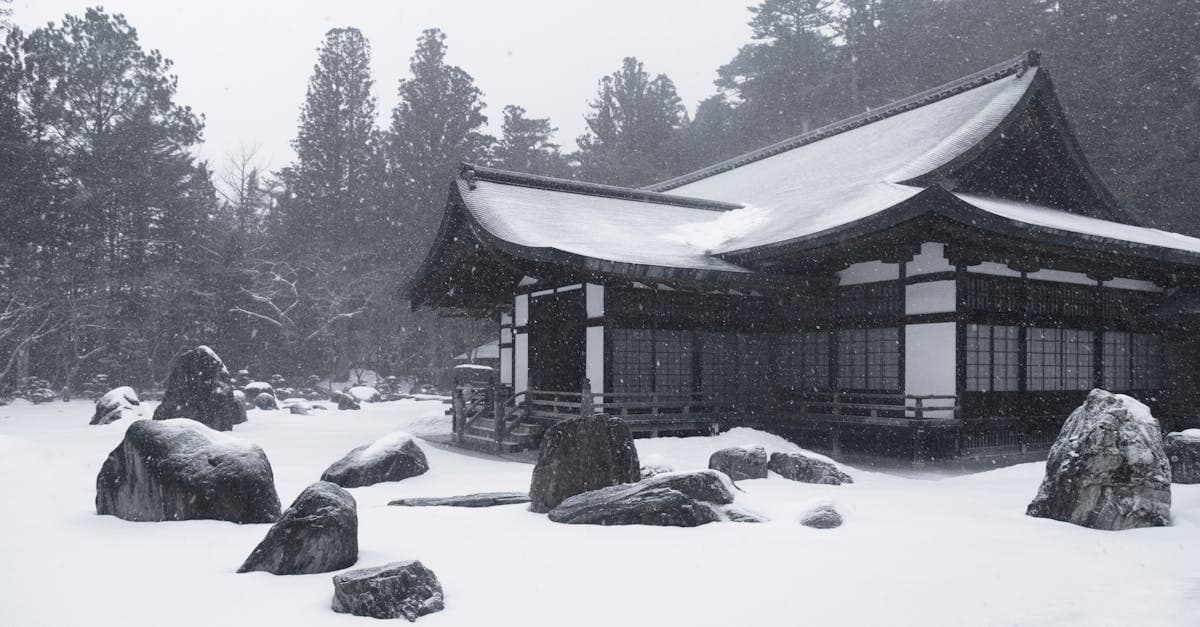
! [Snow-dusted Japanese farmhouse in Nagawa, Nagano, capturing the peaceful beauty of winter in Japan.
Quick Answer: winter in japan
! [Yellow train cutting through snowy landscapes in Akita, a classic winter in Japan rail scene.

Japan in winter runs December through February. Tokyo stays dry and mostly sunny, cold but workable. Travel north to Hokkaido and the experience shifts entirely: Sapporo gets buried under consistent heavy powder, with temperatures well below freezing for most of the season.
Okinawa sits at the far opposite end, warm enough for light layers even in January.
Crowds thin out at most major sites across Honshu. Kyoto temple visits feel genuinely unhurried compared to spring. The New Year window, from December 31 through January 3, is the notable exception, drawing large domestic crowds to shrines nationwide for hatsumode, the first temple visit of the year.
HelloRoam covers Japan with a dedicated eSIM. US carrier international day passes tend to run much higher for any trip longer than a few days, so a dedicated Japan eSIM is the cleaner call. See current plans at the eSIM for Japan page before you leave. Offline maps can't update road closures in real time, and live snow conditions at resorts like Niseko require a working connection.
Winter in Japan at a Glance
! [Lantern-lit snowy alley in Kyoto at night, evoking the atmospheric charm of winter in Japan.

Hokkaido ski resorts, Kyoto temple gardens, and Okinawa beaches all fall within the same calendar window: December through February. Conditions diverge sharply from north to south. The Pacific coast (Tokyo, Osaka, Kyoto) runs cold but dry, with frequent clear-sky days. The Sea of Japan coast collects heavy cloud cover and snowfall from Siberian air masses. Hokkaido, in the far north, gets deep and consistent powder that rivals any ski destination in the world.
Planning a winter in Japan trip requires choosing a climate zone first: the country spans roughly the same latitude range as the US East Coast, and that gap matters.
Okinawa is the outlier. January highs there sit between 63 and 70°F, making it a viable warm-weather option within a single itinerary for travelers who want real contrast japan.travel.
Off-peak conditions pay off in tangible ways. Temple entrance lines in Kyoto shrink dramatically. Ski lift queues at resorts like Hakuba move faster outside holiday windows. Hotel rates in Tokyo and Osaka run below cherry blossom season prices across most categories.
Rural ski resorts and isolated onsen towns sit well outside public Wi-Fi range. A data plan activated before departure means navigation apps are ready the moment you clear customs at Narita or Haneda.
The weather varies sharply by region, and that detail shapes the entire itinerary.
How Cold Does Japan Get in Winter?
! [Traditional Japanese building blanketed in snow, illustrating how cold winter in Japan can get.

Tokyo averages 39 to 50°F in January and rarely sees meaningful snowfall. Sapporo, in Hokkaido, drops to 19 to 28°F with consistent heavy precipitation. Osaka stays mild at 39 to 52°F with intermittent rain. Kyoto sits between 36 and 48°F in January, slightly colder than Osaka and dry outside of rare snow events en.japantravel.com.
The indoor cold is the detail most first-time visitors miss.
Older Japanese buildings, including many beloved ryokan and traditional guesthouses, lack central heating entirely. Individual kerosene heaters or underfloor heating patches warm specific rooms rather than whole floors. Arriving at a historic inn in Kyoto wearing only the outfit you flew in with is an uncomfortable introduction to this reality. Pack base layers for indoors as much as outdoors; thermals earn their keep at dinner, not just on the ski slope.
Kyoto produces some of the most striking winter scenes in Japan despite its modest temperature range. Snow falls infrequently, but when it does, the effect on temple stone lanterns and moss gardens lands differently than any other season. The crowds that pack Arashiyama and Fushimi Inari in spring are nowhere in sight.
The myth worth busting here is that Tokyo winter is brutal. It isn't. The city sits at roughly the same latitude as Los Angeles, and January in Tokyo feels closer to a cold March in New York than a January in Chicago. The cold is real; a decent coat, thermal underlayer, and gloves handle it without drama. Department stores and subway platforms stay reliably warm throughout the day, which makes the city eminently walkable even in the coldest weeks.
Cold weather confirmed. Now the calendar fills in the rest of the picture.
What to See and Do During Winter in Japan
! [Snow-covered Gassho-Zukuri thatched-roof houses at Shirakawa-go, a UNESCO World Heritage site in winter.

Winter in Japan is peak season for onsens, ski resorts, and cultural festivals, despite lower overall visitor numbers than spring. The Sapporo Snow Festival in early February fills Odori Park with colossal ice sculptures that draw crowds from across the country japan.travel. New Year (Oshogatsu), from December 31 through January 3, is the most culturally grounded reason to visit and the one window where booking ahead genuinely matters.
Most Americans assume cherry blossom season is Japan's signature experience. Winter disagrees.
Kyoto in January offers something April makes nearly impossible: quiet. Fushimi Inari Taisha without a queue. Arashiyama bamboo grove before the tour buses arrive. The practical upside of arriving in winter is access to places that spend most of the year at capacity, operating at a pace that lets you actually look at what you came to see.
Hatsumode, the first shrine or temple visit of the new year, draws enormous domestic crowds on January 1 specifically. Meiji Shrine in Tokyo and Naritasan Shinshoji Temple in Narita both see millions of visitors across the three-day window japan.travel. Arriving on January 2 or 3 preserves the tradition with considerably less congestion, and the atmosphere remains vivid and charged throughout.
Outdoor onsens (rotenburo) in snowfall are a bold winter reward. Sitting in a hot spring while snow settles on surrounding cedar trees is a moment that warmer months simply cannot replicate. Hakone, Nikko, and resorts across Tohoku all offer rotenburo within a few hours of Tokyo.
Two experiences anchor most Japan winter itineraries: the festivals and the ski slopes.
Winter festivals worth planning around
! [Glowing kamakura snow igloo huts at the Iiyama festival in Nagano, a beloved winter in Japan tradition.

Four winter festivals define Japan's social calendar between January and mid-February: the Nozawa Fire Festival on January 15, Sapporo Snow Festival in early February, Otaru Snow Light Path running concurrently, and Shirakawa-go's timed illuminations on select Saturdays in late January and February. For all four, book accommodation three to four months before the event dates.
That deadline is the real information here.
Here's how the schedule breaks down:
- Nozawa Fire Festival (January 15): The Dosojin Matsuri at Nozawa Onsen is a single-night event where villagers construct and torch a large wooden shrine in a coming-of-age ceremony en.japantravel.com. One night only.
- Sapporo Snow Festival (approximately February 4-11, 2027): Teams from around the world sculpt snow and ice monuments across Odori Park in Sapporo. The 2027 dates are estimated based on the standard early-February schedule; check snowfes.com to confirm before booking flights.
- Otaru Snow Light Path (concurrent with Sapporo): The harbor town of Otaru, roughly 40 minutes by train from Sapporo, lines its canals and streets with snow lanterns during the same week. Quieter than Sapporo, considerably easier to photograph.
- Shirakawa-go Winter Illumination (select Saturdays, late January and February): The UNESCO-listed Gifu Prefecture village lights its thatched-roof farmhouses on specific evenings only japan.travel. Entry is ticketed and timed.
The ski resorts sit just hours from these festival towns by bullet train.
Where to ski in Japan
! [Red cable car ascending a snow-capped Japanese mountain, perfect for skiing during winter in Japan.

Niseko in Hokkaido averages 15-plus meters of snowfall per season en.japantravel.com. That single figure explains why powder skiers from Australia and the US started redirecting winter trips toward Japan well before the broader travel market caught on. Winter in Japan built its international ski reputation on that snowfall, and the reputation holds.
Japan's ski season runs from late November through late March, with peak conditions in January and February en.japantravel.com. Two distinct zones carry most of the demand: Hokkaido in the north and the Japanese Alps resorts of Hakuba and Nozawa Onsen across central Honshu.
Niseko United connects multiple resort areas with enough vertical and terrain variety to sustain a full week of skiing. English signage at the main cluster is thorough, which matters practically when navigating lift systems and trail maps without local language knowledge.
The Japanese Alps offer different trade-offs. Hakuba hosted alpine and ski jumping events during the 1998 Nagano Winter Olympics and now spreads across multiple interconnected resort areas suitable for every skill level en.japantravel.com. Nozawa Onsen functions as both a ski mountain and the festival village from the previous section, a combination that makes the January 15 window particularly compact to plan around.
Smaller resorts in both regions are expanding English-language services, though signage gets sparse past the primary marked runs.
The natural structure for most winter itineraries: two or three ski days paired with at least one night in an adjacent onsen town. Bullet train connections make the logistics clean.
After a day on the slopes, one tradition is non-negotiable: the onsen.
Warm Up in an Onsen Hot Spring in Japan
! [Snow monkeys soaking in steaming hot springs at Jigokudani Monkey Park, a winter in Japan icon.

Rotenburo is the outdoor hot spring bath, and soaking in steaming mineral water while snow falls around you is the defining visual of winter in Japan. The best destinations for the experience are Noboribetsu in Hokkaido, Hakone in Kanagawa Prefecture near Tokyo, and Beppu in Kyushu japan.travel. Most ryokan include onsen access in the nightly room rate.
Walk through the practical sequence. You arrive at your ryokan in the late afternoon, change into the provided yukata robe, and carry a small towel to the bath. The water runs hot, and most visitors ease in slowly. The contrast between the water temperature and the cold outdoor air makes the experience more striking than photographs prepare you for.
Most ryokan bundle onsen access alongside dinner and breakfast, which reframes the apparent cost against a standard hotel room. What looks expensive on paper often includes two meals and unlimited bath access throughout the stay.
Two details to confirm before booking a winter in Japan ryokan stay. First, many public onsen facilities in Japan restrict guests with visible tattoos. Private baths within ryokan rooms, called kashikiri onsen, are the practical workaround but cost extra. Second, ryokan check-in runs within a defined afternoon window, sometimes just two to three hours. Japan's informal "5-minute rule" applies directly here: arriving near the end of that window creates friction with the tightly scheduled evening meal service, which typically runs at a fixed time.
Good connectivity makes or breaks the logistics of reaching all these places.
Staying Connected During Your Japan Winter Trip
! [Woman in winter coat using a smartphone on a city street, staying connected while traveling in Japan.

Coverage in Japan's cities is reliable; mountain valleys, narrow onsen-town streets, and the access roads to smaller ski resorts are a different situation. Three options cover most itineraries: pocket WiFi rental, a local SIM, or an eSIM.
Key fact: HelloRoam Japan eSIM plans run on KDDI/au 5G and NTT docomo 4G networks, covering Hokkaido, Honshu, and the resort areas in between.
Arriving at a Hokkaido resort with no signal and no way to pull up trail maps or translate the lift-pass kiosk turns a minor inconvenience into a genuine problem, the kind that eats into the first afternoon you were supposed to spend on the mountain.
AT&T, T-Mobile, and Verizon all offer international day passes for Japan. That daily charge accumulates fast across a two-week ski trip. An eSIM with a fixed data allotment removes the variable entirely.
Offline maps are essential for remote ski resorts and mountain routes. Download your region via Google Maps on hotel or airport Wi-Fi before heading into the hills. Three apps depend on live data throughout a Japan winter trip: real-time translation (the camera function reads kanji on trail signs and menus), weather forecasts, and snow condition trackers that update avalanche risk levels continuously.
eSIM for Japan covers Japan's cities, ski resort towns, and mountain valleys.
Logistics sorted. Two questions US travelers search most before booking.
What Months Are Winter in Japan?
! [Traditional Japanese inn and snow-laden trees in a picturesque onsen town during winter in Japan.

December, January, and February are Japan's three winter months, but each delivers a different trip.
December is the entry point. Ski lifts start spinning in Hokkaido by mid-month, city illuminations run through Christmas, and hotels in Tokyo and Kyoto hit their most affordable rates of the year before the Oshogatsu holiday crowds arrive. Most major resorts have enough snowpack for solid skiing by the third week.
January is the coldest month across the country and the peak of ski season. Niseko and Hakuba reach their deepest powder conditions during this window. The stretch between New Year and late January is also the quietest period at Kyoto temples, which makes a combined city-and-ski itinerary particularly compelling right here.
February is festival month. Both the Sapporo Snow Festival and the Otaru Snow Light Path Festival run in the first half of the month, and accommodations in Hokkaido fill weeks in advance. Book early or rethink the calendar entirely.
March is the exit ramp. Hokkaido resorts often extend operations through late March, and some years push into April en.japantravel.com. The Japanese Alps wind down faster. For skiers chasing the final powder runs with thinner crowds, early March is the move.
The month shapes everything. A December Tokyo itinerary and a February Sapporo festival week carry the same "winter in Japan" label, but they're practically two separate trips.
Month-by-month picture clear. Now the question most US travelers ask about cost.
Is $5,000 Enough for a Week in Japan?
! [Snow-blanketed house in Hokkaido, Japan, reflecting the serene landscapes and travel costs of a winter visit.

Yes, $5,000 covers a week of winter in Japan, including round-trip flights from the US, mid-range hotels, daily meals, and activities. Ground costs for most US visitors run $1,500 to $2,200 for a seven-to-ten-day trip, which leaves the rest for flights and a reasonable buffer.
The math shifts if you add a ski leg.
Lift passes at Hokkaido resorts and in the Japanese Alps run $50 to $90 per day. The bullet train from Tokyo to Sapporo costs roughly $100 to $150 each way. A five-night Niseko-plus-Tokyo itinerary can push ground spend toward the upper end of that range without much effort.
Getting the allocation wrong between transport and accommodation is the budget mistake that stings most: a bullet train fare and four nights at a ski resort consume a significant chunk before lift passes or meals enter the picture.
Consider the most common split: a few nights in Tokyo for temples and city streets, then a bullet train north for four or five nights at a Hokkaido ski resort. That structure covers the full range of winter in Japan in a single trip, where department store food halls and snow-dusted shrines give way to powder runs and cedar-scented bath houses within a few hours on the shinkansen. The two line items that require early planning are the bullet train fare and the ski passes; both are bookable well in advance.
Where winter pricing actually works in your favor: Hotel rates in Tokyo, Kyoto, and Osaka run lower in December and January than during spring cherry blossom season. That seasonal gap is real money. Ski resort towns are the exception, where rates climb alongside lift-pass demand, but urban Japan is cheaper in winter across the board.
Budget-focused travelers can keep daily ground costs around $150, not counting flights, by choosing guesthouses, eating at ramen counters and convenience stores, and skipping the lift passes entirely. A ten-day trip at that pace lands around $1,500 on the ground.
For solo travelers, $5,000 is workable. For two people splitting accommodation costs, it's genuinely comfortable. The ski-resort question is the only real budget wildcard.
Budget planned, calendar set, and connectivity sorted for your Japan winter trip.
Reviewed by HelloRoam's editorial team. Last updated: 17 April 2026.
Get Connected Before You Go

Frequently Asked Questions
Winter in Japan runs from December through February. This period covers the full range of winter conditions, from heavy snowfall in Hokkaido to mild, dry weather along the Pacific coast in cities like Tokyo and Osaka.
A $5000 budget for a week in Japan is generally workable for most travelers. Winter is an off-peak season for most of Honshu, meaning hotel rates in Tokyo and Osaka run below cherry blossom season prices, which helps stretch your budget further. However, ski resorts like Niseko and festival accommodation windows require booking three to four months ahead, and costs there can run higher.
The 5-minute rule in Japan refers to the cultural expectation of punctuality, particularly relevant at ryokan check-ins and scheduled services. Ryokan check-in windows are often limited to just two to three hours in the afternoon, and arriving near the end of that window creates friction with the tightly scheduled evening meal service, which typically runs at a fixed time.
Temperatures vary significantly by region. Tokyo averages 39 to 50°F in January, while Sapporo in Hokkaido drops to 19 to 28°F with heavy snowfall. Osaka stays mild at 39 to 52°F, and Kyoto sits between 36 and 48°F. Okinawa remains warm, with January highs between 63 and 70°F.
The best region depends on your priorities. Hokkaido is ideal for skiing, with Niseko averaging over 15 meters of snowfall per season. Kyoto offers quiet temple visits with dramatically fewer crowds than spring. Okinawa provides warm weather in the 60s°F for travelers wanting a beach experience even in January.
Tokyo winters are cold but manageable. The city sits at roughly the same latitude as Los Angeles, and January temperatures average 39 to 50°F. A decent coat, thermal underlayer, and gloves are sufficient, and department stores and subway platforms remain reliably warm throughout the day.
Hatsumode is the first shrine or temple visit of the new year, observed from December 31 through January 3. Major sites like Meiji Shrine in Tokyo and Naritasan Shinshoji Temple in Narita see millions of visitors across this three-day window. Visiting on January 2 or 3 preserves the tradition with considerably less congestion than January 1.
Four key winter festivals define Japan's season: the Nozawa Fire Festival on January 15, the Sapporo Snow Festival in early February, the Otaru Snow Light Path running concurrently with Sapporo, and the Shirakawa-go Winter Illumination on select Saturdays in late January and February. Accommodation for all four should be booked three to four months in advance.
The top ski destinations are Niseko in Hokkaido, known for averaging 15-plus meters of snowfall per season, and the Japanese Alps resorts of Hakuba and Nozawa Onsen in central Honshu. Hakuba hosted events during the 1998 Nagano Winter Olympics and offers terrain for all skill levels. Japan's ski season peaks in January and February.
Rotenburo is an outdoor hot spring bath. Winter is the definitive season to experience one, as soaking in steaming mineral water while snow falls around you is considered one of Japan's signature cold-weather experiences. Top destinations include Noboribetsu in Hokkaido, Hakone near Tokyo, and Beppu in Kyushu.
Yes, winter is significantly less crowded at most major cultural sites. Kyoto temple visits feel genuinely unhurried compared to spring, and places like Fushimi Inari Taisha and the Arashiyama bamboo grove can be experienced without queues. The exception is the New Year window from December 31 through January 3, which draws large domestic crowds.
Many older ryokan and traditional guesthouses in Japan lack central heating entirely. Individual kerosene heaters or underfloor heating patches warm specific rooms rather than whole floors. Packing base layers and thermals for indoor use is recommended, not just for outdoor activities.
The three main options are pocket WiFi rental, a local SIM, or an eSIM. An eSIM is the most convenient choice for international travelers as it can be activated via QR code before boarding and is ready to use the moment you arrive. This matters especially for winter travel, as mountain valleys, onsen towns, and ski resort access roads can be far from public Wi-Fi.
US carrier international day passes are available but tend to run much higher in cost for any trip longer than a few days. A dedicated Japan eSIM is generally the more cost-effective option for week-long or longer winter trips, particularly if your itinerary includes ski resorts or remote onsen towns where a reliable connection is important.
Many public onsen facilities in Japan restrict guests with visible tattoos. The practical workaround is booking a private bath within your ryokan room, called a kashikiri onsen, though this option typically costs extra. Confirm the policy with your specific ryokan before arrival.
Yes, Okinawa is a viable warm-weather destination even in January. High temperatures there sit between 63 and 70°F, making it suitable for light layers. It offers a stark contrast to mainland Japan and can be combined with a Honshu or Hokkaido leg in a single itinerary.
Sources
- GUIDEWinter in JapanCold weather and warm spirits — japan.travel
- Winter in Japan: Your Seasonal Guide — en.japantravel.com
- japan.travel — japan.travel