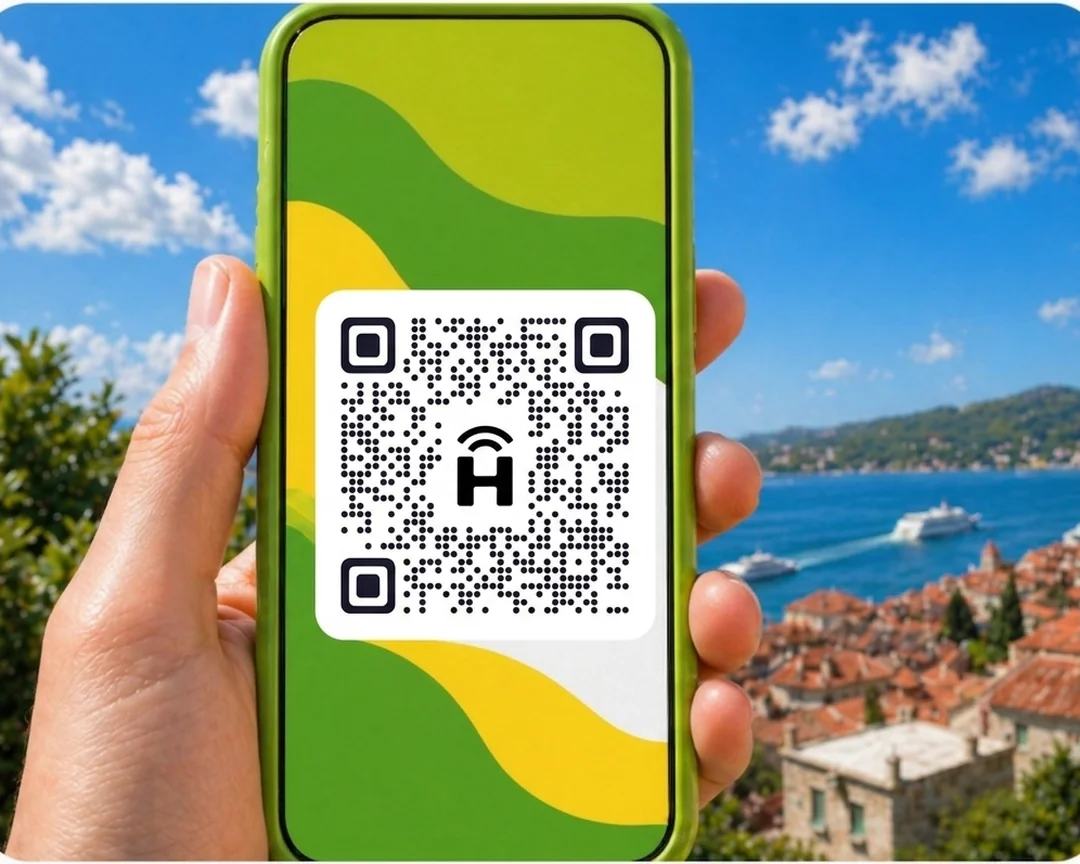

HelloRoam sells prepaid eSIM data plans for North America starting at $4.73 per day. Your e SIM connects to local 4G/5G networks the moment you land. Activate by QR code in under two minutes. Keep your AT&T, T-Mobile, or Verizon number on dual SIM while your e-sim handles data.
- networks
 212+
212+- 5G support
 5G and 4G LTE
- activation
 under 2 minutes
Updated
Your e SIM North America Plan Across All North America Countries
The cheapest eSIM for North America starts from $4.73. Local 4G/5G data on top carrier networks in North America. Works on all eSIM compatible phones. Airport SIM counters charge tourist rates and waste your first hour after landing. The North America sim plan from HelloRoam starts at $4.73 on Local network provider 4G/5G networks across North America. Scan a QR code at home and land already online. Every plan is fully prepaid with no contract, no credit check, and no roaming fees. Coverage works from the moment you scan the code.
North America eSIM with fast 5G and 4G LTE coverage
HelloRoam North America eSIM covers the USA, Canada, and Mexico on one plan. Travelers moving across all three countries stay connected with one plan that switches carriers automatically at each border. Plans start at $0.16 per day.
- Plans start at $4.73 with 5G and 4G LTE speeds
- Coverage from local networks
- Instant activation in under 2 minutes
- 180-day money-back guarantee
- North America coverage across major cities
- Network
- 5G and 4G LTE
- Plans From
- $4.73
- Activation
- Under 2 min
- Guarantee
- 180 days

How to Set Up an eSIM in North America
Follow these steps to set up your eSIM card on iPhone or Android. Works for any eSIM for international travel, no replacement sim, no store visit.
Set up an eSIM on your iPhone with the HelloRoam app
Set up an eSIM on your Android with the HelloRoam app
- 1
Choose your plan & checkout online
Select a data plan for your destination and complete checkout.
 2
2Scan the QR code
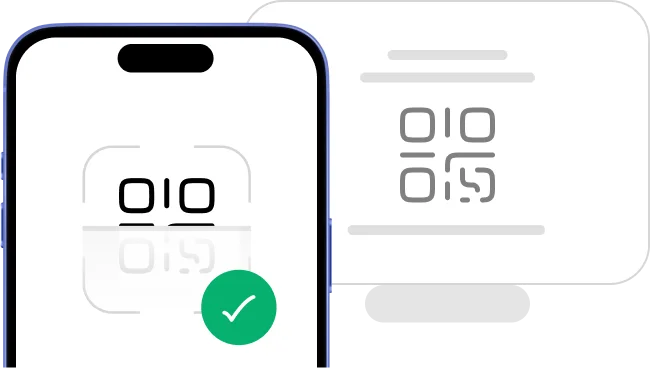
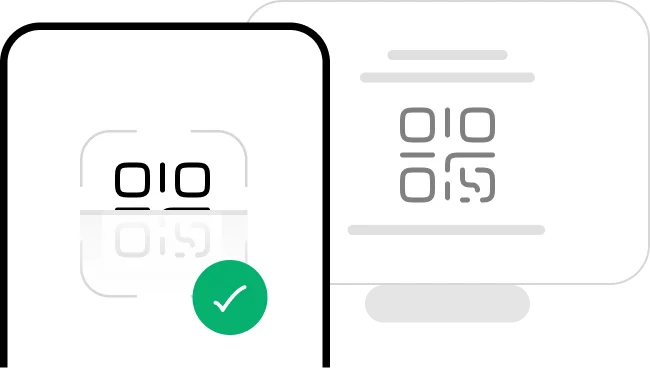
Scan the QR code on Wi-Fi to install your eSIM. If it says not valid or already added, check your phone's list of lines first.
- 3
Activate in minutes: ready on arrival
Install your eSIM before you fly. Your plan's days start at the eSIM's first connection to a supported network in your destination. When you land, switch the line on, turn on data roaming for that line and pick it for mobile data.
 4
4Manage it all from our mobile app
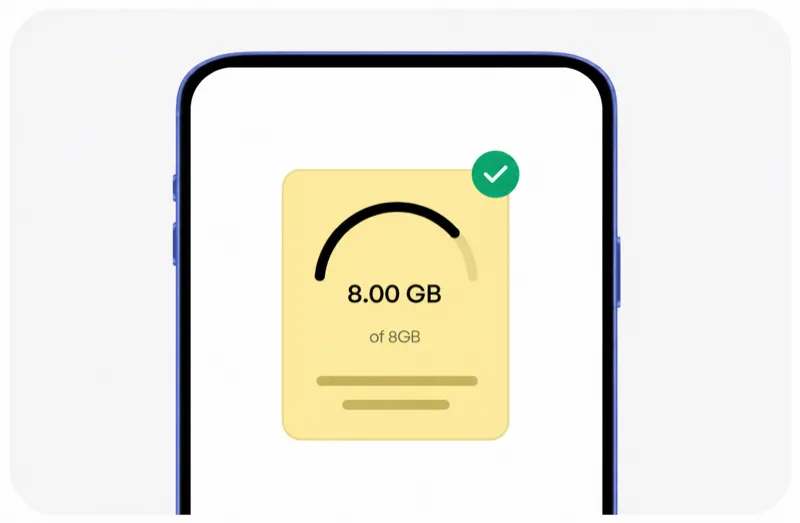
Track usage, top up data in the app, and manage all your eSIMs in one place.




Trip changed? Don't worry, we've got you!
Plans can change anytime, and that's okay. With HelloRoam, unactivated and unscanned eSIMs qualify for a full refund within 180 days of purchase.
Learn more about our refund policyHelloRoam North America eSIM vs AT&T, T-Mobile and Verizon roaming
When comparing an eSIM vs a travel SIM card for North America, HelloRoam wins on price. It costs less than Verizon TravelPass ($10/day), T-Mobile international add-ons, and AT&T International Day Pass ($12/day). Skip the airport SIM shop and get a prepaid eSIM for North America from $4.73 with a 180-day refund on unactivated eSIMs.
| Feature comparison | HelloRoam | Local provider | Limited data eSIM |
|---|---|---|---|
| 180-day refund policy |  Feature available Feature available |  Feature not available Feature not available | Feature not available |
| 24/7 live chat support | Feature available |  Feature available Feature available | Feature available |
| $0 activation fees | Feature available | Feature not available | Feature available |
| Free hotspot and data sharing | Feature available | Feature not available | Feature not available |
| No data overage charges | Feature available | Feature not available | Feature not available |
| Instant QR code delivery | Feature available | Feature not available | Feature available |
| Premium North America carrier networks | Feature available | Feature not available | Feature not available |
Why Travelers Choose an e SIM for North America

24/7 live chat support
Need help at 2 AM in Tokyo or midnight in Paris? HelloRoam support is available 24/7. Message us and a real person responds in under 2 minutes. No bots, no wait queue. Mobile data problems don't wait for business hours, and neither do we.

Best Travel eSIM for North America
Get unlimited data at 4G/5G speeds the moment you land in North America. Skip roaming fees from AT&T, T-Mobile, and Verizon. HelloRoam connects you to local carrier networks in minutes, whether you are traveling or working. Wireless connectivity starts before you clear customs.

Keep your AT&T, T-Mobile, or Verizon number
Keep your AT&T, T-Mobile, or Verizon number active for calls and texts. HelloRoam runs as a second eSIM line on any dual SIM compatible phone, so you never miss a call from home. Your cellular coverage for calls stays on your home carrier while HelloRoam handles data abroad.

212+ partner networks worldwide
HelloRoam eSIMs connect to 212+ carrier networks across 185+ countries. Your phone switches to the strongest available 4G/5G signal automatically. Network access is instant, with no manual carrier selection needed.

Data alerts before you run out
HelloRoam alerts you at 80% data usage so you never hit a surprise cap mid-trip. Top up instantly from the app without reinstalling your eSIM or visiting a store. Adding a fresh prepaid data package takes under a minute from your account dashboard.

Local 4G/5G speeds
Your North America e-sim card connects to trusted local 4G/5G networks. HelloRoam picks the strongest available signal for navigation, streaming, and video calls. Internet abroad at local carrier speeds means maps load fast and video calls stay clear.

Regional and global eSIM plans
Heading to multiple countries? HelloRoam regional eSIM plans cover Europe, Asia, the Americas, and 185+ destinations in one purchase. Tourist eSIM or long-stay: choose fixed data or unlimited data plans. One account, no SIM swaps. Digital connectivity follows you across borders on a single prepaid plan.

Free hotspot and data sharing in North America
Share your North America eSIM data with a laptop or tablet using your phone's built-in hotspot. No extra fees, no setup required. Works on all eSIM compatible phones. One data plan covers your whole travel kit, making the most of every gigabyte you buy.
eSIM Prices for North America
The best eSIM for North America at every price point. Compare plans for every trip length.
| Number of days | Price |
|---|---|
| 1 day | $6.34 |
| 3 days | $18.07 |
| 7 days | $39.05 |
| 15 days | $76.08 |
| 22 days | $103.22 |
| 30 days | $129.34 |
Compare eSIM Providers for North America
American travelers rate HelloRoam eSIM for its 180-day refund policy, zero activation fees, and 24/7 live support. See how HelloRoam compares to Airalo, Holafly, Saily, and other eSIM providers for North America on the things that matter most.
| Feature comparison | HelloRoam | Airalo | Holafly | Nomad | Saily | Ubigi |
|---|---|---|---|---|---|---|
| 180-day refund policy | Feature available | Feature not available | Feature not available | Feature not available | Feature not available | Feature not available |
| 24/7 live chat support | Feature available | Feature available | Feature available | Feature not available | Feature available | Feature available |
| $0 activation fees | Feature available | Feature not available | Feature available | Feature not available | Feature not available | Feature not available |
| Free hotspot and data sharing | Feature available | Feature not available | Feature not available | Feature not available | Feature not available | Feature not available |
| No data overage charges | Feature available | Feature not available | Feature available | Feature not available | Feature not available | Feature not available |
| Instant QR code delivery | Feature available | Feature available | Feature available | Feature available | Feature available | Feature available |
| Premium North America carrier networks | Feature available | Feature not available | Feature not available | Feature not available | Feature not available | Feature not available |
| Own branded carrier identity (SPN) | Feature available | Feature not available | Feature not available | Feature not available | Feature not available | Feature available |
What Is an e SIM? How eSIM Works in North America
An eSIM card is a digital SIM built directly into your phone. There is no plastic chip and no SIM tray to deal with. Scan a QR code to activate your e SIM in under 2 minutes on any eSIM compatible iPhone or Android. An eSIM for North America works as a prepaid data plan with no airport SIM shop, no replacement SIM card, and no carrier contract. Follow the step-by-step setup guide to get connected before your flight. guide


eSIM Coverage Guide for North America Travel
North America has three distinct mobile markets sharing the same continent. The USA, Canada, and Mexico each have their own licensed carriers that operate independently across one of the world's largest landmasses. A HelloRoam North America regional eSIM lets you cross all three borders on one plan.
The United States has three major national carriers with strong nationwide coverage. Coverage footprints differ by geography, with each carrier strong in different rural regions. Urban coverage in New York, Los Angeles, Chicago, Miami, and all major US cities is excellent.
Rural America (Wyoming, Montana, the Great Plains, Alaska) has significant gaps, particularly in national parks and wilderness areas.
Canada's main carrierss serve jointly cover populated areas well, but Canada is a vast country with enormous wilderness. Vancouver, Toronto, Montreal, and Calgary all have strong 4G and 5G. The Trans-Canada Highway has coverage in most towns.
Remote areas of British Columbia, the Yukon, the Northwest Territories, and Nunavut have very limited or no signal.
Telcel serves as the dominant carrier with the widest national coverage, with AT&T Mexico competing in main cities. Mexico City, Guadalajara, Monterrey, Cancún, and Los Cabos all have strong 4G. Beach resort areas on both coasts are well-covered.
Remote rural areas in Oaxaca, Chiapas, and the interior states have more limited signal.
When your North America eSIM crosses the US-Canada or US-Mexico border, it connects to local carriers automatically. The US-Canada crossing at Niagara Falls, Vancouver-Seattle corridor, or Windsor-Detroit all switch network coverage smoothly.
- Covers USA, Canada, and Mexico on one plan
- US national parks often have no coverage inside park boundaries
- Canada's remote northern territories have very limited signal
- Mexico's resort cities are well-covered, rural interior less so
- Automatic carrier switch at US-Canada and US-Mexico borders
- T-Mobile offers the broadest US coverage footprint
- FCC Broadband Data 2025;
- GSMA 2026;
- Ookla Speedtest North America 2025
eSIM Travel Tips for North America
US National Parks Often Have No Coverage
Many of America's most famous national parks have limited or no mobile coverage inside their boundaries. Grand Canyon's South Rim has partial AT&T and T-Mobile coverage. Yellowstone has very limited coverage at some lodges. Yosemite Valley has partial coverage. Death Valley has no coverage in most areas. Download offline maps, trail guides, and your campsite GPS before entering any national park.
Canada's Trans-Canada Highway Has Coverage in Towns
Driving the Trans-Canada Highway from Vancouver to Toronto or beyond has mobile coverage at all towns and most highway service areas. Remote stretches of the highway through British Columbia mountain passes, northern Ontario boreal forest, and Manitoba prairies have gaps. Download offline route guidance for any long-distance Canadian highway drive.
Mexico's Cancún and Los Cabos Are Fully Covered
Mexico's main tourist resort corridors (Cancún, Playa del Carmen, Tulum, Los Cabos, Puerto Vallarta, Mazatlán) connect to Telcel and AT&T Mexico 4G networks. The Riviera Maya beach strip is well-covered. Inland Yucatán cenotes and ruins like Chichén Itzá and Cobá have reasonable coverage. Remote jungle areas and indigenous highland communities have more limited signal.
Alaska Has Significant Coverage Gaps
Alaska is accessible on US plans but has major coverage gaps. Anchorage and Fairbanks have solid AT&T and GCI coverage. The Denali National Park road, the Dalton Highway to Prudhoe Bay, and most of Alaska's wilderness have no coverage. Download offline maps and file trip plans before any Alaska backcountry travel.
US-Mexico Border Crossing Switches Smoothly
Crossing from the US to Mexico at busy crossings like San Diego-Tijuana, El Paso-Ciudad Juárez, or Laredo-Nuevo Laredo, your HelloRoam eSIM switches to Telcel coverage automatically. Border crossings can have congested networks due to high foot and vehicle traffic. Toggle airplane mode after crossing to force a clean connection.
Subway Coverage Varies by US City
Not all US subway systems have mobile coverage. New York City's MTA subway has been installing coverage but remains incomplete in some tunnel sections. Washington DC's Metro has good coverage. Chicago's L train runs mostly above ground and has coverage. San Francisco's BART has coverage at stations. Download offline maps for any city you plan to navigate by subway.
Emergency Number is 911 in All Three Countries
911 is the emergency number in the United States, Canada, and Mexico. This covers police, fire, and ambulance in all three countries. In Mexico, additional emergency numbers vary by state. 911 works from any active eSIM in all three countries.
Network Coverage Across North America
North America's three national mobile markets are each large and complex in their own right.
The United States has some of the world's most advanced 5G infrastructure in major cities alongside some of the worst rural coverage gaps in the developed world. T-Mobile completed its Sprint merger and now has the widest 5G mid-band coverage footprint nationally. AT&T's FirstNet public safety network gives it strong rural reach in many states. Verizon has the most reliable urban 5G millimeter-wave network in dense downtown areas. Coverage in the interior West (Wyoming, Montana, the Dakotas), rural Appalachia, and deep South rural areas can be very sparse.
Canada's Rogers, Telus, and Bell cover virtually all of the country's populated areas with strong 4G and growing 5G in major cities. But Canada's non-urban area is enormous and sparsely settled. The province of Ontario alone is larger than France and Germany combined, with much of it boreal forest with no towers. Northern Canada (Yukon, Northwest Territories, Nunavut) has coverage only in a handful of communities.
Mexico's Telcel (owned by América Móvil) dominates with over 75% market share and the widest national coverage. AT&T Mexico and Movistar Mexico compete in urban markets. Mexico City has strong 4G and growing 5G. The Pacific and Caribbean coasts are well-served for tourism. Interior states like Guerrero, Oaxaca, and Chiapas have urban coverage with rural gaps.
- T-Mobile (USA)

- AT&T (USA)

- Verizon (USA)

- Rogers (Canada)
- Telcel (Mexico)

Regional eSIM vs Country-by-Country Plans
For travelers crossing between the USA, Canada, and Mexico, a regional eSIM eliminates the need for separate plans and potential surprise roaming charges.
| Category | HelloRoam Regional North America eSIM Recommended | Individual country SIMs | Home carrier international billing |
|---|---|---|---|
| Typical cost | — | — | — |
| Details | One plan for USA, Canada, and Mexico. No roaming fees when crossing borders. Automatic carrier switching at the US-Canada or US-Mexico border. Consistent cost for road trips that span multiple countries. | US local SIMs do not include Canada or Mexico. Canadian SIMs are expensive. Buying a new SIM at each border is impractical for road trips. Losing your number at each border creates logistical challenges. | Many US carrier plans include Canada and Mexico with limited data. After the included data is used, overage charges apply. International day-pass plans at $0.16 per day add up quickly on extended cross-border trips. |
Prices approximate as of . Actual savings vary.
Best Times for North American Travel Data
The US, Canada, and Mexico's travel seasons span the entire year due to the continent's size. US National Parks see peak summer crowds from June to August, causing network congestion at gateway towns. Yellowstone's West Entrance, Yosemite Valley, and Grand Canyon South Rim are particularly busy.
Canada's summer (June to September) is peak travel season for national parks like Banff, Jasper, and the Canadian Rockies. Ski resorts in Whistler, Banff, and the Laurentians operate peak November to April with heavy lodge network demand.
Mexico's peak tourist seasons are December to April (winter escape) and July to August (North American summer holidays). Hurricane season (June to November) can affect Caribbean coast coverage temporarily in storm-affected areas.

Explore Countries in North America


Mexico
From $3
Stay online across Mexico with HelloRoam eSIM plans for Mexico City, Cancun, and beyond.

AT&T Mexico 5G covers Mexico City. Coverage thins in rural Oaxaca and the Yucatan interior.


United States
From $2
HelloRoam covers the United States with eSIM plans for New York, Los Angeles, Miami, and all 50 states.
T-Mobile and Verizon 5G cover major cities. Dead zones persist in rural Nevada and Montana.


Canada
From $3
Stay online across Canada with HelloRoam eSIM plans for Toronto, Vancouver, and Montreal.
Rogers, Bell, and Telus run 5G in cities. Coverage drops in remote British Columbia and Yukon.
Showing slide 1 of 3
Reviews
What Our Customers Say
Real reviews from Trustpilot and the App Store, quoted as written.
40k+ travelers have used HelloRoam
Cat
On a trip to Europe, my hotel Wi-Fi was so slow and outside Wi-Fi was unreliable. I couldn’t take it anymore so I got helloroam for a few days. It was tricky to set up correctly because of the primary settings (with my original number). But I reached out to their customer service via WhatsApp. Super responsive and helpful, with specific and clear steps to troubleshoot. Appreciate having 4G roaming instead of being stuck with in and out Wi-Fi during my trip!!
Rated 5 out of 5 by this reviewer

Very good experience! The eSIM was easy to set up and worked great in London. It was much cheaper than it would have been to use my own operator there.
Ilona
Rated 5 out of 5 by this reviewer
metulker
Hard to set up but help was good
Rated 5 out of 5 by this reviewer
Reuben
Really happy with HelloRoam. Everything worked as expected, from messaging and Google Maps through to streaming without any issues. Easy to use, reliable and affordable. Would happily use them again when travelling.
Rated 5 out of 5 by this reviewer

Angeline
Reliable connection. Reasonable pricing.
Rated 4 out of 5 by this reviewer
HelloRoam North America eSIM Questions Answered
Where can I buy a SIM card North America plan for US, Canada, and Mexico?
The cheapest eSIM North America plan from HelloRoam covers the US, Canada, and Mexico on Local network provider 4G/5G networks from $4.73. Airport kiosks at JFK or Pearson sell single-country cards that stop working at the border. HelloRoam's plan stays live from New York to Toronto to Mexico City with no second purchase.
Can I activate a cross-border data plan from home before my flight?
Your North America travel sim activates from home by scanning the HelloRoam QR code in your phone settings. The eSIM locks onto Local network provider 4G/5G networks the moment you land in the US, Canada, or Mexico. Setup takes two minutes and the plan is fully prepaid with no contract. Drive from Vancouver to Seattle or fly from Dallas to Cancun on the same data plan.
Does a HelloRoam North America plan cover Canada and Mexico alongside the US?
One HelloRoam plan covers all three countries on Local network provider 4G/5G networks from $4.73. Your data works across US cities, Canadian provinces, and Mexican resort towns without buying separate cards at each border. Coverage spans major highways so cross-border road trips keep GPS and streaming running.
What plan size works for a summer North America road trip crossing multiple countries?
Navigation, Airbnb bookings, and streaming across a multi-country summer road trip use about 10-20GB. HelloRoam unlimited plans on Local network provider 4G/5G networks remove the guesswork. Your plan crosses US-Canada and US-Mexico borders without dropping data. Activate the QR before you leave and your GPS stays live at every border crossing.
Does a North America eSIM work in the USA?
The USA is covered by HelloRoam North America plans. T-Mobile, AT&T, and Verizon serve the country's largest footprint. Major cities have excellent 5G and 4G. National parks and rural wilderness areas can have limited or no coverage. T-Mobile's network has the widest overall coverage footprint for travelers.
Does a North America eSIM work in Canada?
Canada is covered by HelloRoam North America plans. Rogers, Telus, and Bell serve all main cities. Vancouver, Toronto, Montreal, Calgary, and all major cities have strong 4G and 5G. Remote northern territories (Yukon, Northwest Territories, Nunavut) and wilderness areas have very limited coverage.
Does a North America eSIM work in Mexico?
Mexico is covered by HelloRoam North America plans. Telcel and AT&T Mexico serve the country. Cancún, Mexico City, Los Cabos, Guadalajara, and all main tourist destinations have solid 4G. Remote rural areas in Oaxaca, Chiapas, and interior states have more limited signal. Resort coastlines are well-served.
Does a North America eSIM work at US national parks?
US national parks have variable coverage. Grand Canyon South Rim has partial AT&T and T-Mobile coverage. Yellowstone has limited coverage at some lodges and entrances. Yosemite Valley has partial 4G. Most parks have no coverage in backcountry areas. Download offline maps and trail guides before entering any national park.
Does a North America eSIM work in New York City?
New York City is covered by HelloRoam North America plans on T-Mobile, AT&T, and Verizon networks. Midtown Manhattan, Times Square, Central Park, Brooklyn, and all five boroughs have strong connectivity. The NYC subway has growing coverage with some tunnel sections still limited. Coverage in major landmarks and indoor venues is strong.
Does a North America eSIM work in Los Angeles?
Los Angeles has excellent 5G and 4G coverage across the city. Hollywood, Santa Monica, Beverly Hills, Downtown LA, and Venice Beach all have strong connectivity. The LA Metro rail system has station coverage. Highway traffic navigation is essential in LA, and your eSIM keeps Google Maps and Waze running.