

Quick answer: Vodafone broadband at a glance
Vodafone broadband runs on Openreach's physical network and offers FTTP (full fibre to the premises) plans from ~74 Mbps up to 2.2 Gbps, priced roughly £23 to £60-plus per month on 18 or 24-month contracts. Existing Vodafone mobile customers can save on their monthly bill through a Together bundle discount vodafone.co.uk.
BT, EE, Sky, and Vodafone share the same Openreach cables. The pipe itself is identical. What separates them is pricing, the router, and how customer service holds up when something goes wrong.
Vodafone's headline pitch is no surprise mid-contract price rises. Whether the package delivers on that promise is what the detail below answers.
What is Vodafone broadband?

Vodafone is a retail ISP (a company that resells network access rather than building its own cables). Knowing this helps you compare it accurately against BT, EE, and Sky, which all draw on the same Openreach infrastructure. The differentiator between them is not the physical line but the pricing and service layer sitting on top of it.
By 2025, Ofcom's Connected Nations data showed UK FTTP coverage had exceeded 60% of premises, making full fibre the default for most new broadband orders. Two technologies sit under the Vodafone label, and they behave very differently.
FTTP, Full Fibre to the Premises, runs fibre-optic cable all the way into your home. Speeds stay consistent regardless of your distance from the nearest street cabinet, and with no copper in the chain there's no signal degradation over distance. Vodafone sells this under the "Full Fibre" label.
SOGEA, sometimes called Superfast, runs fibre to the street cabinet and then uses copper wire for the final stretch to your door. Speeds are lower and drop off with distance. As FTTP expands across the UK, Vodafone is phasing SOGEA out, though it remains the only available option in areas not yet cabled for full fibre.
The comparison that trips people up: Virgin Media. Virgin runs its own independent cable network, entirely separate from Openreach. That's why its coverage map looks different and its speeds under load behave differently. Vodafone and Virgin share no infrastructure.
For most UK addresses, full fibre is already on the table. That's the plan worth looking at first.
Vodafone broadband plans and speed tiers
Five plans make up Vodafone's Full Fibre range, and finding the right one means matching your household's usage to the tier built for it. Full Fibre 74 sits at the entry level; Full Fibre 2200 is the ultrafast premium end. Full Fibre 150 is the most popular mid-tier choice: spirited enough for 4K streaming, simultaneous video calls, and half a dozen devices running at once moneysavingexpert.com.
Full Fibre 500 and 900 suit homes with heavy concurrent demand, where several people are gaming, streaming, and working from home at the same time. Full Fibre 2200 is more relevant for home servers and bulk file transfers than for standard everyday use.
Is the jump from Full Fibre 500 to Full Fibre 2200 noticeable for a typical household on a weekday evening? Almost certainly not.
Pricing scales across the five tiers within the range set out in the table above. Vodafone mobile customers qualify for the Together discount, cutting the broadband bill when both services sit under one account vodafone.co.uk. If you're already on a Vodafone mobile plan, not checking eligibility is leaving real savings uncollected.
On the mobile front: customers who travel regularly can keep their UK number active while running on local data rates abroad using an eSIM (a digital SIM activated by a QR code, with no physical swap required). Post-Brexit, some Vodafone roaming charges have returned for EU travel. A dedicated travel eSIM for your destination lets you sidestep those costs while your Vodafone SIM handles UK calls and messages. What Is an eSIM? covers how the technology works in practice.
Vodafone's commitment to no surprise mid-contract price rises is the other headline differentiator. Rivals applied CPI and RPI-linked increases mid-contract through 2023 and 2024. Vodafone has held that position into 2026.
Speed tier chosen, discount checked. Getting it installed is the next practical step.
Switching to Vodafone broadband: what to expect
One-touch switching (the Ofcom-backed framework where your new provider manages the changeover end-to-end) means you can skip calling your old ISP to cancel. Vodafone coordinates the handover directly. No overlapping bills, no chasing a disconnection date.
Here's what the process looks like in practice:
- Order online. Vodafone confirms a guaranteed installation date at the point of booking.
- One-touch switching notifies your current provider automatically. No separate cancellation call needed.
- Your router ships before the activation date: Wi-Fi Hub for standard plans, Wi-Fi Hub Pro for higher-speed tiers.
- On the confirmed date, self-install takes roughly 20 minutes for most addresses.
- An engineer visit is only required if your address has never had a broadband line before.
Activation runs 10 to 14 working days from the point of ordering. The line typically settles within the first few days post-activation as traffic normalises.
No exit fees from your current provider? Check your contract terms before assuming. Most providers waive them when switching runs through one-touch, but mid-contract departures are worth confirming in writing first.
The process is brisk and considerably cleaner than older switching experiences where customers were left chasing two providers at once. Whether Vodafone broadband justifies a switch given its customer satisfaction track record is a sharper question, and that's exactly what the honest assessment below covers.
How do I contact Vodafone broadband UK?
Three contact routes cover most Vodafone broadband support needs. The fastest rarely involves a phone call.
Live chat and phone support sit inside the My Vodafone app vodafone.co.uk. Most billing and account queries resolve through the self-service menus without reaching a human at all, which is the actual point. No hold music, no queue. Engineer visits for line faults or hardware replacement get booked through the online portal or by calling the dedicated broadband support line directly.
Official Vodafone UK social accounts on X and Facebook route direct messages to verified support agents. Include your account reference number in any DM; it cuts response time noticeably.
Support is easy to reach. Whether the quality matches is the more interesting question.
Is Vodafone broadband good?
For most households, yes. Vodafone broadband runs on the same Openreach network as BT and EE, so the physical line speed is near-identical across all three. Compare them on pricing and support, not the pipe itself uswitch.com.
Price is where the story gets interesting. Mid-tier plans compete closely with BT and Sky, and Vodafone's "Together" discount gives customers who bundle a mobile SIM a noticeably lower combined bill. If you're already paying Vodafone for a mobile contract, the bundled pricing deserves a proper look before signing anywhere else.
The award-winning broadband claim holds at network level vodafone.co.uk. The line itself doesn't care who resells it.
Where the picture gets murkier is customer service. Ofcom's 2024 complaints data showed Vodafone carrying above-average complaint volumes relative to its subscriber share, with independent reviews consistently citing wait times and resolution quality as the main friction points.
The price stability pledge tackles one of the industry's oldest frustrations: no CPI/RPI-linked mid-contract hikes. Multiple major UK providers have deployed those increases in recent years. Vodafone's absence from that list is a concrete advantage at signing time.
Good broadband, patchy support. That's the real verdict, and two sharper questions follow.
Is Vodafone broadband rubbish?
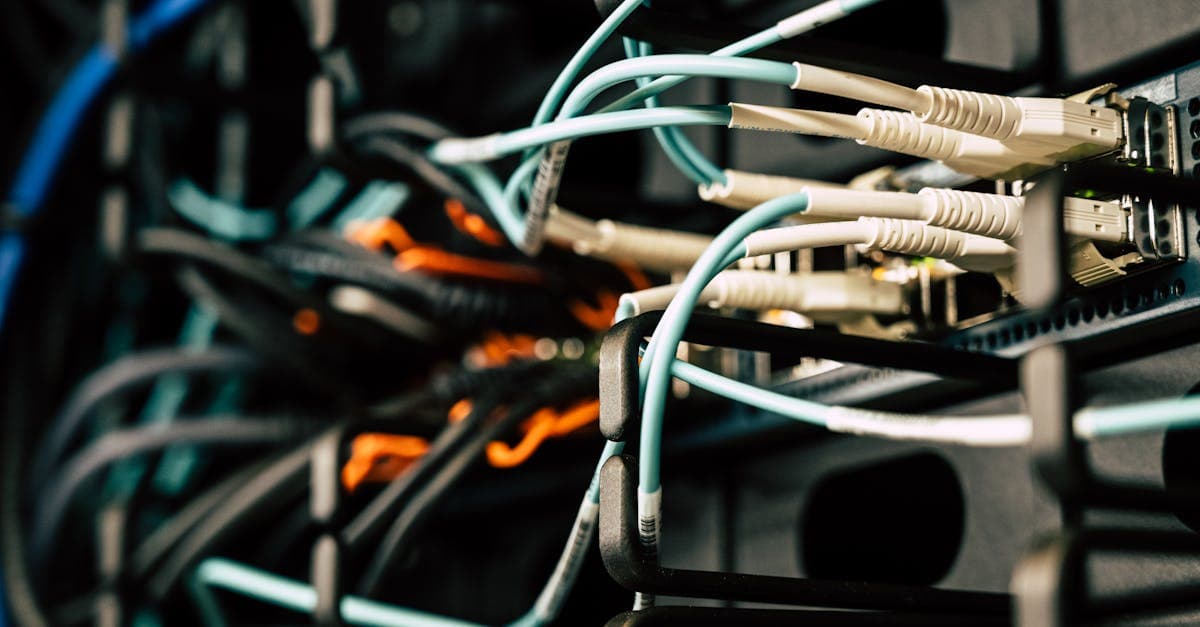
No. The line quality matches BT and EE because it's the same Openreach physical network underneath. If Vodafone broadband is sluggish in your postcode, every other Openreach provider faces the same limitation.
What people typically mean when they say it's rubbish is the support experience. User feedback points consistently to call wait times and resolution speed, not the connection quality itself.
Mid-contract stability has improved with the price pledge noted above. Serviceable rather than standout is the accurate verdict.
Compare it with EE and the picture sharpens.
Which broadband is better, EE or Vodafone?
Both providers run on Openreach, so broadband quality is near identical. Speed differences come from your local cabinet distance, not the company name.
The practical split:
- EE: stronger for BT ecosystem users (TNT Sports, BT landlines); Vodafone has historically scored below the Ofcom industry average for customer satisfaction.
- Vodafone broadband: the clearer pick for existing Vodafone mobile customers running the "Together" bundle, or anyone prioritising a price stability pledge.
At sign-up, run quotes from both. Promotions shift month to month, and the gap usually comes down to live deals rather than fundamental quality. Knowing who owns the pipes changes how you read both.
Whose network does Vodafone use for broadband?
Openreach, BT's wholesale infrastructure arm, provides the physical cables that serve most UK homes. It's structurally separate from BT Retail, regulated by Ofcom, and required to offer equal wholesale access to any ISP that applies for it.
The practical upshot: BT, EE, Plusnet, TalkTalk, and Vodafone broadband all run over the same physical lines to your front door. The cable doesn't change based on which ISP you chose. What changes is the router, the price, the customer service, and the contract terms.
That's a genuinely clarifying point for anyone price-comparing.
The market has two real exceptions. Virgin Media runs its own cable network, inherited from older cable infrastructure and expanded over decades, which is why its coverage map looks different to everyone else's. Altnets, independent builders like Hyperoptic and CityFibre, are laying brand-new full-fibre infrastructure in selected towns and cities, entirely outside the Openreach wholesale framework. Both give you a genuinely different pipe.
For Openreach-based ISPs, competition is brisk and largely commercial: promotional pricing, bundle deals, router quality, and how quickly someone answers when something breaks. That's the market you're navigating when you compare providers.
Your home broadband is sorted. What happens when you leave it behind?
Staying connected abroad: beyond your home broadband
Travel eSIMs (built-in digital SIMs activated by a QR code before you fly) cut around UK roaming charges entirely. Vodafone broadband is a home product: once you land, your mobile data takes over. Post-Brexit, most UK mobile plans, including Vodafone's own mobile contracts, now apply roaming charges in the EU.
That's where the sting often arrives for UK travellers. Carriers reintroduced fees after the Brexit transition ended, and the resulting bills can be a nasty surprise for anyone who forgot to activate a roaming add-on before boarding. Activate the profile before boarding, no plastic SIM swap needed, and your phone connects to a local network on landing. HelloRoam covers more than 190 destinations on local networks, so your data isn't routing through a UK carrier at all.
Dual-SIM (a handset running two connections simultaneously) is the setup most regular travellers settle on. Keep your UK SIM active for calls and bank verification codes, run data through the travel eSIM. Both work simultaneously on most modern iPhones and Android flagships.
A short city break with solid hotel Wi-Fi? Your existing plan probably handles it. Anything longer, or anywhere the hotel Wi-Fi turns patchy, a travel eSIM earns its keep. What Is an eSIM? explains the technology if you're new to it.
Reviewed by HelloRoam's editorial team. Last updated: 02 June 2026.
Get Connected Before You Go





Frequently Asked Questions
No. Line quality matches BT and EE because it uses the same Openreach physical network. User complaints typically target call wait times and resolution speed, not connection quality itself.
Contact Vodafone broadband via live chat or phone through the My Vodafone app, or through official social media accounts on X and Facebook, including your account reference number to speed up response.
Vodafone uses Openreach, BT's wholesale infrastructure arm. The same physical cables serve BT, EE, Plusnet, TalkTalk, and Vodafone, with differences only in pricing, routers, and customer service.
Both run on Openreach, so line speed is near-identical. EE suits BT ecosystem users; Vodafone is the clearer pick for existing Vodafone mobile customers using the Together bundle discount.
Vodafone offers Full Fibre plans from ~74 Mbps up to 2.2 Gbps, including tiers at 150, 500, and 900 Mbps, priced roughly £23 to £60-plus per month on 18 or 24-month contracts.
Vodafone has pledged no surprise mid-contract price rises, distinguishing itself from rivals that applied CPI and RPI-linked increases through 2023 and 2024.
Vodafone broadband uses FTTP (Full Fibre to the Premises), running fibre-optic cable directly into your home for consistent speeds unaffected by distance from the street cabinet.
Activation runs 10 to 14 working days from ordering. Self-installation takes roughly 20 minutes; an engineer visit is only needed if your address has never had a broadband line before.
Yes. Vodafone uses Ofcom's one-touch switching framework, coordinating the handover end-to-end and automatically notifying your current provider, so no separate cancellation call is needed.
Yes. The Full Fibre 150 plan supports 4K streaming, simultaneous video calls, and multiple devices at once, running on the same Openreach network as BT and EE.
Yes. Vodafone mobile customers qualify for the Together bundle discount, reducing the combined monthly bill when both mobile and broadband services are held under one account.
Vodafone supplies a Wi-Fi Hub with standard plans and a Wi-Fi Hub Pro with higher-speed tiers. Routers are shipped before the activation date for self-installation at home.
Coverage depends on Openreach's network, which exceeded 60% UK FTTP coverage by 2025. Where full fibre is unavailable, Vodafone's SOGEA Superfast plan may still be an option.
FTTP runs fibre directly into your home for consistent speeds. SOGEA uses fibre to the street cabinet then copper wire for the final stretch, giving lower speeds that drop with distance.
Yes. Vodafone, BT, and EE all use the same Openreach physical cables. Differences are in pricing, router quality, contract terms, and customer service, not the underlying network.
Sources
- Our best broadband deals — vodafone.co.uk
- Vodafone Home Broadband help — vodafone.co.uk
- vodafone.co.uk — vodafone.co.uk
- Best Vodafone broadband deals for May 2026 - MSE — moneysavingexpert.com
- Vodafone broadband review and UK customer ratings 2026 — uswitch.com
- Vodafone - Our Best Ever Network | Now With 5G — vodafone.co.uk