Table of content
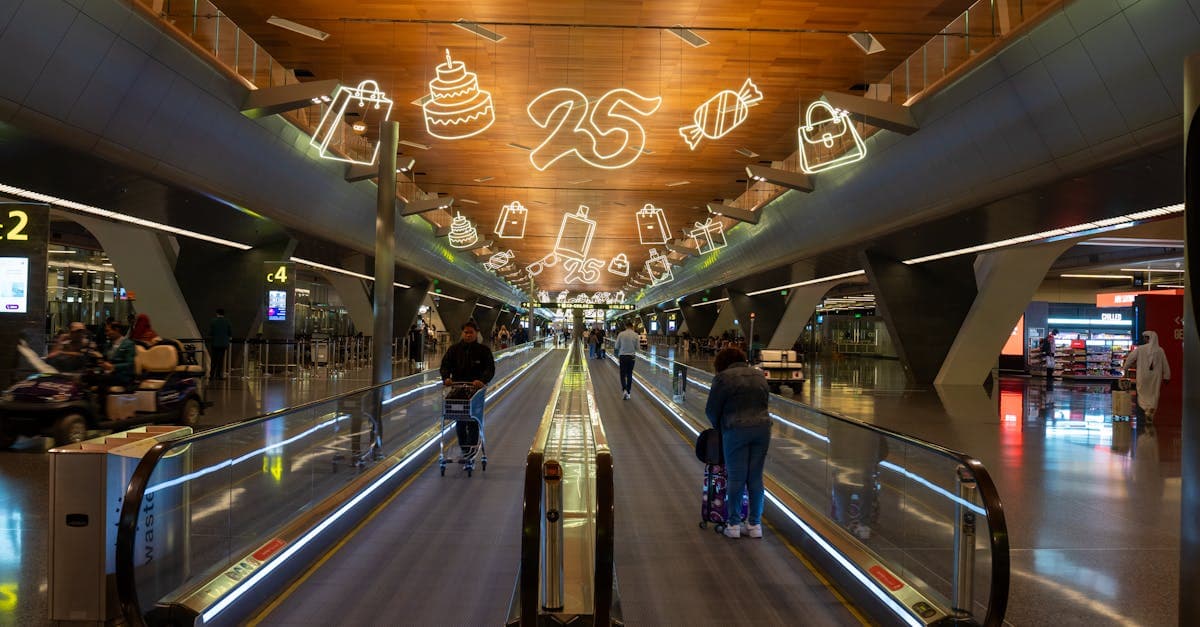
! [Busy travellers at king fahd international airport terminal with vibrant festive ceiling decorations overhead! image
Staying Connected at King Fahd International Airport: eSIM, SIM Cards, and Wi-Fi
! [Modern airport terminal with jet bridges offering connectivity options including eSIM and Wi-Fi for travellers! image
Three connectivity options are available at King Fahd International Airport: free but patchy Wi-Fi, a local SIM from the arrivals counter, or an eSIM you activate before boarding.
Indian carrier roaming packs cost up to Rs 800 per day in Saudi Arabia. A 10-day work trip to Dammam on a Jio or Airtel international pack can reach Rs 8,000 in data charges alone. That figure surprises a lot of travellers on this route.
Airport Wi-Fi exists, but community forums consistently flag it as unreliable for sustained use. Checking a WhatsApp message while you wait for luggage: fine. A video call back to Mumbai or an urgent Teams meeting: unreliable.
On WhatsApp specifically: calls, messages, and voice notes all work freely in Saudi Arabia with no VPN required. This is one of the most searched questions from Indian travellers heading to the Kingdom, and the answer is straightforward.
The practical alternative is to install a travel eSIM at home before you fly. HelloRoam's India eSIM plans start at ~$2.84 for 1GB over 7 days on Vi and Vodafone networks. No counter, no queue. Two requirements apply: your handset must be carrier-unlocked, and the model must support eSIM. Most iPhones from 2020 onwards qualify; Android compatibility varies by brand and price bracket.
Key fact: HelloRoam's entry India eSIM plan starts at ~$2.84 for 1GB over 7 days on Vi and Vodafone networks.
Connectivity sorted. Here's the full picture of the airport itself.
King Fahd International Airport: Location, Size, and Essential Facts
! [Travellers walking through the spacious king fahd international airport terminal in Dammam, Saudi Arabia! image
IATA code DMM, ICAO code OEDF en.wikipedia.org. King Fahd International Airport sits around 35 kilometres northwest of Dammam city centre and roughly 15 kilometres from Dhahran makemytrip.com. It opened in 1999 and operates under Saudi Airports Company (MATARAT), which reports to the General Authority of Civil Aviation (GACA).
The airport serves the Eastern Province, Saudi Arabia's oil heartland. Aramco's global headquarters are in Dhahran, and Dammam together with Al Khobar hosts one of the largest Indian expat communities in the Gulf. IndiGo, Air India, Air India Express, and SpiceJet all fly direct from Indian cities to DMM, making KFIA the primary Saudi gateway for Indian travellers by volume, ahead of Riyadh or Jeddah.
The terminal structure differs from what Indian travellers are used to. Rather than numbered terminals as at Indira Gandhi International or Chhatrapati Shivaji Maharaj International, DMM has one integrated building with domestic and international wings operating from the same structure. Four runways handle the traffic, with annual passenger capacity around 10 to 13 million kfia.sa.
Hindi signage is visible in parts of the terminal, a quiet acknowledgement of the Indian community's presence here.
Those numbers raise one obvious question about world records.
Is King Fahd Airport the Biggest Airport in the World?
! [Futuristic airport architecture bustling with travellers, reflecting king fahd international airport's massive world-class scale! image
Yes, by total land area. According to en.wikipedia.org, King Fahd International Airport covers approximately 776 to 780 square kilometres of desert, placing it above every other airport in the world on this specific measure. For scale: the entire island of Bahrain covers around 765 square kilometres. KFIA is larger.
Denver International Airport in Colorado ranks second globally by land area en.wikipedia.org.
Why so much space? The Eastern Province offered flat, open desert at the time of planning, with no land constraints that urban airports in Europe, India, or Southeast Asia face. Designers built a campus-scale facility with runway separation and infrastructure spread across a footprint that takes genuine time to traverse. Future expansion was built in from the start rather than retrofitted later.
What KFIA is not: the world's busiest airport by passenger count. Throughput here sits well below Dubai International, London Heathrow, or Delhi's Indira Gandhi International. Biggest by land and busiest by traffic are entirely different measures, and conflating the two is a common misreading. The airport's claim is specific: total ground area, not gates served or passengers processed per year.
That scale shapes how the terminal and its services are laid out.
King Fahd International Airport Passenger Guide: Terminals, Lounges, and Facilities
! [Aerial view of king fahd international airport showing terminals, runways, and world-class passenger facilities! image
Orientation first. The terminal operates as a single building divided into domestic and international wings, both clearly signposted from the entrance. There's no inter-terminal shuttle, no numbered terminal confusion.
Lounge access. Plaza Premium Lounge accepts Priority Pass at KFIA kfia.sa. If you carry an HDFC Infinia or Axis Magnus card, your Priority Pass benefit applies here without a separate lounge membership. SBI Elite cardholders are also covered. Bring a valid boarding pass to the lounge desk.
Duty free. Shops operate on both arrivals and departures sides. Collecting purchases on the way in is entirely viable at DMM, which is worth knowing if you'd rather not carry items through departures queues.
Food and luggage services. Halal-certified restaurants and quick-service counters are distributed through both wings, so food access is consistent regardless of your zone. Luggage wrapping and storage are available airside. Wrapping is practical for fragile cargo or if you're connecting to a domestic Saudi flight after clearing international arrivals.
Other facilities. Prayer rooms are provided throughout the terminal, standard in the Kingdom. Hindi signage appears in certain sections, as noted in the overview above.
Getting out of the terminal requires knowing your ground transport options.
Parking, Transport Links, and Getting from DMM to Dammam City
! [Modern airport terminal interior with spacious design representing transport and parking access near Dammam city! image
The airport has short-term and long-term parking directly adjacent to the terminal building. Rates are reasonable by regional standards, and covered bays sit close to the departure entrance. For arrivals, the walk from the terminal exit to the parking structure is short.
Taxis queue outside the arrivals exit and are the default for most first-time visitors. Ride-share apps including Careem and Uber operate in the Eastern Province, but confirm pickup availability before relying on them, particularly for early morning or late-night arrivals.
As of 2026, there's no rail or metro connection between King Fahd International Airport and Dammam city. A municipal bus network exists in the city but doesn't serve the airport. That gap leaves private transport as the practical default.
The drive into Dammam city centre takes around 30 minutes in light traffic. Rush hour adds time, and the Dammam-Dhahran corridor slows considerably on weekday mornings.
Oil sector workers know this airport well.
Aramco and SABIC contractors often have employer-arranged private transfers waiting at arrivals, which is faster and more predictable than queuing for a taxi. Car rental desks occupy a row in the arrivals hall for those who prefer to self-drive.
Before you reach ground transport, immigration and security come first.
Security, Visa, and Immigration at King Fahd International Airport
! [Crowded airport corridors with directional signage guiding travellers through immigration and security at king fahd international airport! image
Indian nationals must hold a valid Saudi visa before boarding. According to airindia.com, no visa on arrival exists for Indian passport holders as of early 2026, and airlines verify this at check-in before you board.
Three visa categories cover most Indian arrivals:
- Work visa: sponsored by a Saudi employer, required before entry for those in employment
- Visit visa: covers tourism, family visits, and short-term business trips
- Umrah visa: issued specifically for pilgrims, with restrictions on duration and movement outside designated areas
First-time arrivals go through biometric registration at the immigration counter. Fingerprints and a photograph are taken. The process adds a few minutes per passenger, so expect the queue to move more slowly than at European airports.
Dedicated lanes exist for GCC residents and diplomatic passport holders. If you hold neither, use the standard queue. Officers redirect anyone who misses the signage, but the lanes are clearly marked.
Don't treat the customs threshold as optional.
Passengers carrying cash above SAR 60,000 must declare it at customs. The rule applies per person, and random checks do occur. Undeclared amounts can be held.
Security screening throughout the terminal follows standard international procedure: liquids in a bag, laptops out of the case, shoes in the tray if requested. Nothing different from major Indian international airports.
Oil sector arrivals occasionally face additional document verification at immigration, where Saudi authorities may cross-reference visa details against employer records. Carry your employment contract or offer letter, not just the visa print-out.
Indian travellers face a distinct set of considerations beyond this standard process.
Indian Travelers at King Fahd International Airport: Key Tips and Expectations
! [Indian travellers silhouetted against large windows inside king fahd international airport terminal in Saudi Arabia! image
Four Indian carriers fly direct to DMM: IndiGo, Air India, Air India Express, and SpiceJet airindia.com. Combined, these routes handle a large share of the labour and business traffic into the Eastern Province, with most departures from Chennai, Hyderabad, Kochi, and Mumbai.
The terminal reflects its passenger mix. Community forums confirm Hindi signage appears in parts of the building, particularly near immigration and the arrivals hall. It's not comprehensive, but it's a frank acknowledgement of who uses this airport most.
Dammam, Al Khobar, and Dhahran collectively host one of the largest Indian expat concentrations in the world, concentrated in the oil and construction sectors. Many arrivals here are not tourists: they're workers joining projects with Saudi Aramco and SABIC contractors.
One specific mistake to avoid with eSIM plans: don't activate your data plan while still in India. Install the eSIM profile on your device before you fly, then leave it dormant. Turn it on after you land. Triggering it days or weeks early burns through the validity window before you've passed immigration at King Fahd International Airport. This is the most commonly reported eSIM error on Indian travel forums.
Currency exchange counters are available in the arrivals hall. The rates are workable, though converting a portion through your bank before departure or carrying a small amount of Saudi riyals from India usually gets you a sharper deal.
Oil sector workers: print your employer's contact details and carry them separately. Immigration officers occasionally ask for an employer's contact number on the spot, and a phone that's just landed with no signal is not a reliable backup.
A common comparison question among Indian travellers deserves a direct answer.
Is King Fahd Airport Bigger Than Mumbai Airport?
! [White aircraft docked at a terminal gate highlighting king fahd international airport's capacity versus Mumbai airport! image
Yes, by a significant margin. King Fahd International Airport's total land area, the world's largest as covered in an earlier section, dwarfs Mumbai's Chhatrapati Shivaji Maharaj International Airport, which covers roughly 19 square kilometres. King Fahd is approximately 40 times larger by area.
The size gap comes down to geography, not grand planning. The Eastern Province is flat desert, and land was plentiful when the airport was designed. Mumbai's airport sits on a congested peninsula, wedged between residential districts and the Arabian Sea, with no realistic room to expand.
The counterintuitive part: Mumbai handles far higher annual passenger volumes. King Fahd's enormous footprint reflects the cost and availability of Eastern Province land, not traffic density. Area and passenger throughput are entirely different measurements.
Passenger experience follows this contrast. Mumbai airport is compact and increasingly metro-connected, built to move large crowds through efficiently. King Fahd is quieter, more open, and dependent on ground transport, which makes it feel unhurried but demands more planning on departure day.
Both airports anchor major Indian travel routes, though for different reasons. Mumbai sends travellers outbound to the Gulf and beyond; King Fahd receives them, primarily workers arriving on multi-month employment contracts.
Pilgrims and transit travellers sometimes confuse King Fahd International Airport with airports located closer to Mecca, which sits in a different province entirely.
Which International Airport Is Near to Mecca?
! [Sleek modern airport terminal hall near Mecca showcasing Saudi Arabia's world-class aviation infrastructure for pilgrims! image
King Abdulaziz International Airport in Jeddah is the closest major international airport to Mecca, sitting roughly 70 kilometres from the holy city en.wikipedia.org. King Fahd International Airport near Dammam is approximately 700 kilometres away. If your trip is pilgrimage-related, flying into the wrong city means a long overland journey that could easily have been avoided.
The distinction matters most for Indian pilgrims booking Umrah or Hajj packages. Many travel agents bundle flights with accommodation and ground transfers, and some cheaper fares route through Dammam. That price difference disappears quickly once you factor in the cost and time of travelling 700 kilometres across the Arabian Peninsula.
A practical decision framework:
- Mecca (Umrah or Hajj): Fly into Jeddah (IATA: JED), King Abdulaziz International Airport. Confirm this with your package operator before booking.
- Madinah visit: Prince Mohammed bin Abdulaziz Airport (IATA: MED) serves the city directly. Several Indian carriers operate seasonal routes here, particularly during Umrah season.
- Eastern Province (Dammam, Al Khobar, Dhahran): King Fahd International Airport (IATA: DMM) is the right choice. This is the correct destination for work, business, or visiting family in the oil sector.
Double-check your itinerary before confirming any flight. The airport codes JED, MED, and DMM look distinct on a booking screen, but the consequences of mixing them up on a pilgrimage trip are significant.
Get Connected Before You Go





Frequently Asked Questions
Yes, by a significant margin. King Fahd International Airport covers approximately 776 to 780 square kilometres, making it roughly 40 times larger than Mumbai's Chhatrapati Shivaji Maharaj International Airport, which covers around 19 square kilometres. The size difference comes down to geography: King Fahd was built on flat, open Eastern Province desert, while Mumbai's airport is wedged into a congested peninsula with no room to expand.
Yes, King Fahd International Airport is the world's largest airport by total land area, covering approximately 776 to 780 square kilometres of desert in Saudi Arabia's Eastern Province. For context, the entire island of Bahrain covers around 765 square kilometres, making KFIA larger. However, it is not the world's busiest airport by passenger count — that distinction belongs to high-traffic hubs like Dubai International or London Heathrow.
King Fahd International Airport (IATA: DMM) in Dammam, Saudi Arabia, holds the record for the world's largest airport by total land area at approximately 776 to 780 square kilometres. Denver International Airport in Colorado ranks second globally by land area. The vast footprint was made possible by the flat, open desert of the Eastern Province, where land was plentiful and designers built in room for future expansion from the start.
King Fahd International Airport is located in the Eastern Province near Dammam and Dhahran, which is not close to Mecca. Mecca lies in the western Hijaz region of Saudi Arabia, and the article notes Jeddah as an alternative Saudi gateway for Indian travellers — King Abdulaziz International Airport in Jeddah is the airport closest to Mecca. Indian pilgrims travelling for Umrah typically fly into Jeddah rather than Dammam.
Three main options are available: free airport Wi-Fi, a local SIM card purchased at the arrivals counter, or a travel eSIM installed before departure. Airport Wi-Fi is described by community forums as unreliable for sustained use such as video calls, though it works for quick message checks. A pre-departure eSIM is the most convenient option for stays of a week or longer, requiring no queuing on arrival.
Yes, WhatsApp works freely in Saudi Arabia with no VPN required. Calls, messages, and voice notes all function without restriction. This is one of the most commonly searched questions from Indian travellers heading to the Kingdom, and the answer is straightforward — no workarounds are needed.
Indian carrier international roaming packs for Saudi Arabia can cost up to Rs 800 per day. A 10-day work trip on a Jio or Airtel international plan can reach Rs 8,000 in data charges alone, making roaming one of the more expensive connectivity options for extended stays. For trips of a week or more, a travel eSIM or local SIM card typically offers better value.
The most commonly reported eSIM error on Indian travel forums is activating the data plan while still in India. You should install the eSIM profile on your device before you fly, but leave it dormant until after you land at King Fahd International Airport. Triggering the plan days or weeks early burns through the validity window before you have even cleared immigration.
Four Indian carriers operate direct flights to King Fahd International Airport (DMM): IndiGo, Air India, Air India Express, and SpiceJet. Most departures are from Chennai, Hyderabad, Kochi, and Mumbai. Combined, these routes handle a large share of the labour and business traffic into Saudi Arabia's Eastern Province.
King Fahd International Airport sits approximately 35 kilometres northwest of Dammam city centre and around 15 kilometres from Dhahran. The drive into Dammam takes around 30 minutes in light traffic, though the Dammam-Dhahran corridor can slow considerably during weekday morning rush hours.
As of 2026, there is no rail or metro connection between King Fahd International Airport and Dammam city. A municipal bus network exists in the city but does not serve the airport. Private taxis, ride-share apps such as Careem and Uber, employer-arranged transfers, and car rental desks in the arrivals hall are the practical transport options.
Yes, Plaza Premium Lounge at King Fahd International Airport accepts Priority Pass. Indian cardholders with HDFC Infinia, Axis Magnus, or SBI Elite cards can use their Priority Pass benefit at this lounge without a separate membership. A valid boarding pass is required at the lounge desk.
Indian nationals must hold a valid Saudi visa before boarding — no visa on arrival exists for Indian passport holders as of early 2026, and airlines verify this at check-in. The three main categories are a work visa (sponsored by a Saudi employer), a visit visa (for tourism, family visits, or short-term business), and an Umrah visa (for pilgrims, with restrictions on duration and movement).
King Fahd International Airport's IATA code is DMM and its ICAO code is OEDF. The airport opened in 1999 and is operated by Saudi Airports Company (MATARAT), which reports to the General Authority of Civil Aviation (GACA). It serves the Eastern Province of Saudi Arabia, including Dammam, Dhahran, and Al Khobar.
King Fahd International Airport operates as a single integrated building with separate domestic and international wings, both clearly signposted from the entrance. There is no inter-terminal shuttle or numbered terminal system as found at major Indian airports like Indira Gandhi International or Chhatrapati Shivaji Maharaj International. Four runways handle traffic with an annual passenger capacity of around 10 to 13 million.
Oil sector arrivals should carry their employment contract or offer letter in addition to their visa print-out, as Saudi immigration officers may cross-reference visa details against employer records and occasionally ask for an employer's contact number on the spot. It is also advisable to print the employer's contact details separately, since a phone that has just landed with no signal is not a reliable backup.
Currency exchange counters are available in the arrivals hall at King Fahd International Airport where Saudi riyals can be obtained. However, converting a portion through your bank before departure or carrying a small amount of Saudi riyals from India typically offers a sharper exchange rate than airport counters. Passengers carrying cash above SAR 60,000 must declare it at customs.
Sources
- Welcome to King Fahd International Airport KFIA — kfia.sa
- en.wikipedia.org — en.wikipedia.org
- King Fahd International Airport (DMM) — airindia.com
- King Fahad International Airport (DMM) Dammam — makemytrip.com