Table of content
! [Luxury halong bay cruise ship navigating scenic limestone karst islands in emerald Vietnamese waters! image
What Is a Halong Bay Cruise?
! [Majestic halong bay cruise boat sailing through emerald green waters surrounded by towering limestone karsts! image
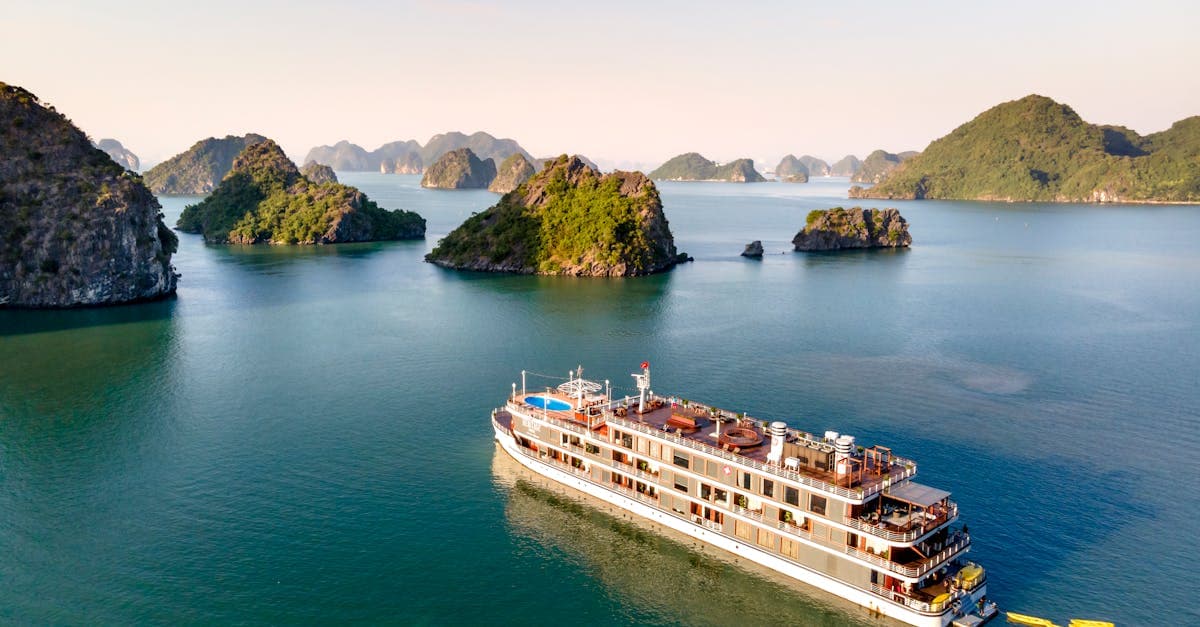
A Halong Bay cruise is an overnight voyage through 1,600 limestone karst islands in northeast Vietnam, roughly 165 kilometres east of Hanoi. The bay earned UNESCO World Heritage status in 1994 halongbaycruises.com. Travellers board traditional wooden junk boats, sleep on the water, and wake to rock towers rising through morning mist.
The scale doesn't register until you're out there. Those 1,600 islands spread across approximately 1,553 square kilometres of sea. Boats pass new formations for hours, and the deeper you sail, the fewer other vessels you encounter. That sense of gradually emptying water is the detail first-time visitors consistently report as the real surprise.
Getting there from Hanoi takes 3.5 to 4 hours by road. Most cruise packages include the transfer, so nothing needs to be arranged separately. The bay has no rail access; road is the standard route in both directions.
Timing shapes the trip more than people expect. The clearest windows are September to November and March to May: settled weather, calm water, lower humidity. July and August bring monsoon rain and occasional typhoon warnings. December through February turns grey and cold enough to make open-deck time uncomfortable.
One practical detail before you board: sort your mobile data while still in Hanoi. Vietnamese networks cover most tourist zones in the bay, but signal drops once boats push into the quieter karst channels. HelloRoam offers Vietnam eSIM plans from ~$2.84 for 1GB over 7 days, enough for maps, messaging, and keeping up with the group chat from the sundeck. Indian travellers can check current options through HelloRoam's Browse eSIM Plans page before departure.
The trip is easy to picture. What takes more figuring out is what it should cost you.
How Much Does a Halong Bay Cruise Cost?
! [Halong bay cruise vessel sailing past towering green-capped limestone rocks viewed from above in daylight! image
Halong Bay cruises run from $120 to over $1,000 per person across three tiers klook.com. Budget one-night trips fall between $120 and $350. Mid-range two-night itineraries cost $200 to $400. Luxury options start at $400 and climb past $1,000.
Almost all cruise prices include meals, kayaking, and cave entry halongbaytours.com. That's worth understanding upfront. A $150 package with transfers and activities bundled in can undercut a $180 quote once you strip out the extras listed separately. Compare inclusions before comparing headline prices.
Flights from India to Hanoi average $300 to $600 return. Booking four to six weeks ahead generally lands you in the lower half of that range. IndiGo and VietJet both serve this route, typically with a single connection.
The Vietnam e-visa costs around $25 for Indian passport holders and processes entirely online. Standard turnaround is three working days. It's a fixed cost regardless of which cruise tier you pick, so factor it in from the start.
Per-person total from India: roughly $700 to $1,400 covers flights, visa, a mid-range 2N3D cruise, ground transfers, and meals ashore. Travellers booking Heritage Line or Era Cruises at the luxury end should budget considerably higher.
Costs span this range because the tiers are genuinely different experiences. Which one suits you depends largely on how long you can stay on the water.
Which Halong Bay Cruise Is Best for Indian Travellers?
! [Aerial view of a halong bay cruise ship ideal for Indian travellers navigating calm limestone-dotted waters! image
Two nights, three days is the right starting point for a first visit katistravelling.com. One night puts you on the bay, but the pace is rushed and the itinerary shallow. The second day is where the experience opens: boats spread into quieter, deeper zones that day-one passengers never reach.
For honeymoon and anniversary travellers, the luxury tier earns its price. Small-cabin boats with butler service, curated menus, and unhurried itineraries are built for exactly this kind of trip. Book three to six months ahead for peak season dates.
Budget cruises are a legitimate choice for backpackers and travellers with tight schedules. A one-night trip still covers kayaking, a cave visit, and a sunrise at sea. The trade-off is pace and crowd levels, not basic comfort.
The practical framework: fix your duration first, then pick a tier. Duration shapes the experience far more than cabin grade. A relaxed mid-range 2N3D trip beats a rushed luxury 1N2D trip most of the time.
Duration is your single biggest booking decision.
1 Night 2 Days vs 2 Nights 3 Days Halong Bay Cruise
! [Halong bay cruise ship on tranquil waters, perfect for comparing one-night and two-night Vietnam itineraries! image
Two nights is better than one. That's the short answer. The longer version involves pace, crowd levels, and what the second day actually unlocks.
The detail first-time bookers miss: on Day 2, 2N3D boats move into sections of the bay that one-night cruises never enter. Popular caves and floating villages sit in the outer zones, and that's precisely where 1N2D itineraries anchor and stay. A second night pushes you past that traffic into noticeably emptier water katistravelling.com.
The per-person cost gap, as set out in the pricing breakdown above, is real but not prohibitive measured against total India-to-Vietnam trip costs. For anyone flying more than 10 hours to reach Hanoi, defending a single night on the bay is a hard case to make.
2N3D is the clear pick for the majority. 1N2D makes sense for genuinely fixed itineraries or tight budgets. The difference shows most clearly on the second morning, when the bay empties out and the boats that left yesterday are long gone.
Once duration is set, the operator tier becomes the key variable.
Top Halong Bay Cruise Operators by Tier
! [Aerial view of a premium halong bay cruise ship sailing past dramatic limestone karst formations in Vietnam! image
Three tiers cover the market, and the quality gap between them is genuine.
At the top, Heritage Line sets the benchmark. Their flagship, The Jasmine, carries 14 suites, offers butler service and an infinity pool, and sails the quieter waters of Lan Ha Bay rather than the busier Halong zones. Era Cruises and Perla Dawn Sails operate at the same level, both focused on Lan Ha Bay, both running tight guest-to-crew ratios with food programmes that earn consistent praise. Book any of these at least three to six months ahead for peak-season departures between October and April.
The mid-range tier is where most Indian travellers end up, and rightly so. Orchid Classic, Capella Cruise, and Peony Cruise all deliver genuine quality without the flagship price tag. Reasonable cabin sizes, organised daily activities, and food that earns decent marks. If the luxury tier feels like overkill for the trip, this is the honest sweet spot klook.com.
For tight budgets or single-night departures, JadeSails and comparable operators running out of Halong City are functional and fair value. The experience is less immersive, but perfectly reasonable for someone who wants to see the bay rather than spend nights at anchor.
One candid point: mid-range operator quality shifts with staff turnover. Reviews from the past six months carry more weight than older averages.
Halong Bay is not the only bay worth cruising here.
Halong Bay vs Lan Ha Bay: Which Should You Book?
! [Two cruise ships navigating rocky limestone formations, comparing the scenic waters of Halong Bay and Lan Ha Bay! image
For mid-range and luxury cruises, Lan Ha Bay is the stronger pick. Same karst scenery, far fewer boats, cleaner water, and swimming that's actually worth doing. Halong Bay still makes sense for budget 1-night trips where simpler access and lower price matter more than atmosphere. The logic for each is clear.
Most travellers book Halong Bay simply because it's the name they recognise. Many never learn Lan Ha Bay exists. That's a gap worth closing before any deposit is paid.
Both bays share the same dramatic geology: limestone towers, cave systems, and fishing communities on the water. The scenery is functionally identical. The experience is not.
Halong Bay runs over 500 active cruise vessels through a relatively contained zone. On peak mornings at popular viewpoints, the boat density is genuinely striking. Lan Ha Bay operates with between 50 and 80 vessels at a time. That difference in scale changes what the trip actually feels like.
The case for Lan Ha Bay
Water quality is noticeably cleaner here, sitting further from the Ha Long City port. Swimming and snorkelling are worth doing in Lan Ha Bay. In Halong's main zone, many passengers skip both. There are also beaches in Lan Ha Bay, something Halong's central area largely lacks. Heritage Line's Ylang and Jasmine sail these waters, as do Era Cruises and Perla Dawn Sails halongbaytours.com.
The case for Halong Bay
Access is the clear advantage. Halong Bay is a direct road journey from Hanoi, roughly 3.5 to 4 hours. Reaching Lan Ha Bay requires a transfer via Cat Ba Island, adding a ferry or speedboat leg. If the schedule is tight or the budget is at its limit, that extra step matters. For a budget 1-night trip where the goal is simply seeing the karst landscape, Halong Bay is a valid booking.
Wherever you cruise, staying connected is a real challenge.
Staying Connected on a Halong Bay Cruise
! [Tranquil halong bay cruise boat on emerald waters where staying connected onboard requires a reliable travel eSIM! image
Mobile signal on the bay ranges from weak to completely absent. The further the vessel sails from Halong City, the more time passes without a usable connection. Plan around that reality and it's manageable. Expect otherwise, and the first evening at anchor can feel unexpectedly isolating.
Most operators offer onboard Wi-Fi. In practice, this means a shared connection under passenger load: video calls drop, uploads stall, and in deeper bay zones the signal cuts out entirely. Treat it as an occasional bonus rather than a reliable connection.
Download before you board
Three apps are worth installing the night before departure:
- Google Maps offline (download the northeast Vietnam region specifically)
- iTranslate for offline Vietnamese phrase support
- XE Currency for offline exchange rate reference
These work without any signal and cover most practical situations that arise on the water.
The Jio and Airtel roaming trap
Both carriers' international packs function in Vietnam, but the per-day charge structure is the problem. You pay for each day the pack is active, whether usable signal is available or not. On a multi-day cruise with intermittent coverage, that daily rate adds up for almost no data in return.
A Vietnam eSIM plan bought before departure costs considerably less and only draws data when signal is actually present. HelloRoam offers Vietnam eSIM plans that install before you leave India and activate automatically on arrival, without swapping out your Indian number or queuing at a SIM counter in Hanoi. Check current Vietnam plan pricing on the HelloRoam website before your trip.
Signal returns gradually on the final morning as the vessel heads back toward Halong City. Connectivity is fully restored by the time you reach the pier.
Connectivity sorted, but one health question still worries many travellers.
Can You Travel on a Cruise with COVID?
! [Cruise ship on Halong Bay's calm waters with limestone cliffs, highlighting post-COVID travel requirements for tourists! image
Vietnam has required no COVID documentation from any incoming traveller since 2022. No PCR test, no vaccination certificate, no quarantine on arrival. The country lifted all pandemic-era entry restrictions that year and hasn't reinstated them.
That's the official position. The practical side is slightly more nuanced.
Individual cruise operators wrote their own health protocols during the pandemic, and some retain traces of those policies. A few mid-range boats still ask guests to declare symptoms at check-in. Most reputable operators in Lan Ha Bay have dropped these requirements entirely, but confirming directly with your chosen operator before booking, not on departure day, saves a stressful conversation at the pier.
Cancellation terms are the more relevant concern for most travellers. Policies vary considerably by tier: budget operators often allow cancellations with 48 hours' notice, while premium operators may require a week or more, with partial or full charges for late changes. Read those terms carefully before transferring any deposit.
Travel insurance covering illness and trip interruption is the practical safeguard. A disrupted booking or an unwell day on the water becomes a straightforward claim rather than an out-of-pocket calculation at a difficult moment.
The idea that Vietnam still requires COVID testing or proof of vaccination is simply outdated. The country has been open to international visitors for several years. Book with the same process you would use for any other Southeast Asian destination.
Health rules clear: now it's time to build the full trip plan.
How to Plan Your Halong Bay Cruise Trip from India
! [Serene halong bay cruise ship amid limestone karsts, an essential visual guide for Indian travellers planning Vietnam! image
Five steps get you from a Delhi or Mumbai departure gate to a cabin on the bay. The e-visa, the cruise booking, and your phone setup all need to happen before you land in Hanoi.
Step 1: Book your flight to Hanoi. Direct and one-stop connections run from Indira Gandhi International, Chhatrapati Shivaji Maharaj, and Kempegowda International. IndiGo, Air India, and Vietnam Airlines all serve the route, typically via a connection at Kuala Lumpur, Singapore, or Bangkok. Hanoi's Noi Bai International Airport is your arrival point; the bay is roughly 3.5 to 4 hours by road from there.
Step 2: Apply for your Vietnam e-visa online. The application sits on the Vietnamese government's official immigration portal, costs around $25, and typically processes in three working days. Apply at least a week before travel to avoid any delays.
Step 3: Book your cruise. Go directly to the operator's website or through a licensed Vietnam-based agent halongbaycruises.com. Third-party booking aggregators add margin without adding value here.
Book early. That matters more than most travellers expect.
For Heritage Line, Era Cruises, and comparable luxury options, the booking window runs three to six months ahead for peak season sailings between October and April. Mid-range boats fill a month or two out.
Step 4: Install a Vietnam eSIM before your departure date. Most of the bay runs with minimal signal, but Hanoi and Ha Long City have solid 4G coverage. You'll want data active from the moment you land, not after a queue at the airport SIM counter.
Step 5: Pack light. Cruise cabins are compact. A 20-litre daypack handles everything you need on deck. Checked baggage stays in Hanoi.
Still have questions? The FAQ covers the rest.
Get Connected Before You Go





Frequently Asked Questions
A 2-night, 3-day cruise is the best option for most first-time visitors, offering a relaxed pace and access to quieter, deeper sections of the bay that shorter itineraries never reach. For luxury and honeymoon travelers, top-tier operators in Lan Ha Bay provide butler service, small-cabin boats, and curated itineraries built for special occasions. Mid-range cruises offer a strong balance of quality and value, while budget one-night options suit travelers with tight schedules or limited funds.
Halong Bay cruises range from $120 to over $1,000 per person across three tiers. Budget one-night trips cost $120 to $350, mid-range two-night itineraries run $200 to $400, and luxury options start at $400 and climb past $1,000. Almost all packages include meals, kayaking, and cave entry, so comparing inclusions alongside headline prices is essential before booking.
Vietnam has required no COVID documentation since 2022, including no PCR tests, vaccination certificates, or quarantine on arrival, and all pandemic-era entry restrictions were lifted that year. Some individual cruise operators may still ask guests to declare symptoms at check-in, so confirming health policies directly with your chosen operator before departure — not on the day — is advisable. Cancellation terms are the more practically relevant concern for most travelers today.
Halong Bay cruises are typically structured as 1-night or 2-night itineraries rather than week-long voyages. A mid-range 2-night, 3-day cruise costs $200 to $400 per person, while luxury options start at $400. For a full week-long Vietnam trip including a cruise, the total cost from India generally ranges from $700 to $1,400, covering flights, the Vietnam e-visa, cruise fare, ground transfers, and meals ashore.
A Halong Bay cruise is an overnight voyage through 1,600 limestone karst islands in northeast Vietnam, approximately 165 kilometres east of Hanoi. Travelers board traditional wooden junk boats, sleep on the water, and experience dramatic rock formations rising through morning mist. The bay holds UNESCO World Heritage status, awarded in 1994, and spans approximately 1,553 square kilometres of sea.
Getting from Hanoi to Halong Bay takes 3.5 to 4 hours by road. Most cruise packages include this transfer, so no separate arrangement is needed. There is no rail access to the bay; road is the standard route in both directions.
The clearest windows for a Halong Bay cruise are September to November and March to May, when weather is settled, water is calm, and humidity is lower. July and August bring monsoon rain and occasional typhoon warnings, while December through February turns grey and cold enough to make open-deck time uncomfortable. Timing shapes the experience more than most first-time visitors expect.
Almost all Halong Bay cruise packages include meals, kayaking, and cave entry. Ground transfers from Hanoi are also commonly bundled in. A lower headline price with activities included can undercut a higher quote once extras listed separately are added, so comparing full inclusions before comparing prices is essential.
A 2-night, 3-day cruise is the recommended choice for most travelers, providing around 44 hours on the water, 5 to 6 activities, and access to quieter, deeper bay zones that 1-night itineraries never reach. The second day is where the experience opens up, as boats move past the busier outer zones into noticeably emptier water. A 1-night cruise suits travelers with genuinely fixed schedules or very tight budgets, covering the basics at a faster pace.
Halong Bay operates over 500 active cruise vessels in a relatively contained zone, while Lan Ha Bay runs only 50 to 80 vessels at a time, resulting in far fewer boats and a quieter atmosphere. Lan Ha Bay also offers cleaner water, beaches, and swimming conditions worth using, sitting further from the busy Ha Long City port. The trade-off is access: Halong Bay is a direct road journey from Hanoi, while Lan Ha Bay requires an extra ferry or speedboat transfer via Cat Ba Island.
Lan Ha Bay is the stronger pick for mid-range and luxury cruises, offering the same dramatic karst scenery as Halong Bay with far fewer vessels, cleaner water, and better swimming. Top-tier operators focus their fleets on Lan Ha Bay's quieter waters, running tight guest-to-crew ratios with consistently praised food programmes. Halong Bay remains a valid option for budget one-night trips where simpler access and lower prices take priority.
Mobile signal on Halong Bay ranges from weak to completely absent, particularly as boats move into quieter karst channels away from Halong City. Onboard Wi-Fi is available on most vessels but is shared, unreliable under passenger load, and cuts out entirely in deeper bay zones. Downloading offline maps, translation apps, and currency converters before boarding is strongly recommended so practical needs are covered without any signal.
A Vietnam eSIM plan purchased before departure is generally more cost-effective than activating an international roaming pack for a Halong Bay cruise. Carrier roaming packs charge a per-day rate whether usable signal is present or not, which adds up during a multi-day cruise with intermittent coverage. A local Vietnam eSIM installs before you leave, activates automatically on arrival, and only draws data when signal is available.
Indian passport holders need a Vietnam e-visa, which costs around $25 and is processed entirely online. Standard turnaround is three working days, so applying well ahead of departure is important. This is a fixed cost regardless of which cruise tier you book, and it should be factored into the overall trip budget from the start.
The per-person total from India typically ranges from $700 to $1,400, covering return flights, the Vietnam e-visa, a mid-range 2-night 3-day cruise, ground transfers, and meals ashore. Flights from India to Hanoi average $300 to $600 return, with booking four to six weeks ahead generally landing in the lower half of that range. Luxury cruise options will push total costs considerably higher.
Luxury tier cruises should be booked three to six months ahead for peak-season departures between October and April, as cabin availability on small high-end vessels fills quickly. Mid-range and budget cruises have more availability but benefit from advance booking during the September to November and March to May high seasons. For honeymoon or anniversary trips on luxury boats, the earlier the booking, the better the cabin selection.
Sources
- Halong Bay Overnight Cruises — halongbaytours.com
- Which Ha Long Bay boat cruise is best? — katistravelling.com (2025)
- booking.com — booking.com
- Official Website of Halong Bay Cruises — halongbaycruises.com
- Top 10 Ha Long Cruises 2026 — klook.com