Korea Weather Guide for Singaporeans: Best Time to Visit by Season in 2026

Written by: David Chen


12 min read
HelloRoam is a global eSIM provider offering instant mobile data in 170+ countries. Buy prepaid travel eSIM plans with no extra fees, no contracts, and instant activation on any eSIM-compatible device.
12 min read
Seoul in July gets 394 mm of rain in a single month, more than Singapore's wettest month. Flip to January and the same city drops to minus 15 degrees Celsius with wind chill. Same country. Completely different planet from the year-round warmth Singaporeans live in.
That's the pull of Korea weather for Singaporean travellers. Each season isn't just a temperature range, it's an experience category unavailable in the tropics.
Three windows stand out clearly. April for cherry blossoms, mild temperatures, and a visual payoff that earns the airfare. October for golden foliage, clear skies, and near-perfect conditions for day hikes. December through January for snow, ski resorts in Gangwon Province, and the cold that drives you straight into Korea's best heated bathhouses and midnight street food culture.
March in Seoul will shock you if Singapore's climate is all you know. Nights hover around 1 degree Celsius, and afternoon highs of 11 degrees Celsius feel genuinely cold without the right layering. By May, temperatures climb to 23 degrees Celsius and the days stay light past 7 pm. Humidity stays manageable through April, then starts building fast toward the summer range.
Spring is Korea's peak season for Singaporean visitors, and it's easy to see why. Cherry blossoms, mild temperatures, and long daylight hours create a travel window that earns its popularity. Be honest about the trade-offs, though: flights and accommodation cost more during peak spring, and crowds at major sites like Yeouido and Gyeongbokgung are substantial.
Two things define the spring experience. The blossoms, which you've already planned around. And yellow dust (hwangsa), which most Singaporean travel guides skip entirely. That hazard gets its own full section below.
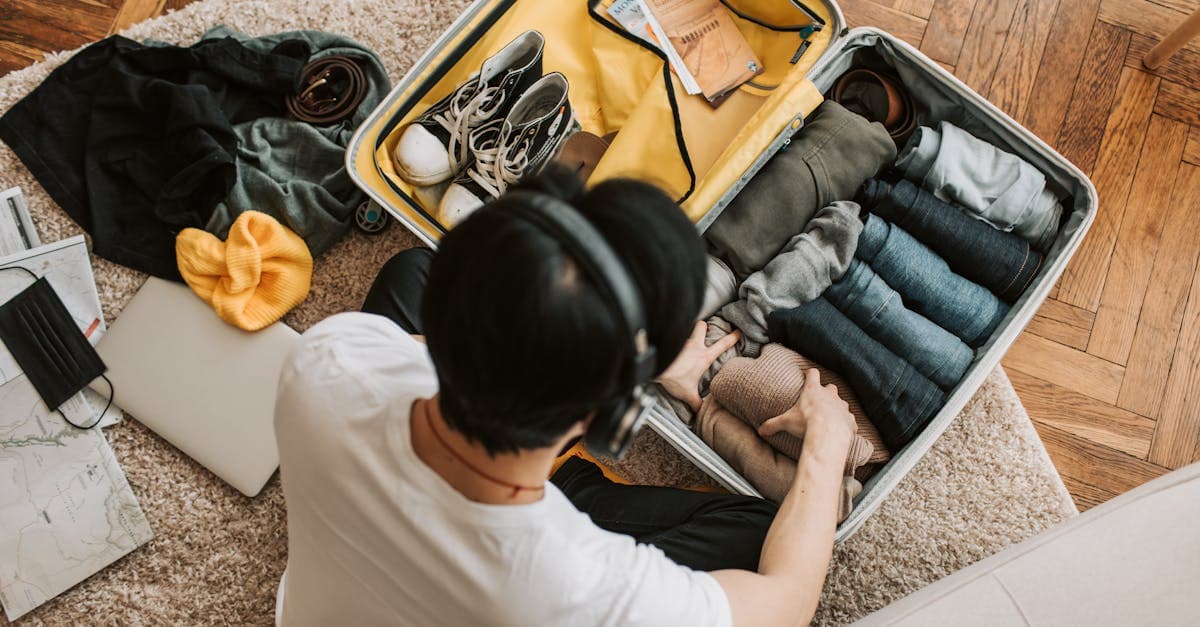
Packing for spring Korea means thinking in layers:
The temperature swings compress as the season progresses. By May, the main challenge is humidity, not cold.
Jeju's cherry blossoms are peaking this week. If you're reading this on or around 20 March 2026, the Jeju window is open right now, with full bloom projected between 25 and 27 March. Miss it by a week and you're looking at bare branches.
The bloom travels northward across the peninsula, giving late-March and April travellers multiple chances to catch it:
This year's blooms are tracking slightly earlier than the historical average, the result of a warmer 2025 to 2026 winter. If you're planning around peak dates, lean toward the earlier end of each window.
Jinhae is the location where accommodation becomes the deciding factor. Yeojwa Stream, lined with cherry trees on both sides, draws 1 to 2 million visitors across the 10-day Gunhangje Festival. Hotels near the stream fill months ahead of the festival. With Jinhae opening in 10 days, check availability immediately and book whatever remains.
Seoul's Yeouido offers around 1,500 trees along 1.7 km of Han River riverside. Changgyeonggung Palace and the Namsan Tower walking paths are quieter alternatives when Yeouido is at peak density on weekend afternoons.
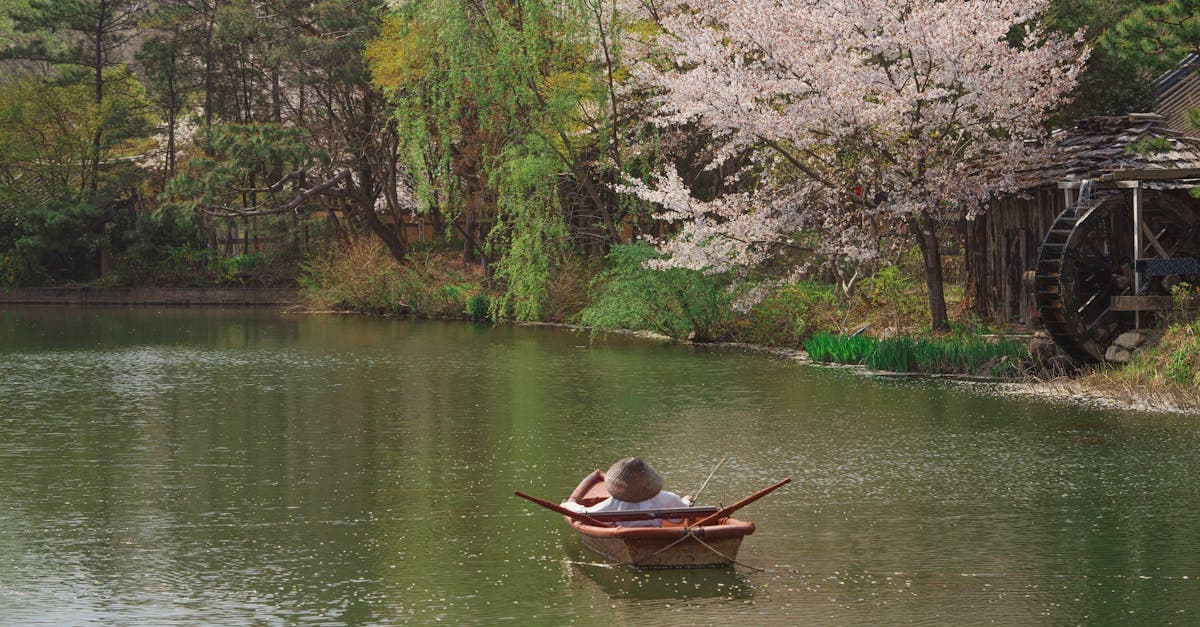
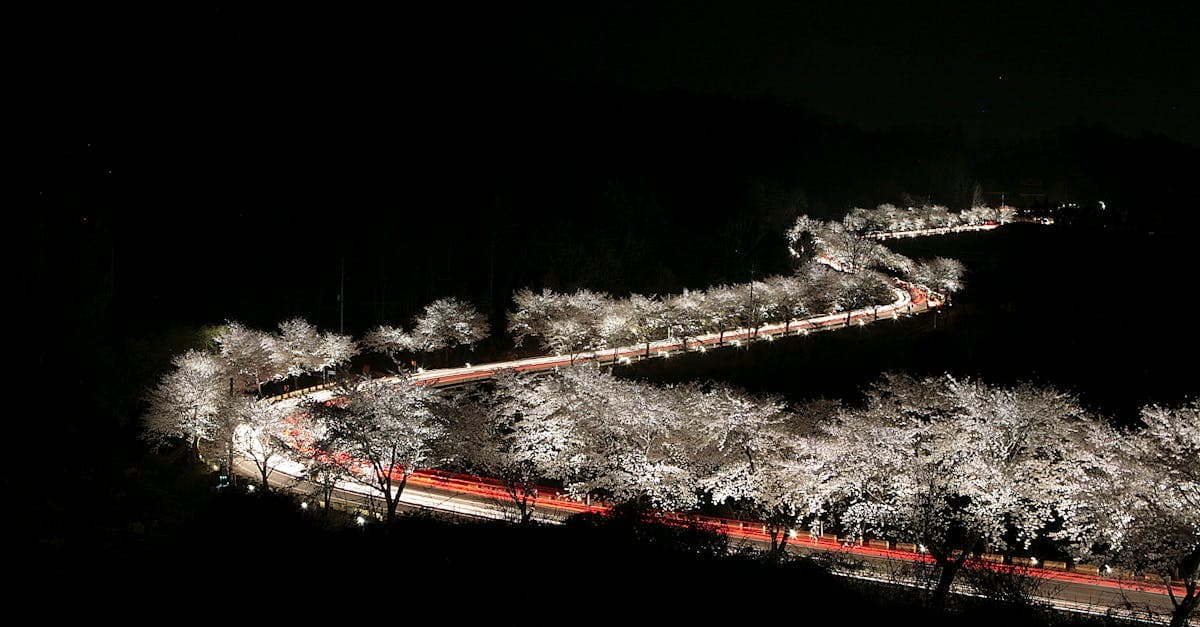
Jeju's Noksan-ro road delivers the most visually distinctive scene: cherry trees in full bloom alongside rows of yellow canola fields. That pairing doesn't exist further north on the peninsula.
For late-March travellers still undecided, the logical sequence is Jeju now, Jinhae in a week, Seoul in early April. The bloom schedule is your itinerary.
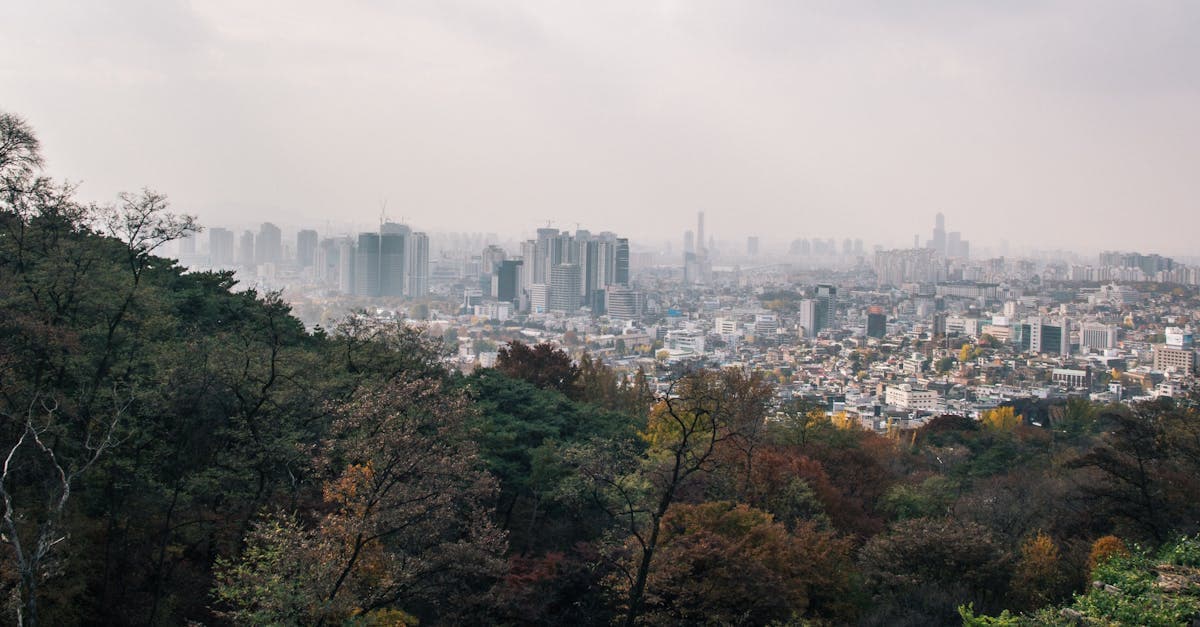
Yellow dust doesn't originate in Korea. It blows in from the Gobi Desert in China, carried by seasonal winds that peak between March and May. The timing is about as inconvenient as it gets: hwangsa season overlaps almost perfectly with cherry blossom season, affecting the same outdoor venues at the same time of year.
On bad days, the air quality index spikes to hazardous levels. PM2.5 particulate matter at those concentrations causes eye irritation, respiratory discomfort, and aggravated asthma symptoms. It's not a reason to cancel a spring trip. It is a reason to check air quality before heading to any outdoor blossom viewing spot.
The practical routine is straightforward. Download AirVisual or IQAir before you fly; both apps show real-time AQI readings by district across Korea. When the reading exceeds 150, limit outdoor exposure and wear a mask. KF94 masks are stocked at every CU, GS25, and Olive Young convenience store for around KRW 1,000 to 2,000. You don't need to source them before leaving Singapore.
Most Singaporean travel content treats spring as an unqualified win and skips hwangsa entirely. That gap is real. Arriving at Yeouido on a yellow dust day without a mask, with no idea why your eyes are watering, is an easily preventable problem. Checking the AQI app the night before costs nothing and changes your morning significantly.
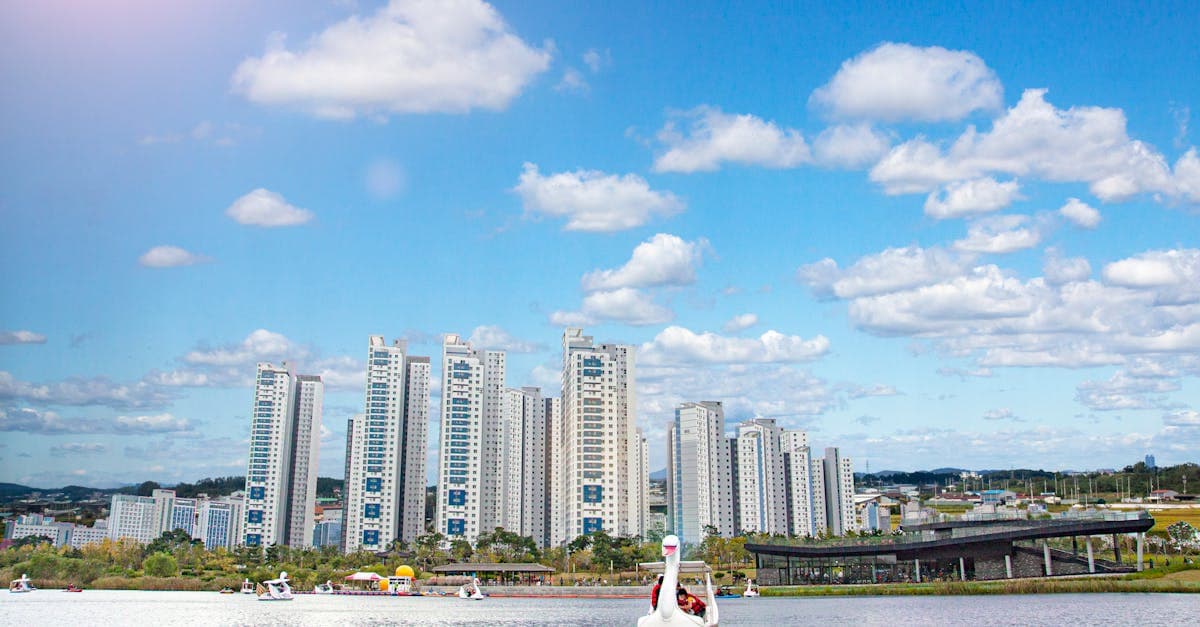
June in Korea feels oddly familiar the moment you land at Incheon. Temperatures run between 27 and 31 degrees Celsius, humidity climbs toward 80 percent, and afternoon showers are part of the schedule. For Singaporeans, none of that is new. What changes everything is how the rain behaves over the following eight weeks.
July is when korea weather earns its budget travel credential. The changma monsoon arrives and with it a drop in flight prices and hotel rates. Travellers divert elsewhere, deals open up, and Korea becomes noticeably cheaper. The trade-off is real: outdoor sightseeing needs backup plans, and some coastal activities close during heavy periods.
Busan is the summer payoff. Haeundae and Gwangalli beaches come into their own in late August once the main monsoon window usually clears. Warm water, a lively beachfront promenade, and coastal seafood markets at full capacity.
Summer events fill the schedule. The Boryeong Mud Festival in July operates on the west coast with complete commitment to being chaotic fun. The Pentaport Rock Festival and various coastal seafood events run through August weekends.
Pack for movement: moisture-wicking layers, a compact umbrella (Korean pavements get genuinely slippery when wet, so free hands matter more than dry shoulders), waterproof bag covers, and sandals with grip. Flip-flops work at the beach. Everywhere else in July, you'll regret them.
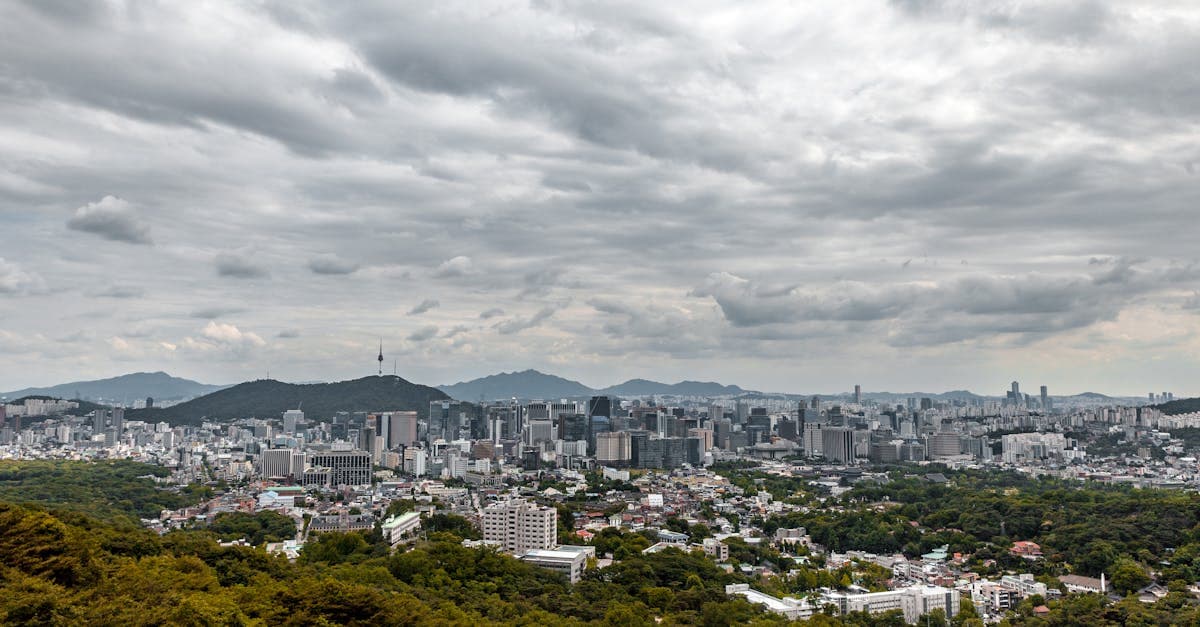
Korean rain doesn't behave like Singapore rain. That's the most practically useful distinction for any summer trip plan.
Singapore's roughly 2,400 mm of annual rainfall spreads across the calendar in short, intense bursts that clear within an hour. Korea's changma, running from around late June to late July, works differently. Rain falls for hours, not minutes. The monthly Seoul total already noted in the opening section gives you the scale. What matters here is the duration: it's sustained weather, not passing showers.
The on-the-ground consequences are specific. Low-lying subway entrances flood during prolonged falls. Outdoor markets reduce operating hours mid-day. Riverside parks along the Han River issue closure notices when water levels rise. Some basement-level accommodation in older Hongdae and Itaewon buildings has a flooding history worth checking in reviews before you book.
August adds typhoon risk. Jeju and the southern coastal cities, Busan and Yeosu in particular, sit in the path of late-summer systems tracking north from the Pacific. Travel insurance with trip cancellation cover is a sensible purchase for any August booking in these areas. Check policy conditions before you travel, not after a forecast appears.
Target the second half of August. Changma has typically cleared by then, temperatures reach their annual peak for beach conditions, and access to the south coast runs uninterrupted.
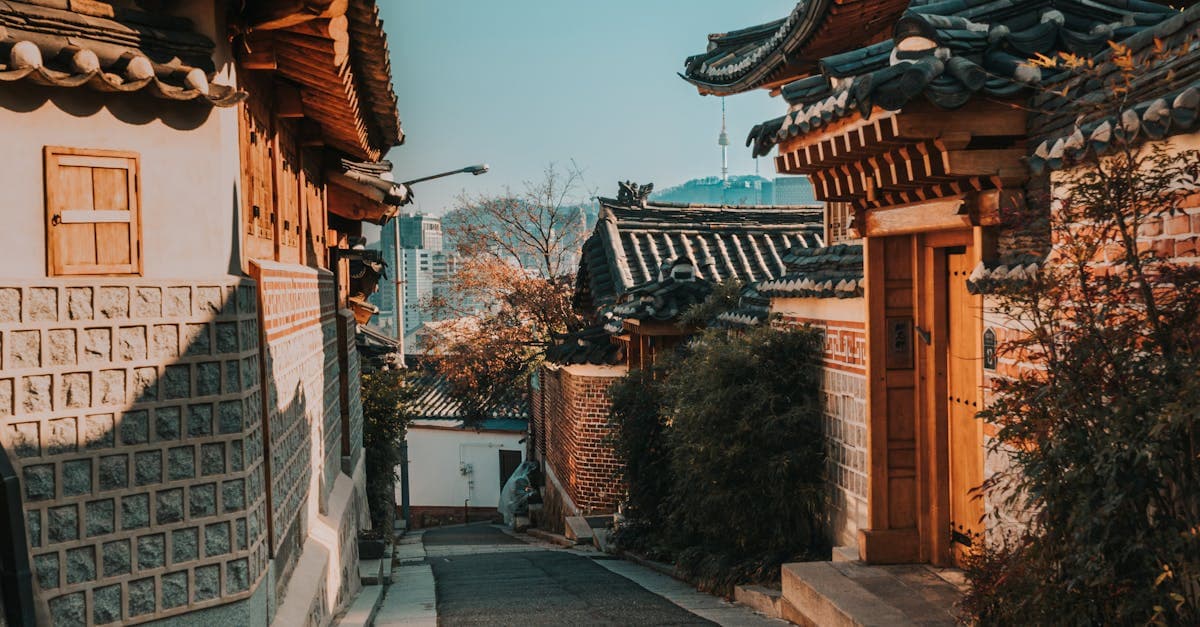
September arrives as a relief. The rain drops sharply: October averages around 49 mm, the driest calendar month of the year. Temperatures settle between 8 and 26 degrees Celsius, and the air clarity after the monsoon months is immediately noticeable.
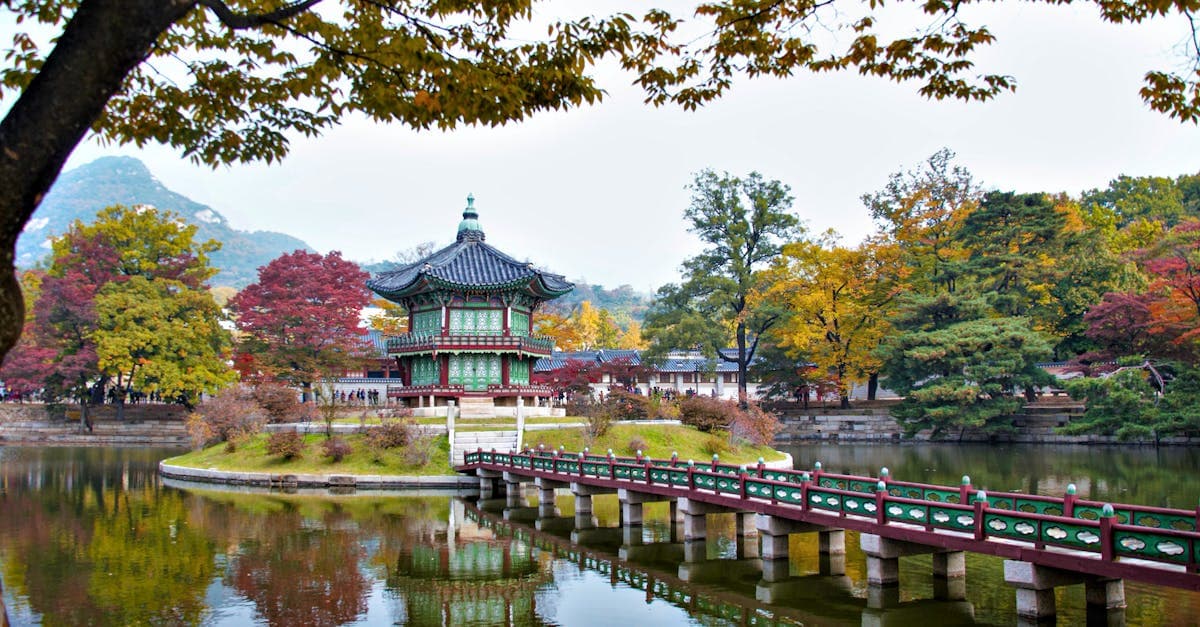
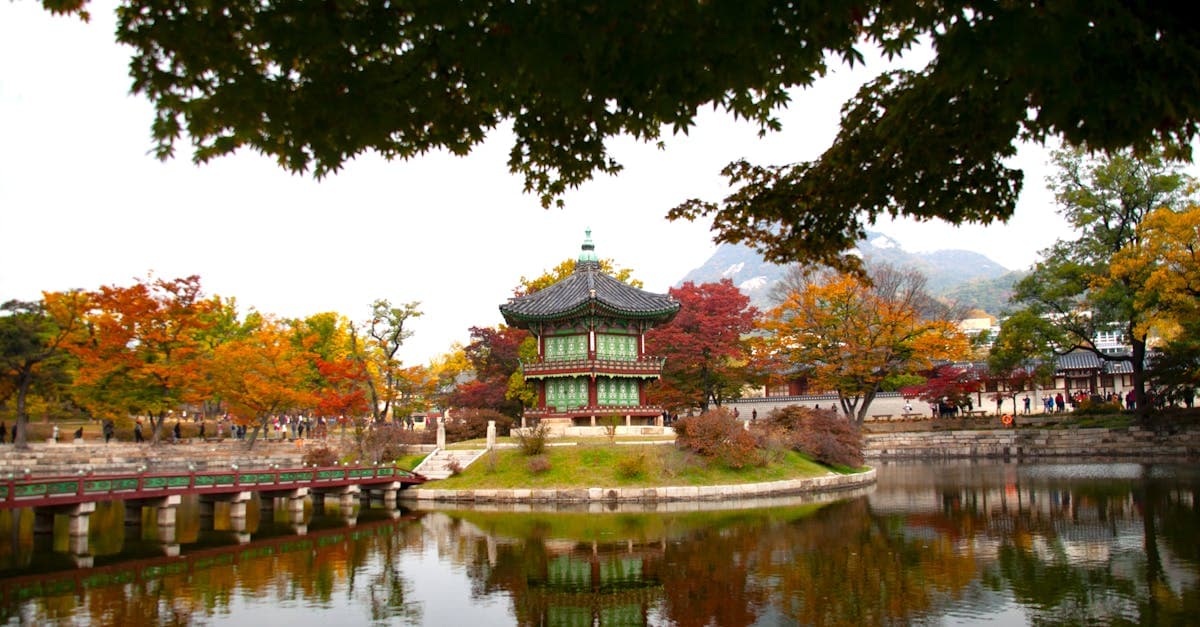
The foliage sequence moves roughly north to south over eight weeks. Seoraksan National Park on the north-east coast peaks in late September to mid-October, granite ridges rising above red and orange forest. Nami Island follows in mid to late October, its tree-lined avenues at their most photographed. Gyeongbokgung Palace in central Seoul is compelling from late October, maples and ginkgo against stone walls. Naejangsan in the south-west holds colour into early November.
For Singaporean families, the September school break (5 to 13 September 2026) is the most convenient korea weather alignment in the calendar. Post-monsoon clarity, walking-temperature days, and good flight availability into Incheon.
Autumn also edges out spring for hiking. No yellow dust, smaller crowds than cherry blossom season, and the best trail conditions of the year across Bukhansan and Hallasan. Pack a light fleece for evenings, sturdy walking shoes for mountain paths, and a daypack for self-guided routes.
Gyeongju and Jeonju round out an autumn itinerary well. Gyeongju's UNESCO-listed royal tombs against autumn foliage is one of those experiences that consistently outperforms expectations. Jeonju Hanok Village in mild temperatures rewards slow walking.
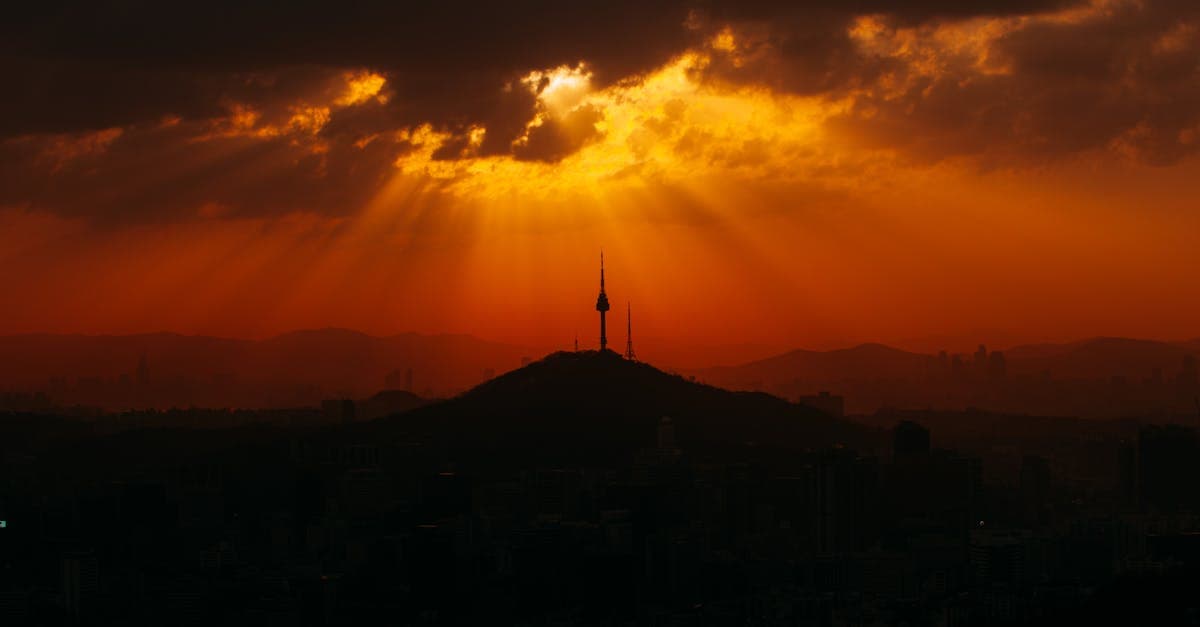
April and October. That's the direct answer for most Singaporean travellers without fixed timing constraints.
April delivers cherry blossoms and mild temperatures. October returns with foliage, near-zero rainfall, and the best hiking conditions of the year. Both sit outside changma, outside yellow dust peak, and outside the coldest winter window. For anyone matching a korea weather experience to a single trip, either month works cleanly.
The June break is the one that consistently disappoints families. Changma onset means unpredictable outdoor conditions with no distinctive seasonal draw to compensate.
One practical deadline for parents: Jinhae cherry blossom accommodation fills months in advance regardless of which break you use. Confirm your dates, then book immediately.
The autumn value case is what most guides miss. Japan's Golden Week pushes regional travel costs up every spring. Korea's October foliage season stays globally underappreciated, which means better flight availability and lower hotel rates in October than in April. The scenery competes directly. The cost doesn't.
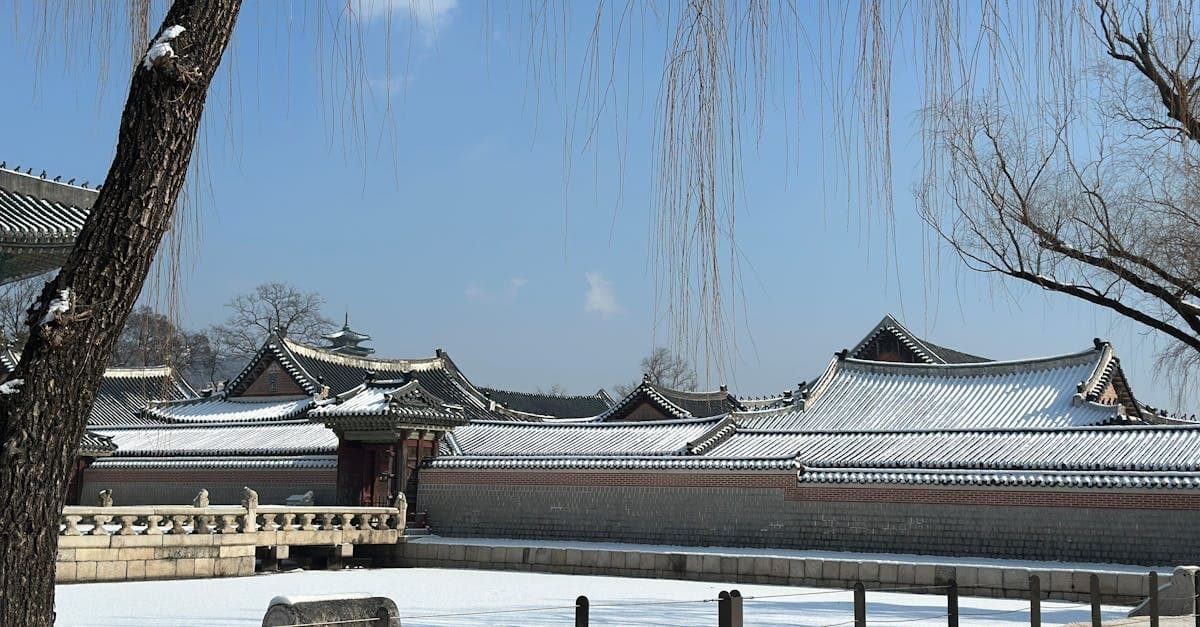
Worth it, with caveats. Winter is the season most Singaporean first-timers skip and most repeat visitors eventually book.
Seoul's January nights average minus 6 degrees Celsius. Wind chills reach the range described in the opening month-by-month summary, which is physically unfamiliar for anyone raised on equatorial heat. The fix is straightforward: thermal base layer from Uniqlo (buy in Singapore before departure), a mid-layer fleece, and a windproof outer shell. Hand warmers from CU or GS25 cost around KRW 500 each.
What makes winter worth considering is what the cold forces you into. Ondol, the radiant underfloor heating built into Korean hotel and guesthouse rooms, makes indoor warmth feel genuinely different from air conditioning. The floor itself is warm. Jjimjilbang, the 24-hour heated bathhouses found across the country, are the cultural centrepiece of the season: cheap, social, and open overnight if you want to cut one night of accommodation costs on a longer trip.
Three ski resorts sit within 90 to 150 minutes of central Seoul: Vivaldi Park, Alpensia, and High1 Resort. Day trips are standard even without a hire car. Nami Island blanketed in snow draws visitors who would never buy a lift pass.
The food argument is the one that actually converts people. Gamjatang in a steamed-up restaurant. Hotteok from a street cart. Korean BBQ that tastes categorically different when it's minus five outside.
Winter crowds are the lowest of any season. If Gyeongbokgung during peak autumn felt overwhelming, December gives you the palace at a pace that actually lets you look at it.
An eSIM is the lowest-cost connectivity option for most Korea trips. Three approaches exist for Singaporean travellers: home telco roaming day passes, a physical SIM collected at Incheon Airport, or a prepaid eSIM installed before departure. Each suits a different budget and planning style.
Korea's mobile network ranks among the two fastest globally by Speedtest data. Average 5G download speeds in Seoul exceed 500 Mbps; LTE coverage runs at 70 to 100 Mbps nationwide, including subway tunnels and mountain hiking trails. Public WiFi is genuinely dense: Seoul Metro lines carry it in-tunnel, and CU stores, GS25, and most cafes provide access without passwords. That density doesn't extend to highway coaches, rural stretches, or the gaps between cities on a multi-stop itinerary.
Three options for Singaporean travellers. First: activate your home telco's roaming day pass. Works immediately, no setup required, expensive over a 10-day trip. Second: collect a physical tourist SIM from the KT Roaming Centre at Incheon Terminal 1. It's open 24 hours a day, staff speak English, and passport verification takes a few minutes at the counter. More expensive than a pre-purchased eSIM, but requires zero advance planning. Third: install a prepaid eSIM before you leave Singapore. No SIM swap at the airport, no kiosk queue. Your phone connects the moment you land.
If you're staying entirely in Seoul and spending most of your time in cafes and hotels, public WiFi covers the majority of daily needs. If your itinerary spans Seoul, Busan, Gyeongju, and Gangwon in a single trip, consistent mobile data is practically necessary for navigation and transport apps between each destination.
The gap between telco roaming and a prepaid eSIM is larger than most Singaporeans expect before they actually check.
The savings on a 10-day trip, switching from a standard telco day pass to a prepaid eSIM, run from SGD 100 to SGD 160.
Hello Roam's Korea plans start at $1.84 for 1GB over seven days and run on SK Telecom and KT networks. Those two carriers cover over 78 percent of the Korean mobile market, including mountain hiking trails, subway tunnels, and rural routes between cities. Plans are SGD-denominated, so there are no currency-conversion surprises on return. If connectivity issues arise mid-trip, 24-hour English-language support is available.
The KT tourist SIM at Incheon Terminal 1 suits genuinely last-minute travellers: unlimited data, 10-day validity, no pre-trip configuration. The tradeoff is higher cost than a pre-purchased eSIM and passport verification at the counter, which adds time if you're arriving on a late-night flight into a crowded arrivals hall.
Check Hello Roam's Korea eSIM plans before departure to lock in your data before landing and skip the Incheon queue entirely.

April and October are the best months for most Singaporean travellers. April offers cherry blossoms and mild temperatures, while October brings golden foliage, near-zero rainfall, and excellent hiking conditions. Both months fall outside the changma monsoon, yellow dust peak, and coldest winter window.
April in Korea sees highs around 18 degrees Celsius and lows around 7 degrees Celsius, with around 72 mm of rainfall. It is the peak cherry blossom season in Seoul and is considered the top travel window for Singaporean visitors due to mild temperatures and long daylight hours.
Cherry blossoms bloom progressively from south to north between late March and mid-April. In 2026, Jeju peaks around 25 to 27 March, Busan and Gyeongju around 29 March to 1 April, Jinhae from 30 March to 3 April, and Seoul from 3 to 7 April. Blooms typically last about one week per location.
Yellow dust, known as hwangsa in Korean, is fine particulate matter blown in from the Gobi Desert in China. It peaks between March and May, coinciding with cherry blossom season. On severe days, PM2.5 levels can reach hazardous concentrations, causing eye irritation, respiratory discomfort, and aggravated asthma.
Download AirVisual or IQAir before travelling to Korea. Both apps show real-time AQI readings by district. When the reading exceeds 150, limit outdoor exposure and wear a mask. KF94 masks are available at convenience stores such as CU, GS25, and Olive Young for around KRW 1,000 to 2,000.
The changma monsoon runs from approximately late June to late July. Unlike Singapore's brief intense showers, changma rain falls for hours at a time. Seoul receives around 394 mm in July alone, with roughly 60 percent of the city's annual rainfall arriving between June and August.
Summer is challenging for outdoor sightseeing due to the changma monsoon, but it offers the lowest flight prices and hotel rates of the year. The second half of August is the best summer window, as the monsoon typically clears by then and Busan's beaches are at their best.
Late August is the best time to visit Busan. The main changma monsoon window typically clears by then, leaving warm water, a lively beachfront at Haeundae and Gwangalli, and coastal seafood markets operating at full capacity.
Yes, typhoon risk is highest in August, particularly for Jeju and the southern coastal cities of Busan and Yeosu. Late-summer systems track north from the Pacific. Travel insurance with trip cancellation cover is advisable for any August booking in these areas.
October is widely considered the best month of the year in Korea. Temperatures range from 8 to 19 degrees Celsius with only around 49 mm of rainfall, making it the driest month of the year. Autumn foliage peaks across major sites, and hiking conditions across Bukhansan and other parks are at their best.
Autumn foliage moves roughly north to south over eight weeks. Seoraksan National Park peaks in late September to mid-October, Nami Island in mid to late October, Gyeongbokgung Palace in central Seoul from late October, and Naejangsan in the south-west holds colour into early November.
Yes. The September school break (around 5 to 13 September 2026) aligns with post-monsoon clarity, comfortable walking temperatures, and good flight availability into Incheon. It is considered the best school holiday window of the year for Singaporean families visiting Korea.
Korean winters are cold, with Seoul reaching minus 15 degrees Celsius with wind chill in January and typical highs of only 2 to 5 degrees Celsius between December and February. Snow is likely in December and January, ski resorts in Gangwon Province open, and the season offers strong novelty for travellers from tropical climates.
Top cherry blossom locations include Yeouido in Seoul with 1,500 trees along 1.7 km of Han River riverside, Changgyeonggung Palace, the Jinhae Gunhangje Festival along Yeojwa Stream, and Jeju's Noksan-ro road where cherry blossoms bloom alongside yellow canola fields.
Pack light base layers plus a mid-weight fleece for cold March mornings, a packable waterproof jacket for April showers, KF94 masks for yellow dust days, and comfortable walking shoes for festival crowds. By May, the main challenge shifts from cold to building humidity.
Korea's August temperatures of 29 to 31 degrees Celsius and humidity around 80 percent are broadly familiar to Singaporeans. The key difference is rainfall volume and duration. Korea's changma delivers sustained rain lasting hours rather than Singapore's short intense bursts that clear within an hour.
Both are excellent. Spring offers cherry blossoms in April but comes with yellow dust risk and higher prices. Autumn, particularly October, has no yellow dust, lower rainfall, smaller crowds than cherry blossom season, and better hiking conditions. Autumn slightly edges out spring for hiking and clear skies.
The June school break, running approximately 30 May to 28 June, coincides with the onset of the changma monsoon. This is the least recommended travel window for outdoor itineraries due to high humidity, building rainfall, and deteriorating conditions heading into the wettest months of the year.
HelloRoam: your trusted travel eSIM that keeps you online across borders.
Explore Plans