

HelloRoam is a global eSIM provider offering instant mobile data in 175+ countries. Buy prepaid travel eSIM plans with no extra fees, no contracts, and instant activation on any eSIM-compatible device.
15 min read


Korean street food traces its roots to the Joseon dynasty (1392 to 1897), when travelling merchants set up at open-air trading posts called jangmadang. These weren't casual pop-ups. Hundreds of vendors gathered at regular intervals throughout the calendar year, selling grain, cloth, and cooked food, building a commercial food culture that would persist across dynasties and into the modern city.
The pojangmacha, the covered tent stall that defines late-night Seoul today, emerged as a distinct format in the early twentieth century. At first, these were modest canvas structures selling rice wine and simple snacks. The Korean War changed the equation. Through the 1950s and 1960s, vendors incorporated American military surplus ingredients, spam and processed cheese among them, into hybrid dishes that are still on menus across the country. Budae-jjigae, sometimes called 'army stew', was born directly from that era of improvisation and has since become a staple in its own right.
The 1988 Seoul Olympics brought a different kind of momentum: international attention and commercial investment in key market districts. Myeongdong and Gwangjang drew visitors from abroad, and development followed. Two dominant formats consolidated over that period. Pojangmacha are semi-permanent tent stalls selling cooked food and drink, drawing an after-work crowd into the late evening. Bunsikjeom are dedicated snack bars with printed menus and fixed seating, open throughout the day for students and families. Each has a distinct social orbit.
The food has since travelled well beyond the peninsula. Toronto's Korea Town along Bloor Street West now hosts vendors selling tteokbokki and hotteok to a growing Canadian audience. Vancouver's H-Mart corridors carry similar options. The food didn't just migrate: it arrived with its social context largely intact.
History explains where Korean street food came from. The dishes tell you what to order first.

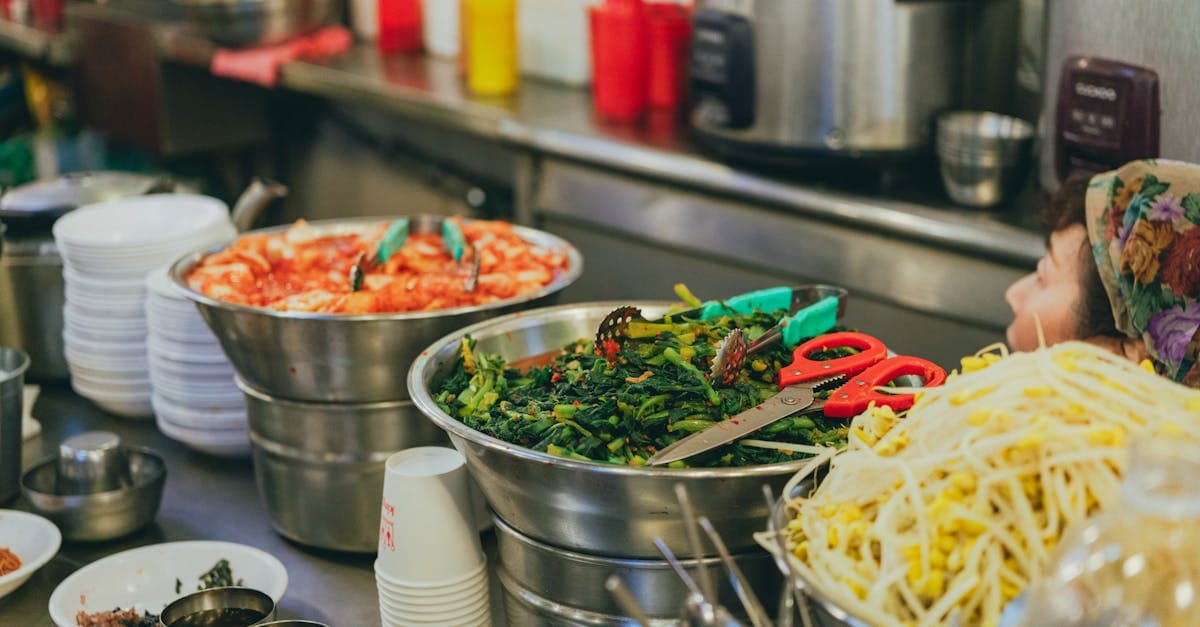
According to deborahinkorea.com, five dishes define the core of Korean street food: tteokbokki (spicy rice cakes), hotteok (sweet filled pancakes), gimbap (sesame-seasoned rice rolls), twigim (deep-fried snacks), and eomuk (fish cake skewers served in a light broth). These appear at nearly every market across the country, sold from compact stalls with quick turnaround and minimal fuss.
Prices are genuinely accessible. Most items run between 1,000 and 5,000 Korean won, roughly $1 to $5 CAD at current exchange rates. Sampling six or seven different dishes in a single afternoon costs about the equivalent of one sit-down lunch in downtown Toronto. The math makes casual exploration straightforward.
Vendors cluster at predictable locations: subway exits, university campuses, and traditional markets. Gwangjang Market in central Seoul operates daily, drawing both residents and visitors. Myeongdong's evening stalls run from late afternoon past midnight, with dozens of carts packed into a few narrow pedestrian streets. Most outdoor stalls keep late-morning through evening hours, with winter bringing slightly shorter operating windows.
The options divide into two practical categories: sweet snacks and savoury staples. For first-timers, that split is a useful framework. Sweet options are more forgiving entry points, with textures and flavours that most visitors already recognize. Savoury staples carry more heat and complexity, and they're the ones most visitors end up returning to.
Sweet options are the more approachable start. Hotteok and bungeoppang both suit anyone unfamiliar with gochujang's intensity, and neither requires much explanation at the stall.

Four sweet snacks anchor the classic Korean street food dessert category: hotteok, bungeoppang, gyeranppang, and dalgona. Most run 1,000 to 2,000 won each, roughly $1 to $2 CAD, and traditional vendors still prefer cash, though Myeongdong stalls have been accepting card more regularly.
Start with hotteok. A chewy wheat-flour pancake filled with brown sugar, cinnamon, and crushed peanuts, pressed flat on an iron griddle until the outside crisps and the filling turns molten. Best in winter, when the temperature outside makes eating three or four in a row feel entirely reasonable.
Bungeoppang follows: a fish-shaped waffle pastry filled with sweet red bean paste, cast in specialized iron molds at outdoor carts. The fish shape is decorative; the filling is warm and subtly sweet. Cold-weather stalls across Seoul sell these from roughly October through March.
Gyeranppang breaks the sweet pattern slightly. A soft oblong bread with a whole egg baked into the centre, lightly salted, it runs more savoury than the others and turns up near transit hubs as a quick morning option. Think of it as Korea's answer to a breakfast bun, sold standing up.
Then there's dalgona: a flat disc of caramelized sugar pressed with a decorative shape using a small stamp. International audiences recognized it after a 2021 television series, but as maangchi.com documents, it has been a long-standing market staple in Korea for decades. The detail worth knowing: the challenge of pressing out the shape without cracking it is part of the experience, not just the eating.
The sweet snacks are the easy entry point. The savoury dishes are where Korean street food earns its reputation.

According to migrationology.com, tteokbokki is the definitive dish of the savoury category: cylindrical rice cakes simmered in gochujang (fermented chili paste), finished with fish cakes and boiled eggs. Heat levels shift between vendors, but the base flavour is consistently deep, slightly sweet, and unmistakably spicy, a quality maddielovesfood.com describes as its most addictive characteristic. It's the first thing most locals would point a visitor toward.
The five staples below cover the range from snack-light to satisfying.
Eomuk comes on skewers, but the broth it simmers in is served warm as a drink alongside, at no charge. In cold weather, locals drink several cups while eating. That arrangement makes eomuk one of the better-value items at any winter market, and the broth is worth the pause on its own terms.
Gimbap deserves a specific mention. Seasoned with sesame oil rather than rice vinegar, it reads quite differently from Japanese maki: nuttier, more savoury, with a cleaner finish. Compact and portable, it turns up at nearly every market and most bunsikjeom counters throughout the day, and it functions as a full, balanced meal rather than a snack deborahinkorea.com.
Japchae suits anyone wanting something fuller and less spicy: glass noodles stir-fried with vegetables, sometimes finished with thin-sliced beef. The pojangmacha format suits it well. Order at the counter, sit at a plastic table, and eat without rushing.
For Canadian travellers navigating between Gwangjang Market and Myeongdong on foot, reliable mobile data keeps maps running without surprise fees on a Canadian plan. Hello Roam's Cities eSIM plans cover Seoul alongside 190+ other destinations, with activation sorted before departure.
Knowing what to eat is only part of the experience. Knowing where to go turns a snack into a proper outing.

Seoul's best Korean street food markets are Gwangjang, Myeongdong, Namdaemun, Tongin, and the university districts of Hongdae and Sinchon. Gwangjang opened in 1905 and has run continuously since, making it Seoul's oldest market and the most historically grounded starting point. The food alley on the second floor is where bindaetteok (mung bean pancakes) are done properly: thick, crisp at the edges, cooked to order on flat iron griddles. Mayak gimbap, small rice rolls sold in plates of six or ten, earns its name, which translates roughly as "drug kimbap," honestly. You will not stop at one order.
Myeongdong street food alley runs primarily in the evenings and caters heavily to tourists, which produces practical advantages: vendor signs are frequently bilingual, card payment is reliably accepted, and the variety is broad. Prices run a notch higher than traditional markets. For a first visit with limited Korean, the navigational ease is a fair trade.
Namdaemun Market is larger and denser than Gwangjang, mixing raw ingredients with prepared food stalls in close quarters. Eomuk, hotteok, and kalguksu (knife-cut noodle soup) are all reliably available. Kalguksu rarely appears in visitor guides and is the better cold-weather order at this particular market.
The university districts run on a different clock entirely.
Hongdae and Sinchon serve the student crowd and stay open late: tteokbokki and Korean fried chicken are available past 2 am on most nights. The atmosphere after 9 pm differs sharply from a daytime market visit, louder and considerably less structured.
Tongin Market in Jongno-gu operates a bronze coin system. Visitors buy coins at the entrance and exchange them for small portions at individual stalls, assembling a full meal from a dozen vendors. It is a practical format for anyone who wants to sample broadly without committing to a single dish.
Jeonju, roughly two hours south of Seoul by KTX train, is widely regarded as Korea's culinary capital. Its Nambu Market offers regional variations including a richer bibimbap and locally produced makgeolli (rice wine), served alongside snacks at open stalls. Most Seoul markets operate between 11 am and 8 pm on weekdays. Gwangjang opens at 9 am and closes at 11 pm, giving it the longest operating window of any major market in the city.
Markets give you the experience. Recipes give you something to bring home to Canada.

Korean street food recipes suitable for home cooking include tteokbokki, hotteok, and gimbap, with ingredients widely available across Canada. As maangchi.com documents in its street food recipe collection, the core pantry requirements are more accessible than most home cooks expect. T&T Supermarket stocks cylindrical rice cakes (tteok), gochujang, and sliced fish cakes in most locations. H-Mart, with stores in Toronto and Vancouver, carries a broader range: dangmyeon glass noodles, dried anchovies for making broth, and specialty fermented pastes that T&T doesn't always carry.
Tteokbokki is the most accessible starting point. The ingredient list is short: tteok, gochujang, gochugaru (chili flakes), soy sauce, sugar, and sliced fish cakes. The sauce comes together in under five minutes; the full dish is ready in under twenty. A single batch feeds two to three people comfortably, with ingredient costs running roughly $8 to $12 CAD depending on protein additions.
Hotteok requires more patience but rewards it. The dough uses all-purpose flour, instant yeast, whole milk, and sugar; the filling is brown sugar, cinnamon, and roughly chopped walnuts or peanuts. A well-seasoned cast-iron pan replicates the crisp exterior that makes the street-stall version so satisfying. The challenge is pressing the dough flat without burning your thumb on the molten filling.
One ingredient genuinely has no close substitute.
Doenjang, the fermented soybean paste used in soups and dipping sauces, is earthier and more pungent than Japanese miso. The two are not interchangeable in Korean recipes. Source it from a Korean grocery for any dish that calls for it specifically, rather than reaching for miso as a stand-in. The difference in flavour is noticeable immediately.
Gimbap relies on short-grain rice seasoned with sesame oil and salt, not vinegar. Common fillings include pickled daikon (danmuji), blanched spinach, julienned carrot, and egg strips. A bamboo rolling mat helps, but a firm piece of plastic wrap handles the job adequately.
Home cooking handles the familiar dishes. The next question most travellers ask is about the health profile of what they've been eating.

Not as a general rule. The foundation of most Korean street food is rice, vegetables, and fermented condiments rather than red meat or dairy. Saturated fat content across the majority of dishes runs markedly lower than Western fast food equivalents, which is where this concern most often originates.
The part most guides skip: meaningful exceptions cluster in specific categories. Gyeranppang (the egg bread covered earlier in this guide) contributes dietary cholesterol. Seafood roe appears occasionally at traditional market stalls. Organ-meat soups at pojangmacha (covered tent stalls) are a third category worth keeping in mind. None of these dominate a typical market visit, but all three are present.
Sodium is the more practical concern for most visitors.
Gochujang, doenjang, and fish cake broth are all salt-heavy by design. Eomuk broth, the warm liquid served alongside fish cake skewers, can contain between 700 and 900 milligrams of sodium per serving, a significant portion of the daily limit recommended by Health Canada. The broth is free of charge and genuinely warming on a cold afternoon, which makes it easy to underestimate how much you have consumed.
Fermented foods including kimchi have appeared in peer-reviewed research with modest associations between regular consumption and reduced LDL cholesterol. Researchers are careful to note the evidence is not conclusive. The studies examine long-term dietary patterns, not a week of market eating. The association is there; the therapeutic claim is not.
For Canadians managing cardiovascular health, the practical approach is to moderate portions of sodium-dense dishes and favour vegetable-forward options such as japchae and vegetable twigim. The overall dietary pattern is not inherently problematic. It simply rewards some attention to what is in the broth.
The cholesterol question is largely reassuring. The diabetes question requires a more specific answer.

Yes, with deliberate choices. Korean street food spans a wide glycaemic range, from rice-cake dishes that spike blood sugar quickly to vegetable-forward options that present no particular concern. Knowing which is which before you order is the practical skill.
Tteokbokki warrants the most attention. Cylindrical rice cakes are made from refined glutinous rice flour, and the sauce adds sugar directly to that base. Substituting eomuk skewers at the same stall is a straightforward adjustment: they are protein-forward and considerably lower in carbohydrates, and most stalls sell both.
Glass noodles are an underrated choice for managing blood sugar at a Korean market.
Dangmyeon, the sweet potato starch noodles used in japchae, carry a lower glycaemic index than wheat pasta. For most people managing type 2 diabetes, japchae loaded with vegetables and egg is a defensible order. The dish is filling, broadly available, and far less disruptive than the rice-cake options at adjacent stalls.
Kimchi and fermented vegetable banchan served alongside main dishes have shown modest blood glucose benefits in preliminary clinical research. The evidence does not yet support therapeutic claims, and a short trip's worth of street food eating is unlikely to shift any markers in a measurable direction. What the research does suggest is that fermented sides are not a liability.
The practical approach at a street stall: prioritise protein-forward and vegetable-forward dishes, treat sweet snacks as occasional rather than default orders, and ask vendors about sauce ingredients where language permits. Most vendors in the tourist-heavy districts of Seoul are accustomed to ingredient questions and respond straightforwardly.
Health considerations addressed, the next practical concern for first-time visitors is what not to do once you arrive.

Five habits create friction for foreign visitors at Korean street food markets: tipping at stalls, walking through market areas while eating, pointing at items with a single finger, skipping basic Korean phrases, and carrying large-denomination notes. Most feel instinctive to Canadian travellers. None take more than a few minutes to correct.
Skip the tip. South Korea has no tipping culture. Offering extra coins at a traditional stall creates mild confusion, and vendors at Gwangjang and Namdaemun will often try to return the money, turning a courteous gesture into an awkward exchange.
Eat at the stall. Street food is designed for standing consumption at the counter. Moving through older market districts while eating is considered disrespectful to vendors and surrounding shoppers. The stall is the dining room.
Watch your gestures. Avoid pointing at items with a single extended finger; an open hand or four-finger gesture is the conventional choice. When passing money or collecting change, both hands are preferred. A single-hand pass carries a dismissive connotation in Korean social contexts.
Learn two phrases. "Igeot juseyo" (I'll have this one) and "eolmaeyo?" (how much?) consistently get a warmer response than pointing at a menu sign. The attempt matters more than the pronunciation.
Carry small bills. Traditional stalls at Gwangjang and Namdaemun rarely have change for large-denomination notes, and card terminals are not reliable at every vendor.
Cultural preparation handled, there is one more practical matter worth sorting before you land in Seoul: how to stay connected while navigating the markets.

Signal is not a problem across Seoul's major market districts. South Korea has one of the densest 5G networks in the world, and coverage across Myeongdong, Jongno-gu, and Hongdae is consistent throughout, including underground on the Seoul Metro. Your navigation app will be running from the first alley to the last stall.
Canadian travellers have three practical options, each with a clear trade-off.
Roaming through Rogers, Bell, or Telus is the simplest choice for a short visit. Rogers Roam Like Home runs ~$14 CAD per day in South Korea. For a long weekend, that arithmetic is easy. Stretch it to ten days and you're looking at ~$140 CAD in roaming charges alone. The fine print changes that calculation.
A local SIM from KT, SK Telecom, or LG U+ at Incheon Airport costs between 33,000 and 55,000 Korean won (~$32 to ~$54 CAD) for seven to ten days of unlimited data. Better value for a longer stay, but it means joining a queue at the arrivals hall when most travellers want to clear the airport fast.
A travel eSIM activated before boarding sidesteps that queue entirely. Hello Roam's South Korea plans cover 5 to 10 GB for ~$15 to ~$30 CAD, and the connection is live before you reach customs. For a ten-day market-focused trip, that cost difference is a straightforward call.
One step worth taking regardless of which option you choose: install Naver Maps before departure. Inside dense market districts, it handles walking directions more accurately than Google Maps. Download offline maps over hotel Wi-Fi each morning before heading out.

The most popular Korean street foods include tteokbokki (spicy rice cakes in gochujang sauce), hotteok (sweet filled pancakes), gimbap (sesame-seasoned rice rolls), twigim (deep-fried snacks), and eomuk (fish cake skewers served in warm broth). These dishes appear at nearly every market across Korea and are sold from compact stalls with quick turnaround. Most items cost between 1,000 and 5,000 Korean won, roughly $1 to $5 CAD.
Korean street food includes many carbohydrate-heavy and sugar-containing dishes such as tteokbokki (rice cakes with sweetened gochujang sauce), hotteok (sugar-filled pancakes), and dalgona (caramelized sugar discs), which can spike blood sugar levels. Lower-sugar options like eomuk (fish cake skewers in broth), gimbap, and japchae (glass noodles with vegetables) may be more suitable in moderation. Diabetics should review individual ingredients and portion sizes carefully before eating Korean street food.
The article does not provide specific guidance on cultural etiquette or things to avoid as a foreigner in Korea. However, it notes that many traditional vendors at markets still prefer cash over card, so arriving without local currency can be a practical issue. For markets like Myeongdong that cater to tourists, card payment is more reliably accepted.
The article does not provide specific nutritional data on cholesterol levels in Korean street food. However, several popular street foods such as twigim (deep-fried snacks), eomuk (fish cakes), and dishes containing eggs or meat may contribute to dietary cholesterol. Lighter options like gimbap with vegetables or eomuk broth tend to be lower in fat overall.
Seoul's top Korean street food markets include Gwangjang Market (open since 1905, known for bindaetteok and mayak gimbap), Myeongdong (tourist-friendly with bilingual signs and card payment), Namdaemun Market (great for eomuk and kalguksu), and the university districts of Hongdae and Sinchon (open late, popular with students). Tongin Market in Jongno-gu offers a unique bronze coin system where visitors sample from multiple stalls. Most Seoul markets operate between 11 am and 8 pm, while Gwangjang opens at 9 am and closes at 11 pm.
Korean street food is very affordable, with most items priced between 1,000 and 5,000 Korean won, roughly $1 to $5 CAD at current exchange rates. Sweet snacks like hotteok, bungeoppang, and dalgona typically cost 1,000 to 2,000 won each. Sampling six or seven different dishes in a single afternoon costs about the equivalent of one sit-down lunch in a Western city.
Tteokbokki is cylindrical rice cakes simmered in gochujang (fermented chili paste), finished with fish cakes and boiled eggs. It is considered the definitive Korean street food staple with a deep, slightly sweet, and unmistakably spicy flavour. Heat levels shift between vendors, but it is generally rated medium-high spice and is the first dish most locals would recommend to visitors.
Gimbap is seasoned with sesame oil and salt rather than rice vinegar, giving it a nuttier and more savoury flavour compared to Japanese maki rolls. Common fillings include pickled daikon, blanched spinach, julienned carrot, and egg strips. Gimbap is compact, portable, and functions as a full balanced meal rather than a snack.
Several popular Korean street foods contain no heat at all, including eomuk (fish cake skewers in anchovy broth), twigim (deep-fried vegetables and squid), gimbap (seaweed rice rolls), and japchae (glass noodles stir-fried with vegetables). Sweet snacks like hotteok, bungeoppang, gyeranppang, and dalgona are also spice-free and make approachable entry points for visitors unfamiliar with gochujang.
Hotteok is a chewy wheat-flour pancake filled with brown sugar, cinnamon, and crushed peanuts, pressed flat on an iron griddle until the outside crisps and the filling turns molten. It is a classic Korean street food sweet snack that costs roughly 1,000 to 2,000 won and is especially popular during winter months. The dough uses all-purpose flour, instant yeast, whole milk, and sugar.
Dalgona is a flat disc of caramelized sugar pressed with a decorative shape using a small stamp, and has been a long-standing Korean market staple for decades. It gained significant international attention after being featured in a 2021 television series, but it has existed in Korean street markets long before that. The challenge of pressing out the shape without cracking the sugar disc is considered part of the experience.
Yes, Korean street food recipes like tteokbokki, hotteok, and gimbap are well-suited for home cooking in Canada, with key ingredients available at Korean grocery stores in major cities. Cylindrical rice cakes, gochujang, sliced fish cakes, and dangmyeon glass noodles can be found at specialty Asian supermarkets in Toronto and Vancouver. A basic tteokbokki batch feeds two to three people and costs roughly $8 to $12 CAD in ingredients.
Korean street food traces its roots to the Joseon dynasty (1392–1897), when travelling merchants sold cooked food at open-air trading posts called jangmadang. The pojangmacha tent stall format emerged in the early twentieth century, and American military surplus ingredients introduced during the Korean War led to hybrid dishes like budae-jjigae (army stew). The 1988 Seoul Olympics brought international attention and commercial investment that helped consolidate the two dominant formats: pojangmacha (tent stalls for evening dining) and bunsikjeom (snack bars open throughout the day).
Gwangjang Market, which opened in 1905, is Seoul's oldest continuously operating market and is best known for bindaetteok (mung bean pancakes cooked on flat iron griddles) and mayak gimbap (small rice rolls sold in plates of six or ten). It operates from 9 am to 11 pm, giving it the longest hours of any major market in Seoul. It is considered the most historically grounded starting point for exploring Korean street food.
Eomuk, also called odeng, consists of fish cake skewers simmered in a light anchovy broth and is one of the most common Korean street food items sold at outdoor carts and market entrances. The warm broth it simmers in is served as a free drink alongside the skewers, making it one of the better-value items at any winter market. It contains no heat and is accessible to all palates.
Some Korean street food options are vegetarian-friendly, such as sweet snacks like hotteok, bungeoppang, dalgona, and gyeranppang, as well as vegetable-filled gimbap and certain twigim (battered vegetables). However, many staple dishes like tteokbokki traditionally include fish cakes, and eomuk is made entirely from fish paste. Visitors with dietary restrictions should ask vendors about specific ingredients, as fish-based broths and pastes are common even in dishes that appear vegetarian.

Best Time to Visit Bali: a Month-by-Month Guide for Canadian Travellers

eSIM Europe: the Complete Guide for Canadian Travellers in 2026

Cheap Vacation Destinations for Canadians: 26 Budget Picks for 2026

Costa Rica Weather Guide for Canadian Travellers: Month-by-Month and Region-by-Region
HelloRoam: your trusted travel eSIM that keeps you online across borders.
Explore Plans