


Quick Answer: travel checklist
A travel checklist covers four areas: documents and ID, pre-departure admin (visas, insurance, bookings), physical packing, and connectivity. International trips need at least a month of lead time. Domestic travel can be handled in a week, though not if a passport renewal's in the picture.
The two things most travellers underestimate are admin lead times and carrier roaming costs. Telstra, Optus, and Vodafone AU all offer international roaming packs, but daily rates stack up fast on anything longer than a long weekend. An eSIM sidesteps that cost entirely.
HelloRoam covers 190+ destinations and lets you compare and activate a plan before you leave home. Browse All eSIM Plans to tick connectivity off the list early.
The essentials: valid passport, confirmed bookings, travel insurance, local currency for arrival, and a working data plan. Everything else builds from there.
What is the basic travel checklist?

Documents, bookings, packing, connectivity. Every travel checklist maps to those four categories, regardless of where you're headed or how long you'll be away. At minimum, every traveller needs a valid passport, confirmed bookings, travel insurance, enough local currency for arrival, essential medications, and a working data plan vaccinehub.com.au.
Four to six weeks before departure is the point at which every international checklist should be active, not theoretical. Domestic Australian travel rarely needs more than a week once the basics are confirmed. The reason lead time matters: some tasks can't be rushed. Visa processing, insurance comparisons, and booking confirmations all have minimum timelines built in.
The detail most guides miss: connectivity belongs in the same priority tier as insurance and documents, not with socks and chargers. A working data plan isn't optional on an international trip. Without one, navigation, banking, and emergency contacts all depend on whatever the hotel Wi-Fi happens to be doing.
Broken down by category:
- Documents and ID: Passport (check expiry), visas, insurance documents, international driving permit if needed
- Pre-departure admin: Flights and accommodation confirmed, airport transfers locked in, smartraveller.gov.au registration completed
- Physical packing: Clothing suited to the climate, medications with scripts, adapters, power bank
- Connectivity: Data plan activated before departure, emergency contacts saved offline, banking app set for international use
The packing category is where most people spend their energy. It's also the category least likely to strand them.
The admin side of travel catches people out more than packing does. Start there.
Pre-travel checklist: what to sort before leaving Australia
Pre-departure admin has hard deadlines. Packing does not. A lapsed passport, missing visa, or unconfirmed transfer costs real money and, in the worst cases, the trip itself.
Visa processing is the single most time-sensitive item on any international checklist. Processing times range from instant for an e-visa to 12 weeks or more for certain destinations, making it the first thing to check, not the last. The Australian Government's smartraveller.gov.au is the authoritative source for destination-specific entry requirements, travel advisories, and registration. Third-party visa services can be patchy on current requirements; if their information is stale, that's your problem to sort out at the border, not theirs.
Missed admin tasks are the most disruptive and expensive travel mistakes. They're also the most avoidable.
Travel insurance has timing implications beyond the premium. Some policies exclude conditions diagnosed after your booking date but before the policy was purchased. Lock it in early, not the night before departure.
The same discipline applies to transfers and accommodation. A confirmation email is not the same as a secured reservation, particularly for airport pickups during peak travel periods. Check each booking carries a reference number, a contact, and a cancellation clause that doesn't leave you exposed.
Break it into two categories: documents and ID first, then bookings and logistics.
Passports, visas and travel insurance
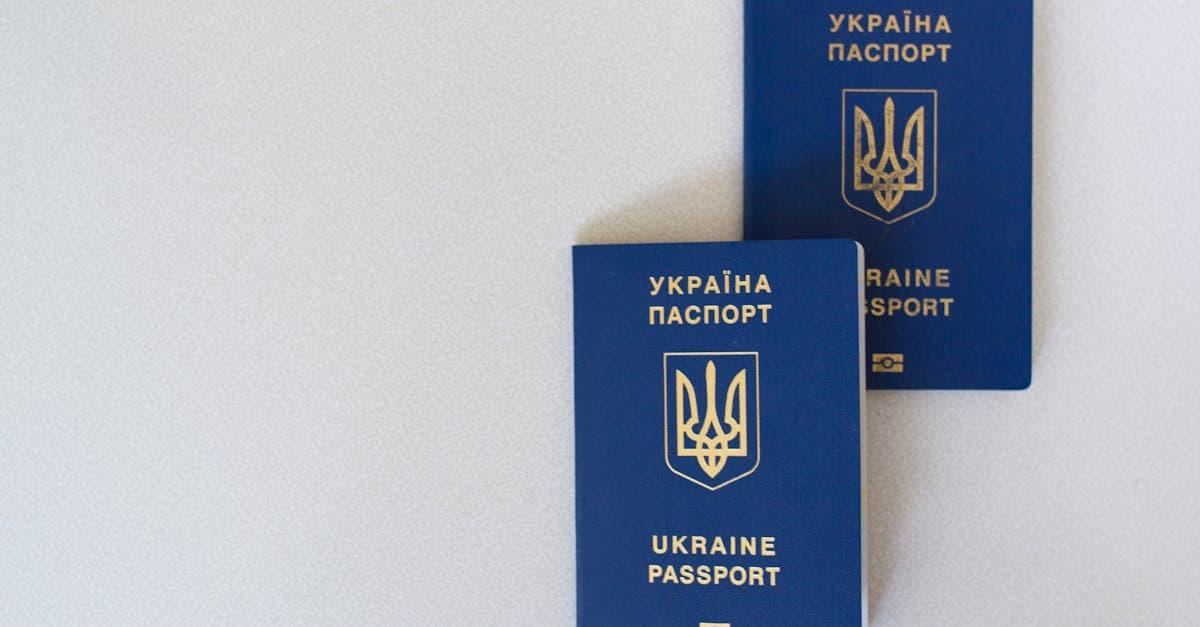
Check passport expiry before booking anything else. Most countries require at least six months of validity beyond your return date, not your departure date smartraveller.gov.au. That distinction catches Australian travellers out every year, particularly on long-haul trips where the gap between departure and return extends past six months.
Renewing an Australian passport takes around a month on the standard track, or roughly two weeks via the urgent service, which comes with additional fees. Current processing times are listed at passports.gov.au; check there before assuming you have time to spare.
Visas are the second time-pressure item on this list. Confirm entry requirements for every country on your itinerary at smartraveller.gov.au. Private visa services exist, but the information can lag behind official updates, sometimes by weeks.
Travel insurance is not optional for international travel. The Australian Department of Foreign Affairs and Trade explicitly recommends it for all overseas trips smartraveller.gov.au. A single hospitalisation or medical evacuation abroad can exceed A$50,000.
Compare policies across four points: trip cancellation cover, medical evacuation, pre-existing condition exclusions, and adventure activity coverage. A cut-price policy with blanket exclusions isn't coverage; it's just a document.
Once documents are locked in, the logistical layer is next: transfers, contingency plans, and what to do when things don't run to schedule.
Bookings, transport and pre-departure admin
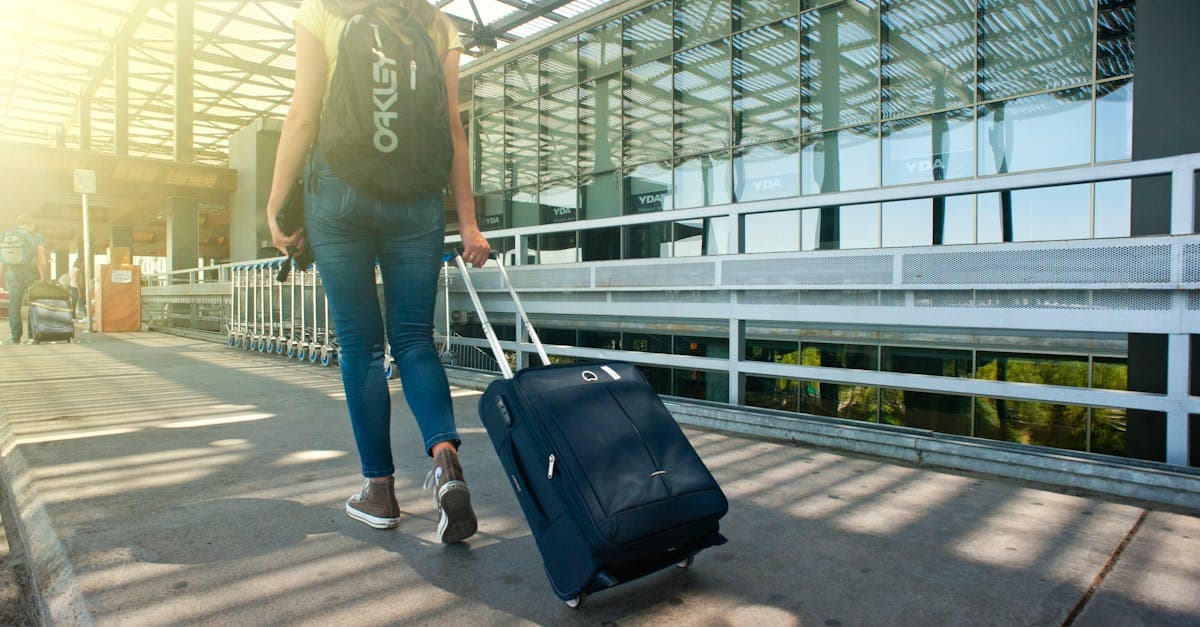
Five admin tasks cover the pre-departure side of any travel checklist help.flightcentre.com.au. None takes long. The one most Australians skip is also the most important.
1. Register your trip on Smartraveller. Free, two minutes. DFAT uses this database to contact Australians overseas during emergencies: natural disasters, civil unrest, consular crises. Registration takes roughly the time it takes to board a flight.
2. Confirm all bookings 48 hours before departure. Accommodation, airport transfers, car hire. Download offline copies to your phone; hotel Wi-Fi isn't guaranteed the moment you arrive, and connectivity can be patchy at regional airports.
3. Leave copies at home. Passport photo page, insurance policy number, and a complete itinerary with a trusted contact. If your phone goes missing, that person becomes your lifeline.
4. Check your airline's baggage policy before you pack. Domestic carry-on limits typically run around 7 kg; international allowances vary by carrier, class, and destination. Excess baggage fees at check-in are steep, especially on budget carriers.
5. Notify your bank. Overseas card blocks hit at the worst times. A no-foreign-transaction-fee debit or credit card saves a small percentage on every purchase abroad and stops international conversion fees stacking up.
Admin done. Now the part everyone actually enjoys arguing about: what to pack.
The ultimate packing checklist for any trip

Structure your travel checklist by category: clothing, footwear, toiletries, electronics, documents, medications scti.com.au. Jumping between categories mid-pack produces both duplicates (three sunscreens, two belts) and omissions (no plug adapter, no backup card).
The most common packing mistake isn't forgetting items. It's volume. Most travellers carry far more than they need, then drag the extra weight through airports regretting every kilo.
A practical test before your next trip: lay out everything you plan to bring, then put half back. In practice, you'll manage on half what you originally selected.
Carry-on only suits trips of five to seven days with smart choices around clothing and toiletries. For ten-plus day trips, or anything involving destination-specific gear (diving equipment, ski gear, formal wear), checked luggage earns its fee.
Packing cubes are the closest thing to a universal upgrade. They compress clothing, separate categories, and speed up airport security unpacking. Ask a frequent traveller whether they'd go back to an unstructured bag.
Two categories trip most people up: clothing decisions and electronics. Both have practical rules worth knowing.
Clothing, footwear and toiletries
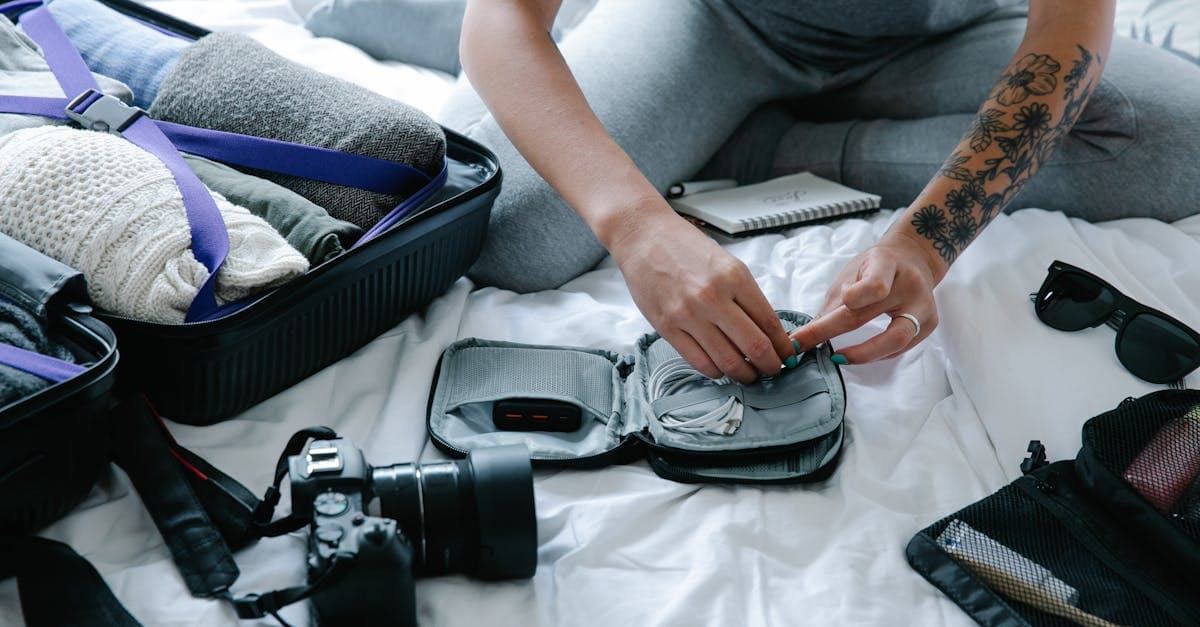
Three bottoms and five tops create 15 outfit combinations. That covers a full week without repeating a look, at roughly half the wardrobe most people attempt to bring.
Go for mix-and-match neutrals: navy chinos, olive shorts, and black trousers pair with almost any top. Novelty prints and single-use pieces (the formal shirt packed for one potential dinner) are where bags start to blow out.
Footwear takes the most space and weight on any travel checklist. Two pairs is the workable maximum for most trips: a comfortable walking shoe for days, one smarter option for evenings or events. Any third pair will spend the trip at the bottom of the bag.
Toiletries for carry-on must comply with the 100 ml liquids rule, per CASA aviation security guidelines scti.com.au. Transfer products to reusable containers rather than paying inflated prices for travel-sized versions. Sunscreen counts as a liquid: pack it in checked luggage or buy it at the destination.
For cold-weather destinations, layering beats bulk every time. A merino base layer, a mid-layer fleece, and a packable outer shell handles most conditions and compresses to a fraction of the space a single heavy jacket needs.
Electronics are where carry-on weight sneaks up. Audit this category before you zip the bag.
Electronics, chargers and carry-on essentials
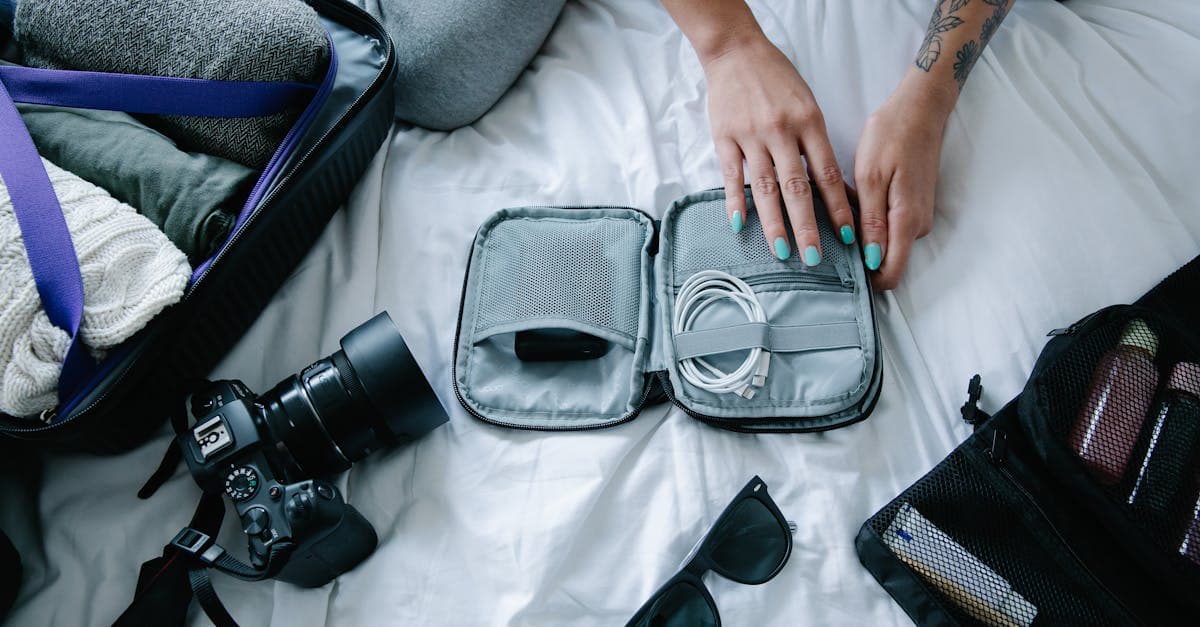
Power banks belong in carry-on, not checked luggage. Australian aviation rules follow CASA guidelines capping lithium batteries at 100 Wh (around 27,000 mAh) for carry-on; anything larger requires prior airline approval. Checking them in isn't an option.
Universal adapters run bulkier than destination-specific ones. On a multi-country itinerary through Europe, Asia, or North America, that extra weight pays for itself. A single unit covers AU, EU, UK, US, and most Asian sockets without needing a secondary adapter.
One backup charging cable sounds excessive. It isn't.
Packing rules like the 5-4-3-2-1 method take the decision-making out of clothing entirely. Worth understanding before your next trip.
What is the 5 4 3 2 1 packing rule?
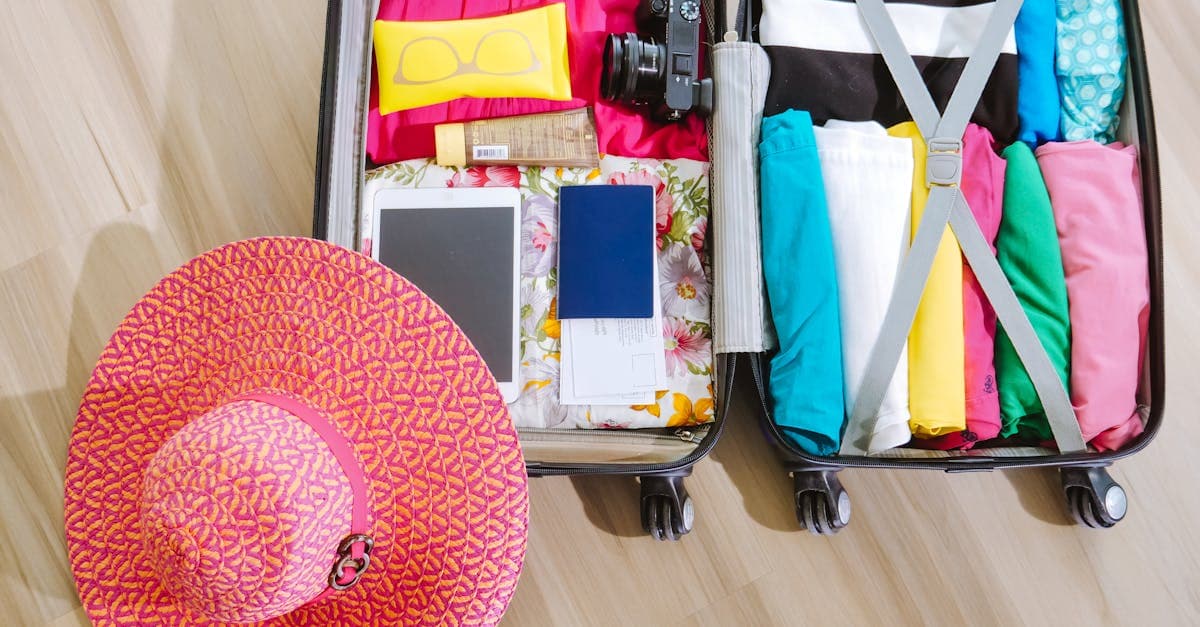
The 5-4-3-2-1 packing rule specifies five tops, four bottoms, three pairs of shoes, two accessories (belt, scarf, or hat), and one jacket or outer layer. Designed for a seven-day trip, the full formula fits a standard carry-on when paired with compact toiletries.
The distinction most packing guides miss: it's a starting framework, not a locked formula.
The shoe count is the most debated element. Three pairs sounds reasonable until you're hauling the bag through a connection at 5 am, regretting every extra kilo. For a week-long city trip, two pairs covers almost every scenario. Keep the third only for trips with genuinely different terrain, such as a beach-and-hiking combination or a mix of outdoor activities and formal events.
Activity gear sits outside the count entirely. Swimwear, hiking boots, and formal wear don't replace items within the formula; they're additions to it. The rule was built for versatile city packing with interchangeable wardrobe basics, not trips with specialist gear requirements.
One real strength of the approach: it forces deliberate decisions at home, where they cost nothing. Overpacking rarely happens because travellers forgot a packing rule. It happens because they never applied one.
A related formula approaches the same overpacking problem with different numbers, and it suits a lighter packing style.
What is the 3 5 7 rule for packing?
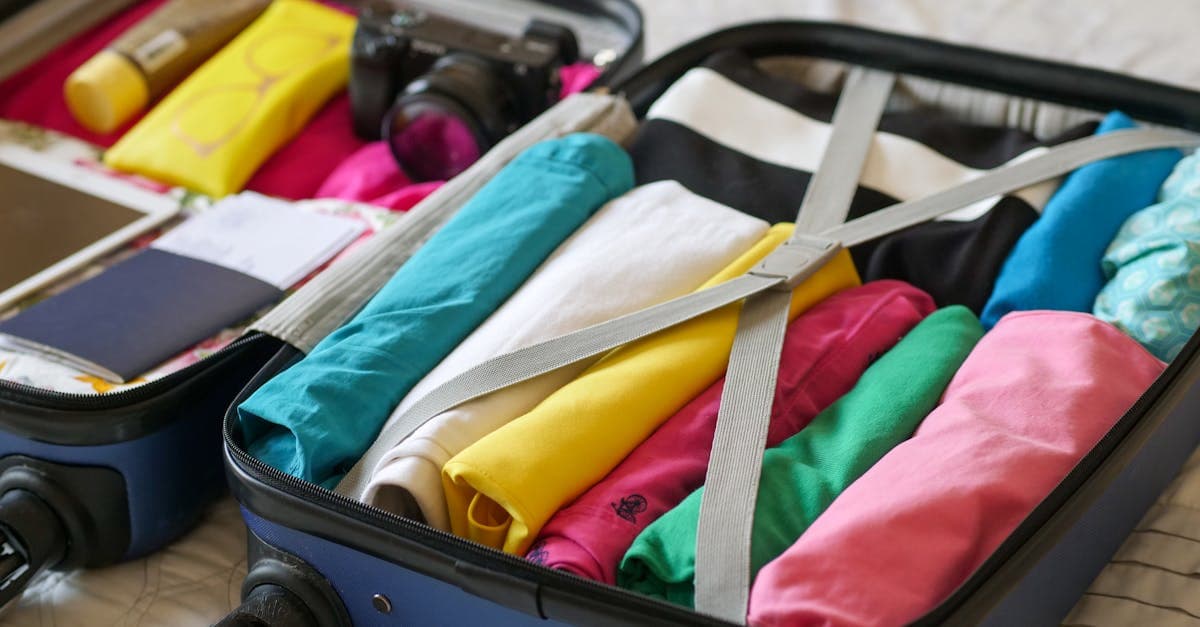
Pack three bottoms, five tops, and seven pairs of socks and underwear: that's the 3-5-7 packing rule, and the distribution maps directly to how most travellers actually dress on holiday. Eight garments, enough outfit combinations to cover a full week without repetition, and it all fits in a carry-on.
The logic isn't accidental. Bottoms repeat. Tops vary. Socks and underwear don't. Those three facts about how people dress on trips are baked into the ratio, which is why the formula works without any particular eye for fashion.
Neutral colours amplify the usefulness significantly. Navy, grey, black, white, and olive all combine freely, eliminating the situation where you've packed a full bag and still feel like you have nothing to wear. That specific frustration comes from packing the wrong colours, not from packing too few items.
Against the 5-4-3-2-1 rule, the 3-5-7 approach produces a lighter bag and suits faster-moving, casual itineraries. The 5-4-3-2-1 rule adds explicit shoe and accessory counts, making it more structured for trips with varied social commitments. Neither is objectively better. Trip style and personal preference settle it.
Both rules converge on the same goal: maximum outfit variety from minimum garments. The items that belong on every travel checklist, regardless of which formula you follow, are a separate question entirely.
What are the 10 essential travel items?
Ranked by consequence of forgetting them, the ten travel essentials are: passport or photo ID, travel insurance documents, prescription medications with a copy of the script, local currency for arrival, phone and charger, universal power adapter, a working data plan, reusable water bottle, TSA-approved travel locks, and a compact daypack scti.com.au.
Medications are the highest-stakes item for anyone who takes them. Carry prescriptions in hand luggage with the script separate, particularly for controlled substances that may require customs declarations on arrival. Losing checked luggage with a week's medication is a far worse problem than losing clothes.
Currency still matters in highly card-friendly destinations. Japan, Germany, and Scandinavia all have situations where digital payments fail: small markets, taxi drivers with broken card terminals, network outages. Arrive with some local cash and skip the scramble.
A working data plan rounds out the list for one specific reason: navigation, emergency contact, accommodation check-in, and transport bookings all depend on connectivity from the moment you land, not once you've found the hotel Wi-Fi password.
Travel industry surveys consistently flag power adapters, medication scripts, and travel locks as the items most commonly left behind. They're unglamorous. The data plan is different from the others on that list; it has setup variables that reward attention before you leave home.
Staying connected overseas: data, SIMs and eSIM options
Australian travellers heading overseas have three connectivity options: carrier roaming from Telstra, Optus, or Vodafone AU, a local SIM purchased at the destination, or an eSIM activated before departure. Each approach works. The right choice depends on trip length, destination, and how much setup you're willing to handle before you fly.
Carrier roaming requires the least preparation: no new accounts, no changes to your phone. Daily roaming rates from Australian carriers typically run ~A$5-10 across popular destinations. For a quick hop to Auckland or Bali, that's workable. Scale it to two weeks across European cities and the daily cost compounds into a line item that most travellers didn't budget for.
A local SIM at the destination is usually the cheapest per-gigabyte option. The friction is real: you need an unlocked handset, and after a 20-plus-hour flight from Sydney or Melbourne, queuing at the airport SIM counter isn't the welcome most travellers want. Practical for stays of a week or more. Less so for a five-day trip where you want data running from the taxi rank.
eSIMs activate via QR code scan before you leave, no physical SIM swap required. Most iPhones released since 2018 support them, and compatibility is expanding across Android flagships. Check your specific model's support before purchasing a plan. Budget eSIM plans run ~A$4-8 per gigabyte depending on destination, which undercuts Australian carrier daily rates significantly on any trip longer than a few days.
HelloRoam offers multi-country eSIM plans with 24/7 support, a useful differentiator for multi-destination itineraries where managing separate plans for each country adds unnecessary complexity. See current plan options at Browse All eSIM Plans.
Add 'sort data plan' to your pre-departure checklist alongside documents and insurance. Leaving it to the arrivals hall limits your options and costs more than sorting it from the couch.
Reviewed by HelloRoam's editorial team. Last updated: 29 April 2026.
Get Connected Before You Go





Frequently Asked Questions
A basic travel checklist covers four areas: documents and ID, pre-departure admin, physical packing, and connectivity. At minimum, every traveller needs a valid passport, confirmed bookings, travel insurance, enough local currency for arrival, essential medications, and a working data plan. International trips should have the checklist active four to six weeks before departure, while domestic travel typically needs only a week of preparation.
The 5-4-3-2-1 packing rule means bringing five tops, four bottoms, three pairs of shoes, two accessories such as a belt, scarf, or hat, and one jacket or outer layer. Designed for a seven-day trip, the full formula fits a standard carry-on when paired with compact toiletries. The shoe count is the most debated element, and for most week-long city trips two pairs covers almost every scenario.
The 3-5-7 rule is a numbered packing framework similar to the 5-4-3-2-1 method, using set quantities per clothing category to keep luggage minimal and organised. The principle aligns closely with the advice that three bottoms and five tops create 15 outfit combinations that cover a full week without repeating a look. Choosing mix-and-match neutrals is essential to making any numbered packing rule work in practice.
The 10 core travel essentials are a valid passport, confirmed flight and accommodation bookings, travel insurance, local currency for arrival, essential medications with prescriptions, a working data plan, a universal travel adapter, a carry-on power bank, offline maps downloaded to your phone, and copies of your documents left with a trusted contact at home. These span all four checklist categories — documents, admin, packing, and connectivity — and cover the items most likely to cause serious disruption if missing.
Start your international travel checklist four to six weeks before departure. This lead time exists because visa processing can range from instant e-visa approval to 12 weeks or more for certain destinations, and Australian passport renewals take around a month on the standard track. Travel insurance comparisons and booking confirmations also have minimum timelines built in that cannot be rushed.
Most countries require at least six months of passport validity beyond your return date, not your departure date. This distinction catches Australian travellers out every year, particularly on long-haul trips where the gap between departure and return extends past six months. Australian passport renewals take around a month on the standard track, or roughly two weeks via the urgent service for an additional fee.
Yes, travel insurance is strongly recommended for all international trips. The Australian Department of Foreign Affairs and Trade explicitly recommends it for all overseas travel, and a single hospitalisation or medical evacuation abroad can exceed A$50,000. When comparing policies, check for trip cancellation cover, medical evacuation, pre-existing condition exclusions, and adventure activity coverage.
Australian carriers offer international roaming packs, but daily rates add up quickly on trips longer than a long weekend. An eSIM is a cost-effective alternative that allows you to compare and activate a local data plan before leaving home. eSIM providers covering 190 or more destinations make it straightforward to tick connectivity off the checklist well ahead of departure.
Power banks must be packed in carry-on luggage only and cannot go in checked baggage. Australian aviation rules following CASA guidelines cap lithium batteries at 100 Wh, which is approximately 27,000 mAh, for carry-on use. Any power bank exceeding this limit requires prior airline approval.
Carry-on toiletries must comply with the 100ml liquids rule per CASA aviation security guidelines, meaning each liquid or gel container must hold 100ml or less. Transfer products into reusable containers rather than paying inflated prices for travel-sized versions at the shops. Sunscreen counts as a liquid, so it is best packed in checked luggage or purchased at the destination.
Yes, registering your trip on smartraveller.gov.au is free and takes approximately two minutes. The Australian Department of Foreign Affairs and Trade uses this database to contact Australians overseas during emergencies such as natural disasters, civil unrest, or consular crises. It is one of the most overlooked pre-departure steps and one of the most important.
Carry-on only works well for trips of five to seven days with smart clothing choices and toiletries that comply with the 100ml rule. For trips of ten or more days, or itineraries requiring destination-specific gear such as diving equipment, ski gear, or formal wear, checked luggage becomes worthwhile. Packing cubes help compress clothing and separate categories, making the most of limited carry-on space.
Notify your bank before departing to prevent overseas card blocks, which typically happen at the most inconvenient moments. A debit or credit card with no foreign transaction fees saves a small percentage on every international purchase and stops conversion fees stacking up across a trip. Also confirm that your banking app is configured for international use before you leave home.
Leave a copy of your passport photo page, your travel insurance policy number, and a complete itinerary with a trusted contact before departing. If your phone or documents go missing while abroad, that contact becomes your primary lifeline for accessing key information. Download offline copies of your bookings to your phone as a backup, since hotel Wi-Fi is not guaranteed on arrival.
Layering outperforms bulk packing for cold-weather destinations. A merino base layer, a mid-layer fleece, and a packable outer shell handles most conditions and compresses to a fraction of the space a single heavy jacket requires. For general trips, choosing mix-and-match neutrals such as navy, olive, and black allows three bottoms and five tops to create 15 usable outfit combinations without overpacking.
Sources
- What you need to know before you go — smartraveller.gov.au
- Ultimate packing list — scti.com.au
- Pre-travel checklist — help.flightcentre.com.au
- Your Travel Checklist — vaccinehub.com.au