New Zealand Travel Itinerary Template: Plan Your Perfect NZ Road Trip in 2026

Written by: David Chen


13 min read

HelloRoam is a global eSIM provider offering instant mobile data in 170+ countries. Buy prepaid travel eSIM plans with no extra fees, no contracts, and instant activation on any eSIM-compatible device.
13 min read

New Zealand doesn't forgive spontaneous travel planning. The country spans two main islands connected by a ferry crossing that costs you a full travel day whether you like it or not. Book the Interislander or Bluebridge weeks ahead or you'll arrive in Wellington with no available sailing.
Distances alone demand structure. A full North and South Island road trip covers roughly 3,000 to 4,000 km. That's comparable to crossing most of continental Europe, except New Zealand's roads are narrower, towns are smaller, and there's often only one place to sleep within the next 100 kilometres.
Then there's the Milford Track. The Department of Conservation runs a ballot system for this walk, and places fill within hours of the booking window opening each May or June. Miss it and you're waiting another full year. No amount of flexibility compensates for a missed ballot.
The West Coast compounds everything. That stretch between Greymouth and Haast averages more than 200 rain days per year. Unplanned itineraries regularly lose a day, sometimes two, to road closures and weather detours. International visitors average 18 to 22 days in New Zealand, long enough that each lost day genuinely hurts.
A structured travel itinerary template accounts for all of this: realistic daily driving times, accommodation scarcity in small towns, seasonal road access conditions, and what you're spending day by day. Without it, you're reacting rather than planning.

A New Zealand travel itinerary template is a working document built around a day-by-day grid, not a list of pretty places. It should include the overnight location, driving distances in kilometres, realistic journey times, a cost column in NZD, and confirmation numbers for every pre-booked element. You will revise it on the road.
Each row needs the overnight location, the driving distance in kilometres, and a realistic driving time (not the Google Maps estimate that assumes clear roads and no stops). New Zealand's State Highway 6 through the West Coast doesn't behave like a motorway.
Add a cost column in NZD broken down by category: accommodation, fuel, paid activities, and food. A DoC campsite runs around NZD $8 to $20 per person per night. A Milford Sound cruise costs roughly NZD $85 to $150. These figures compound fast across 20-plus days.
Reserve a dedicated row for confirmation numbers: ferry bookings, Great Walk hut passes, shuttle bookings for the Tongariro Alpine Crossing. Searching for a reference number on a slow rural connection mid-trip is a problem you can prevent entirely.
A weather contingency row belongs on every template, particularly for the West Coast, Fiordland, and the alpine passes. Mark which days need a backup plan before you leave home.
Don't overlook the connectivity column. Flag each leg where mobile coverage drops or disappears, so you know which towns require an offline maps download before continuing south. Choose your format based on how you travel: Google Docs for shared editing, Notion for linked databases with embedded booking references, and a printable PDF for days when you've got no signal at all.

Four to eight weeks ahead for the Cook Strait ferry. That's the booking window in peak summer (December through February), and if you're treating it like a spontaneous day trip, you'll miss a sailing in high season.
The crossing takes around 3 to 3.5 hours on the water. That sounds reasonable until you add a Wellington departure, a Picton arrival, and then an onward drive south before dark. Your template should flag this as a full travel day with nothing ambitious in the activity column.
Great Walk bookings run to a completely different calendar. The Department of Conservation opens hut passes for the following season in May or June each year. The Milford Track, Routeburn Track, and Kepler Track all fill within hours of that window opening. Miss the ballot and you're waiting twelve months.
Freedom camping at high-demand DoC sites near Wanaka and Queenstown is first-come, first-served with limited capacity. Don't build your accommodation plan around these. Your template needs a paid campsite listed as the default for each of those nights, with the free site as the optimistic option.
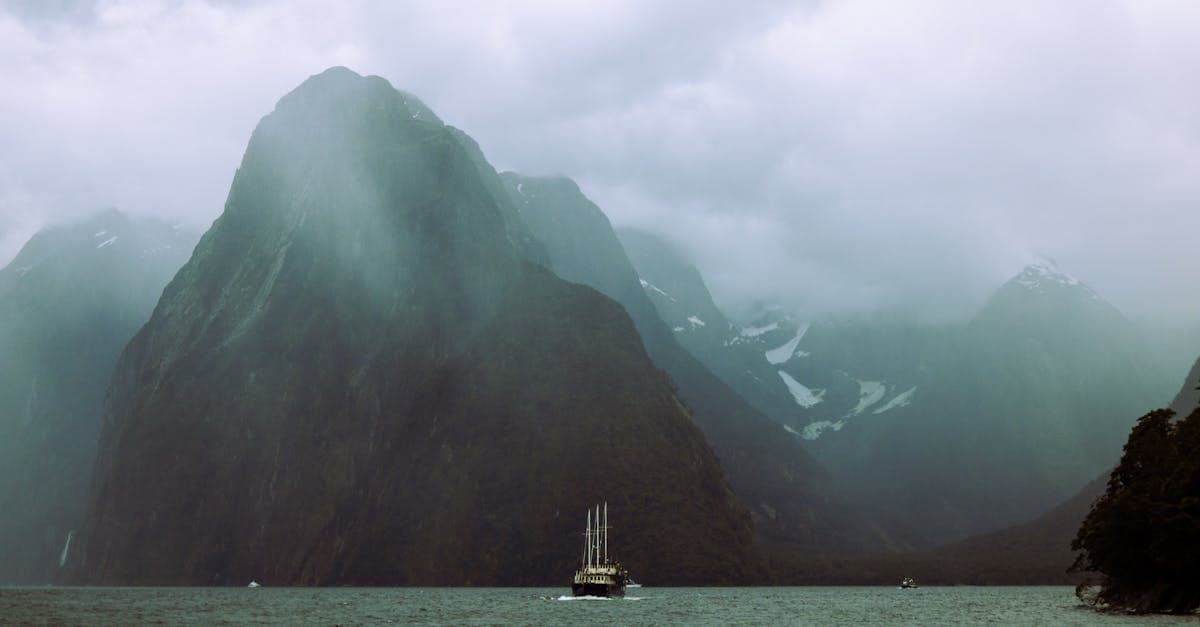
The Milford Sound road closes overnight. SH94 can also close after heavy rainfall with no advance warning. Te Anau belongs in your template as the fixed overnight base for that leg, already decided before the weather makes the decision for you.

Auckland gets two nights. Rushing from an international flight to Waitomo on the same afternoon means you won't do justice to either stop. Use the arrival evening for Waitemata Harbour and Ponsonby Road, then drive to Waitomo on Day 2 (2.5 hours from Auckland) for the glowworm caves.
Days 3 and 4 cover Rotorua: Te Puia, Wai-O-Tapu thermal park, and the Redwoods. Drive to Taupo on Day 4 (around 1 hour from Rotorua) for lake views and Huka Falls. Day 5 is the optional Tongariro Alpine Crossing, a full-day walk requiring a shuttle booking before you arrive. Overnight Taupo or National Park village.
Days 6 and 7 run south through Palmerston North to Wellington (4 to 5 hours). Te Papa Museum, Cuba Street, and the Mount Victoria Lookout. Wellington is your last proper urban base. Day 8 is the crossing: morning ferry to Picton, then drive to Nelson or Blenheim (around 1 hour from Picton). Nothing ambitious goes in Day 8's activity column.
Days 9 and 10 cover Nelson and Abel Tasman National Park via kayak day trip or water taxi to Awaroa or Bark Bay. The Marlborough wine region and Queen Charlotte Track are the dry-weather alternative. Day 11 is the West Coast run via Lewis Pass to Greymouth or Franz Josef (5 to 6 hours). Coverage drops from Greymouth south. Download offline maps before leaving town.
Day 12 starts at the Fox Glacier access track, then Haast Pass to Wanaka or Queenstown (4 to 5 hours). Fox Glacier township is the last reliable signal point before coverage disappears for hours. Save your maps to your device before leaving. For the full trip, Hello Roam's(https://www.helloroam.com/en-NZ/local-esim) range from $8.36 for 5GB to $27.98 for 20GB, both on 30-day validity.
Day 13 in Queenstown: Skyline Gondola, Shotover Jet, Arrowtown, or the Remarkables ski area in winter season. Day 14 drives north via Lindis Pass through the Mackenzie Basin, with optional stops at Lake Tekapo and Aoraki Mount Cook before Christchurch for the fly-out.
Each day in this template carries seven columns: overnight location, kilometres driven, driving time, key activities with pre-booking flags, a confirmation number field, estimated NZD spend, and a mobile coverage rating (good, patchy, or offline maps required).

Three mobile networks cover New Zealand. Spark NZ delivers the widest rural reach, which matters most on South Island back roads. One NZ (formerly Vodafone NZ) is strong along the main tourist corridors. 2degrees is cheapest, but its rural coverage is the weakest of the three.
Large sections of the South Island simply have no mobile signal. That makes connectivity planning a practical itinerary requirement rather than an optional extra. Navigation depends on either live coverage or pre-loaded offline maps, and flagging dead zones in your travel itinerary template before you leave saves real headaches on the road.
EU and UK travellers should check their home roaming bundle before assuming coverage. New Zealand falls outside most standard roaming packages, so surprise per-day charges are common. US travellers on carrier international day passes tend to get throttled after 512 MB, which runs out quickly when navigation is running in the background.
The practical choice is either a local prepaid SIM from the airport on arrival or an eSIM activated before departure. For trips continuing from New Zealand to Australia, Fiji, or the Cook Islands after New Zealand, Hello Roam offers coverage across all three destinations, with New Zealand access on Spark or One NZ infrastructure.
Network coverage quality matters more than price difference for a South Island road trip.

SH94 from Te Anau to Milford Sound carries no mobile coverage for around 120 km. That's not a patchy stretch with occasional gaps. It's a complete blackout from the moment you leave town. Download offline tiles for the full route while you still have WiFi in Te Anau.
The West Coast highway (SH6) between Greymouth and Fox Glacier has signal only in town centres. On the highway itself, stretches of 40 to 80 km run with no coverage at all. Plan to save your maps for offline use the night before, from accommodation in Hokitika or Greymouth.
Fiordland National Park's interior has zero mobile coverage throughout. For Great Walk hikers on overnight routes in the area, emergency locator beacons (PLBs) are available for hire in Te Anau. They're worth the small daily fee.
Signal in the Otago backcountry and Mount Aspiring National Park drops to minimal or nothing, including sections of the Haast Pass road in poor weather. The East Cape road (SH35) and the eastern Coromandel Peninsula both have known coverage gaps worth marking in your itinerary.
The practical workflow: at each dead zone entry point in your day-by-day plan, add a callout to download Google Maps or Maps.me offline coverage via WiFi before departure. Treat it as a morning task, not an afterthought at the trailhead.

Physical SIM cards from all three networks are sold at Auckland and Christchurch airports and in major supermarket chains. Spark prepaid SIMs run NZD 29 to NZD 55 for 8 to 30 GB. One NZ sits at NZD 25 to NZD 50 for 6 to 25 GB. 2degrees is cheapest at NZD 19 to NZD 40 for 5 to 20 GB, but its rural reach is thin enough that it's genuinely not worth the saving if your route covers the West Coast, Fiordland, or Haast Pass.
eSIM skips the airport queue and keeps your home SIM installed alongside it. Hello Roam's New Zealand plans start at $1.70 for 1 GB (7 days), with a 10 GB 30-day plan at $15.24. For travellers who'd rather not track data carefully through Fiordland, the unlimited 14-day plan comes in at $46.85. Hello Roam provides access to Spark or One NZ's network in New Zealand, delivering the same rural coverage quality as a local Spark SIM.
The case for a regional plan is strong if your trip extends beyond New Zealand. Travellers continuing to Australia, Fiji, or Rarotonga can stay on the same Hello Roam plan without sourcing a new SIM on arrival in each country.
For a straightforward New Zealand-only trip, a Spark prepaid SIM and an eSIM with access to Spark's network deliver comparable rural coverage. The real differentiator is setup time and whether your itinerary crosses borders.
Fourteen days covers both islands, but only just. The rough split is six to seven days per island, with the ferry crossing consuming one full transition day. That leaves little buffer for weather delays or rest.
The format works best as a one-way trip: fly into Auckland and fly out of Christchurch, or the reverse. Flying back to Auckland from Queenstown to catch a return flight wastes two driving days and cuts straight into sightseeing time.
First-time visitors consistently overpack their itineraries. A realistic 14-day core hits Rotorua, Taupo, Wellington, the Marlborough wine region, the West Coast glaciers, Queenstown, and Christchurch, connected by the Cook Strait ferry. Adding Northland, Abel Tasman, and the Otago Peninsula on top of that turns a road trip into a relay race.
Three weeks changes the picture significantly. Twenty-one days unlocks the Bay of Islands and Cape Reinga, a proper stay in the Abel Tasman, and an overnight Milford Sound cruise rather than a day return. For anyone who wants to move beyond the main circuit, 21 days is where travel starts to feel unrushed.
One thing your travel itinerary template should flag honestly: South Island driving is more demanding than equivalent distances in Europe or the US. Alpine passes with no services for two to three hours are common, and fatigue compounds over consecutive days faster than most first-timers expect. A rest day is not soft planning; it's the thing that keeps the second week enjoyable.

The ferry booking collapses everything downstream. Miss the peak-season sailing window on the Interislander or Bluebridge, and your South Island schedule doesn't bend: it breaks. In peak summer, popular crossings sell out weeks before departure. Book late and you're stuck rerouting the entire second half of your trip.
The Department of Conservation ballot for the Milford Track is the other unrecoverable mistake. The window opens in May or June for the following season. Miss it, and there's no waiting list, no alternative date. You simply don't walk it that year.
South Island driving times are the slow-burn trap. Distances look manageable on a map. They aren't. Alpine passes, one-lane bridges, and campervans on SH6 and SH94 routinely double journey times. A three-hour leg becomes five.
The West Coast needs at least one weather buffer day. Haast Pass can close. The Greymouth to Queenstown route in heavy rain has no quick alternative.
Arrive with connectivity arranged. Airport SIM kiosks carry real queues at peak arrival times. Travellers who skip this often spend the first day or two on expensive home-carrier rates without realising it until the bill arrives.
The scale of New Zealand's main driving circuit is closer to a cross-continental road trip than a long weekend getaway. An itinerary built on compact-country logic runs out of buffer days by midweek.

Short answer: yes. New Zealand is fully eSIM-compatible, with all three major networks supporting it natively. Spark NZ, One NZ, and 2degrees each handle eSIM, and international travel providers route through these same networks. No compatibility surprises when you land.
Smartphone support is broad. Apple iPhone XS and later, Google Pixel 3 and later, and Samsung Galaxy S20 and later all qualify. Dual-SIM devices can run a home SIM alongside a travel eSIM simultaneously, so your home number stays reachable for incoming calls while local data runs through a separate profile. That's practical for anyone who can't go fully dark for two weeks.
Activation follows the same steps as any eSIM destination: purchase online before boarding, scan the QR code or use the provider's app, then toggle the profile active on arrival. No store visit required.
Keep the home SIM running as a secondary profile throughout the trip. Family can still reach you on your regular number the whole time, without you handing out a temporary NZ number.
Dead zones are a separate matter. No eSIM creates signal where tower infrastructure doesn't exist. The Milford Sound road and Fiordland's interior are coverage gaps regardless of which SIM or eSIM you carry. eSIM handles NZ's main highway network well. It doesn't change the physics of remote alpine terrain.

Book the Cook Strait ferry four to eight weeks ahead during peak summer (December through February). Interislander and Bluebridge sailings fill quickly in high season. Treat the crossing as a full travel day, as the journey takes around three to three and a half hours plus departure and arrival transfers.
The Department of Conservation opens hut passes for the following season in May or June each year. The Milford Track, Routeburn Track, and Kepler Track all fill within hours of the booking window opening. Missing the ballot means waiting a full twelve months for the next opportunity.
Fourteen days covers both islands, but only just. The rough split is six to seven days per island, with the ferry crossing consuming one full transition day. A realistic 14-day itinerary hits Rotorua, Taupo, Wellington, the Marlborough wine region, the West Coast glaciers, Queenstown, and Christchurch. Three weeks is where travel starts to feel unrushed.
A day-by-day grid works best, with columns for overnight location, driving distance in kilometres, realistic journey time, key activities with pre-booking flags, confirmation numbers, estimated NZD spend, and a mobile coverage rating. Google Docs suits shared editing, Notion works for linked databases with booking references, and a printable PDF covers days with no signal.
A New Zealand itinerary template should include the overnight location, driving distances, realistic journey times, a cost column in NZD broken down by category, and confirmation numbers for every pre-booked element. It should also have a weather contingency row and a connectivity column flagging legs where mobile coverage drops or disappears.
A Department of Conservation campsite runs around NZD $8 to $20 per person per night. Freedom camping at high-demand DoC sites near Wanaka and Queenstown is first-come, first-served with limited capacity. Your itinerary should list a paid campsite as the default for those nights, with the free site as the optimistic option.
A Milford Sound cruise costs roughly NZD $85 to $150. The road to Milford Sound (SH94) closes overnight and can also close after heavy rainfall with no advance warning. Te Anau is the recommended fixed overnight base for the Milford Sound leg of any South Island road trip.
Three mobile networks cover New Zealand: Spark NZ delivers the widest rural reach and is most useful on South Island back roads. One NZ (formerly Vodafone NZ) is strong along the main tourist corridors. 2degrees is cheapest but has the weakest rural coverage and is not recommended for routes covering the West Coast, Fiordland, or Haast Pass.
SH94 from Te Anau to Milford Sound has no coverage for around 120 km. The West Coast highway (SH6) between Greymouth and Fox Glacier has signal only in town centres, with stretches of 40 to 80 km running with no coverage. Fiordland National Park's interior, parts of Haast Pass, the East Cape road, and sections of the eastern Coromandel Peninsula also have known coverage gaps.
Both options deliver comparable rural coverage if they access Spark or One NZ infrastructure. A local prepaid SIM is available at Auckland and Christchurch airports. An eSIM can be activated before departure and keeps your home SIM installed alongside it, skipping the airport queue. For trips continuing to Australia, Fiji, or the Cook Islands, a regional eSIM plan avoids the need to source a new SIM in each country.
Spark prepaid SIMs run NZD 29 to NZD 55 for 8 to 30 GB. One NZ sits at NZD 25 to NZD 50 for 6 to 25 GB. 2degrees is cheapest at NZD 19 to NZD 40 for 5 to 20 GB, but its rural coverage is thin enough to make it a poor choice for West Coast or Fiordland routes.
Most EU and UK standard roaming packages do not cover New Zealand, and surprise per-day charges are common for travellers who assume otherwise. US travellers on carrier international day passes are typically throttled after 512 MB, which runs out quickly when navigation is running in the background. Checking your home roaming bundle before departure is recommended.
Download offline maps via WiFi at each dead zone entry point before continuing. Use Google Maps or Maps.me offline coverage tiles and treat the download as a morning task at your accommodation, not an afterthought at the trailhead. For overnight Great Walk routes in Fiordland, emergency locator beacons are available for hire in Te Anau.
The most efficient 14-day format is a one-way trip flying into Auckland and flying out of Christchurch, or the reverse. Flying back to Auckland from Queenstown to catch a return flight wastes two driving days. This avoids backtracking and uses the Cook Strait ferry as the natural transition between islands.
A full North and South Island road trip covers roughly 3,000 to 4,000 km. New Zealand's roads are narrower than European motorways, towns are smaller, and there is often only one accommodation option within the next 100 kilometres. Google Maps journey times should be treated as underestimates, particularly on routes like State Highway 6 through the West Coast.
The West Coast between Greymouth and Haast averages more than 200 rain days per year. Unplanned itineraries regularly lose one to two days to road closures and weather detours. A weather contingency row in your itinerary, with a backup plan decided before departure, is particularly important for West Coast, Fiordland, and alpine pass legs.
The Tongariro Alpine Crossing requires a shuttle booking before you arrive, as private vehicles cannot access the start of the trail. It is a full-day walk and should occupy its own day in your itinerary. Overnight options are Taupo or National Park village, both of which should be pre-booked especially in peak season.
Hello Roam's New Zealand plans start at $1.70 for 1 GB on a 7-day plan, with a 10 GB 30-day plan at $15.24 and an unlimited 14-day plan at $46.85. For the full road trip, plans range from $8.36 for 5 GB to $27.98 for 20 GB on 30-day validity. Hello Roam provides access to Spark or One NZ infrastructure, delivering the same rural coverage quality as a local Spark SIM.
HelloRoam: your trusted travel eSIM that keeps you online across borders.
Explore Plans