The Ultimate Packing List for Travel: What to Pack for Any Trip in 2025

Written by: Sarah Mitchell


14 min read
HelloRoam is a global eSIM provider offering instant mobile data in 170+ countries. Buy prepaid travel eSIM plans with no roaming fees, no contracts, and instant activation on any eSIM-compatible device.
14 min read
Airlines collected $7.03 billion in checked bag fees in 2023. That's not a footnote; it's a signal that packing decisions carry direct financial weight. Carry-on-only travel has grown around 30 percent since 2019, driven by budget airline expansion and travelers who've started doing the per-leg math.
Most packing guides hand you a list. This one works as a decision framework. The choices you make in the week before your flight, not the ones you make while standing over your suitcase at midnight, determine whether the trip runs smoothly.
Three categories cover the territory: documents and legal requirements, finances and fraud prevention, and digital and connectivity prep. Most travelers handle the first reasonably well. The second gets rushed. The third gets skipped entirely until something goes wrong at a foreign arrivals terminal.
Around 50 percent of travelers report forgetting at least one essential item per trip. Working through categories instead of relying on habit reduces that rate considerably, because you're checking against a system, not guessing from memory.
Connectivity planning belongs here alongside your passport review and bank notifications. Deciding how your phone will work abroad isn't an arrivals-terminal problem; it's a problem for the Tuesday before you board.
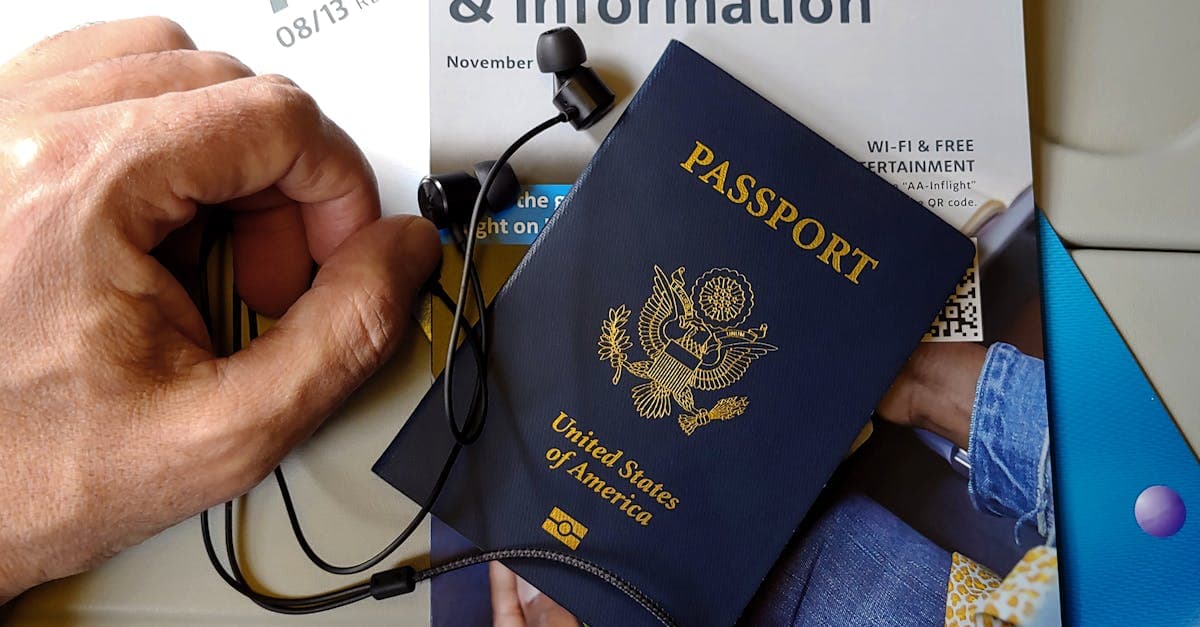
Most countries require your passport to be valid for six months beyond your return date, not just your travel dates. That distinction catches more travelers than you'd expect. A passport expiring in two months is effectively useless for a six-week trip to Southeast Asia, even if the departure date technically clears.
For visa requirements, go to official government sources. The US State Department's travel website lists entry requirements by country, and most destination nations publish their consular pages in English. Lead times vary: consulate-based applications can take a week or more, while tourist e-visas for destinations like Sri Lanka or Turkey typically process in a few days. Plan backwards from your departure date, not forwards from whenever you think to look it up.
According to allianztravelinsurance.com, standard travel insurance covers medical evacuation, trip cancellation, and lost luggage. Most policies exclude pre-existing conditions, extreme sports, and valuables above a specified dollar limit. Read the exclusions before you buy, not after you need to file.
Before departure, make two physical copies and two digital copies of your passport, visa, and insurance policy. Store the digital versions in separate cloud accounts, and keep originals and one copy set in different bags.
Notify every bank and credit card issuer of your exact travel dates and destinations to prevent fraud freezes mid-trip. Then save your bank freeze number, insurance claims hotline, and nearest US embassy contact offline in your phone.
Your carrier's Carrier Lock setting tells you immediately whether your phone is unlocked. On an iPhone, go to Settings > General > About. If "Carrier Lock" reads "No SIM restrictions," you're clear to use any carrier's SIM or eSIM abroad. If it doesn't, call your carrier before you pack, not at the boarding gate.
eSIM compatibility is worth confirming now. iPhone XS and later models support eSIM natively, as do most Android flagship devices from 2020 onward. Around 75 percent of smartphones sold in the US in 2024 are eSIM-capable. If yours qualifies, activating a travel data plan before you board means full connectivity the moment the wheels touch down, no SIM kiosk hunt on arrival. Hello Roam's eSIM for United States plans start around $5 per regional data package and activate directly from your phone settings before departure.
Download offline Google Maps for every city on your itinerary before you leave. The app stores detailed maps locally at no cost and works without any cell signal. Also generate two-factor authentication backup codes for Gmail, bank apps, and other critical accounts in case you temporarily lose access to your US number abroad.
Install local transit apps, translation tools, and currency converters while you're still on home Wi-Fi. Airport data is slow, expensive, or both.
A round-trip domestic checked bag runs ~$70 to $90 on average. On international budget carriers, that fee can reach ~$150 or more per direction. Two legs on an itinerary that includes a European low-cost carrier and the bag charges alone can rival the base fare.
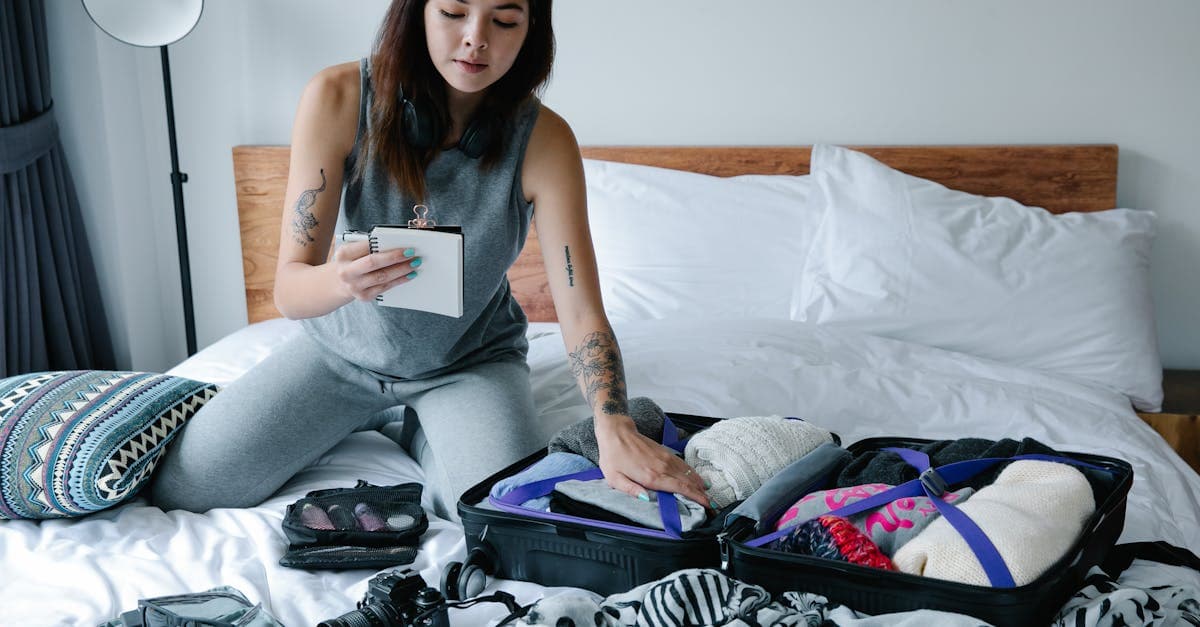
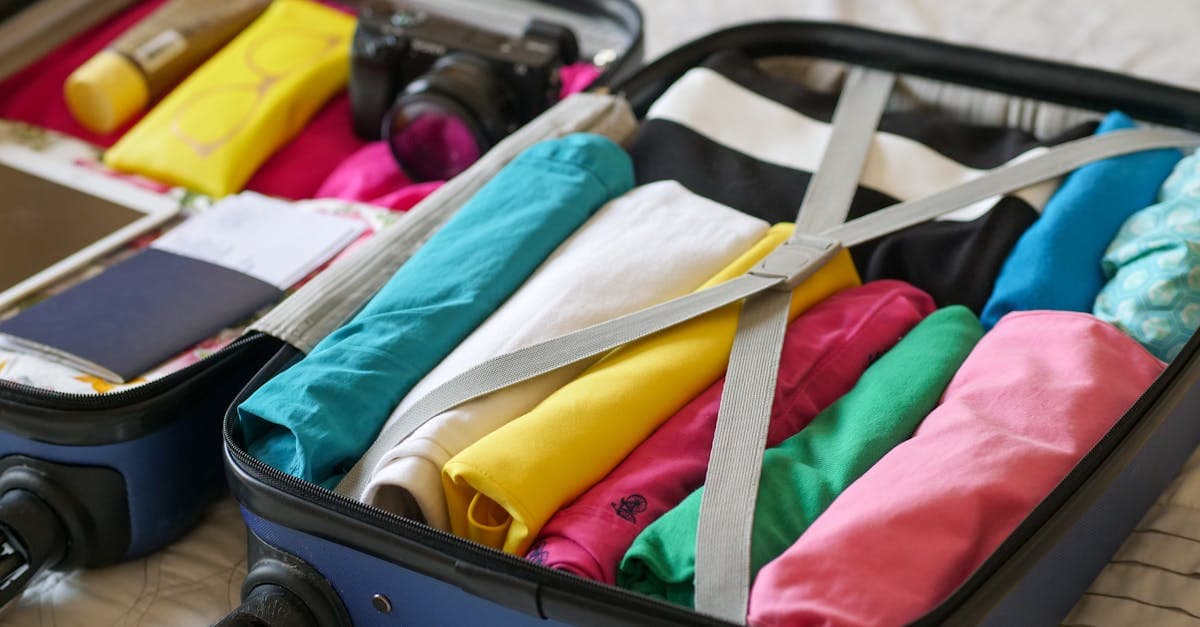
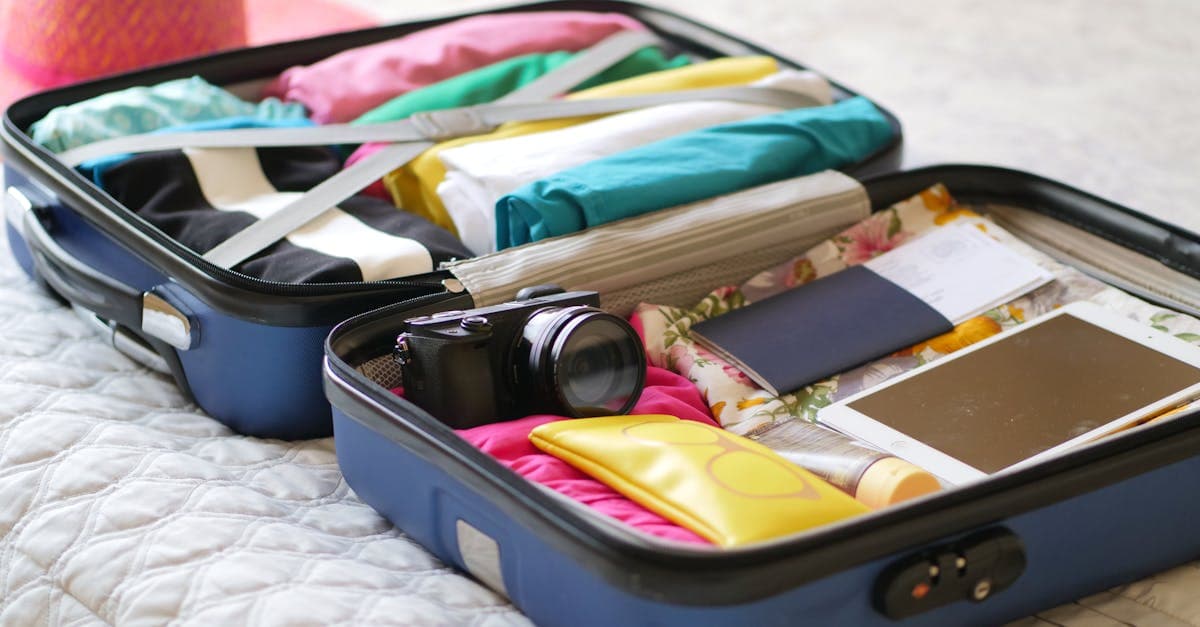
Carry-on-only is achievable for trips up to two weeks, but it requires a clothing strategy, not just packing lighter. The core principle is mix-and-match math: build around three or four compatible neutral colors (navy, white, gray, olive) so every top pairs with every bottom. Three tops and four bottoms generate 12 outfit combinations before you've even thought about layering pieces.
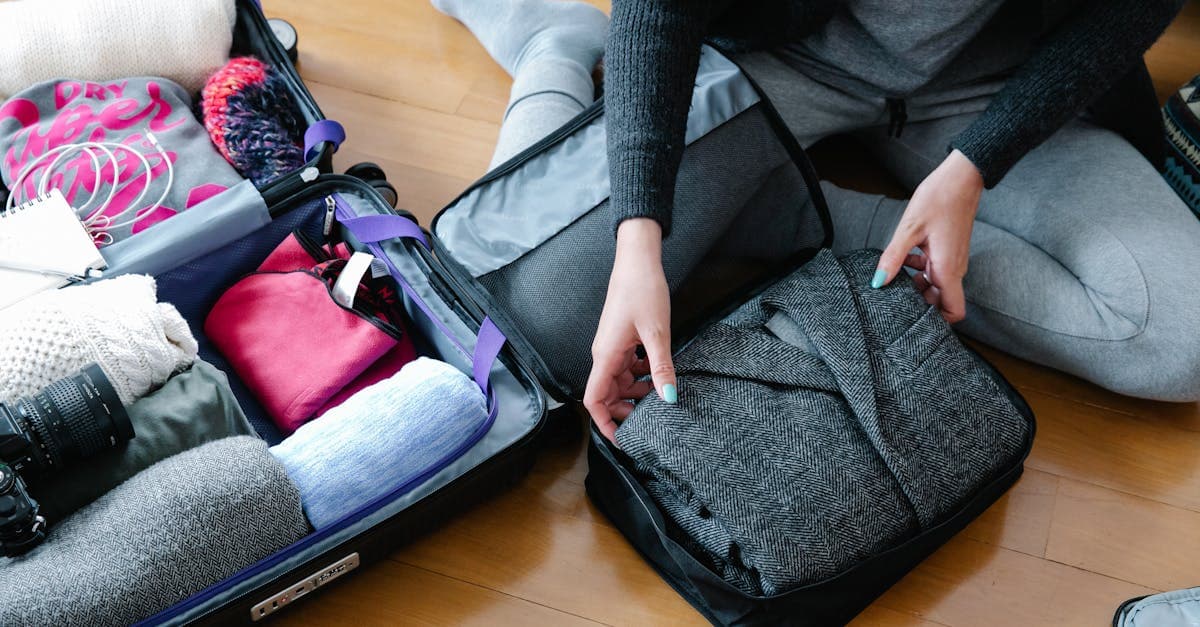
According to eaglecreek.com, compression-style cubes reduce clothing bulk by up to 40 percent, letting you fit a week's worth of clothes into a space that would otherwise hold four days. They also keep things organized when you're moving between cities every few nights.
The 5-4-3-2-1 rule (five tops, four bottoms, three pairs of shoes, two accessories, one jacket) is addressed in the FAQ section below. The principle behind it: every item in the bag needs to pair with at least three others, so nothing rides along as a solo piece.
Wear your bulkiest items on travel days. Boots and a heavy jacket don't count against carry-on weight limits when you're wearing them through security.

Five tops paired with four bottoms create 20 distinct outfit combinations before you repeat a single look. Nine clothing items, two weeks, no repeats. The math is simple; most travelers ignore it and overpack by half.
Fabric determines how well those nine items hold up across the trip. Merino wool is the consensus pick: a quality tee stays odor-free for three to five wears, dries in under two hours after a sink wash, and regulates temperature from cool airport terminals to warm city streets. You pay more upfront, but the per-wear cost drops fast on anything longer than a long weekend.
Synthetic blends (polyester-spandex) pack lighter and cost less but retain odor after two or three wears without washing. On shorter trips or warmer climates where daily swimming is likely, they're a reasonable alternative.
Shoes consume more bag space than any other category. Three pairs is the practical ceiling: one for walking, one dressier, one casual or beach-specific. Your bulkiest pair belongs on your feet on travel day, as covered in the clothing section above. That single decision frees more room than any compression bag.
One semi-formal outfit (a blazer with slacks, or a versatile dress) handles restaurant dress codes, unexpected events, and business meetings without requiring a second bag. Wear it; don't fold it.
The practical backbone of any minimalist packing list is laundry strategy, not packing volume. Sink-washing with a compact travel soap bar every three to four days means you're always packing for a laundry cycle, not for the full trip duration.
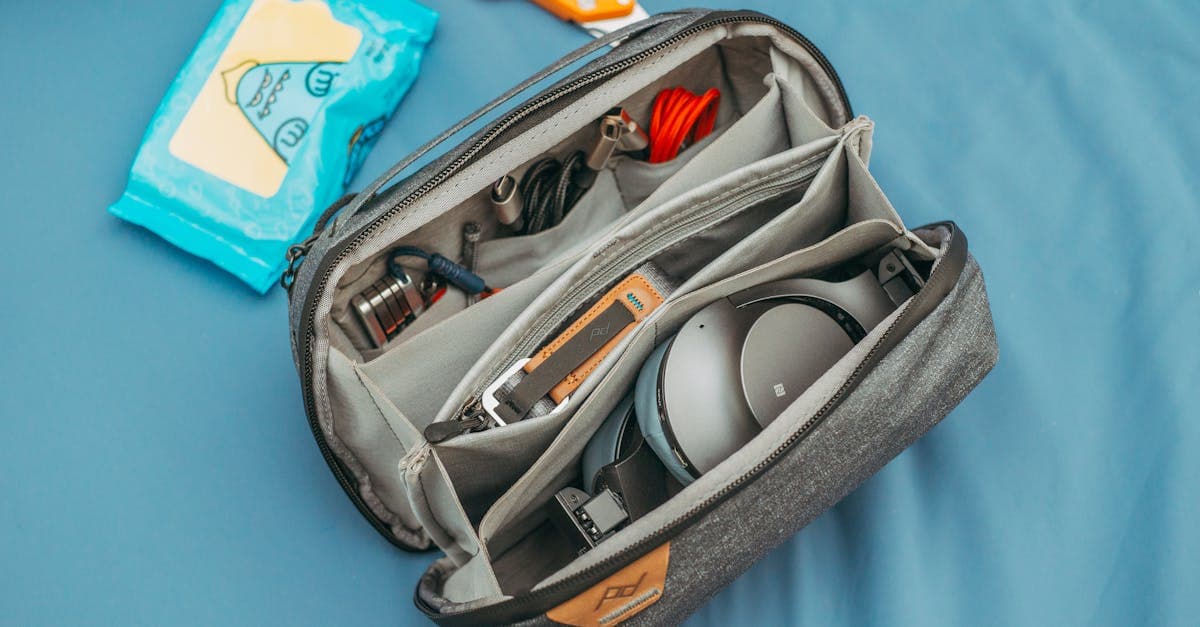
Consolidating to USB-C is the single most effective tech-packing decision, dropping five or six cable types to two and eliminating the need for multiple adapters competing for the same outlet. The average traveler carries 3.5 personal electronic devices and arrives with far more cables than necessary.
A 65W GaN (Gallium Nitride) charger handles a laptop, phone, and tablet simultaneously from one wall outlet. GaN technology runs cooler and packs smaller than traditional chargers at equivalent wattage. You don't need three separate bricks; one handles the whole stack.
For a power bank, 10,000 mAh is the practical target: enough for two to three full phone charges, and safely within TSA carry-on limits (the threshold is under 100 Wh). Anything larger requires airline pre-approval or gets flagged at security. Check the Wh rating printed on your bank's label before you pack it.
A travel adapter and a voltage converter solve different problems. An adapter changes the plug shape to fit a foreign outlet. A converter changes the voltage. Most modern devices (phones, laptops, cameras) are dual-voltage, meaning they handle 100-240V automatically and need only an adapter. If your device label shows a voltage range, a converter is unnecessary.
Noise-canceling headphones justify their weight on any flight over four hours. At a cafe or co-working space, they function as a focus barrier that costs nothing extra to carry.
Before boarding: download movies, podcasts, e-books, Spotify playlists, and Google Maps tiles for every city on your itinerary. In-flight Wi-Fi pricing and hotel Wi-Fi reliability are inconsistent enough that offline content is the reliable default.
AT&T's International Day Pass and Verizon TravelPass both charge $10 to $15 per day. On a two-week trip, that totals $140 to $210 in roaming fees before you've bought a single meal. The charge activates automatically the moment your phone connects to a foreign network, which many travelers discover only when the billing cycle closes.
T-Mobile's included international data sounds like the workaround. It isn't. The plan throttles speeds to 128 kbps, which can't handle Google Maps turn-by-turn navigation, video calls, or streaming. It functions for iMessages and not much else. T-Mobile offers paid add-on packages at full LTE speeds, but those require manual activation before departure and carry additional charges.
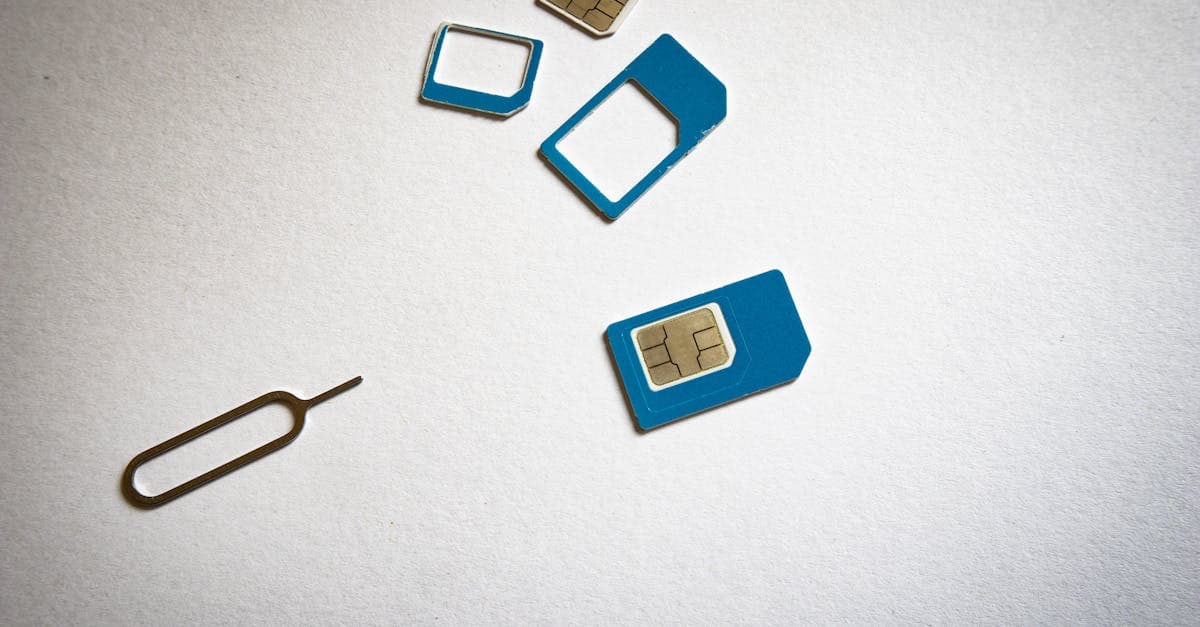
A local SIM card delivers full local speeds at local prices, often under $20 for 5 to 15 GB of data. The tradeoffs: you need an unlocked phone (covered in the previous section), you'll need to locate a carrier store or airport kiosk on arrival, and your US number goes inactive for the duration. That last point matters if family members or hotels are trying to reach you.
eSIM sidesteps the physical swap entirely. You activate a regional plan before you board, your US number stays live on a secondary line, and you land with working data. Regional packages covering multiple countries typically run under $25. Hello Roam offers multi-country eSIM plans on a single package, which is particularly practical for Europe or Southeast Asia itineraries where swapping physical SIMs at each border is genuinely impractical.
Around 75 percent of smartphones sold in the US in 2024 are eSIM-capable. A quick check under Settings confirms compatibility before you purchase a plan.
Airport and hotel Wi-Fi is unreliable for navigation and represents a real security exposure on public networks, especially for any app that touches a bank account. A dedicated mobile data plan is the baseline. Treat eSIM activation the way you treat packing your universal adapter: a confirmed pre-departure task, not something to figure out at the arrivals gate.
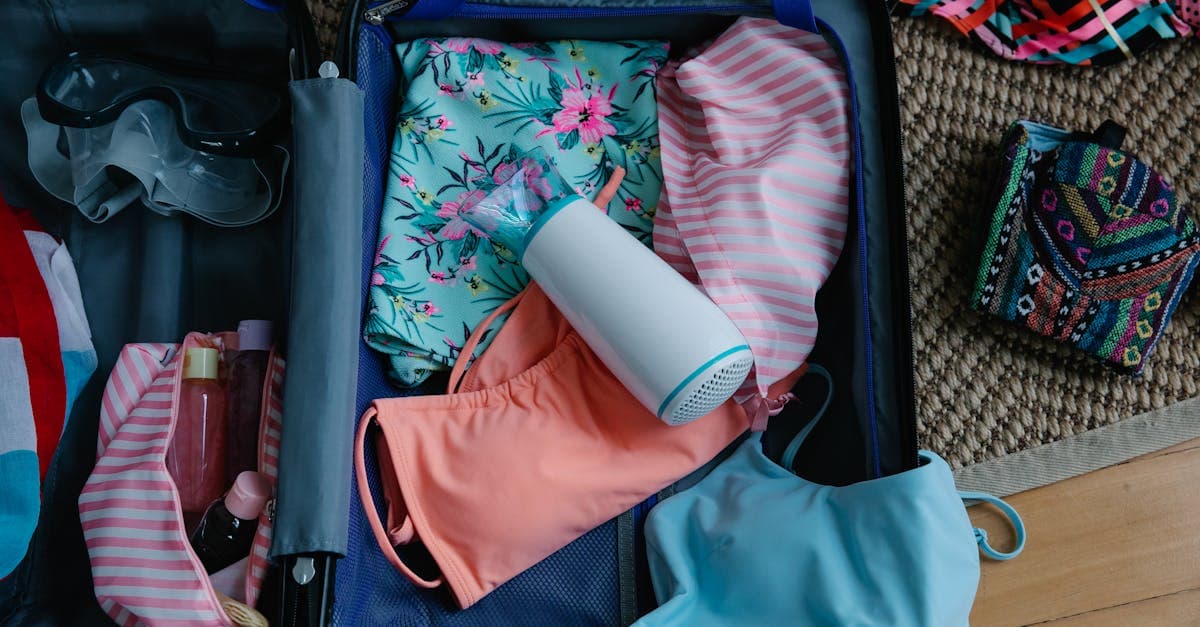
TSA's 3-1-1 rule governs every carry-on bag at US airports: all liquids, gels, and aerosols in containers of 3.4 oz (100 mL) or less, packed into one quart-sized clear bag, one bag per passenger for screening allianztravelinsurance.com. That's the hard constraint. Everything below is about working within it without sacrificing anything essential.
Shampoo, conditioner, body wash, toothpaste, and basic sunscreen are sold at pharmacies and supermarkets in virtually every country on a standard travel itinerary. Packing full supplies of any of these adds weight without necessity. A small travel-size bottle handles the first day or two; pick up a fresh one on arrival.
Prescription medications are the exception to every pack-light principle. Bring your full supply in original labeled containers, carry a doctor's letter for any controlled substance, and always keep medications in your carry-on bag. A delayed checked bag is manageable. Delayed insulin or a blood pressure medication is a different problem entirely.
A compact over-the-counter kit earns its place: antidiarrheal (Imodium), pain reliever (ibuprofen or acetaminophen), antihistamine, antacid, and any altitude or motion sickness medication your itinerary specifically calls for vacationexpress.com. You won't need all of it. You'll be grateful it's there when you do. For longer trips, add blister bandages, moleskin, rehydration sachets, and a digital thermometer.
Skip full-size hair tools (hotel amenities cover most needs; travel dual-voltage versions are widely available if you genuinely need one), bulk sunscreen, and more than one fragrance.
The most practical toiletry upgrade is going solid. Shampoo bars, conditioner bars, solid sunscreen sticks, and toothpaste tablets bypass the 3-1-1 bag entirely and can reduce your liquid load by roughly a pound (500 g to 1 kg). Airport security moves faster. Your bag survives a pressure-change leak without turning everything inside it into a chemistry experiment.

The 5-4-3-2-1 packing rule is a carry-on clothing framework with five numbered limits: five tops, four bottoms, three pairs of shoes, two jackets or outerwear pieces, and one formal outfit as the ceiling for any trip's clothing load. The structure traces back to Rick Steves' carry-on philosophy and the travel minimalism communities that built around it in the early 2010s.
As covered in the capsule wardrobe section, five tops and four bottoms produce 20 distinct outfit combinations from nine clothing items before any repeat. That's the numerical foundation of the rule's appeal. It gives travelers a specific ceiling rather than a vague directive to pack light.
Trip type shapes how you apply it. Beach trips swap one jacket slot for a swimsuit and cover-up. Business travel replaces casual tops with dress shirts and a blazer while keeping the same count. The structure holds; the contents shift.
One consistent mistake is treating these numbers as minimums. Experienced packers often run a 3-3-2-1-1 system for trips under five days and find it perfectly adequate. The rule was designed as a ceiling to prevent overpacking, and that's how it works best.
The rule also assumes a laundry strategy. Sink-washing items overnight or stopping at a local laundromat every four to five days extends the formula to any trip length. Without that planned stop, five tops covers roughly five days of unique outfits before combinations start repeating.
Trim any packing list to its irreducible core and you hit these ten items. Not nice-to-haves. These are the things whose absence sends you to a pharmacy, a carrier store, or an embassy office on arrival day instead of wherever you actually planned to be.
Most are intuitive for frequent travelers, but three get skipped consistently by first-timers: the travel adapter, a confirmed mobile data plan, and an over-the-counter medication kit. Those three items alone account for most last-minute airport purchases.
Keep those three commonly forgotten items together in a dedicated travel pouch. You'll pull the same kit from storage before every trip without scrambling.
The "3-3-3 rule" gets applied to two separate frameworks in travel circles, and the overlap is mostly coincidental. The more widely cited interpretation is a clothing baseline for short trips: three tops, three bottoms, and three pairs of shoes as the minimum viable wardrobe for a weekend or three-to-five-day itinerary.
A second interpretation bundles in TSA's 3-1-1 liquids rule, covered earlier in the toiletries section. The number 3 anchors both concepts, and some travel writers combine them under one label for easier memorization. Useful shorthand, though the two rules are operationally unrelated.
Within a larger packing system, the 3-3-3 is a starting point rather than a full strategy. It scales directly into the 5-4-3-2-1 framework for trips lasting one to two weeks. The clothing counts increase; the structural logic stays the same.
What the 3-3-3 rule leaves out is significant. Tech, toiletries, documents, and connectivity planning all require separate category checklists. A clothing count tells you nothing about whether your adapter is packed or your data plan is confirmed before departure.
Best pre-trip test: lay everything you plan to bring out on a flat surface and remove one item from each category. If the trip still works without it, that item stays home. Most travelers find they packed at least one extra pair of shoes they never touched.

The 5-4-3-2-1 rule means packing five tops, four bottoms, three pairs of shoes, two accessories, and one jacket. The guiding principle is that every item in the bag must pair with at least three others, so nothing rides along as a solo piece. This approach eliminates redundant items and keeps carry-on luggage manageable.
The article frames minimalist packing around capsule wardrobe math: combining five tops with four bottoms creates 20 distinct outfit combinations before repeating a single look. Building around three to four compatible neutral colors — navy, white, gray, olive — ensures every top pairs with every bottom. The goal is maximizing outfit variety while minimizing the total number of items packed.
The article references the TSA 3-1-1 rule, which governs carry-on liquids at US airports: all liquids, gels, and aerosols must be in containers of 3.4 oz (100 mL) or less, packed into one quart-sized clear bag, with one bag per passenger allowed through screening. Beyond liquids, the article emphasizes treating pre-departure tasks — bank notifications, eSIM activation, offline map downloads — as confirmed steps completed before departure day rather than last-minute decisions.
The article highlights essentials across categories: a valid passport with six months of validity beyond your return date, travel insurance, bank and credit card notifications completed in advance, an unlocked phone with eSIM or local SIM arranged, a 65W GaN charger, a 10,000 mAh power bank, a universal travel adapter, noise-canceling headphones, offline maps downloaded before departure, and prescription medications in original labeled containers. Packing cubes and a compact travel soap bar are also recommended for carry-on efficiency.
Carry-on-only travel eliminates checked bag fees, which average $70 to $90 for domestic round trips and can reach $150 or more per direction on international budget carriers. The strategy requires a mix-and-match clothing approach, compression packing cubes, and wearing bulky items like boots and heavy jackets on travel day. Carry-on-only travel has grown around 30 percent since 2019 as more travelers calculate the per-leg bag fee cost.
Yes, carry-on-only is achievable for trips up to two weeks, but it requires a deliberate clothing strategy rather than simply packing fewer items. Using compression cubes that reduce clothing bulk by up to 40 percent combined with sink-washing every three to four days means you are always packing for a laundry cycle rather than the full trip duration. Building outfits around neutral, mix-and-match pieces is the core enabling tactic.
Most countries require your passport to be valid for six months beyond your return date, not just your travel dates. A passport expiring in two months is effectively unusable for a six-week trip to Southeast Asia even if the departure date technically clears. Always verify the specific entry requirements for your destination through official government sources before booking.
Yes. Notify every bank and credit card issuer of your exact travel dates and destinations before departure to prevent automatic fraud freezes mid-trip. Also save your bank's freeze number, insurance claims hotline, and nearest embassy contact offline in your phone so you can access them without data connectivity.
The TSA 3-1-1 rule requires all liquids, gels, and aerosols in carry-on bags to be in containers of 3.4 oz (100 mL) or less, packed into one quart-sized clear bag, with one bag per passenger for screening. Common toiletries like shampoo, conditioner, and body wash are available at pharmacies and supermarkets in virtually every travel destination, so packing full supplies from home adds weight without necessity.
An eSIM is a digital SIM built into your phone that lets you activate a travel data plan remotely before you board, without swapping a physical SIM card. Your US number stays live on a secondary line while a regional data plan handles connectivity abroad. Around 75 percent of smartphones sold in the US in 2024 are eSIM-capable, including iPhone XS and later and most Android flagship devices from 2020 onward.
AT&T's International Day Pass and Verizon TravelPass both charge $10 to $15 per day, totaling $140 to $210 on a two-week trip. T-Mobile's included international data throttles speeds to 128 kbps, which cannot support Google Maps navigation, video calls, or streaming. Local SIM cards typically cost under $20 for 5 to 15 GB of data, and regional eSIM packages covering multiple countries generally run under $25.
eSIM lets you activate a travel plan before departure, keeps your US number live on a secondary line, and eliminates the need to locate a carrier store on arrival. Local SIM cards deliver full local speeds at low prices — often under $20 for 5 to 15 GB — but require an unlocked phone, an in-person purchase on arrival, and cause your US number to go inactive for the duration. eSIM is especially practical for multi-country itineraries where swapping physical SIMs at each border is genuinely impractical.
Merino wool is the consensus choice: a quality tee stays odor-free for three to five wears, dries in under two hours after a sink wash, and regulates temperature across airport terminals and warm city streets. Synthetic blends pack lighter and cost less but retain odor after two or three wears without washing. Merino's higher upfront cost drops quickly on trips longer than a long weekend when measured per wear.
Three pairs is the practical ceiling for most trips: one for walking, one dressier, and one casual or beach-specific. Your bulkiest pair should be worn on travel day rather than packed, which frees more bag space than any other single decision, including using compression bags. Shoes consume more carry-on space than any other clothing category.
Power banks must be under 100 Wh to meet TSA carry-on rules without requiring airline pre-approval. A 10,000 mAh power bank is the practical target — it delivers two to three full phone charges and safely falls within the threshold. Always check the Wh rating printed on the label before packing, as anything larger may be flagged at security.
Most modern devices — phones, laptops, and cameras — are dual-voltage, meaning they handle 100 to 240V automatically and require only a plug adapter, not a voltage converter. If your device label shows a voltage range like 100-240V, a converter is unnecessary. A travel adapter changes only the plug shape to fit a foreign outlet and is all that is needed for dual-voltage devices.
Make two physical copies and two digital copies of your passport, visa, and insurance policy before departure. Store the digital versions in separate cloud accounts and keep originals and one physical copy set in different bags. This ensures access even if one bag is lost, delayed, or stolen.
Compression-style packing cubes reduce clothing bulk by up to 40 percent, fitting roughly a week of clothes into the space that would otherwise hold four days of items. They also keep your bag organized when moving between cities every few nights, since you can locate specific items without unpacking everything. This makes them one of the highest-impact carry-on tools for multi-destination trips.
HelloRoam: your trusted travel eSIM that keeps you online across borders.
Explore Plans