Best Travel Insurance for South Africa in 2026: a Visitors Guide

Written by: David Chen


13 min read

HelloRoam is a global eSIM provider offering instant mobile data in 170+ countries. Buy prepaid travel eSIM plans with no extra fees, no contracts, and instant activation on any eSIM-compatible device.
13 min read
The quick answer: World Nomads Explorer for adventure and safari travelers, SafetyWing Nomad for budget backpackers, Allianz OneTrip Prime if you're protecting an expensive transatlantic flight, and IMG iTravelInsured for over-60s or anyone with a pre-existing condition to declare.
No single insurer wins every category. A 25-year-old doing a two-week Cape Town circuit has completely different risk exposure to a 58-year-old booking a private lodge in the Limpopo lowveld. The right policy matches the trip.
Connectivity goes on the same pre-trip checklist. Hello Roam offers South Africa eSIM plans from $3.04 for 1GB on Vodacom's network, with instant activation and no SIM card queue at OR Tambo Airport. If you haven't used one before, What Is An Esim explains the setup in plain terms.
South Africa has no reciprocal healthcare agreement with the US, UK, Canada, Australia, or the EU. Foreign visitors are entirely self-funded for any medical care they need.
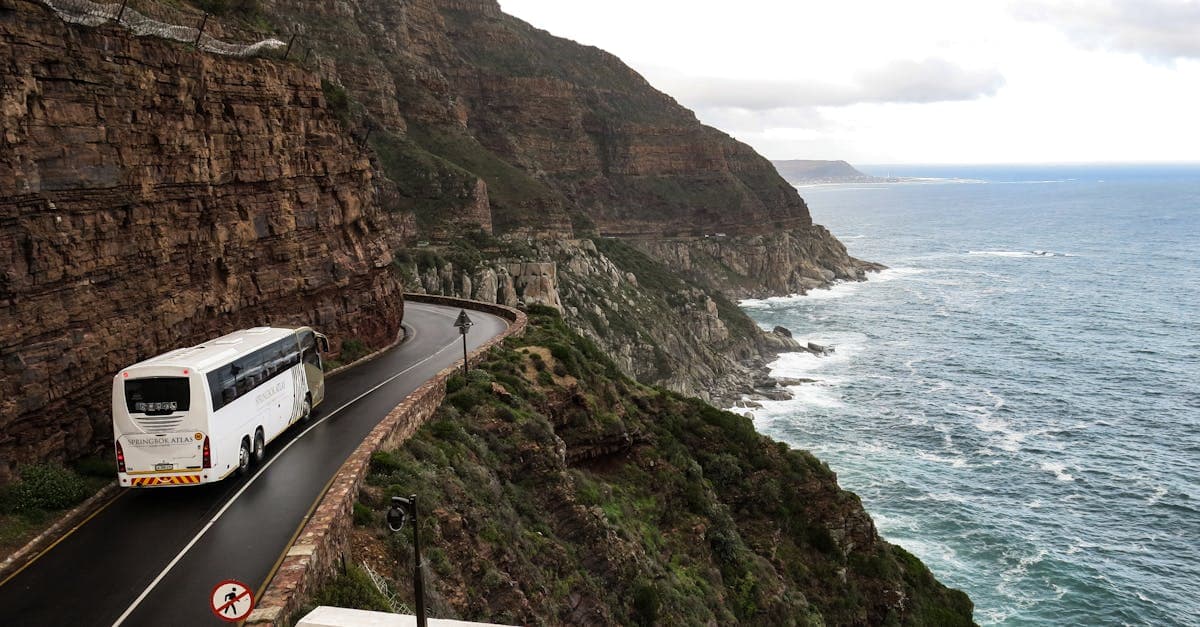
Private hospital emergency care in South Africa costs between USD 3,000 and USD 50,000. That's the range at Netcare, Mediclinic, and Life Healthcare, the three private networks that treat the majority of foreign visitors when something goes seriously wrong. Complex trauma or prolonged intensive care pushes the ceiling well past that figure.
One clarification on who this guide is for: international visitors flying into South Africa. If you're a South African resident looking for outbound travel cover, Santam santam.co.za, Old Mutual oldmutual.co.za, and Hollard hollard.co.za serve that market well. Nearly every top Google result for "travel insurance South Africa" targets those domestic travelers. This guide doesn't.
Medical evacuation rewrites the risk calculation entirely. A helicopter transfer from a remote safari camp in the Kruger lowveld or Greater Limpopo to a Johannesburg trauma unit costs between USD 15,000 and USD 80,000. That single line item can exceed the entire cost of the holiday. It's the exposure most first-time South Africa visitors don't factor in until they're reading the fine print.
The public sector offers no fallback. South Africa operates no healthcare reciprocity arrangements with Western nations, and public hospitals are severely under-resourced even for residents. Without private insurance, you're paying market rates from the first minute of any emergency.
Crime adds meaningful exposure. South Africa ranks in the top 10 globally for violent crime. Theft, armed robbery, and carjacking are documented tourist risks in Johannesburg, Cape Town, and Durban. How different policies handle crime-related hospitalisation, stolen electronics, and local police report requirements varies considerably between providers.
Malaria requires its own read. Kruger National Park, Greater Limpopo, and the KwaZulu-Natal coast are endemic zones, with peak transmission from April through October. Standard travel insurance policies generally cover in-hospital malaria treatment contracted during the trip. Preventative medication taken before departure is not a covered expense.
Entry to South Africa doesn't require proof of insurance. Given those costs, traveling without it is a financially indefensible choice.

Travel insurance for South Africa typically covers emergency medical treatment and hospitalisation, medical evacuation and repatriation, trip cancellation and curtailment, baggage and personal effects, and personal liability. Adventure activities, undisclosed pre-existing conditions, and unattended items are standard exclusions unless appropriate riders are added at the point of purchase.
What's usually included: - Emergency medical treatment and hospitalisation at private hospitals, including Netcare, Mediclinic, and Life Healthcare - Medical evacuation and repatriation, including helicopter transfer from remote safari locations - Trip cancellation and curtailment for covered events such as serious illness, bereavement, or natural disaster (exact triggers vary by policy) - Baggage, personal effects, and travel documents - Personal liability for accidental third-party damage or injury - In-hospital treatment for malaria contracted during travel
What standard policies typically exclude: - Bungee jumping, shark cage diving, and open-vehicle safari game drives: these require an adventure sports upgrade to be covered - Pre-existing medical conditions not declared at the point of purchase: failing to disclose voids the claim entirely, regardless of how comprehensive the policy is - Malaria prophylaxis (preventative medication prescribed before departure is not classed as emergency medical treatment) - Unattended items: the definition varies by policy, so check the exact wording before assuming your phone or camera is covered if stolen - Acts of war or civil unrest, and incidents involving reckless behaviour under the influence of alcohol
The open-vehicle game drive exclusion catches most visitors off guard. That format is standard across Kruger National Park and nearly every private safari reserve in South Africa. Before your first morning drive, confirm your policy explicitly covers it, or add the adventure sports rider. Discovering the gap after an incident is considerably more expensive.

The best travel insurance for South Africa in 2026 is World Nomads Explorer for adventure and safari trips, SafetyWing Nomad Insurance for budget travelers, Allianz OneTrip Prime for trip cancellation protection on expensive long-haul flights, and IMG iTravelInsured for travelers over 60 or with pre-existing conditions to declare.
A helicopter medevac from a remote safari camp to a Johannesburg trauma unit can cost between USD $15,000 and $80,000+. South Africa has no reciprocal healthcare agreements with the US, UK, Canada, or Australia. Without a policy, you're paying every cent yourself.
Private hospitals (Netcare, Mediclinic, Life Healthcare) handle serious emergencies well but aren't cheap. Emergency treatment runs from USD $3,000 to $50,000+. Getting the right policy sorted before you book is genuinely non-negotiable.
World Nomads Explorer is built for South Africa's adventure density. Bloukrans Bridge bungee (216 metres, the world's highest commercial bungee) and shark cage diving both sit within its covered activities. If your trip mixes big-five safari with serious adventure, it's the strongest fit.
Budget backpackers working through Cape Town and the Garden Route will find SafetyWing Nomad Insurance hard to beat on price. That lower medical ceiling deserves honest scrutiny, though, before you head deep into remote safari territory.
Long-haul flight costs are where Allianz OneTrip Prime earns its place. Transatlantic routes to Johannesburg run USD $800 to $1,800 per person. That's a real sum to lose if a cancellation forces the issue.
IMG iTravelInsured is worth close examination for travelers over 60 or anyone declaring pre-existing conditions. Higher medical ceilings and flexible declaration options make it the most practical choice for this group, where budget alternatives often fall short.
Heymondo's direct claims app is a genuine differentiator for digital nomads and remote workers. Filing a claim without hunting for a hotline number matters when you're managing work alongside travel.
Check your policy wording on open safari vehicles. Standard policies often exclude them by default. Don't rely on the marketing summary to confirm adventure cover.
Disclaimer: Hello Roam is a travel eSIM provider, not an insurance broker. Verify all policy terms, coverage limits, and pricing directly with each insurer before purchase. Policy terms change regularly.
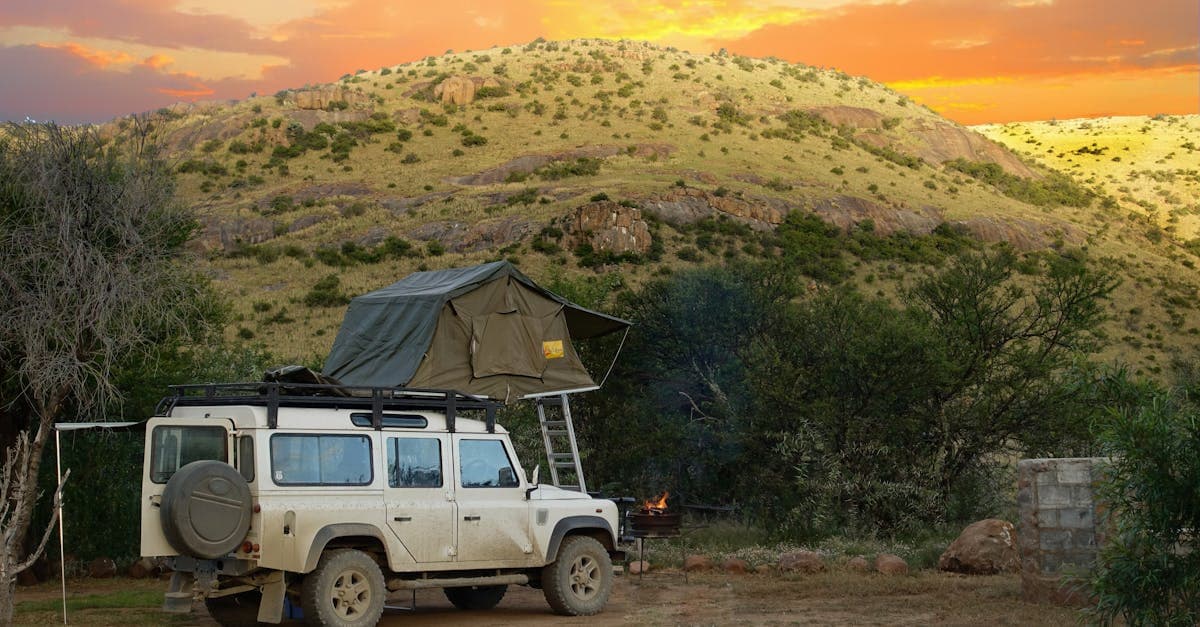
Policies that cover remote safari areas in South Africa must include helicopter medevac with high medical limits and explicitly cover open-vehicle game drives. World Nomads Explorer and IMG iTravelInsured are the strongest fits for Kruger National Park and private concession travel. Standard policies frequently fall short on both counts.
Kruger National Park sits roughly 330 kilometres from the nearest Johannesburg trauma units. In a serious emergency inside the park, a road ambulance isn't a realistic option. Helicopter medevac is often the only viable route.
The evacuation costs referenced earlier in this guide reflect figures published by operators including AMREF Flying Doctors and AirLink Medical Rescue. Long-range transfers push toward the higher end of that range.
Before buying any policy, check whether it covers "open vehicle safari" as an activity. Some insurers classify game drive vehicles as a hazardous pursuit requiring a specific declaration before departure. If you don't declare it upfront, a claim arising from a vehicle incident may be rejected outright.
Malaria adds another variable. Kruger and the Greater Limpopo Transfrontier Park are active malaria zones. For remote travel in these areas, in-hospital medical limits of at least USD 1,000,000 are recommended. Most standard policies don't come close to that ceiling.
There's one more wrinkle. Private lodge concessions in the Greater Limpopo Transfrontier Park straddle an international border. Your evacuation coverage zone under a standard policy may differ depending on whether you're technically in South Africa, Mozambique, or Zimbabwe when an incident occurs. Read the policy wording carefully before you travel, not after.
Most international visitors spend several weeks in South Africa. Don't buy a short-break product designed for a European city long weekend. Make sure your single-trip policy covers every day of your actual itinerary.
Most theft claims get rejected for the same reason: the unattended items exclusion. Items left on a restaurant table, a beach, or in a hostel common room are typically outside the scope of cover. This isn't buried small print. It's a standard clause in the majority of policies, and South Africa generates a disproportionate number of baggage claims that run straight into it.
The numbers to check before you buy:
Carjacking deserves a specific check. It's a documented risk on certain suburban Johannesburg routes, and policy language here varies considerably. Confirm whether personal injury during a carjacking is covered under the medical section, and whether theft of items from a hired vehicle triggers the personal effects benefit or falls under a separate vehicle-related exclusion.
One practical step before you leave home: save a digital copy of your policy schedule, emergency helpline number, and claims process in your email or cloud storage. If your phone is stolen, you'll have everything you need accessible from any replacement device.
Two networks are worth prioritising for South Africa: Vodacom and MTN. Vodacom has the strongest national 4G coverage, dominant in cities, suburbs, and along tourist routes including the Garden Route and Cape Winelands. MTN is solid in urban centres and steadily expanding rural reach. The other operators cover less ground and aren't worth prioritising for a typical international trip.
Coverage at Kruger is a different matter entirely. Signal exists at rest camps and gate areas on both Vodacom and MTN. Between camps, inside private concessions, expect nothing. Drakensberg above roughly 1,500 metres is similarly patchy. Download offline maps before leaving camp.
Physical SIM cards are available at OR Tambo Airport. A Vodacom tourist SIM costs around USD 7.50; MTN's starter pack runs about USD 5.50. Both require RICA registration using a passport, which takes between 15 and 40 minutes at airport counters depending on the queue. Not ideal after a long-haul flight.
eSIM is the better choice for most international visitors: instant activation before you board, no registration queue on arrival, no physical card to lose or have stolen.
Here's the connectivity-insurance link most travellers miss. If your phone is stolen in Johannesburg, a physical SIM is gone permanently. An eSIM QR code stored in your email can be reactivated on any replacement device the same day, restoring maps, banking access, and your insurance app at the exact moment you need them.
UK network standard roaming typically runs around ZAR 2 per megabyte. US carrier international day passes cost approximately USD 10 per day. For a multi-week trip, neither option makes financial sense. Cape Town, Johannesburg, and Durban have excellent 4G coverage with 5G emerging across major urban areas, broadly comparable to Western Europe.
No single policy is right for every visitor. The best travel insurance for South Africa depends on your trip type, your age, and how much you've committed to non-refundable flights and accommodation.
For adventure and safari travel, World Nomads Explorer is the benchmark. It covers open vehicle game drives and the kinds of activities that standard policies exclude by default, with emergency evacuation from remote park areas included. If Kruger or a private concession is on your itinerary, this is the policy category to start from.
For budget and backpacker travel, SafetyWing Nomad Insurance is the most cost-effective option for Cape Town and Garden Route circuits. The pricing detailed earlier in this guide makes it accessible for longer stays, though the medical limits are lower than specialist products.
For trip cancellation and flight protection, Allianz OneTrip Prime is the strongest choice for travellers booking expensive transatlantic or long-haul routes. The cancellation and curtailment benefits outperform most budget-tier competitors.
For high medical limits and pre-existing conditions, IMG iTravelInsured is the recommended starting point for over-60s and travellers with declared health conditions who need coverage ceilings above the standard tier.
One clarification that cuts through a recurring search result confusion: Santam santam.co.za, Hollard hollard.co.za, and Old Mutual oldmutual.co.za are South African insurers selling travel cover for South African residents travelling abroad. They're not relevant products for international visitors coming to South Africa. If these names appear in your search results, they're designed for the opposite journey.
The FAQ section below addresses credit card cover limitations, pre-existing condition handling, and whether Schengen insurance extends to South Africa.
Providers consistently rated for African travel include World Nomads, Allianz Travel, IMG Global, and SafetyWing for budget-conscious travelers. The right fit depends on medical limits, adventure cover, trip cancellation terms, and pre-existing condition handling. Always verify South Africa is listed by name in the policy scope, not just "sub-Saharan Africa" or "Africa."
Generic Africa-wide policies often disappoint South Africa visitors. A policy designed for extended Kenyan safari travel or East African overland routes may not explicitly cover the urban crime risk, private hospital networks, or adventure density that South Africa presents.
Multi-destination travelers combining South Africa with Botswana and Zimbabwe for a Victoria Falls extension need to confirm every country in the itinerary appears explicitly within the policy scope. World Nomads covers most African countries under a single Explorer or Standard plan. SafetyWing Nomad Insurance covers Africa-wide for long-stay and nomadic travelers at the budget figure noted earlier.
One trap EU travelers routinely fall into: Schengen-compliant insurance issued to satisfy visa requirements for EU travel does not extend to South Africa or anywhere in sub-Saharan Africa. A separate international policy is required.
What is the best travel insurance for Africa?
Providers consistently rated for African travel include World Nomads, Allianz Travel, IMG Global, and SafetyWing for budget-conscious travelers. The right fit depends on medical limits, adventure cover, trip cancellation terms, and pre-existing condition handling.
Who is the best travel insurance company to use?
There isn't a universal answer. Adventure-heavy trips need strong activity cover. Long-stay travelers should prioritise medical limits and evacuation terms over trip cancellation benefits. Match the policy to the trip, not the other way around.

World Nomads Explorer is best for adventure and safari travelers, SafetyWing Nomad Insurance suits budget backpackers, Allianz OneTrip Prime is strongest for trip cancellation on expensive long-haul flights, and IMG iTravelInsured is the top pick for travelers over 60 or those with pre-existing conditions. No single insurer wins every category — the right policy depends on your age, trip cost, and activities planned.
For South Africa specifically, World Nomads Explorer leads for adventure and safari trips due to its coverage of over 150 activities including bungee jumping and shark cage diving. SafetyWing Nomad Insurance is the strongest option for budget travelers, while IMG iTravelInsured offers the most flexibility for older travelers and those with pre-existing medical conditions.
The best company depends on your travel profile. World Nomads Explorer suits adventure and safari visitors, SafetyWing fits backpackers on a budget, IMG iTravelInsured is best for over-60s or anyone with conditions to declare, and Heymondo stands out for digital nomads thanks to its direct claims app. Always compare based on your specific trip length, activities, and medical history.
For South Africa, World Nomads Explorer and IMG iTravelInsured are the strongest options for safari and remote-area travel because both include high medical limits and helicopter medevac coverage. Safari-specific risks — including open-vehicle game drives, malaria zones, and remote evacuations costing up to USD 80,000 — make high medical ceilings and explicit adventure sport cover essential when choosing a policy for Africa.
Emergency treatment at South Africa's private hospital networks — Netcare, Mediclinic, and Life Healthcare — typically costs between USD 3,000 and USD 50,000. Complex trauma or prolonged intensive care can push costs well above that range. A helicopter medevac from a remote safari location to a Johannesburg trauma unit alone can cost between USD 15,000 and USD 80,000.
No. South Africa has no reciprocal healthcare agreements with the United States, United Kingdom, Canada, Australia, or any EU member state. Foreign visitors are entirely self-funded for any medical care they require, and public hospitals are severely under-resourced even for residents. Without travel insurance, you pay market rates from the first minute of any emergency.
Not automatically. Many standard policies exclude open-vehicle game drives — the format used across Kruger National Park and virtually every private safari reserve in South Africa. You must either confirm your policy explicitly covers this activity or add an adventure sports rider before departure. Discovering this gap after an incident is far more costly than verifying it in advance.
Standard travel insurance policies generally cover in-hospital malaria treatment contracted during the trip. Preventative medication taken before departure is not covered as it is not classed as emergency medical treatment. Kruger National Park, Greater Limpopo, and parts of the KwaZulu-Natal coast are active malaria zones, so travelers to these areas should confirm their policy's medical limits are sufficient.
Standard policies typically cover emergency medical treatment and hospitalisation at private hospitals, medical evacuation and repatriation including helicopter transfer from remote safari locations, trip cancellation and curtailment for covered events, baggage and personal effects, personal liability, and in-hospital treatment for malaria contracted during travel. Exact inclusions vary by policy and provider.
Common exclusions include bungee jumping, shark cage diving, and open-vehicle safari game drives unless an adventure sports upgrade is added, pre-existing medical conditions not declared at purchase, malaria prophylaxis, unattended items, and incidents involving reckless behaviour under the influence of alcohol. Failing to disclose a pre-existing condition voids the entire claim, regardless of policy tier.
IMG iTravelInsured is the strongest option for travelers over 60 or anyone with pre-existing conditions to declare, due to its higher medical ceilings and flexible declaration options. Budget alternatives often fall short for this demographic, where higher medical risk makes comprehensive cover more critical. Always declare all pre-existing conditions at the point of purchase to avoid claim rejection.
A helicopter transfer from a remote safari camp in Kruger or Greater Limpopo to a Johannesburg trauma unit costs between USD 15,000 and USD 80,000, based on figures from operators including AMREF Flying Doctors and AirLink Medical Rescue. Long-range transfers push toward the higher end of that range. This single cost item can exceed the total cost of the holiday.
Go to the nearest South African Police Service station immediately and obtain a case number. Most insurers will reject a theft or robbery claim without an official police report reference, regardless of how credible the circumstances are. Before you leave home, also save a digital copy of your policy schedule and emergency helpline number to a cloud account in case your phone is stolen.
Cash sublimits in most travel insurance policies fall between USD 200 and USD 500 per claim, so carrying larger undeclared sums and expecting full reimbursement after a street robbery is unlikely to succeed. Electronics sublimits range from roughly USD 300 to USD 1,500, with per-item caps that can be exceeded when a camera, laptop, and smartphone are stolen together. Check these sublimits before buying any policy.
South Africa does not require proof of travel insurance as a condition of entry. However, given that private hospital emergency care runs from USD 3,000 to USD 50,000 and medical evacuation from remote areas can reach USD 80,000, traveling without insurance represents a serious financial risk. There is no public healthcare fallback for foreign visitors.
HelloRoam: your trusted travel eSIM that keeps you online across borders.
Explore Plans