Street Food in Hanoi: the Complete Guide for UK Travellers (2026)

Written by: Sarah Mitchell


17 min read
HelloRoam is a global eSIM provider offering instant mobile data in 170+ countries. Buy prepaid travel eSIM plans with no roaming fees, no contracts, and instant activation on any eSIM-compatible device.
17 min read
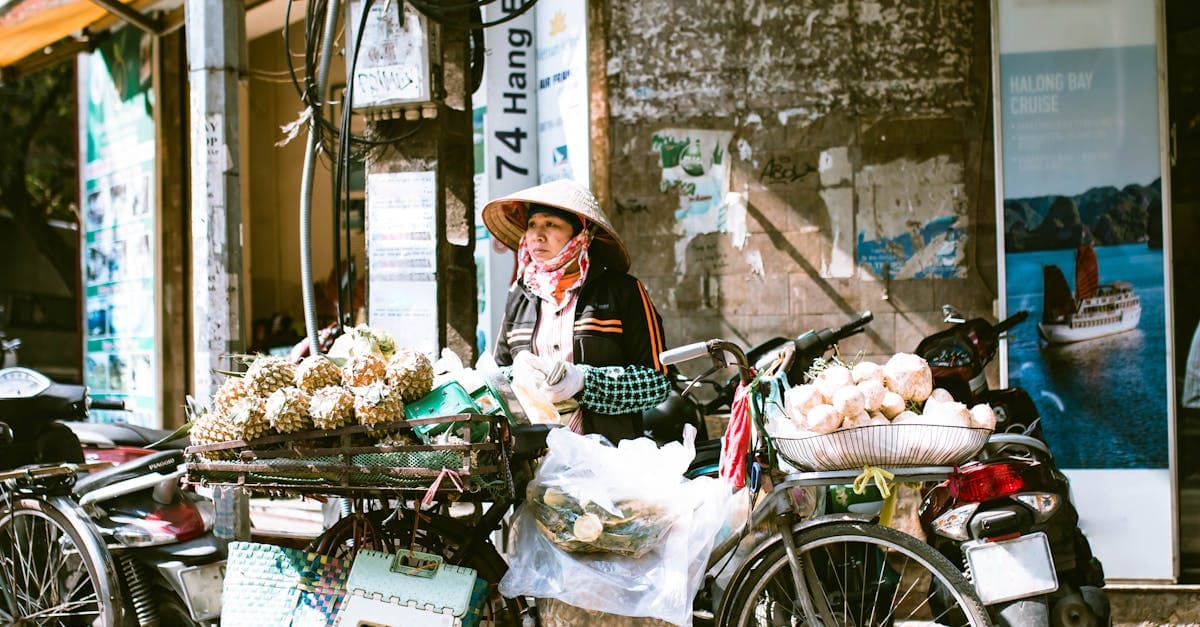
According to thesensiblefay.com, Hanoi has Vietnam's best street food because of its culinary restraint, historically specialised trade streets, and a morning stall culture centred on pho as a daily ritual rather than a tourist attraction. CNN Travel has ranked Hanoi among the world's top 10 street food cities, and the reasoning becomes clear once you're standing in a lane before dawn watching someone ladle broth.
The city's culinary identity runs deeper than mere ingredients. The Old Quarter's 36 ancient trade streets each historically specialised in a specific craft or food, producing a micro-specialised eating culture unlike anywhere else in Vietnam.
Breakfast here is soup. Not a novelty for tourists to photograph: a cultural institution, practised daily, with its own etiquette and timing. Many of the best stalls close before noon, their pots empty, their work done for the day.
As thesensiblefay.com reports, pho is the centre of everything. The dish originated in northern Vietnam, and the Hanoi version, clear broth with flat rice noodles and minimal garnish, is the original recipe before it migrated south and was adapted into something sweeter and busier. If you ask most Vietnamese which dish defines the country's street food culture, they'll say pho. Its spiritual home is here.
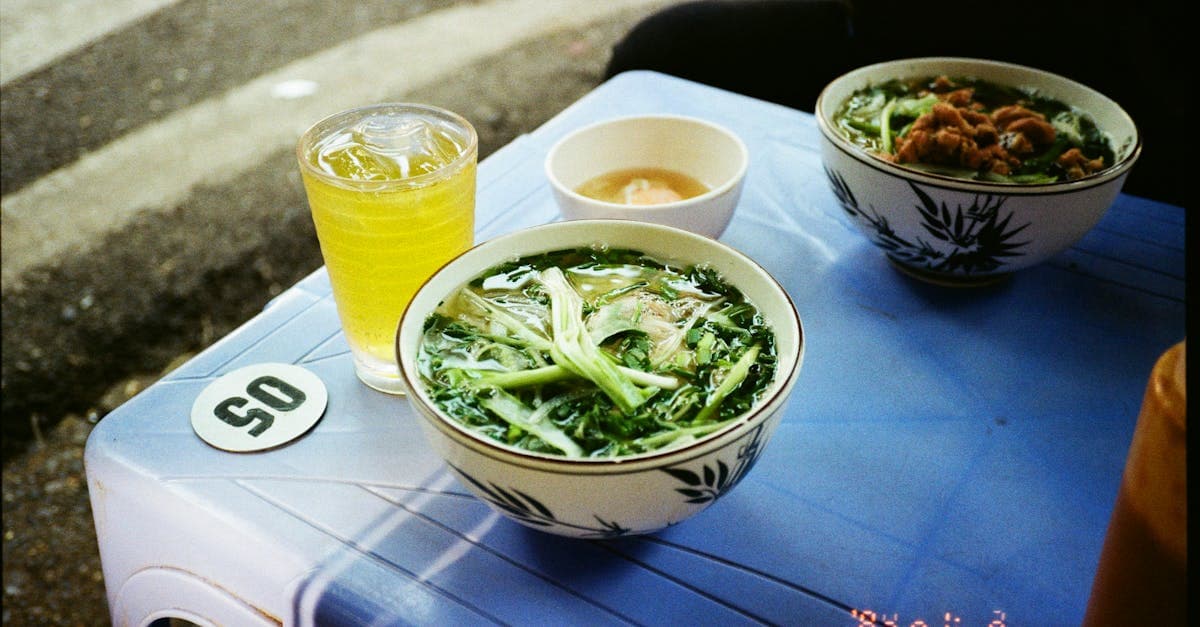
According to thediscoveriesof.com, the essential street foods to eat in Hanoi are pho bo, bun cha, banh mi, and egg coffee, each tied to a specific time window. Pho, xoi (sticky rice), and banh cuon (steamed rice rolls) are morning foods that sell out well before 10am. Bun cha belongs to midday. After dark, the grills around Ta Hien Street take over.
Two categories of dish are worth understanding. The first is iconic: pho bo, bun cha, banh mi. Every visitor will encounter these without looking. The second requires more effort, more walking, and a higher tolerance for alleys with no English signage: bun rieu, banh cuon from a morning market, bun bo nam bo down a side street in Hang Dieu. These dishes don't find you.
Thousands of vendors operate across the city, from noodle stalls open before dawn to midnight grills near Ta Hien. Finding the better ones means using Google Translate's camera mode on menus, Foody.vn for local hygiene reviews, and Grab to move between districts. All three require a live data connection. Hello Roam's eSIM for United Kingdom activates before you leave home and keeps your UK number live for bank notifications whilst you navigate the Old Quarter's lanes.
As madisonsfootsteps.com emphasises, the morning is where street food in Hanoi earns its reputation. Turn up after 10am and half the best stalls have already closed.

As thediscoveriesof.com notes, Pho Gia Truyen at 49 Bat Dan Street opens at 6am, queues form within the hour, and by 10am the pot is finished and the shutters come down.
Clear beef broth, flat noodles, a few slices of beef, and nothing the dish doesn't need. That is Hanoi pho. Chicken pho (pho ga) is lighter and marginally cheaper, worth ordering on a hot morning when beef broth feels too heavy for the climate.
Bun cha requires no marketing. In 2016, Anthony Bourdain and Barack Obama ate it together at Bun Cha Huong Lien on 24 Le Van Huu. Their table is still preserved and labelled. The dish itself, grilled pork patties and vermicelli noodles served alongside a sweet-savoury dipping broth, predates that particular lunch by centuries.
Bun rieu gets far less attention than it deserves. A crab and tomato broth noodle soup with an acidic, pink-hued taste, it sits at the opposite end of pho's restraint. Deeply embedded in Hanoi's eating habits, it is rarely covered in travel writing, which is travel writing's loss.
The broth distinction matters if you've had pho outside Hanoi. The northern version is cleaner and saltier; the Ho Chi Minh City style trends sweeter, with beansprouts, hoisin sauce, and fresh basil piled alongside. If the southern version is your only reference point, the Hanoi original will taste like a different dish.
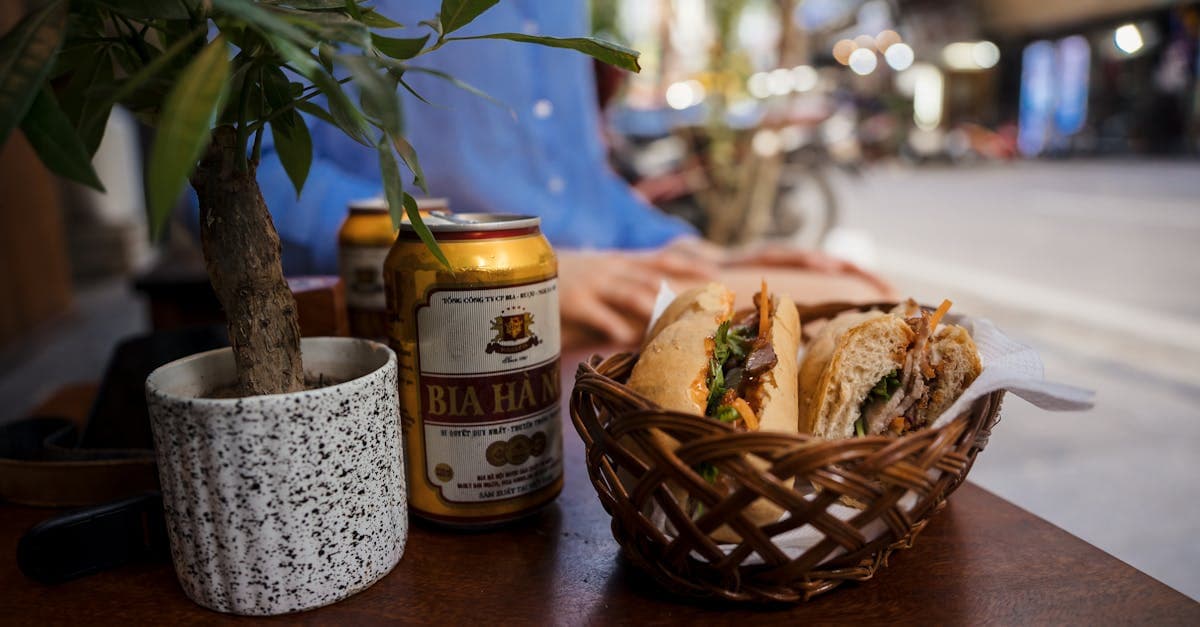
Three dishes were created in Hanoi and remain most authentically eaten here: cha ca lang (turmeric-marinated fish with dill), banh mi sot vang (baguette with red wine-braised beef), and ca phe trung (egg coffee made with whipped egg yolk and condensed milk). All three carry colonial and wartime history in their recipes.
As thediscoveriesof.com reports, one street in Hanoi is named after a dish. Cha Ca Street takes its name from cha ca lang, the turmeric-marinated fish served at Cha Ca La Vong (number 14), a restaurant operating at the same address since 1871. A portion costs 150,000 to 200,000 VND (roughly £5 to £6.30), making it the priciest item on this list and still cheaper than most London lunches.
Banh mi sot vang is not the sandwich sold on every tourist corner. A baguette filled with beef braised in red wine sauce, it is a direct product of French colonial rule, and its flavour sits closer to a Vietnamese boeuf bourguignon than anything cold-cut.
According to thesensiblefay.com, ca phe trung (egg coffee) has a precise origin. Wartime rationing in the 1940s made fresh milk scarce across Hanoi. A bartender at the Sofitel Metropole began whipping egg yolk with condensed milk over strong robusta coffee as a substitute. The recipe survived, and Cafe Giang at 39 Nguyen Huu Huan, the cafe he eventually opened, still serves the original. Cash only. Usually full.
These are not adaptations for foreign palates. The French colonial period embedded baguettes and cafe culture into northern Vietnamese daily life, and dishes like banh mi sot vang and egg coffee carry that history in every bite.
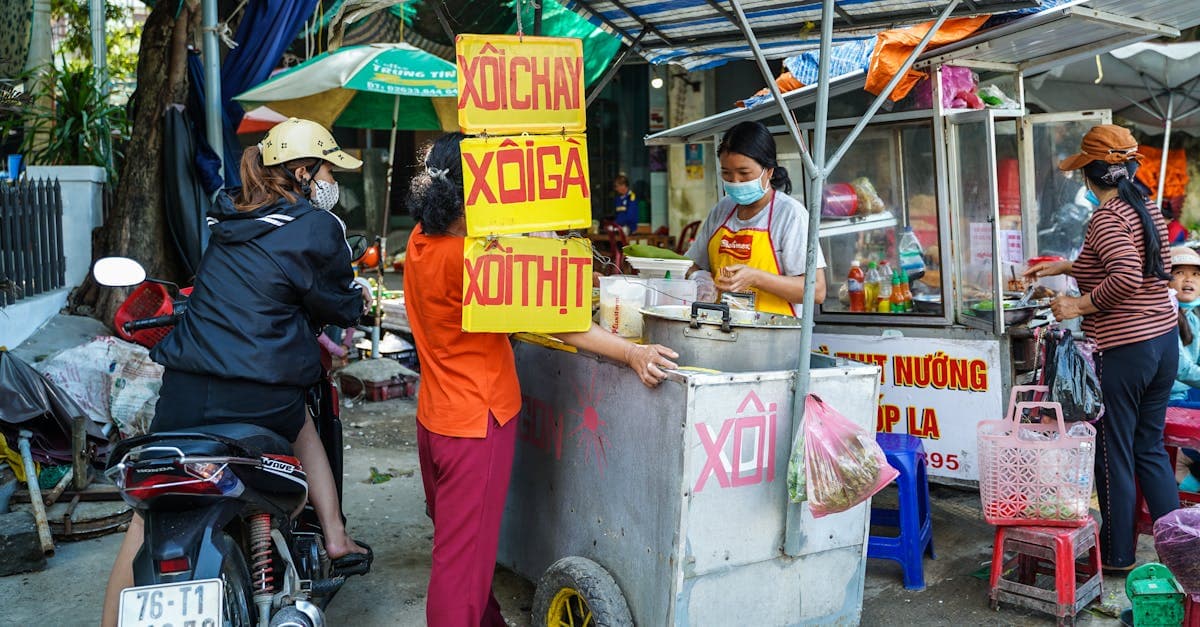
The four most overlooked street foods in Hanoi are chao suon (pork rib congee), xoi (sticky rice), nem nuong (grilled pork skewers), and banh tom (shrimp and sweet potato fritters). Each sells out early or requires knowing the right address, which is why most visitors miss them entirely.
Most visitors see chao suon and keep walking. Pork rib congee, thick and deeply savoury, it's sold only at morning stalls that sell out before noon, with nothing to distinguish the best from the rest except a longer queue.
Xoi is better known, though barely. Sticky rice topped with shredded pork, a fried egg, dried shallots, or sweet mung beans, it costs between 20,000 and 40,000 VND, under £1.30 at current exchange rates. Xoi Yen on Nguyen Huu Huan is the address locals point to; the bean and sesame version without pork is one of the most adaptable dishes in a cooking tradition that defaults heavily to meat.
Nem nuong, grilled pork sausages on bamboo skewers, appears around Dong Xuan Market and at stall clusters across the Old Quarter. Served wrapped in rice paper with herbs and a dipping sauce, smoke and char are the selling point.
Banh tom is a West Lake dish. Shrimp and sweet potato fritters in a light batter, served with a vinegar dipping sauce on the side. The stalls along Thanh Nien Road are best at sunset, when the queue feels like less of an obstacle.
Banh cuon disappears with the morning. Steamed rice rolls filled with minced pork and wood ear mushroom, translucent and barely substantial in texture, with no evening equivalent anywhere in the city.
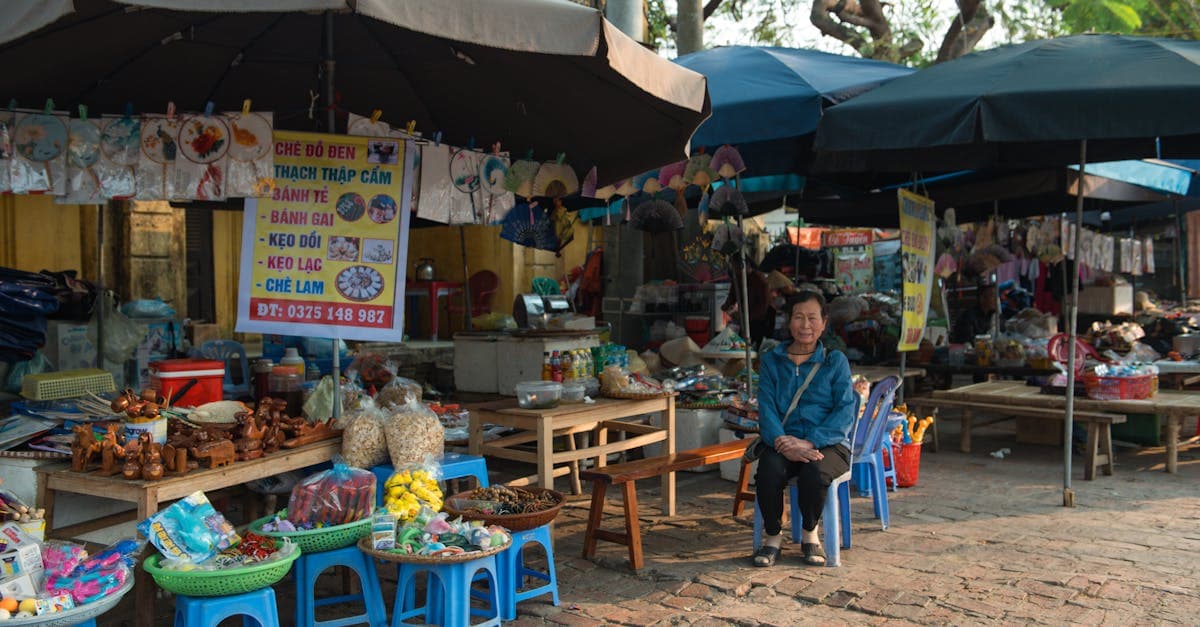
The best street food areas in Hanoi are the Old Quarter (the highest concentration of stalls in northern Vietnam, all within a 2-kilometre circle), Hang Be Market (the most efficient morning stop), Ta Hien Street (evening bia hoi and grills), and Dong Xuan Market (the largest covered food court). All are reachable on foot or by a short Grab ride.
As madisonsfootsteps.com highlights, Hang Be Market is the most efficient single stop for a morning run. A wet market with a cooked food section open from 6am, it places banh cuon, pho, and xoi within metres of each other on one site. No backtracking required.
As adventuresofjellie.com describes, Ta Hien Street, known informally as Beer Street, shifts the character in the evening. Bia hoi, fresh draught beer brewed daily, sells for around 10p to 15p a glass alongside nem ran and grilled skewers at stalls setting up from 6pm onward.
Dong Xuan is Hanoi's largest covered market. The ground floor food court carries nem cuon, banh bao, and xoi. Less atmospheric than a pavement stall, but consistently stocked.
Four addresses worth saving before you board: Pho Gia Truyen at 49 Bat Dan, Bun Cha Huong Lien at 24 Le Van Huu, Cafe Giang at 39 Nguyen Huu Huan, and Cha Ca La Vong at 14 Cha Ca Street. Google Maps offline handles walking navigation through the Old Quarter competently, but won't show whether a specific stall has sold out for the day.
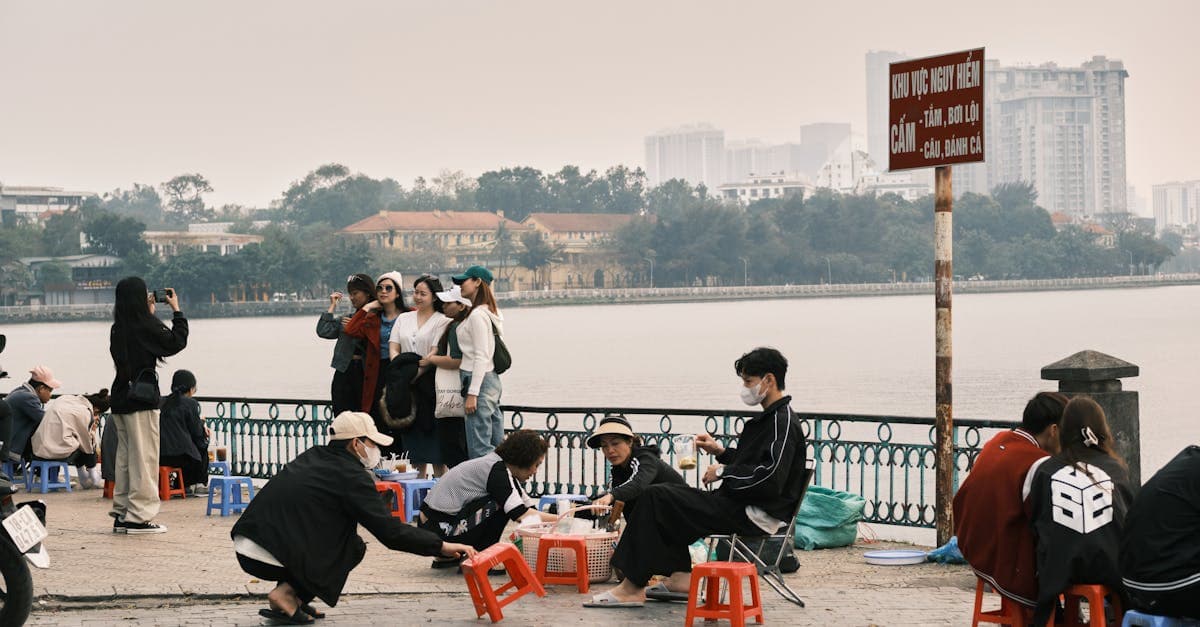
Banh tom only works at West Lake. The shrimp and sweet potato fritters described above aren't found reliably in the Old Quarter; the stalls run along Thanh Nien Road at the lakeside and are best visited as the sun drops. Getting there on foot from the Old Quarter takes around 30 minutes. A Grab ride costs 30,000 to 50,000 VND and takes roughly 10 to 15 minutes.
The Grab app needs a live data connection to function. No offline mode, no pre-booking without signal. Hello Roam's Vietnam eSIM keeps your UK number active for bank notifications while delivering 4G coverage from the moment you clear immigration at Noi Bai.
Kim Ma and Ba Dinh, the residential districts west of the Old Quarter, offer pho and banh mi at prices typically 10 to 20 per cent below equivalent stalls in Hoan Kiem. Less English spoken. The food is more local for it.
The area around Hoan Kiem Lake is the logical stop for egg coffee after a pho breakfast, with cafes clustering along Dinh Tien Hoang and adjacent lanes. Google Maps offline covers the walking detail adequately, but for Grab, an active data connection is non-negotiable.
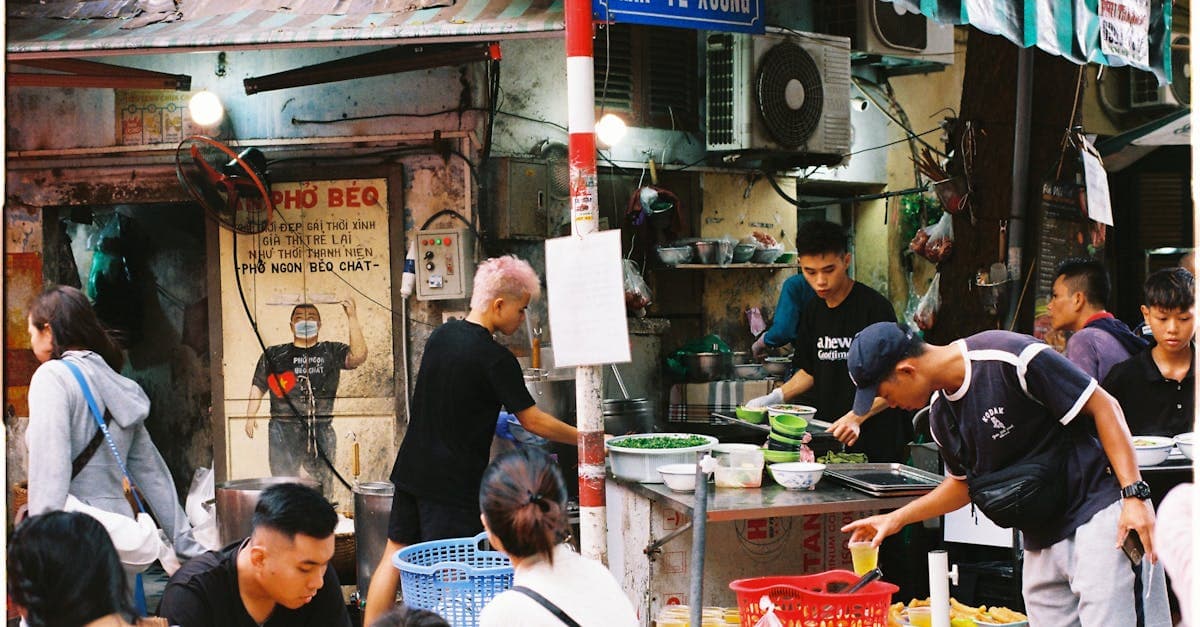
According to thesensiblefay.com, Hanoi is famous for pho bo (the original northern-style beef noodle soup), bun cha (grilled pork with vermicelli), cha ca lang (turmeric fish with dill), and ca phe trung (egg coffee). These are origin dishes that either developed in Hanoi before spreading elsewhere or remain unique to the city and most authentic here.
Pho developed here before the recipe migrated south and acquired the sweeter broth and heavier garnish of the Saigon version. Egg coffee was created at Cafe Giang during wartime rationing, as described earlier, and Cha Ca La Vong has operated from the same address without interruption, making it among the oldest continuously operating restaurants in Vietnam.
These are origin dishes, not borrowed recipes. Cha ca in particular doesn't translate well beyond the city: versions eaten elsewhere frequently lose the dill, omit the table-side cooking ritual, or adapt the spice balance for a broader audience. The original restaurant exists for a reason.
Geography explains the broth character. Hanoi winters drop to single-digit Celsius, and the cuisine reflects it: slow-cooked proteins, deep stocks, and warming dishes that Ho Chi Minh City's climate has never required.
Visitors who've spent time only in Ho Chi Minh City will find Hanoi's food notably quieter and more restrained. Pho remains Vietnam's most recognised dish internationally, but within Hanoi, bun cha runs it close in cultural weight, a gap that narrowed significantly after the Le Van Huu moment described earlier in this piece.
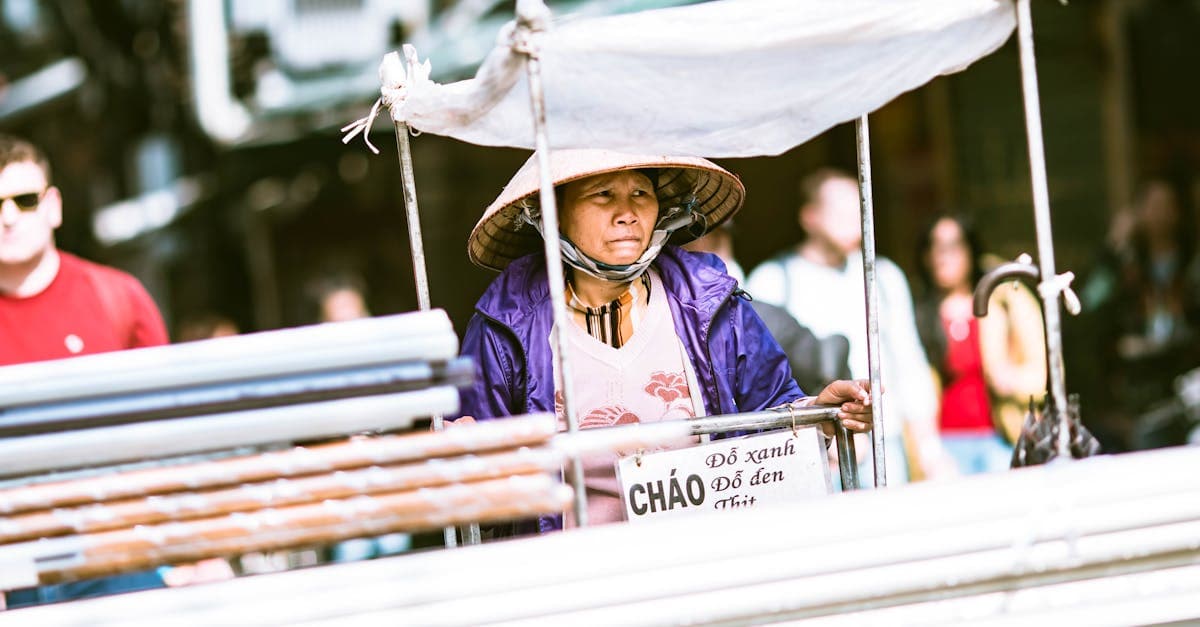
According to madisonsfootsteps.com, a bowl of pho bo from a neighbourhood stall costs around £1.25. At the better-known addresses in the Old Quarter, that rises to roughly £1.90, which is still less than the average airport sandwich at Heathrow. Bun cha with a side of nem ran runs under £2.20. Egg coffee at Cafe Giang sits between £1 and £1.60 depending on whether you order the original or one of the condensed milk variations.
As adventuresofjellie.com reports, bia hoi is the most absurdly priced drink in Southeast Asia. Fresh draught beer at Ta Hien Street costs between 15p and 30p a glass, poured from kegs delivered to the stalls each morning.
Cha ca lang at Cha Ca La Vong is the outlier. At the prices noted earlier in this article, it's the most expensive single dish on the list and still a fraction of what a comparable main course costs in London.
Put together a full day: pho at breakfast, bun cha at lunch, an afternoon egg coffee and something from a banh mi cart, then three or four dishes and a run of bia hoi at dinner. That circuit totals roughly 350,000 VND, which at March 2026 rates of approximately 32,000 to 33,000 VND per pound works out to around £11.
Cash is essential. Almost every stall and market vendor in Hanoi is card-free. Withdraw VND on arrival at Noi Bai Airport ATMs, or find a Techcombank or Vietcombank machine in the Old Quarter for lower fees.
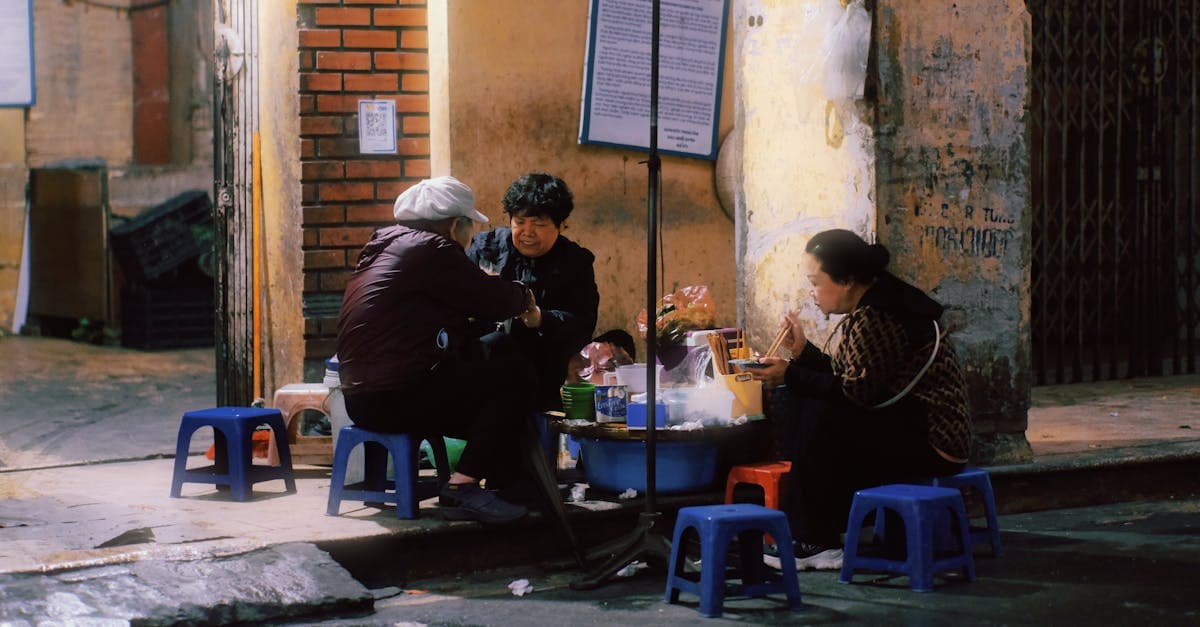
As madisonsfootsteps.com advises, the simplest safety test at any Hanoi stall is to count the customers. A vendor shifting 200 bowls of pho before 9am has rapid ingredient turnover and broth hot enough to eliminate most bacterial concerns. An empty stall at the same hour is a warning sign, not an undiscovered gem.
Prioritise food cooked in front of you. Pho, bun cha, banh cuon, and nem nuong all qualify: you watch the ingredients go in and the dish come out. Avoid anything sitting under glass that you cannot date.
The ice question gets overthought. Hanoi's cylindrical pillar ice, delivered commercially in large blocks, is generally safe. Crushed ice in unlabelled plastic bags from unknown sources is worth skipping entirely.
Timing is more unforgiving here than in most cities. Stalls for pho, banh cuon, xoi, and chao suon open between 5am and 6am and are typically sold out by 10am. Arrive mid-morning expecting breakfast and you'll find empty pots and a vendor packing up.
For the first two days, keep it straightforward: pho, banh mi, xoi. Introduce bun cha and cha ca from day three. Google Translate's camera mode reads Vietnamese text as you point your phone at the menu. If the dish is still unclear, point at what the table beside you is eating.
Disposable chopsticks in individual packets and sealed wet wipes at a stall are positive hygiene markers. One administrative matter before you fly: EHIC has no standing in Vietnam. Comprehensive travel insurance, including medical evacuation cover, is not optional.
Walking food tours in the Old Quarter run between about $20 and $30 per person, covering five or six stalls over three hours in a group format. Most operate in the evening, when the lanes are cooler and the stalls are at full capacity. They're widely listed on Viator and GetYourGuide, with several local operators running their own programmes directly.
Evening motorbike tours cost between $35 and $55 and cover considerably more ground in less time. Getting from banh tom stalls at West Lake to bun cha in the Old Quarter in the same session requires a motorbike or a succession of Grab rides, which adds up.
What a guide provides that a map cannot: knowledge of which stalls had the best produce that particular week, real-time translation at the table, a sense of the order dishes are meant to arrive in, and implicit safety vetting of the vendors. Vegetarian requirements can usually be accommodated if flagged at the time of booking. Independent navigation without Vietnamese requires more patience with pointing.
Hanoikids runs student-led tours on a donation basis. The cultural depth is good, the cost is modest, and the money goes directly to the students who lead them.
The practical recommendation is straightforward: take a guided tour on your first evening. Get oriented, save the addresses, ask the questions you'd otherwise spend three days working out. From day two, go alone. The Old Quarter is compact enough that wandering without a fixed plan stops feeling disorienting quickly, and the best finds tend to be the accidental ones.
Mobile data in Hanoi is not optional. Grab is the most reliable way to move between food districts quickly. Google Maps navigates the Old Quarter's narrow lanes. Google Translate's camera reads Vietnamese menus in real time. Foody.vn, Vietnam's equivalent of Yelp, surfaces local hygiene ratings and queue times that no printed guide carries. All of it requires a live connection.
No major UK carrier includes Vietnam in its free roaming allowance. Daily add-on passes range from £2 to £6 depending on provider, meaning a 14-day trip can generate between £28 and £84 in data charges before a single dish is ordered.
The local alternative is available at Noi Bai Airport on arrival. Viettel, Vinaphone, and Mobifone all offer tourist SIMs for roughly £3 to £6, covering 30 days of data. Passport registration is required at the point of sale, which adds a queue to an arrival process that is already slow.
An eSIM sidesteps all of that and keeps your UK number active for bank notifications and two-factor authentication throughout the trip. Hello Roam's Vietnam eSIM is configured via QR code before departure, meaning your phone is already online before you clear immigration at Noi Bai. Dual SIM support keeps the UK physical SIM active for incoming calls alongside the data connection.
4G LTE coverage across Hanoi's city centre is reliable. Viettel is leading 5G deployment in Vietnam, though rollout remains concentrated in the main urban districts for now.
No UK carrier gives Vietnam a free pass. EE's 'roam like home' benefit covers EU destinations only, so Vietnam triggers a daily add-on charged for each day you use data. Three's Go Roam list excludes Vietnam as of 2025, regardless of plan tier. O2 and Sky Mobile both apply standard roaming charges with no free data allowance included. Vodafone requires its Extra Abroad pass, typically coming in under £5 per day.
Run the maths. At roughly £4 per day across a fortnight, roaming charges land at around £56 before you've opened Google Translate to read a single menu. A Vietnam-specific eSIM from a specialist provider costs considerably less than that total.
As covered earlier, a dual SIM setup keeps your UK number active for bank notifications while a Vietnam eSIM handles data. Offline maps cover walking navigation around the Old Quarter well enough. They won't summon a Grab to take you out to West Lake for banh tom, surface live stall opening times, or pull up Foody.vn reviews, which makes a live connection the practical choice for any food-focused itinerary. Sort the data before you fly and the rest of it, finding street food in Hanoi included, becomes considerably easier.

The essential street foods to eat in Hanoi are pho bo (beef noodle soup), bun cha (grilled pork with vermicelli), banh mi, and egg coffee. Morning foods like pho, xoi (sticky rice), and banh cuon (steamed rice rolls) sell out before 10am, bun cha is a midday dish, and grilled meats around Ta Hien Street dominate after dark. Dishes like bun rieu and banh cuon require more exploration down side streets with less English signage.
Hanoi is famous for pho bo (the original northern-style beef noodle soup), bun cha (grilled pork with vermicelli noodles), cha ca lang (turmeric-marinated fish with dill), and ca phe trung (egg coffee made with whipped egg yolk and condensed milk). These are origin dishes that either developed in Hanoi before spreading elsewhere or remain unique to the city. CNN Travel has ranked Hanoi among the world's top 10 street food cities.
Street food in Hanoi is very affordable. Xoi (sticky rice) costs between 20,000 and 40,000 VND, which is under £1.30. Cha ca lang, the priciest common dish, runs 150,000 to 200,000 VND (roughly £5 to £6.30). Fresh draught bia hoi beer at Ta Hien Street sells for around 10p to 15p a glass. Prices at stalls in residential districts like Kim Ma and Ba Dinh are typically 10 to 20 per cent lower than equivalent stalls in the tourist-heavy Hoan Kiem area.
Pho is Vietnam's most recognised street food both internationally and domestically. If you ask most Vietnamese which dish defines the country's street food culture, they will say pho. The dish originated in northern Vietnam, and the Hanoi version, with its clear broth, flat rice noodles, and minimal garnish, is the original recipe before it migrated south and became sweeter and more garnish-heavy.
Bun cha is a midday dish of grilled pork patties and vermicelli noodles served alongside a sweet-savoury dipping broth. It became internationally famous when Anthony Bourdain and Barack Obama ate it together at Bun Cha Huong Lien on 24 Le Van Huu in 2016, and their table is still preserved and labelled at the restaurant. It is a lunchtime dish and not typically available in the evenings.
Ca phe trung, or egg coffee, is made by whipping egg yolk with condensed milk over strong robusta coffee. It was created in the 1940s by a bartender at the Sofitel Metropole during wartime rationing when fresh milk was scarce across Hanoi. Cafe Giang at 39 Nguyen Huu Huan, the cafe he eventually opened, still serves the original recipe. It is cash only and usually full.
Cha ca lang is turmeric-marinated fish served with dill, and it is one of three dishes created in Hanoi that remain most authentically eaten there. Cha Ca La Vong at 14 Cha Ca Street has been operating at the same address since 1871, making it among the oldest continuously operating restaurants in Vietnam. A portion costs 150,000 to 200,000 VND (roughly £5 to £6.30). An entire street in Hanoi is named after this dish.
Many of the best Hanoi street food stalls open before dawn and close well before noon once their pots are empty. Pho Gia Truyen at 49 Bat Dan Street opens at 6am, queues form within the hour, and the pot is finished by 10am. Hang Be Market's cooked food section opens from 6am. Evening food culture runs from around 6pm at Ta Hien Street and surrounding grill stalls.
The best street food areas in Hanoi are the Old Quarter (the highest concentration of stalls in northern Vietnam within a 2-kilometre circle), Hang Be Market (the most efficient morning stop with banh cuon, pho, and xoi on one site), Ta Hien Street (evening bia hoi and grilled meats), and Dong Xuan Market (the largest covered food court). Residential districts like Kim Ma and Ba Dinh offer similar food at 10 to 20 per cent lower prices with a more local atmosphere.
Hanoi pho uses a clean, salty, clear broth with flat rice noodles and minimal garnish, and is considered the original recipe. The Ho Chi Minh City version trends sweeter, with beansprouts, hoisin sauce, and fresh basil served alongside. The northern version is less heavily garnished and the broth is notably more restrained. If the southern version is your only reference point, the Hanoi original will taste like a distinctly different dish.
Banh mi sot vang is a baguette filled with beef braised in red wine sauce, a direct product of French colonial rule in Vietnam. It is distinct from the standard cold-cut banh mi sold on tourist corners, and its flavour sits closer to a Vietnamese boeuf bourguignon. The dish is one of three foods created in Hanoi that carry French colonial and wartime history in their recipes.
The four most overlooked street foods in Hanoi are chao suon (pork rib congee), xoi (sticky rice), nem nuong (grilled pork skewers), and banh tom (shrimp and sweet potato fritters). Bun rieu, a crab and tomato broth noodle soup, also receives far less attention than it deserves despite being deeply embedded in Hanoi's eating habits. Most of these sell out early or require knowing a specific address, which is why visitors typically miss them.
Banh tom, shrimp and sweet potato fritters in a light batter served with a vinegar dipping sauce, is a West Lake dish. The stalls run along Thanh Nien Road at the lakeside and are best visited at sunset. Getting there from the Old Quarter on foot takes around 30 minutes, while a Grab ride costs 30,000 to 50,000 VND and takes roughly 10 to 15 minutes.
Ta Hien Street, known informally as Beer Street, is Hanoi's centre for evening street food and bia hoi culture. Bia hoi is fresh draught beer brewed daily and sells for around 10p to 15p a glass. Grilled skewers and nem ran stalls set up from 6pm onward, making it the main destination for street food after dark in the Old Quarter.
Xoi is sticky rice topped with shredded pork, a fried egg, dried shallots, or sweet mung beans, and costs between 20,000 and 40,000 VND (under £1.30). Xoi Yen on Nguyen Huu Huan is the address locals most frequently recommend. A bean and sesame version without pork is available and is one of the more adaptable dishes in a cooking tradition that defaults heavily to meat.
HelloRoam: your trusted travel eSIM that keeps you online across borders.
Explore Plans