Is Thailand Safe for Americans? the Honest 2026 Travel Guide

Written by: David Chen


15 min read
HelloRoam is a global eSIM provider offering instant mobile data in 175+ countries. Buy prepaid travel eSIM plans with no extra fees, no contracts, and instant activation on any eSIM-compatible device.
15 min read
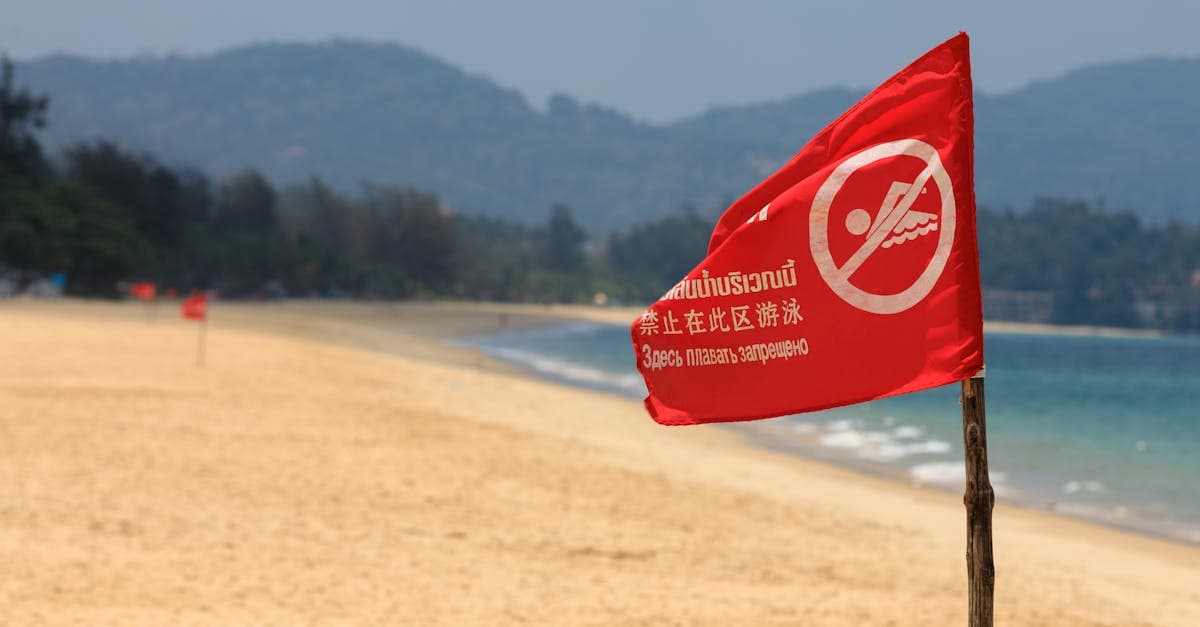
Thailand is safe for most American tourists. According to travel.state.gov, the US State Department assigns it a Level 2 advisory ("Exercise Increased Caution"), the same rating carried by France, Germany, and Japan. The risks that actually land tourists in trouble are scams, road accidents, and drug law violations, not targeted violent crime.
Reliable mobile data is one of the most underrated safety tools you can bring to Thailand. Grab (the country's dominant ride-hailing app), Google Maps, and emergency contacts all need a live connection. HelloRoam's Thailand eSIM activates before you leave home, keeps your US number live for bank calls and two-factor authentication, and skips the SIM-swap queue at Suvarnabhumi. What Is an eSIM?
The one area that genuinely warrants extra caution is the far south. Pattani, Yala, Narathiwat, and Songkhla provinces are off the mainstream tourist circuit and carry elevated risk from a long-running insurgency. Everywhere else, preparation beats avoidance.
Around 40 million international tourists visit Thailand each year, placing it among the most-traveled countries in Southeast Asia. The overwhelming majority complete their trips without a serious incident, a track record the country has held through years of rapid tourism growth.
According to bhtp.com, Thailand is safe for most American tourists. The US State Department assigns the country a Level 2 advisory ("Exercise Increased Caution"), the same designation carried by France, Germany, the United Kingdom, and Japan. The risks that actually affect visitors are largely predictable and avoidable, not random or violent.
That distinction matters. Americans planning a first trip often fixate on violent crime. What sends travelers to the hospital or a police station is a different list: motorbike accidents, taxi and gem scams, drink spiking at nightlife venues, and a drug enforcement framework that treats possession with extreme severity. Those risks are real, but they respond to preparation.
One genuine exception exists in the far south. Pattani, Yala, Narathiwat, and Songkhla provinces have seen persistent violence tied to a long-running separatist conflict. They don't appear on mainstream tourist itineraries, and the State Department advisory flags their risk level separately from the rest of the country.
The real question isn't whether to book the trip. It's how to prepare before you leave and what to watch for once you land.
The US State Department rates international destinations on four levels: Level 1 (Normal Precautions), Level 2 (Exercise Increased Caution), Level 3 (Reconsider Travel), and Level 4 (Do Not Travel). Americans often read Level 2 as alarming, but context reframes it quickly. France, Germany, Belgium, the United Kingdom, and Japan all carry Level 2 advisories. Thailand sits in the same risk band as those destinations.
According to travel.state.gov, the July 2025 advisory update flagged civil unrest risk connected to political protest activity. That's a real concern near government buildings and central Bangkok during organized demonstrations. It doesn't apply to Phuket beach resorts, Chiang Mai's night markets, or Krabi's coastline, and it wasn't triggered by anything that touches standard tourist itineraries. The advisory language targets political gathering zones, not resort areas.
The provinces carrying meaningfully elevated risk are Pattani, Yala, Narathiwat, and Songkhla in Thailand's deep south, where a separatist insurgency has operated since 2004. The State Department singles out those provinces separately from the broader country-level advisory travel.state.gov.
The advisory also carries no blanket warning against Bangkok, Chiang Mai, Phuket, Koh Samui, or Krabi. These are the cities that attract the bulk of American tourism to Thailand each year, and none appear in the advisory language as areas of concern.
Before you fly, enroll in STEP (Smart Traveler Enrollment Program) at travel.state.gov. It's free, takes a few minutes, and allows the embassy to contact you if conditions shift while you're in-country. The US Embassy in Bangkok is at 95 Wireless Road, and the 24-hour emergency line is +66 2 205 4000.

Road accidents, not violent crime, are the leading cause of tourist fatalities in Thailand. That single fact reframes the safety question: the hazards that statistically affect American visitors are largely situational and avoidable, not random or targeted.
Three risk categories account for most of what travelers actually encounter. Scams and petty theft concentrate in high-traffic tourist areas and generate the most frequent complaints. Road accidents and transport hazards, mostly involving rented motorbikes, cause the most serious physical injuries. Legal and nightlife dangers, including drug violations and drink spiking, carry the most severe and least predictable consequences.
Because crime against tourists in Thailand runs almost entirely opportunistic, awareness and deliberate behavior cut personal exposure dramatically. A traveler who uses Grab instead of unmarked taxis, avoids unsolicited help near major temples, and treats spontaneous "amazing deal" offers with immediate skepticism has already removed most of the statistical risk profile. None of that requires paranoia, just attention.
Risk also concentrates in specific zones and specific situations, not spread evenly across the country. The sections that follow map where those situations tend to cluster.
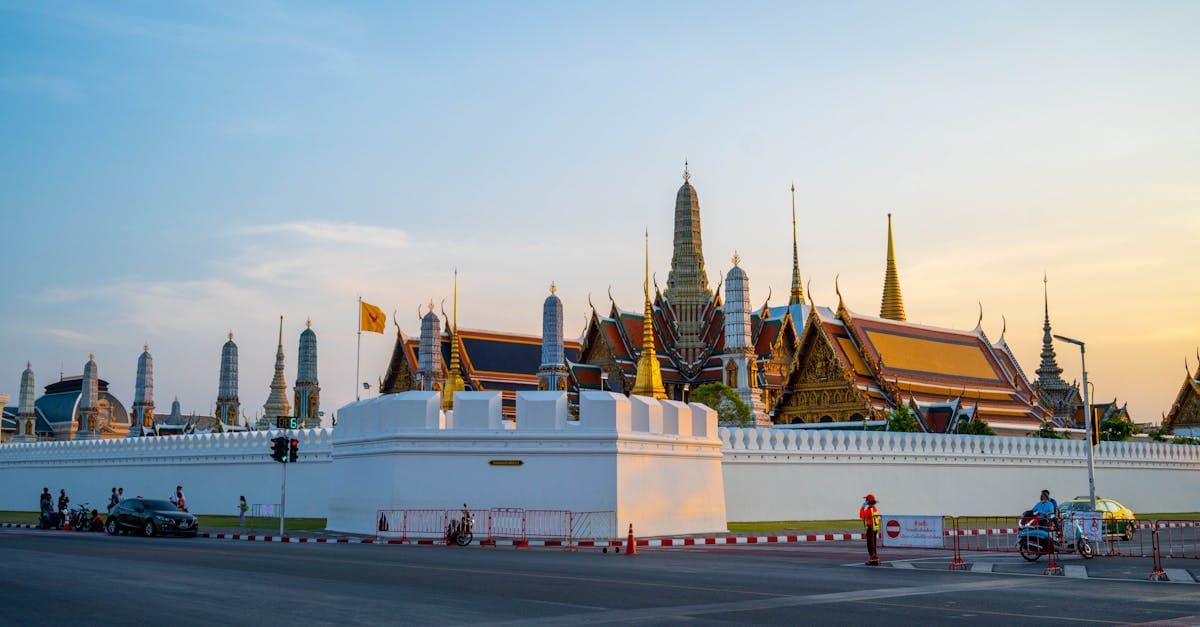
"The Grand Palace is closed today" has run as a Bangkok con for decades and still works on first-time visitors every week. A well-dressed stranger appears near Wat Phra Kaew, mentions a Buddhist holiday or renovation, and points you helpfully toward a government gem export sale nearby. Unsolicited route advice near any major temple is the tell.
Gem shops are the destination in a related scheme where tourists are escorted in and told Thailand runs a tax-free export program expiring imminently. No such tourist program exists. Stones sold under this premise are generally overvalued or synthetic, and the "export permit" offered has no legal standing outside the shop.
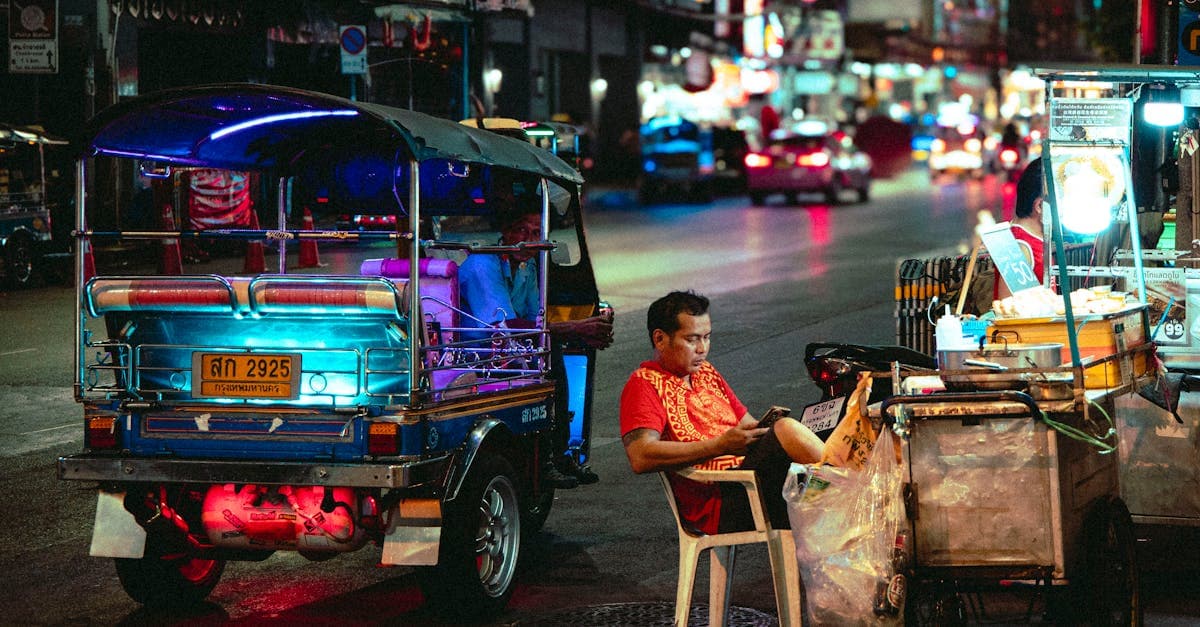
Tuk-tuk drivers quoting unrealistically cheap fares are typically subsidized by commission from the shops on the route. You're the product, not the passenger.
ATM skimming concentrates around standalone machines in high-traffic tourist areas. Khaosan Road and the lower Sukhumvit corridor have documented cases. Use ATMs inside bank branches or at 7-Eleven stores, both widely available and significantly lower-risk than freestanding machines on the street.
Friendly-stranger scams work the same geography: a person claiming to work for the Thai government strikes up conversation near a temple and gradually steers the discussion toward a travel agency or jewelry shop. Knowing it by name makes it easier to recognize before you've invested twenty minutes.
The practical rule across all of these: if someone initiates contact in a tourist zone and seems unusually eager to assist, assume commercial motivation and politely disengage.
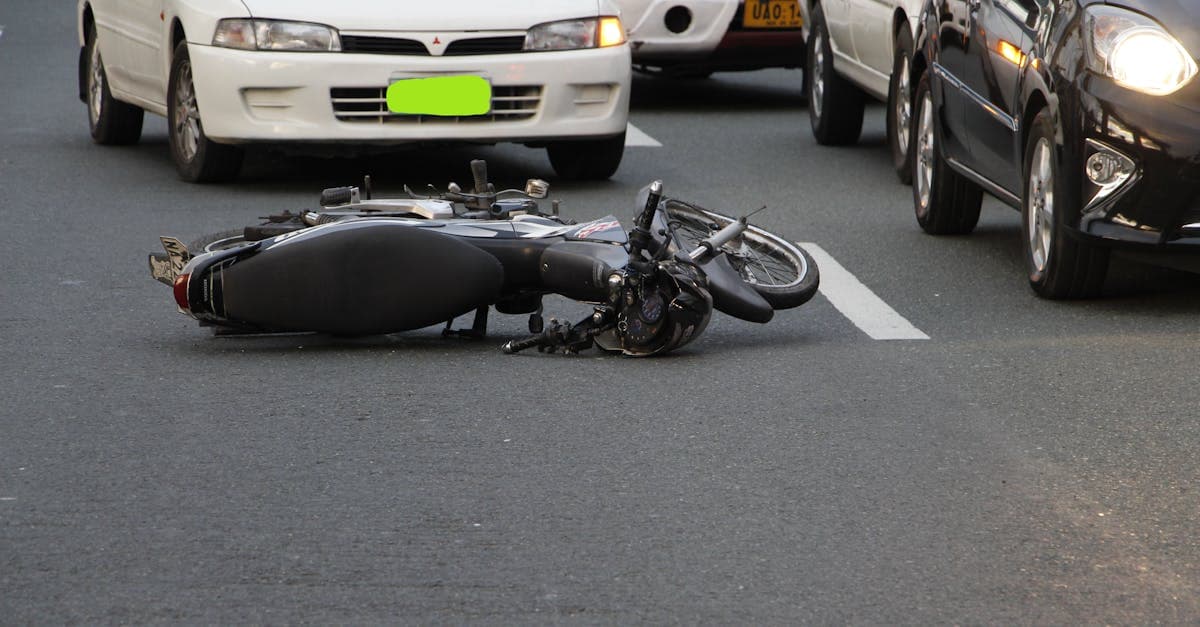
Motorbike rental shops across Thailand's tourist islands typically require no license check and rent to anyone who provides a deposit. Around 20,000 people die on Thai roads each year, and tourists on rented bikes are disproportionately represented in that figure. Standard travel insurance frequently excludes motorbike accidents without a specific adventure sports rider added to the policy. Read the exclusions before you rent anything with two wheels.
Grab is the practical city alternative to negotiated tuk-tuks or unlicensed taxis. Fares are metered, routes are tracked in the app, and your location is visible to anyone you've shared the trip with. The app requires live mobile data, which is worth sorting before you leave the airport.
According to bhtp.com, Thailand's laws are strict, and drug violations carry consequences that fall entirely outside the reach of US consular assistance. Possession of even small amounts of hard drugs can result in life imprisonment. The US Embassy in Bangkok can provide a list of attorneys and visit you in detention, but it has no authority to intervene in Thai judicial proceedings or secure your release. That ceiling on consular assistance is absolute, regardless of circumstances.
Drink spiking has been reported in specific nightlife zones: Khaosan Road in Bangkok, Walking Street in Pattaya, and certain beach bars in Phuket. Don't leave a drink unattended. Accepting one from someone you've just met in any of those settings carries real risk.
Cannabis was partially decriminalized in 2022, but the regulatory framework around it has continued shifting. What a dispensary sells legally isn't necessarily permissible in every context, including certain public spaces and areas near schools or temples. Verify current law before assuming a purchase is clean.
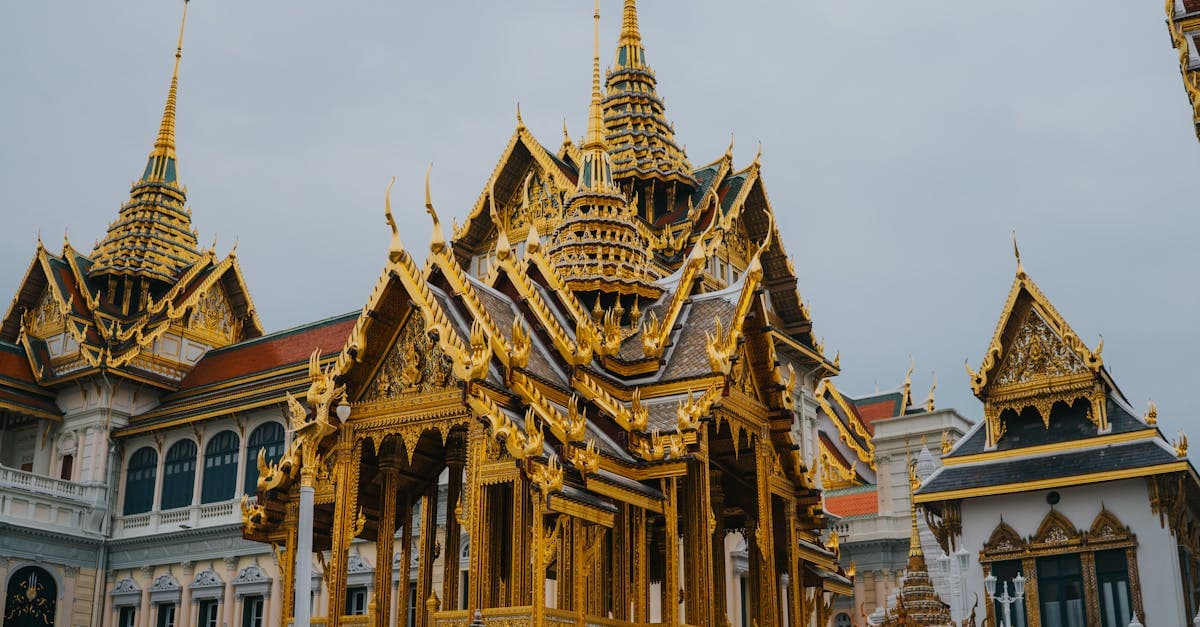
Bangkok's Silom, Sukhumvit, and Sathorn neighborhoods are well-policed and dense with tourist infrastructure, making violent crime toward visitors genuinely uncommon. The main exposure points are scam corridors near major temples, petty theft in crowded markets, and traffic that makes driving yourself through the city impractical during peak hours.
Chiang Mai is widely regarded as the safest major Thai city for solo travelers. The Old City is compact, walkable, and backed by strong digital nomad infrastructure. Traffic density is a fraction of Bangkok's. The primary hazard is road accidents on the mountain roads north of the city, especially heading toward Pai after rain or after dark.
Phuket is safe in the main resort zones: Kata, Karon, and Kamala carry low risk. Patong shifts after midnight, with elevated drink-spiking and petty theft risk in the nightlife corridor. Jet ski rental scams near Patong Beach are chronic; the standard move is to claim pre-existing damage on return and demand cash on the spot. Skip jet ski rentals in Patong.
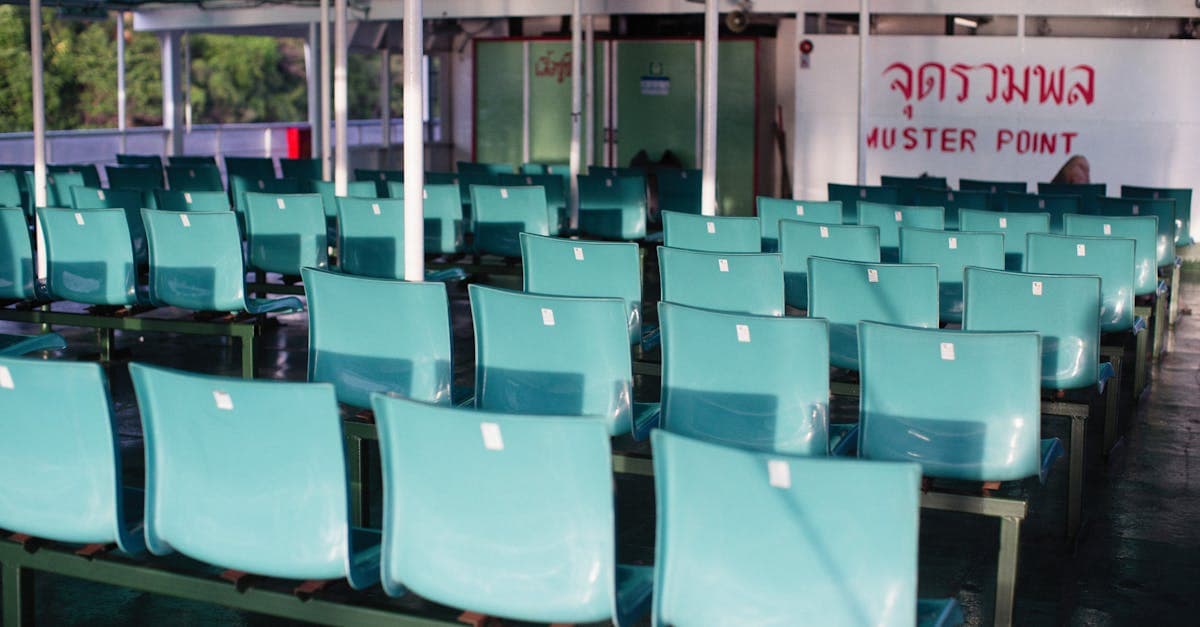
Koh Samui and the smaller islands are generally safe on land. Ferry crossings during rough weather are a different matter. Verify conditions and check a boat operator's safety record before booking any island transfer during the wet season, which runs roughly May through October.
Route 1095 toward Pai, with its 762 curves, is genuinely dangerous on motorbikes in wet conditions or after dark. Crime in Pai itself is low; it's the road in that carries the risk.
Cellular signal drops significantly outside major cities, with weak or no coverage in the rural northeast and near the Myanmar border. Download offline maps before entering those regions and carry a power bank. In remote areas, you can't count on connectivity being there when you need it.
According to travel.state.gov, a low-level separatist insurgency has been active in Thailand's four southernmost provinces since 2004. Pattani, Yala, Narathiwat, and parts of Songkhla province see periodic bombings and shootings, with some incidents affecting civilians. According to travel.state.gov, the advisory language specifically flags this region, treating it as a distinct concern within the broader Level 2 designation for Thailand.
Most popular southern Thai destinations are geographically well clear of the active conflict area. Krabi, Koh Lanta, Ko Phi Phi, and Koh Samui are all outside the four affected provinces and have no operational connection to the insurgency. Travelers booking southern island itineraries are not going anywhere near the actual risk corridor.
Hat Yai, the main overland transit hub in Songkhla province, warrants added situational awareness. Travelers crossing into Malaysia by train or bus pass through this city. Stick to daylight hours for that transit and avoid an overnight stay in the city center.
Flying over the region entirely is the cleanest option. Direct flights from Bangkok to Penang or Kota Bharu are available and eliminate the overland transit question completely.
Pattani, Yala, and Narathiwat have no significant tourist draw for American visitors. The vast majority of southern Thailand itineraries never require entering any of the three. For most travelers planning a beach trip in the south, the conflict zone is geographically irrelevant.
Grab is cheaper than a tuk-tuk, shows your route in real time, and lets you share your live location with anyone following your trip from home. It requires a live data connection. That's the connectivity-safety link in its most practical form.
Three emergency numbers to save before you land: 1155 for Tourist Police (an English-speaking line built for foreign visitors), 191 for regular police, and 1669 for ambulance. The Tourist Police line handles scam reports, theft, and situations where a language gap with local officers creates a problem. Mobile data lets you share GPS coordinates the moment you call, instead of trying to describe an unfamiliar intersection.
WiFi is reliable in Bangkok coffee shops, Chiang Mai co-working spaces, and most mid-range hotels in major cities. Outside those zones, coverage frays fast. Boats between islands, mountain roads toward Pai, trekking routes near Doi Inthanon, and the rural northeast all run on cellular only. There's no café fallback when your vehicle breaks down at dusk on a mountain road.
STEP alerts from the US Embassy Bangkok arrive by email and require a connected device to receive them in real time during civil unrest or safety incidents. Enroll at travel.state.gov before departure.
Telemedicine apps, popular among expats and long-stay visitors, allow a remote consultation before deciding whether a symptom needs a local clinic or a referral to a major facility like Bumrungrad International or Bangkok Hospital. Those consultations require data, and on a longer trip, the option is more valuable than travelers typically anticipate.

Airport SIM counters at both Suvarnabhumi (BKK) and Don Mueang (DMK) sell tourist plans from AIS, TrueMove H, and DTAC (now merged with True) right after customs. Plans run ~$8 to $14 for 30 days with 15 to 30 GB of data. The coverage is solid in major cities and the price is hard to beat.
The case for an eSIM is less about cost and more about continuity. Activate before your flight, arrive with data already running, and your US number stays live for two-factor authentication and bank calls while Thai data runs in parallel on the same device. No SIM swap at the airport after a long-haul flight.
HelloRoam's Thailand eSIM runs on the AIS network, which carries the widest rural and border region coverage in Thailand, with activation taking under five minutes through the app before you board. Airalo offers plans from around $8 for 7 days (1 GB) to around $25 for 30 days (10 GB), positioning itself as the budget option. Holafly's unlimited data plans run roughly $27 for 7 days, which suits heavy streamers but is overkill for most travelers.
On the US carrier side, T-Mobile Magenta includes unlimited 2G data in Thailand at no extra charge, with high-speed access at $5 per day. For trips under five days, that's workable. For a week or longer, a dedicated eSIM runs substantially cheaper.
Before leaving any hotel, download offline Google Maps for Bangkok, Chiang Mai, and your full route. Coverage near Doi Inthanon and the Golden Triangle is minimal on any network, and offline navigation is the practical fallback.
Yes, with standard travel precautions. The Level 2 advisory applies countrywide, and the only areas most travelers should actively avoid are the four southern conflict provinces covered above.
The US Embassy in Bangkok sits at 95 Wireless Road, Lumphini, Pathumwan, with an emergency assistance line at +66 2 205 4000 that operates around the clock. For most tourist incidents, the Tourist Police at 1155 is the faster first call, particularly when a language barrier with local officers would complicate the situation.
A point Americans often misunderstand: consular assistance has real limits. If you're arrested, Embassy officers can visit you, verify your condition, and provide a list of local attorneys. They cannot override Thai court proceedings or reduce a sentence. Thai drug laws carry penalties that US diplomatic intervention cannot affect.
Most US domestic health plans don't cover international medical emergencies. Evacuation from Thailand to the United States runs $50,000 to $100,000 or more. Travel insurance with medical evacuation coverage is not an optional line item at those figures. Policies typically run $5 to $15 per day depending on age and coverage tier.
Enroll in STEP at travel.state.gov before departure if you haven't already. The process is quick, and it gives the Embassy a direct line to you during civil unrest, natural disasters, or a family emergency stateside.
At roughly 3,500 Thai baht in early 2026, $100 covers a full mid-range travel day with money left over. A hotel or guesthouse in Chiang Mai runs $20 to $40 per night. A full meal at a local restaurant costs $2 to $5. A Grab ride across central Bangkok averages $3 to $7. That's accommodation, transport, and three solid meals for well under budget.
Understanding those benchmarks has a direct safety payoff. A tuk-tuk quoting $30 for a short Bangkok hop is a 600 percent markup and almost always the opening move of a sponsor shop scam. When you know what things cost, inflated pricing registers immediately. Scams of the redirect variety typically announce themselves with unrealistic pricing before the pressure begins.
A $100 daily budget also lets you make consistently safer choices: Grab over negotiated tuk-tuks, restaurants with visible kitchens and steady local traffic, and accommodation in better-policed neighborhoods with proper lighting.
Travel insurance with medical evacuation coverage is the non-negotiable line item. At the daily rate outlined in the previous section, it offsets exposure that runs well into the tens of thousands. No other line on the budget comes close on risk-adjusted return.
Bangkok tourist corridors and Phuket beach towns run noticeably higher than those mid-range figures. Chiang Mai and smaller northern towns deliver comparable quality at roughly 20 to 30 percent less.

Yes, Thailand is safe for most American tourists. The US State Department assigns it a Level 2 advisory (Exercise Increased Caution), the same rating carried by France, Germany, and Japan. Around 40 million international tourists visit Thailand each year, and the overwhelming majority complete their trips without a serious incident. The real risks are scams, road accidents, and drug law violations, not targeted violent crime.
Thailand is generally an affordable destination, and $100 USD carries significant purchasing power compared to Western countries. It can cover daily meals, local transport, and budget accommodation. The country's low cost of living is one reason it attracts millions of visitors and long-term digital nomads and expatriates each year.
At 6pm each day, the Thai national anthem is played in public spaces such as train stations, parks, and shopping areas. Thai custom calls for people to stop and stand still as a sign of respect while the anthem plays. Visitors unfamiliar with this tradition may be gently reminded by locals. The same custom applies at 8am daily.
For many digital nomads and expatriates, $2000 a month is a comfortable budget in Thailand, particularly outside Bangkok. Cities like Chiang Mai, which offers strong digital nomad infrastructure and lower traffic density than the capital, are popular for longer stays. Costs in Bangkok and resort areas like Phuket tend to run higher.
Thailand carries a Level 2 advisory (Exercise Increased Caution), the same designation as France, Germany, the United Kingdom, and Japan. The advisory does not flag Bangkok, Chiang Mai, Phuket, Koh Samui, or Krabi as areas of concern for standard tourists. The four southernmost provinces (Pattani, Yala, Narathiwat, and parts of Songkhla) are flagged separately due to a long-running insurgency.
The southernmost provinces of Pattani, Yala, Narathiwat, and parts of Songkhla carry elevated risk from a separatist insurgency active since 2004, including periodic bombings and shootings affecting civilians. These provinces do not appear on mainstream tourist itineraries. Popular southern destinations like Krabi, Koh Lanta, Ko Phi Phi, and Koh Samui are geographically outside the affected zone.
The most frequent scams include the Grand Palace closed con, where a stranger claims a major attraction is shut and redirects tourists to a gem shop, tuk-tuk routes subsidized by commission-based shops, and gem export schemes falsely promising tax-free deals. ATM skimming is documented near Khaosan Road and the lower Sukhumvit corridor. The practical rule is to treat any unsolicited help in a tourist zone with immediate skepticism.
Motorbike rental carries significant risk. Around 20,000 people die on Thai roads each year, and tourists on rented bikes are disproportionately represented in that figure. Rental shops typically require no license check. Standard travel insurance frequently excludes motorbike accidents unless a specific adventure sports rider is added to the policy before travel.
Thailand's drug laws are strict and the consequences are severe. Possession of even small amounts of hard drugs can result in life imprisonment. The US Embassy in Bangkok can provide a list of attorneys and visit you in detention, but has no authority to intervene in Thai judicial proceedings or secure your release. Cannabis was partially decriminalized in 2022, but the regulatory framework continues to shift, so verifying current law before any purchase is essential.
Chiang Mai is widely regarded as the safest major Thai city for solo travelers. The Old City is compact, walkable, and supported by strong digital nomad infrastructure, with far lower traffic density than Bangkok. The main hazard is road accidents on mountain roads north of the city, particularly heading toward Pai after rain or after dark.
Phuket is generally safe in the main resort zones of Kata, Karon, and Kamala. Patong carries elevated drink-spiking and petty theft risk in its nightlife corridor after midnight. Jet ski rental scams near Patong Beach are a chronic issue, with operators claiming pre-existing damage on return to demand cash on the spot. Avoiding jet ski rentals in Patong removes that specific risk.
Grab is the recommended alternative to negotiated tuk-tuks or unlicensed taxis. Fares are metered, routes are tracked in the app, and your location can be shared with contacts. The app requires live mobile data, making it worth setting up connectivity before leaving the airport. Driving yourself through Bangkok during peak hours is impractical due to traffic density.
Drink spiking has been reported in specific nightlife zones, including Khaosan Road in Bangkok, Walking Street in Pattaya, and certain beach bars in Phuket. Travelers should not leave drinks unattended or accept drinks from strangers in those settings. Petty theft also rises in Patong, Phuket after midnight.
Ferry crossings during rough weather present genuine risk. The wet season runs roughly May through October, when sea conditions can deteriorate quickly. Before booking any island transfer during this period, verify current conditions and check the safety record of the boat operator rather than booking based on price alone.
STEP (Smart Traveler Enrollment Program) is a free service from the US State Department available at travel.state.gov. Enrolling takes a few minutes and allows the US Embassy to contact you if conditions shift while you are in-country. The US Embassy in Bangkok is located at 95 Wireless Road, with a 24-hour emergency line at +66 2 205 4000.
HelloRoam: your trusted travel eSIM that keeps you online across borders.
Explore Plans