

What Is a Travel eSIM and How Does It Work?
Get your Browse All eSIM Plans before you travel.
A travel eSIM is an embedded SIM chip soldered directly into your phone's circuit board that stores downloadable carrier profiles, letting you switch to a local or regional data plan without swapping physical SIM cards. The global eSIM market is on track to exceed $16 billion by 2026, per GSMA projections, reflecting how rapidly the physical SIM card is becoming optional hardware.
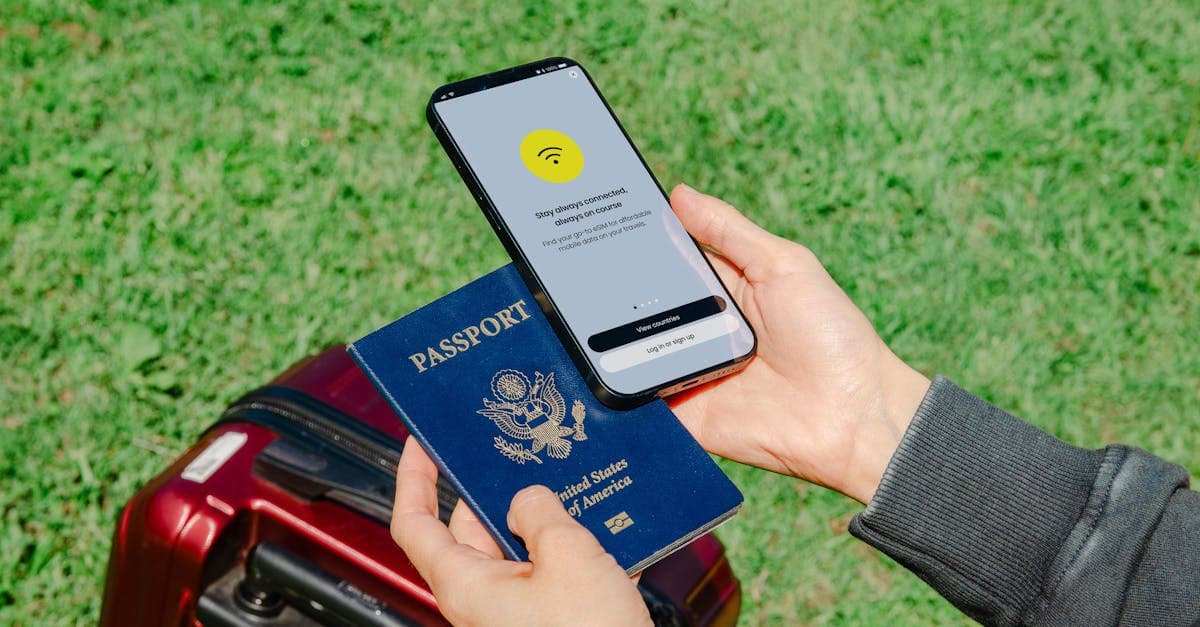
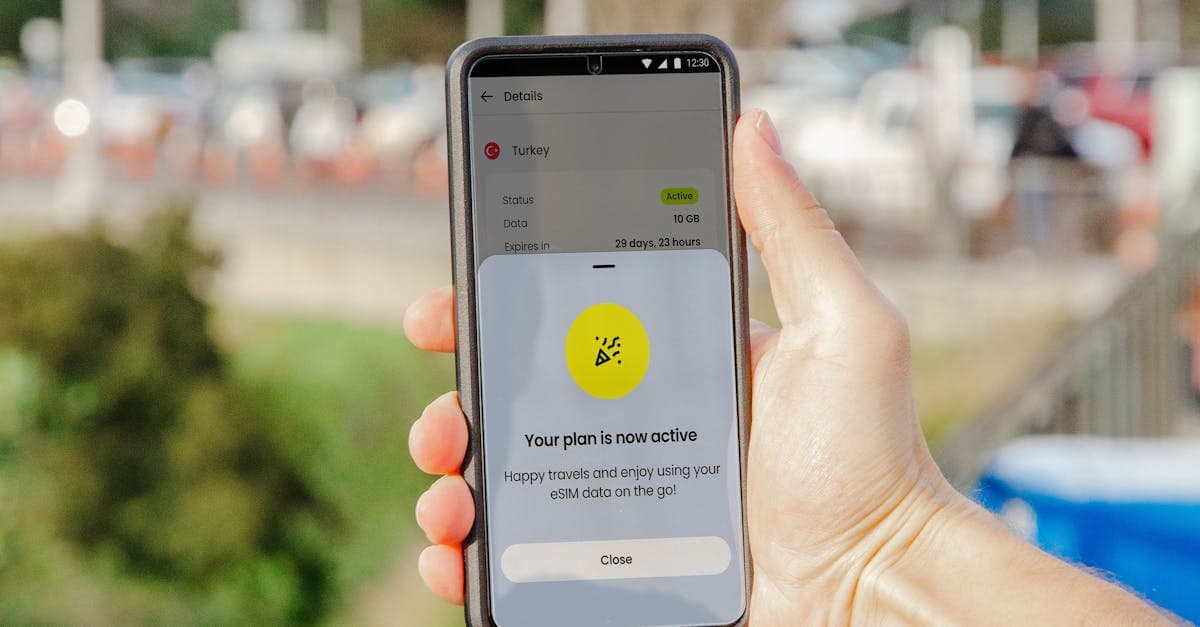
Activation happens remotely, through a QR code scan or a provider's app, on your home Wi-Fi before you leave. There is no tray, no ejector pin, no plastic card to drop on a terminal floor.
The purchase flow is straightforward. Buy a plan online before your flight, scan the QR code the provider emails you, and the eSIM installs itself. At your destination, open your phone's cellular settings, select the new profile as the active data line, and you're online before you've cleared customs.
Every US iPhone 14 and later ships without a SIM card tray. Apple removed it from all domestic models in September 2022, which makes eSIM the only connectivity option for a large share of current American iPhone users, whether they realize it or not. A single device can store between 8 and 15 eSIM profiles and run two simultaneously, so keeping your home number active while running a separate travel data line is entirely normal practice.
Does Your Phone Support eSIM?
Your phone supports eSIM if it is a US flagship model released after 2022; virtually every device in that category has the embedded chip inside. Hardware support and software activation are two different things, though, so confirming both before travel matters.
On the iPhone side, eSIM support dates back to 2018. The XS and XR were the first Apple phones with the capability, and every model since is compatible: the 11, 12, 13, 14, 15, and 16 series. US iPhone 14 and later models are eSIM-only, a point covered in the section above. For current iPhone users, compatibility is essentially a given.
Android is more fragmented. The reliable eSIM lineup includes:
- Google Pixel 3 and later: eSIM across the full Pixel line from 2018 onward
- Samsung Galaxy S20 and later: covers the Galaxy S, Z Fold, and Z Flip through the current generation
- OnePlus 9 and later: eSIM added to the OnePlus mainline in 2021
- Motorola Razr 2022 and later: eSIM supported across the Razr folding lineup from that refresh
Confirming on an iPhone takes 30 seconds. Go to Settings, tap General, then About, and scroll to the bottom of the screen. An EID number (the eSIM hardware identifier) confirms support. On Android, open Settings and navigate to Connections on Samsung, or Network and Internet on Pixel and most other brands, then tap SIM card manager. An "Add eSIM" option in that menu means you're clear to proceed.
One specific exception: phones purchased in mainland China. Many ship with eSIM software disabled at the factory level, even when the hardware inside is identical to models sold in the US or Europe. The model number looks the same on paper. The feature won't work. You have to check.
Carrier locks and Android compatibility
A grayed-out "Add eSIM" button is the most deflating thing to discover the night before a flight. It means your carrier has software-disabled the eSIM function on your device, even though the chip itself is physically present and functional.
Samsung devices sold by T-Mobile or AT&T on installment plans are the most common source of this problem. Many require completing 12 or more monthly payments before an eSIM unlock is granted. If you're 6 months into a 24-month plan and your trip is next week, that's a gap you need to close before you pack.
The fix is a phone call. Contact your carrier's customer service line and ask specifically for an eSIM unlock. For devices that are fully paid off or purchased outright, most US carriers process it within 24 to 48 hours. If you're still on an installment plan and haven't hit the required threshold, ask anyway; some carriers grant exceptions for travel use.
Google Pixel phones purchased directly from Google are unlocked out of the box. No installment thresholds, no waiting period, no callbacks required. For Android users who travel regularly and are considering a new phone, buying direct from the Google Store removes this entire variable.
US iPhone users don't face the same restriction. Purchasing through AT&T, Verizon, or T-Mobile doesn't limit your ability to add a travel eSIM. Apple's implementation keeps the primary domestic line separate from any additional profiles you load for international use, so the carrier lock that sometimes applies to the main line doesn't extend to travel plans.
Best eSIM Providers for International Travel in 2026
AT&T, Verizon, and T-Mobile charge $6 to $12 per day for international day passes. A 10-day Europe trip at that rate runs $60 to $120 in roaming before you've opened a single map. A regional eSIM covering the same trip costs a fraction of that and arrives in your inbox.
Five providers dominate the US traveler market heading into 2026, per [timetravelturtle.com. Here's how they compare on the factors that actually matter:
HelloRoam is the stronger pick for travelers who prioritize straightforward policies over the lowest possible price. Hotspot is included and disclosed upfront, not tucked into a terms page. The 24/7 live chat is a real differentiator: being able to reach a person when your eSIM won't activate at midnight in a foreign city is worth more than a small per-GB discount. Plans start from ~$5 per week. For a full breakdown, see the [eSIM for United States plan page.
Airalo operates as a marketplace rather than a single carrier. You can buy a local plan for one country, a regional pass for Europe, or a global pass spanning multiple continents, all through the same app. For itineraries that string together four or more countries, the range of underlying options is difficult to beat [timetravelturtle.com.
Holafly sells well on the unlimited framing, and for light use the pitch holds up. The catch is buried: hotspot sharing isn't supported. If you're planning to tether a laptop, a tablet, or a travel companion's phone to your connection, Holafly won't accommodate that. Read the fine print before buying.
According to [pcmag.com, Nomad earns points for being transparent about throttling. Post-cap speeds are documented per plan rather than handled with a generic disclaimer. Solid mid-range option when you have a reasonable estimate of your data needs.
Saily, backed by NordVPN, leans on privacy and brand trust as its main differentiators. Pricing is aggressive, and the NordVPN infrastructure provides a credibility baseline that newer entrants lack. Coverage is still expanding, so verify your specific destinations before committing.
Budget plans in the 1 to 5 GB range run ~$5 to $15 across providers, per [easysim.global. Average tourist usage for maps, messaging, and social media runs 3 to 8 GB per week, which puts a mid-range regional plan in practical value territory for most trips. The unlimited tier earns its place only if you're working remotely or streaming heavily.
Hotspot and tethering policies compared
Holafly's unlimited plans block hotspot use outright, meaning you can't share the plan's eSIM data with a laptop or tablet [runawaytraveller.com. The restriction appears in plan fine print rather than the marketing page, which explains why it consistently ranks as the top complaint in app store reviews among travelers who discovered it mid-trip.
Saily throttles to 256 Kbps after its daily data cap. At that speed, Google Maps stalls, video calls won't connect, and loading a basic webpage becomes slow enough to disrupt any real task.
Airalo and Nomad allow hotspot on their standard and regional plans. Nomad's regional options suit remote workers particularly well, offering stable laptop connectivity throughout a full workday rather than just occasional mobile browsing. Confirm the tethering policy on any specific plan's detail page before purchasing, since policies can vary by plan within a provider.
Running the numbers before buying matters more than most travelers realize. A three-hour Zoom session consumes roughly 2.7 GB. Background processes, including iCloud sync and OS updates, drain 2-5 GB per month without any deliberate use on your part. A plan sized for a tourist may run out on a remote worker in two working days.
Anyone traveling with a laptop should filter by "hotspot allowed" first, then compare prices. A plan that blocks tethering isn't cheaper; it's unusable.
Best eSIM for Europe 2026
Europe is the top international destination for US travelers and drives the highest purchase volume in the regional eSIM market. One detail trips up a lot of buyers: the Schengen Area covers 26 countries but excludes the UK. A plan marketed as "Europe coverage" may or may not include UK data. If London is on your itinerary, confirm UK is explicitly listed before purchasing.
Data requirements split clearly by traveler type. Tourists navigating maps, messaging, and posting to social media need 3-8 GB per week. Remote workers and digital nomads running video meetings and cloud-based workflows need 18-27 GB per month, at minimum. Those ranges don't overlap, which is why the plan that works fine for a vacation falls genuinely short on a working trip.
5G coverage across major European cities is solid in 2026. Paris, Amsterdam, Berlin, Barcelona, and Rome all run established networks through their primary domestic carriers. Coverage on intercity trains and in rural areas is patchier; speeds on a regional rail connection may reflect 4G or lower regardless of your plan's stated tier.
The cost math against US carrier roaming is hard to ignore. A 14-day Europe trip runs $140-168 in carrier day-pass fees depending on your home carrier. According to [myvegantravels.com, a mid-range regional eSIM for the same 14-day trip costs well below that, based on the pricing tiers laid out in the comparison section above.
For trips spanning three or more European countries, a single Europe-wide plan beats stacking per-country plans. Per-country stacking saves money only for short single-country stays where a local plan undercuts the regional rate.
Casual tourists under 10 GB per week fit well with Holafly unlimited (keeping the hotspot restriction noted above in mind) or a mid-range plan from Airalo. Remote workers should use a hotspot-enabled plan from Nomad, which allows tethering across its regional offerings.
How to Activate a Travel eSIM (iPhone and Android)
Activate your eSIM 24-48 hours before departure, not at the gate or after landing. eSIM activation requires an active internet connection for the QR code handshake, and troubleshooting a failed scan is dramatically easier from home than from an arrivals hall with no signal.
Two activation methods exist: QR code scanning, the standard approach used by most providers, and carrier app download, which some providers offer as an alternative, particularly for Android users.
On iPhone (iOS 17 or 18)
Open Settings, tap Cellular, then Add eSIM, then Use QR Code. Scan the provider's QR code from their confirmation email or app. Label the eSIM something recognizable, like "Europe Trip," then set it as Default for Cellular Data.
One critical setting to adjust after activation: go back to Cellular and turn off "Allow Cellular Data Switching." Leaving it on allows your phone to fall back automatically to your US carrier line whenever the travel eSIM signal drops, which triggers international roaming charges from your home carrier.
On Android
Samsung devices: Settings > Connections > SIM Card Manager > Add eSIM. Pixel devices: Settings > Network and Internet > SIMs > Add eSIM. Scan the QR code, or enter the activation code manually if your provider supplies one. Set the travel eSIM as your preferred data SIM immediately after adding it. On many Android models, the original SIM stays as the default data line until you manually switch it.
If the QR scan fails, the three likely causes are a carrier lock (covered earlier in this guide), no active internet connection during the attempt, or a device that isn't yet ready for the activation handshake. Contact provider support while you're still on home Wi-Fi. Fixing an activation failure at the destination, without any data connection, is a frustrating loop.
Is a Travel eSIM Actually Cheaper Than My Carrier's International Plan?
According to [easysim.global, a travel eSIM is cheaper than US carrier international plans for trips of four days or longer, often by a significant margin. Verizon's international day pass runs $10 per day. AT&T's runs at the daily rate noted above. Ten days in Europe on Verizon: $100 in carrier fees before you've opened a single streaming app.
A HelloRoam or Airalo 20 GB Europe plan for that same 10-day trip costs approximately $25-35 total. That's a saving of $65-95 depending on which carrier you're comparing against. The fixed data ceiling is also easier to plan around than a daily roaming clock that ticks whether you're using data or not.
T-Mobile merits a separate note. Magenta and Go5G plans include international data in 200+ countries at no extra daily charge. The catch: those international speeds throttle to the same rate flagged in the Saily section above. That speed handles iMessages, and not much else.
Subscribers who expect to use navigation or join video calls abroad should still consider a travel eSIM even with international coverage technically included. The T-Mobile plan covers basic connectivity as a fallback; the travel eSIM covers actual use.
The break-even threshold is roughly four days. For trips of three days or fewer, US carrier day passes can be competitive depending on destination and carrier. For four or more days, a regional eSIM saves money in nearly every scenario.
Keep your US number active on a second line for two-factor authentication texts, bank logins, and calls from home. The travel eSIM handles data. Running both simultaneously is standard dual-SIM use, as covered earlier in this guide.
What Countries Block eSIM Activation?
Four countries sit outside the reach of every major international eSIM provider: mainland China, Cuba, Iran, and North Korea. This isn't a coverage gap; it's a regulatory restriction.
Mainland China is the most relevant exception for US travelers. Domestic regulations block eSIM roaming by foreign MVNOs (mobile virtual network operators, meaning companies that resell carrier access without owning infrastructure). Your options: a physical SIM purchased at the airport on arrival, a Hong Kong SIM bought before your flight, or a physical international roaming card arranged in advance.
One distinction that trips travelers up: Hong Kong and Macau operate under separate telecom regulations from the mainland and fully support eSIM activation from major providers. If your trip covers only Hong Kong, a standard eSIM works fine. Cross into Shenzhen or beyond, and you need a physical card for that leg.
Transiting through a mainland Chinese hub en route to a third country? Airport Wi-Fi covers the layover.
Outside those four exceptions, coverage is broad. The EU, UK, Japan, South Korea, Australia, New Zealand, Mexico, Southeast Asia, and the Middle East all support eSIM plans from major providers. That accounts for the vast majority of US travel destinations.
Before purchasing any plan, check the provider's coverage map and note which local carrier your eSIM routes through. Knowing you'll be on NTT Docomo in Japan or Orange in France tells you the actual signal quality and network reach to expect on the ground.
Get Connected Before You Go





Sources
- The best eSIMs I use as a full-time traveller (2026) — myvegantravels.com
- runawaytraveller.com — runawaytraveller.com
- Best Travel eSIM 2026: The Smartest Way to Stay Connected Worldwide — easysim.global (2026)
- The Best eSIMs We've Tested for 2026 — pcmag.com
- The best eSIM for international travel in 2026 — timetravelturtle.com