Roaming Charges in Europe: the Complete 2026 Guide for Irish Travellers

Written by: James Harrington


16 min read

HelloRoam is a global eSIM provider offering instant mobile data in 170+ countries. Buy prepaid travel eSIM plans with no extra fees, no contracts, and instant activation on any eSIM-compatible device.
16 min read

Irish travellers heading to France, Spain or Italy pay no roaming charges in Europe. According to europa.eu, under the EU's Roam Like At Home rule, your Irish SIM works across all 27 EU member states, plus Norway, Iceland and Liechtenstein, at your normal domestic rate.
The regulation was extended in June 2022 and runs through to 2032, so this protection isn't going anywhere. For non-EU destinations or data-heavy trips, a travel eSIM fills the gap neatly. Hello Roam covers 30+ European countries with plans from around €8 for 10GB, and its guide to what an eSIM is is worth reading before you book any add-ons from your carrier.
Most Irish plans include a roaming data cap. The sections below explain exactly where that limit sits and where charges still apply.

For Irish customers, yes. As comreg.ie confirms, Regulation (EU) 2022/612 requires that all EU-issued SIM cards, including every Irish mobile contract and prepay plan, can be used across EU member states and the three EEA nations without any retail surcharges on calls, texts or data.
Those EEA nations are Norway, Iceland and Liechtenstein. The rule covers calls made and received, texts sent, and all data used, billed at your domestic Irish rate. The arrangement is guaranteed through to 2032, giving Irish travellers long-term regulatory certainty.
The legal framework works from the top down. Wholesale caps set by EU regulators (around €2.00 per gigabyte for data) limit what operators can charge each other for roaming customers, while ComReg, the Commission for Communications Regulation, enforces compliance and handles billing disputes in Ireland comreg.ie.
The catch is the word 'free.' Fair use policies apply on virtually every Irish plan, and if your roaming data looks disproportionate relative to domestic usage, your carrier can throttle speeds or apply additional charges. Most holidaymakers won't trigger this, but anyone streaming video or hotspotting regularly should check their plan's roaming data threshold.

Membership, not geography, determines your roaming rights. Ireland is an EU member state, so every SIM card issued by an Irish carrier (Vodafone, Three, Eir and the budget MVNOs that run on their infrastructure) is fully covered by Roam Like At Home when travelling across the EU and EEA.
The confusion often comes from proximity to the UK. Many travellers assume Brexit changed their EU roaming entitlements, but it didn't. Irish SIM cards are governed by EU law, and Ireland's membership is the only factor that matters here.
Northern Ireland is the one genuine source of confusion. Travellers there use UK-issued SIM cards (EE, O2 UK, Vodafone UK, Three UK), none of which are covered by Roam Like At Home, meaning someone flying out of Dublin on a Northern Irish mobile account will face roaming charges in Lisbon that an Irish SIM holder won't pay.
The legal instrument underpinning all of this is Regulation (EU) 2022/612. It covers every EU member state plus the three EEA nations of Norway, Iceland and Liechtenstein. For billing disputes or complaints about roaming charges, ComReg.ie is the correct point of contact for Irish consumers.

Your phone roams when it can no longer reach your home network and connects to a foreign operator's infrastructure instead. Your Irish SIM authenticates via a commercial roaming agreement between your carrier and the local operator abroad, at which point calls, texts and data flow through the foreign network back to your Irish account.
Before the Roam Like At Home regulation came into force in June 2017 comreg.ie, this arrangement was expensive. A week in Spain could add several hundred euro to an Irish phone bill through a combination of per-minute call charges, per-megabyte data fees and charges for incoming calls the user hadn't even initiated. Two categories drove the biggest costs: voice calls (made and received) and mobile data, with texts typically the cheapest element by some distance.
When you land in a covered country today, your phone automatically scans available networks and connects to whichever has a roaming agreement with your Irish carrier. No action on your part is required.
If you want an extra layer of security, both iPhone and Android let you disable mobile data roaming entirely before you board. On iPhone, go to Settings, then Mobile Data, and toggle Data Roaming off. On Android, the same control sits within network settings, usually under Mobile Data or Connections.
RLAH resolved the bill shock problem for EU travel, but outside the EU (Turkey, Morocco, the US and elsewhere), those protections don't apply. For mixed itineraries that combine EU and non-EU stops, Hello Roam's plans cover both in a single account, with Irish-focused customer support for queries on the go.

Pre-pay customers hold the same RLAH rights as contract customers. Three, Vodafone, Eir, Tesco Mobile and 48 all extend the regulation to pre-pay SIMs, so the principle holds regardless of how you pay your bill.
The difference is credit, not coverage. RLAH does not suspend the requirement to hold an active bundle or sufficient top-up balance. Voice calls and texts stop working if your credit runs dry, whether you are in Tallaght or Tuscany.
Data roaming draws from your existing domestic bundle at the domestic rate. There is no separate roaming pool. Budget MVNOs, specifically Tesco Mobile Ireland and 48, tend to carry tighter fair use caps when roaming, a direct consequence of their lower domestic pricing tescomobile.ie 48.ie. By the EU fair use formula, a cheaper monthly plan means a proportionally lower ceiling for data abroad.
'Unlimited' pre-pay bundles are not unlimited once you cross into the continent. EU fair use rules apply regardless of what the plan label says. The word 'unlimited' applies to domestic use.
One activation detail specific to Three Ireland: some pre-pay accounts require an explicit opt-in before international roaming is enabled three.ie. It takes a minute in the Three app, but skipping it means your phone will not connect abroad. Check before you reach the departures queue.

The most common misconception about EU roaming is that data is fully unlimited abroad on any Irish plan. It is not, on any network.
The fair use policy (FUP) is the regulatory mechanism that allows carriers to throttle or surcharge roaming data when usage abroad is disproportionate to a customer's domestic pattern. The rule exists to prevent customers from buying cheap domestic SIMs in low-cost countries and using them as permanent European connections.
The FUP threshold is calculated by dividing your monthly plan cost by the EU wholesale data rate (€0.0185 per GB) comreg.ie. On a standard Irish contract above €20 per month, that ceiling runs into hundreds of gigabytes, well above what a typical fortnight in Majorca or the Algarve consumes. On a budget plan at €5 or €6 per month, the threshold is lower by the same proportion.
Most contract customers will not trigger additional charges on a standard holiday. The genuine risk sits with budget pre-pay users running HD video streams, video calls, or laptop tethering through their phone's hotspot while abroad. Those activities consume data at a rate that casual browsing and messaging simply do not.
Carriers are legally required to send an SMS warning before a customer crosses the FUP threshold. Charges above that point are capped under EU wholesale rate rules, so the exposure is limited but real.

No two Irish carriers apply EU roaming identically, and the practical differences matter most for heavy data users and anyone who travels regularly beyond EU borders.
According to n.vodafone.ie, Vodafone Ireland covers all 27 EU member states under RLAH. Higher-value plans carry generous FUP thresholds. For non-EU destinations, the 'Roam Further' daily add-on extends coverage. eSIM is available on selected plans.
According to three.ie, Three Ireland operates its 'Feel At Home' scheme across the EU plus 71 additional countries, one of the wider non-EU coverage lists among Irish carriers. Its UK roaming arrangement, a consequence of Three's corporate relationship with Three UK, makes it the most practical choice for Irish travellers who cross regularly to Belfast or Britain. Unlimited plans remain subject to the EU FUP formula.
Eir covers RLAH across most contract plans, but budget tiers carry lower FUP thresholds. UK roaming requires a daily add-on. eSIM support is restricted to higher-tier plans.
No Irish network offers genuinely unlimited data abroad. All apply fair use restrictions, and the cheapest plans carry the most constrained caps.
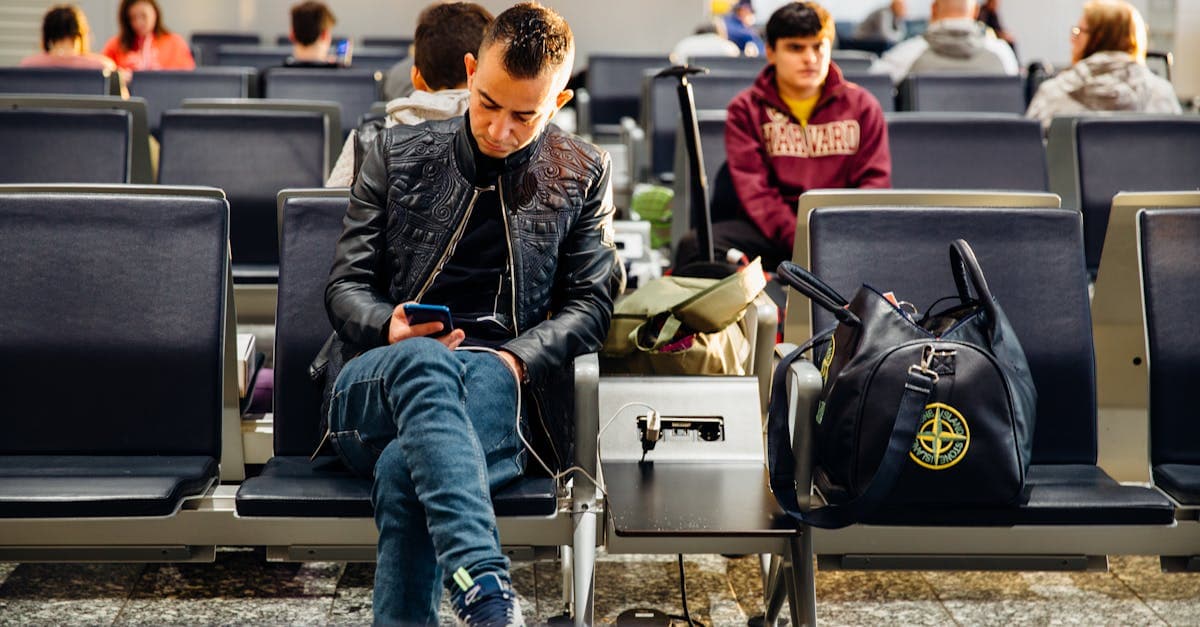
Turkey is one of the largest markets for Irish package holidays. It is also outside the EU. RLAH does not apply, and without a daily pass, data on standard Irish carrier plans can run at €1 to €3 per megabyte. At those rates, a week of normal smartphone use would generate a bill that comfortably dwarfs the price of the flights.
Morocco, Egypt, Dubai and the United States sit in the same position: popular Irish destinations, all outside RLAH coverage. Non-EU European countries add a further layer of confusion. Switzerland is geographically central to Europe but is not an EU or EEA member. Albania, North Macedonia, Serbia, Montenegro and Kosovo, increasingly visited by Irish travellers drawn to the Western Balkans, are also excluded from the regulation.
The standard mitigation is a carrier daily add-on. Vodafone's 'Roam Further' scheme, Three's 'Feel At Home' country list and Eir's daily passes all cover non-EU destinations at a flat daily rate. For stays of five days or longer, a dedicated travel eSIM tends to be more cost-effective than stacking daily charges across a fortnight.
Two groups face exposure beyond the typical tourist scenario. Irish people commuting regularly between Ireland and Northern Ireland encounter non-RLAH UK roaming costs far more often than occasional visitors, and their carriers' standing arrangements are worth reviewing in detail. Irish digital nomads living in another EU country face a subtler risk: EU operators can restrict RLAH for customers whose roaming usage consistently exceeds their domestic usage, a clause the regulation built in specifically for that situation.

Twelve nautical miles is where EU consumer protections end at sea. Inside that boundary from the nearest coastline, land-based mobile towers remain reachable and RLAH rules apply normally. Cross it on a cruise ship or open-sea ferry, and your phone connects to a satellite-based maritime network that EU roaming regulations explicitly exclude.
According to comreg.ie, EU rules permit cruise and ferry operators to charge up to €0.24 per MB of data at sea, and voice calls can cost up to €0.29 per minute to make or receive, even on an Irish SIM. A few minutes of browsing on a Mediterranean crossing could cost more than a round at the bar.
Switching to aeroplane mode before the vessel leaves port is the sensible response. On-board Wi-Fi packages cost money too, but at a predictable flat daily or session rate, which makes the spend containable. Mobile data left running in maritime satellite range does not.
River cruises are a separate matter entirely. Itineraries along the Rhine, the Danube and similar European waterways generally remain within range of shore-based networks throughout, so RLAH typically applies for the full journey. The satellite billing issue is mainly a concern for open-sea crossings: Mediterranean routes, Atlantic sailings and longer Baltic itineraries. ComReg publishes dedicated guidance on maritime roaming charges for passengers who want the regulatory detail before booking.

According to europa.eu, EU law requires your carrier to warn you before your roaming data runs out. An automatic SMS alert must be sent at 80 per cent of your data cap when roaming abroad, followed by a hard spending cut-off at €50 of additional charges. No Irish carrier can breach that threshold without your explicit written consent, which must be given in advance.
Set additional safeguards yourself before you travel. Both iPhones and Android devices support data usage warnings in their settings. The Vodafone Ireland app, the Three app and My Eir all display current roaming consumption in real time, accessible over Wi-Fi so the checks themselves draw nothing from your allowance. USSD codes (short dial sequences entered from your keypad) give balance information without any data connection at all; each of the main Irish carriers publishes the relevant codes on its support pages.
Background app refresh is the most common culprit behind unexpected charges. Disable it on iPhone under General in Settings, and restrict background mobile data for individual apps on Android, before you board.
If a charge appears that you cannot account for, contact your carrier in writing and keep a record. Disputes unresolved within ten working days can be escalated to ComReg. Regulation (EU) 2022/612, enforced by ComReg, entitles Irish consumers to itemised roaming bills on request. Every carrier operating in Ireland is legally obliged to provide one.
No. Carrier roaming charges apply only when your SIM connects to a foreign mobile network. Wi-Fi routes data through the internet, entirely independently of your carrier, so no charge can accumulate regardless of which country you are in.
Wi-Fi Calling (labelled VoWiFi in phone settings) is available on Three Ireland and Vodafone Ireland. Calls routed through Wi-Fi are billed against your domestic allowance at the standard rate, not as international roaming calls. In a hotel or rental apartment with a solid broadband connection, it removes voice charges abroad almost entirely.
iMessage, WhatsApp voice and video calls, and FaceTime all route through internet data when used over Wi-Fi. No carrier charges apply.
Wi-Fi Assist traps more travellers than most realise. The iPhone feature automatically switches to mobile data when Wi-Fi signal weakens. Disable it in Settings under Mobile Data before any trip abroad. Android devices carry a similar function, labelled 'Adaptive Wi-Fi' or 'Switch to mobile data' depending on the manufacturer. Both should be off when roaming.
If a roaming charge appears on your bill that you cannot attribute to mobile network use, contact your carrier first. Disputes not resolved within a reasonable period can be escalated via ComReg's online complaint tool, which handles roaming billing disputes under Irish and EU consumer law.
A travel eSIM is a digital SIM profile downloaded to a compatible phone before departure. No physical card, no trip to a shop: scan a QR code and the profile installs in a few minutes. It runs alongside your existing Irish SIM, which stays active for calls and texts throughout. You select the eSIM as your data connection in phone settings and switch back whenever the Irish number is needed.
The most practical application is travel outside the EU. Turkey, Morocco, Dubai, the United States: none fall under RLAH, and carrier daily add-ons accumulate quickly over any trip longer than a few days. A regional eSIM covering several non-EU destinations in a single purchase removes that daily arithmetic. Multi-destination itineraries mixing EU and non-EU stops, common from Irish airports, are also well served by one regional plan rather than a combination of carrier bolt-ons.
EU travel has a case for heavy data users too. Sustained hotspot tethering, video streaming or extended remote working can push usage past the FUP thresholds discussed in earlier sections. A higher-cap eSIM absorbs the surplus without the carrier surcharge conversation.
Phone compatibility is the first thing to verify. iPhone XS and later, Samsung Galaxy S20 and later, and Google Pixel 3a and later all support eSIM. Around 40 per cent of smartphones in Ireland were eSIM-capable in 2024, a figure that continues to rise as newer handsets replace older ones.
Hello Roam offers regional Europe plans across 30-plus countries, priced at €12 to €18 for a 10GB package as of March 2026, with no daily fees. For a seven-day non-EU trip, that sits considerably below the cumulative daily add-on cost discussed in the carrier comparison section above. Airalo and Holafly are the category's best-known global names: Holafly specialises in unlimited-data plans at a higher price point; Airalo offers a wider range of regional packages at varying tiers. For Irish travellers who want customer support calibrated to European time zones and coverage built around the routes Irish tourists actually take, Hello Roam's European eSIM plans are worth comparing before any non-EU booking.
Are roaming charges free in Europe?
For Irish SIM cards, yes. Voice calls, texts and incoming calls are fully free across the EU and EEA under Roam Like At Home rules. Data is free up to the fair use policy threshold on your specific plan; beyond that, surcharges may apply.
Is EU roaming free in Ireland?
Both ways, yes. Irish-issued SIMs roam free in EU countries, and EU visitors to Ireland receive the same RLAH protection on their own home SIM. EU membership is the determining factor, not your carrier.
How much data can you use while roaming on Three?
Three Ireland applies a fair use policy. Plans at 30GB or above typically allow the full domestic allocation while roaming. Unlimited plans are subject to the EU FUP formula. Check your specific tariff at three.ie before you travel.
Will I be charged for roaming if I use Wi-Fi?
No. Wi-Fi use doesn't generate carrier charges. Disable Wi-Fi Assist on iPhone and Adaptive Wi-Fi on Android to prevent automatic cellular fallback, as covered earlier.
Does my Irish phone work in the UK without roaming charges?
No. The UK left the EU in 2021, so RLAH no longer applies to UK travel. Most Irish carriers apply a daily add-on for UK usage. Three Ireland offers the most favourable arrangement due to its corporate structure, but a charge still applies.
What should I do about an unexpected roaming bill?
Dispute it with your carrier in writing. If that goes nowhere, file a complaint with ComReg at comreg.ie. EU regulations set hard limits on roaming charges and those rules are legally enforceable.

For Irish customers, yes. Under EU Regulation 2022/612, all EU-issued SIM cards including every Irish mobile contract and prepay plan can be used across all 27 EU member states plus Norway, Iceland and Liechtenstein without any retail surcharges on calls, texts or data. This protection is guaranteed through to 2032. Fair use policies do apply, meaning very heavy data users may face throttling or additional charges if roaming usage is disproportionate to domestic usage.
No. Roaming charges from your Irish mobile carrier only apply when your phone connects to a foreign mobile network and uses calls, texts or mobile data. When you connect to Wi-Fi, your device uses the local internet connection rather than your mobile network, so no roaming charges from your carrier apply.
Yes. Ireland is an EU member state, so every SIM card issued by an Irish carrier such as Vodafone, Three, Eir and budget MVNOs is fully covered by Roam Like At Home when travelling across the EU and EEA. The legal basis is Regulation (EU) 2022/612, which covers all 27 EU member states plus Norway, Iceland and Liechtenstein. For billing disputes or roaming complaints, ComReg is the correct point of contact for Irish consumers.
Three Ireland applies the EU fair use policy formula to all plans including unlimited ones, meaning there is no truly unlimited data abroad on any plan. The fair use threshold is calculated by dividing your monthly plan cost by the EU wholesale data rate of €0.0185 per GB. Three operates its Feel At Home scheme across the EU plus 71 additional countries, and carriers must send an SMS warning before a customer crosses the fair use threshold.
Roam Like At Home is an EU regulation that came into force in June 2017 and requires that all EU-issued SIM cards can be used across EU member states and the three EEA nations without retail surcharges on calls, texts or data. The rule was extended in June 2022 and runs through to 2032. It covers calls made and received, texts sent and all mobile data used, billed at your normal domestic rate.
Yes. Pre-pay customers hold the same Roam Like At Home rights as contract customers. Three, Vodafone, Eir, Tesco Mobile and 48 all extend the regulation to pre-pay SIMs. The key difference is credit: RLAH does not suspend the requirement to hold an active bundle or sufficient top-up balance, and voice calls and texts stop working if credit runs dry whether you are at home or abroad.
The fair use policy is the regulatory mechanism that allows carriers to throttle or surcharge roaming data when usage abroad is disproportionate to a customer's domestic pattern. The threshold is calculated by dividing your monthly plan cost by the EU wholesale data rate of €0.0185 per GB. On a standard Irish contract above €20 per month the ceiling runs into hundreds of gigabytes, but budget plan users on €5 to €6 per month face proportionally lower caps.
No. UK-issued SIM cards are no longer covered by Roam Like At Home following Brexit, meaning travellers using EE, O2 UK, Vodafone UK or Three UK SIM cards will face roaming charges in EU countries. However, Irish SIM cards are governed by EU law and remain fully covered by RLAH throughout the EU and EEA. Northern Ireland is a source of confusion because travellers there use UK-issued SIMs, so someone flying from Dublin on a Northern Irish mobile account will face charges that an Irish SIM holder will not.
No. Turkey, Morocco, Egypt, Dubai and the United States are outside the EU and EEA, so Roam Like At Home does not apply in these destinations. Without a daily pass, data on standard Irish carrier plans in these countries can run at €1 to €3 per megabyte. The standard options are carrier daily add-ons or a dedicated travel eSIM, which tends to be more cost-effective for stays of five days or longer.
Only within 12 nautical miles of the nearest coastline where land-based mobile towers are reachable. Beyond that boundary, your phone connects to a satellite-based maritime network that EU roaming regulations explicitly exclude. EU rules permit cruise and ferry operators to charge up to €0.24 per MB of data at sea and up to €0.29 per minute for voice calls, even on an Irish SIM.
Yes. Although Norway, Iceland and Liechtenstein are not EU member states, they are members of the European Economic Area and are fully covered by the Roam Like At Home regulation. Irish SIM cards work in all three countries at your normal domestic Irish rate for calls, texts and data, with the same fair use policy rules applying as elsewhere in the EEA.
No. Switzerland is geographically central to Europe but is neither an EU member state nor an EEA member, so Roam Like At Home does not apply there. Using your Irish SIM in Switzerland will incur roaming charges. A daily carrier add-on or dedicated travel eSIM is the recommended option for Swiss travel.
Both iPhone and Android allow you to disable mobile data roaming entirely. On iPhone, go to Settings, then Mobile Data, and toggle Data Roaming off. On Android, the same control sits within network settings, usually under Mobile Data or Connections. Disabling roaming prevents unexpected charges if you travel to a non-EU destination or board a ferry outside the 12 nautical mile limit.
Yes, both Tesco Mobile Ireland and 48 extend Roam Like At Home to their customers. However, both carriers tend to carry tighter fair use caps when roaming, a direct consequence of their lower domestic pricing. The EU fair use formula means a cheaper monthly plan results in a proportionally lower ceiling for data used abroad.
Carriers are legally required to send an SMS warning before a customer crosses the fair use policy threshold. Charges above that point are capped under EU wholesale rate rules, which limits financial exposure. Carriers may also throttle speeds rather than apply additional charges depending on the plan terms.
Some Three Ireland pre-pay accounts require an explicit opt-in before international roaming is enabled. This can be done quickly in the Three app. Skipping this step means your phone will not connect to mobile networks abroad, so it is worth checking before reaching the airport departures queue.
EU operators can restrict Roam Like At Home for customers whose roaming usage consistently exceeds their domestic usage. This clause was built into the regulation specifically to prevent customers from buying cheap domestic SIMs in one country and using them as permanent European connections. Digital nomads living long-term in another EU country should review this risk with their Irish carrier.

Cheapest Holiday Destinations From Ireland in 2026: Sun Breaks, City Trips and Real Prices

Best Countries for Digital Nomads in 2026: is Ireland Worth the Premium?

eSIM Spain: the Complete Guide for Irish Travellers in 2026

What to Eat in Spain: the Complete Food Guide for Irish Travellers
HelloRoam: your trusted travel eSIM that keeps you online across borders.
Explore Plans